• The move to the new server is done. There are some software and database maintenance updates in process. This has us passing the hat around to help out. We appreciate any donations. Seriously, even a dollar helps. The payment page may be found here - https://www.audiokarma.org/support.html

Magnepan MG-IIA Rebuild

There was a post here last night about using Xylene to try and remove the gunk. The theory being that DAP may have been used to make a previous repair and Xylene will remove DAP (acetone will not). That post seems to be missing now.

Don't remember who it was but there were some really good suggestions.

Did anyone see it or am I going competently insane?? :headscrat
 
When finished I would love to hear your impression of the DQ-10s vs. the Maggies. I just recently rolled a pair of DQ-10s in as my main speakers which will be recapped soon and I have a pair of MG-IIs in the waiting when spring comes around and I can work on them in the barn.
 
Reverb. I agree with your assessment of the high end. It's there, but it's not like a dome or cone tweeter. It's diffuse. It also changes character as you move perpendicular to the panel.
 
baco99, I have an idea I am thinking of trying with the maggies.

I have a spare set of Realistic Electrostat 2a's. Even though they are single-ended and horribly non-linear on paper, they actually sound quite pleasing. There are 4 electrostatic elements in each of the 2a's.

What I am considering doing is siphoning off some of the signal from the maggie's tweeter crossover output and sending it through the 2a's crossover and on to the 4 electrostatic elements. Maybe mount them in an arc configuration on top of the maggies - cause we all know they aren't tall enough already :D

There is an L-Pad as part of the 2a's so I could (theoretically) balance the amount of signal sent to the electrostats.

The only thing I am unsure about is what will the additional of the electrostatics do to the resistance (load) of the panel?
 
If you run the 'stats in series, the impedances will add. If in parallel, it will be less. The formula I learned way back is: total impedance= 1/[(1/a)+(1/b)+...], where a & b are the individual impedances.
 
Quick update on panel #1.

I washed the sock in Woolite and hung it up to dry last evening. It looked clean but I was quite surprised at how dirty the water was after washing it.

Secondly, I replaced the 17uf electrolytic cap. I had some decent 8uf's that read a little on the high side to begin with so I ganged them together to get my replacement. The final capacitance ended-up being 16.9uf - close enough for government work. The replaced cap read 19.8 on my meter; not terrible after all these years.

Lastly, I think I am going to leave the four 10uf caps alone. They are some sort of poly cap to begin with so they should be pretty close. If I get ambitious, I may pull one of the legs and check to make sure. I get the feeling it may be difficult to find a suitable replace for them given the confines of the panel (very shallow), plus this thing has already got it's pound-of-flesh from me so I will likely just let them be.

Going to re-sock (is that a word?) tonight and get panel #1 out of the way. Hopefully will start on #2 in the next few days.
 

Attachments

  • m1.jpg
    m1.jpg
    38 KB · Views: 58
  • m2.jpg
    m2.jpg
    78.7 KB · Views: 59
  • m3.jpg
    m3.jpg
    76 KB · Views: 55
Last edited:
Panel #2 Begins

Got panel #2 on the operating table last night and looks like more of the same - albeit less extensive.

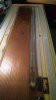
You will see in the first pic how the first 1/3 of the panel seems to "shine" more than the other 2/3?? That is the area that has the non-Magnepan sanctioned adhesive applied. It looks like it has been poured on and spread around generously. Pic 2 shows this a little closer up.

The 3rd pic is the broken tweeter wire. We knew this going in, so no shocker there. The gunk is smeared over some of tweeter section as well, so it will have to be dealt with - at least in that area.

The 4th pic shows the end of the panel that is Magnepan pristine - i.e. no work has been done on it. It's hard to see but the bass wire is starting for lift from the mylar... just barely beginning to de-laminate!

Since the wires are not really peeling yet, I wonder if a thin coat of FastBond would lock everything back down?? I am leaning this direction. I really don't want to strip this whole panel the way I had to on #1.

As to the end of the panel with the mystery gunk on it? It appears solid and the repair is still holding. The goal is to leave it as-is if possible.

I am going to get some Xylene and see if it will remove whatever was used previously. There is a section where some of the gunk is actually on the metal side support. This will provide an excellent test-area to see what Xylene will do to it without involving the mylar. The result of that test will determine to what lengths I will go to try and repair/refurbish this panel.

The hopeful plan is to clean off the crap in the tweeter section and restring new wire there. Then put a little FastBond onto the end where the wires are starting to de-laminate. Wash the sock, put it all back together and see how they sound.

Fingers-Crossed!
 

Attachments

  • mg2_1.jpg
    mg2_1.jpg
    61.4 KB · Views: 68
  • mg2_2.jpg
    mg2_2.jpg
    66.9 KB · Views: 63
  • mg2_3.jpg
    mg2_3.jpg
    77.9 KB · Views: 65
  • mg2_4.jpg
    mg2_4.jpg
    82.2 KB · Views: 69
If you run the 'stats in series, the impedances will add. If in parallel, it will be less. The formula I learned way back is: total impedance= 1/[(1/a)+(1/b)+...], where a & b are the individual impedances.

Thanks GuyK. This is where it all gets a little foggy to me. I know what you are saying and agree. Gotta do some more digging to see if this is even possible.

Stats are odd in that they usually have a very high impedance and are impedance-matched (usually with a transformer) to make them compatible with amplifiers. That's the way I understand it anyways. On top of that, the Realistic stats are single-ended so they are even a bit more exotic/unusual in design. A bigger brain than mine would be needed to figure all this out :yes:

Maybe I'll float this idea around in a separate thread and see if someone can offer some advice.
 
Went to purchase Xylene tonight at the local big-box home center. They only sold a $25, gallon can. No pints or quarts. I decided to wait and try another store because:

A) I have never had the need for Xylene in the 52 years I have been alive.
B) I doubt I will ever need Xylene again after this panel test is concluded.
C) I am not even sure Xylene will dissolve the crud on the panel.
D) Xylene is nasty s#it and if it doesn't work, I will have 99% of a gallon to dispose of.
 
IIRC, lacquer thinner contains Xylene.

It very well may Danvee and thanks for your suggestion.

I am a bit hesitant to use a combination solvent however. While these polyester films are quite robust, I am still a bit nervous about what it can withstand.

What worries me is on these combo solvent ingredient lists they will often say something like "Other Petroleum Distillates". My concern is something in the "other" could be damaging to the mylar - and if I ruin it, it's game over and everything accomplished so far will be in vain.

I found a quart can of Xylene at lunch. I'll give it a whirl this weekend and see how it does. :thmbsp:
 
If you run the 'stats in series, the impedances will add. If in parallel, it will be less. The formula I learned way back is: total impedance= 1/[(1/a)+(1/b)+...], where a & b are the individual impedances.
Maggies are not "stats". The are planar magnetic speakers.

Keep up the fight reverb, many of us are rooting for you!
 
Maggies are not "stats". The are planar magnetic speakers.

Keep up the fight reverb, many of us are rooting for you!

Thanks Joe. I'm trying to keep my chin up!

The "stats" being referred to are Electrostatic elements I was thinking of robbing from a pair of Realistic Electorstat 2's. Theory being, they could augment the high-end of the Maggies to give it a bit of sizzle. (Post #44)

Then all that impedance stuff reared it's ugly head :D
 
Last edited:
Hot Damn - finally caught a break!

Panel #2 was repaired with a different type of gunk than the "panel from hell" (panel #1)

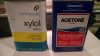
Whatever was used on #2 will come off with Acetone but it is much easier to use Xylene first then the Acetone on the non-Magnepan repair areas. The Xylene will soften the goop and turn it into a smeary mess, then the Acetone will pick it right up. I refer to this as the Toxic-Twins. I'm sure I sacrificed some of the weaker brain-cells tonight working with that stuff!

Without the gunk on the panels, these are really not that hard to work. Messy, yeah a little - but not bad. I would do another pair now that I see how it supposed to go.

Beauty shots of the tweeter wire area - clean and ready for new wire! No compromises like the last panel. No "that's good enough" or "that's as good as I can get it". 100% clean with no damage to the mylar. Very happy with this outcome.

Think I am going to touch-up the bass wire ends and leave the rest of the bass section alone. If they rattle or buzz, I can always pull it back apart and work that section. No big deal, I can strip these quicker than a teenager can get out of a prom dress :yes:

I replaced the electrolytic in the crossover last night and the sock is washed and hanging up to dry right now. If temperatures permit, I will string wire and apply FastBond tomorrow.

Maybe Sunday, I can put it all back together and start the audition. Finally!
 

Attachments

  • mg_all.jpg
    mg_all.jpg
    67.1 KB · Views: 60
  • mg_bot.jpg
    mg_bot.jpg
    61.4 KB · Views: 53
  • mg_mid.jpg
    mg_mid.jpg
    59.1 KB · Views: 56
  • mg_top.jpg
    mg_top.jpg
    63.2 KB · Views: 62
  • mw_twins.jpg
    mw_twins.jpg
    51.6 KB · Views: 49
Happy Sunday Morning All!

Restringing the tweeter section was easy-peasy. While I had the FastBond out, I put an extra layer on the end of the bass wires. As mentioned earlier, they were beginning to LOOK like they were going to start delaminating. Figured since it is near the edge of the mylar, a little extra mass there wouldn't make a whole lot of difference. btw: The FastBond is not as thick as it looks, it will become more and more opaque as it dries.

I may had to do something to the bass wire later but I am running out of time as far as temperature goes. Even here in GA, it gets below 68 in the winter :)

Attached are some pics of course. I may put one more light coat of FastBond here and there before I button this one up.
 

Attachments

  • IMG_20141206_171547029_HDR.jpg
    IMG_20141206_171547029_HDR.jpg
    70.9 KB · Views: 58
  • IMG_20141206_171609352.jpg
    IMG_20141206_171609352.jpg
    52.6 KB · Views: 52
  • IMG_20141206_171601319_HDR.jpg
    IMG_20141206_171601319_HDR.jpg
    91.8 KB · Views: 51
  • IMG_20141206_171615641.jpg
    IMG_20141206_171615641.jpg
    66.5 KB · Views: 53
When I repair Magnepans, they play nude for a few days or more as I verify that everything that needs to be repaired is repaired. Good to see this project getting done and your opportunity to enjoy the speakers just around the corner.
 
Outstanding! you may have stumbled upon a new way to go about stripping these nasty things for all! You comfortable about the Xylene on the mylar after this? Sure would be great to reduce the time of exposure to those chemicals in the stripping effort.

So you saying the white is turning clear after a while?
 
The green areas are where the old adhesive is failing.
The golden/reddish areas are fine.
I'm thinking your first speaker was repaired with DAP, acetone won't touch it.
DAP doesn't guarantee the bass wires won't lift, and then your forced to use a much more toxic chemical to remove it.
Or for those, like you who were unaware of the adhesive used- a nightmare.
The stock Magnepan setup works fine IMHO, never has a issue with them lifting, and can be much more easily repaired.
Good job by the way!:thmbsp:
 
Last edited:
You comfortable about the Xylene on the mylar after this?

According to the spec sheet of mylar, Xylene is safe to use. I did not notice any ill-effects from the Xylene on my mylar as well. I would use it again if straight Acetone did not remove the crud first. I am real curious if Xylene would have removed the gunk on the first panel - which I think was some type of Epoxy.

So you saying the white is turning clear after a while?

That seems to be the case. It is a milky-white when first applied but it does turn a little less opaque as it dries. I don't think it ever becomes totally transparent though (clear).
 
The green areas are where the old adhesive is failing.
The golden/reddish areas are fine.
I'm thinking your first speaker was repaired with DAP, acetone won't touch it.
DAP doesn't guarantee the bass wires won't lift, and then your forced to use a much more toxic chemical to remove it.
Or for those, like you who were unaware of the adhesive used- a nightmare.
The stock Magnepan setup works fine IMHO, never has a issue with them lifting, and can be much more easily repaired.
Good job by the way!:thmbsp:

Thanks automojo. It was your suggestion to try Xylene that headed me in that direction. Don't know what happened to your original post, but luckily I remembered enough to recall the solvent name!

I agree that the standard Magnepan method of wire attachment seems to work well, but it does take a little practice. Getting a feel for when to do what and how long to let things get tacky comes with experience. I think I could do a much better job next time (and stay tuned... that "next time" may be right around the corner). :smoke:
 
Back
Top Bottom