• The move to the new server is done. There are some software and database maintenance updates in process. This has us passing the hat around to help out. We appreciate any donations. Seriously, even a dollar helps. The payment page may be found here - https://www.audiokarma.org/support.html

Marantz Model 9 Prototype

Pio -- I would imagine that the CF driver stage was primarily included to ensure plenty of low distortion drive into the reduced grid return resistance that paralleled output tubes produce, and to isolate the inverter stage from the effects of the output stage at the onset of clipping. Consider:

1. One principle reason to use a CF driver stage is to eliminate blocking distortion at the onset of clipping in the output stage..... except that with there being R/C coupling used to couple the CF stage into the output stage, that theory is blown out of the water since it is R/C coupling that causes blocking distortion in output stages to begin with.

2. A CF driver stage will certainly help in dealing with Miller in triode output stages, but with the considerable resistance introduced into the grid #1 circuit of the output tubes by way of the grid step/stopper networks used in this design, there is little benefit to be gained with regards to Miller by the use of a CF driver stage.

That leaves the CF's ability to drive low impedance circuits with relative ease (as compared to a comparable anode follower stage), and the buffering action it provides for the inverter stage as the most likely reason for its inclusion. To the latter point, it helps to maintain the balance of the stage as clipping is approached, while its low output impedance certainly acts to quill any socially unacceptable behavior that might occur from each side driving dual output tubes during that time as well.

Dave
 
Thnx for response. The cf driver seems a bit like belt-and-suspender overkill at a practical level. I suppose Sid was going for a no-compromise, no holds barred ultimate effort.
At the time it seems most amps were Mullard or variants, with some single envelope driver amps not that much different than the Mullard re number of actual stages and practical simplicity. A few oddballs from other mfgrs re the National Horizon and of course, the unique rather complex but excellent and durable McIntosh unity coupled amps.
I recall that Dave O'Brien of the Mac clinics commenting that the Marantz amps were the only amps he'd tested other than Mac themselves that always met or exceeded specs during the tube era.
 
Absolutely. And a good part of that fact was achieved because virtually all manufacturers OTHER than Marantz and Mac first rated the power output of their models using some combination of single channel driven, IHF , or some other absolute maximum power output measurement technique -- and THEN rated the distortion specification at a power level that was 1 db down from that power specification. This maximized the former and minimized the latter for the pure benefit of marketing their equipment.

Mac and Marantz refused to participate in the power output wars -- they didn't need to. Witness that virtually all manufacturers using (for example) the 7591 tube (or its variants) rated their best models at 35 wpc -- except Mac, who rated the MC225 at 25 watts per channel, with the distortion being rated at that power level, and also with both channels driven -- a much more honest portrayal of the performance these tubes can be expected to deliver in a practical design. When Eico pushed two EL34s to produce a rating of 60 watts in their HF-60, Marantz used four such tubes to produce a rated 70 watts in the 9 -- but of course it could do much more than that even on a bad day, whereas the Eico could never really meet its performance rating even on a good day. Both Marantz and Mac ultimately placed the highest value on the integrity of their products and the performance they could be expected to produce, over running with the pack and the wars that went on within it -- a decision that served them well even to this day.

Dave
 
Last edited:
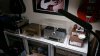
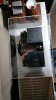
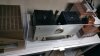
Wanted to share the acrylic case that arrived today. It was reasonably priced, even for being made to order.

20160831_194024.jpg

20160831_194128.jpg

20160831_194152.jpg

Shold have the cage back by the weekend. Sent it over to a buddy that has a very cool machine shop here in town. He's been there 40 years and has the skill to make it perfect again. It really wasn't too bad but the thought of me putting it in a vise rattled my bones too much, considering what it is. 2230s I'll do all day long. :rflmao:

Also, I've gotten in contact with DMH about it and have forwarded off the info on it and hoping to hear back soon. Their corporate office here in the states is only a mile from my job which is really convenient.

I decided to wait another week before bringing it to the tech. Wanted t make sure Marantz wasn't going to need it in thier possession for inspection so this weekend I will try to bring it up carefully with the tech. You guys may hate me for wanting to fire it up even though I have no intentions of using it, I at least need to know it works. I'm still planning the perfect base but wanted to have exact top dimensions first.
 
Last edited:
Very very nice! It would be great if your tech would draw out the schematic of it, too. As for firing it up, if it's still serviceable as is, I'd work on bringing it up, adjusting the usual controls, measure its performance, and THEN put it on display..........

Dave
 
Allen Sides from Ocean Way Studios in Hollywood has been a big Marantz Model 9 fan for many years. He has used them to monitor countless recordings made by the biggest names in show business.
Check out minute 1:52 on the video below:

 
Last edited:
In my earlier posts I CLEARLY did not understand that this was a hand made experimental piece and most likely personally wired. Essentially a museum piece. That is SOOOO cool just to have on display while listening to your other Marantz stereos. And my misguided comments about touching it up in anyway - I apologize. I wish I could see the damn thing in person.

Best of luck
charles
 
I haven't been able to get off my mind that the gentleman who owned the piece and was in the broadcasting industry was also in the part of the country where Saul and Sid were working. I wonder if there is any chance he was acquainted with them and came into possession via some broadcasting need. The post about Allen Sides just strengthened my curiosity. Probably no way to check this out,but it's an intriguing scenario.
 
Well, I wrote to the guy who sold it to me inquiring about its origin. Initially I thought he told me a radio engineer over the phone but... Hes saying it was purchased from an estate of an engineer that worked for Marantz!! and was purchased with about 50 other items. 2 of which he sold me as well.

He also said he has blueprints for a few models that he may sell me!!!
 
Last edited:
Well, I wrote to the guy who sold it to me inquiring about its origin. Initially I thought he told me a radio engineer over the phone but... Hes saying it was purchased from an estate of an engineer that worked for Marantz!! and was purchased with about 50 other items. 2 of which he sold me as well. My 4400 that is mint in box and my sm6 that is also mint in box.

He also said he has blueprints for a few models that he may sell me!!!
If that's where Sid's notes and dox went, the stuff needs to be gathered and indexed.:yikes:
 
Bryans -- When he does the schematic, the more data he can generate, the better -- besides basic component values, tube/transformer voltages and even the impedance of the primary and tertiary windings of the OPT if possible.

Dave
 
Well, I wrote to the guy who sold it to me inquiring about its origin. Initially I thought he told me a radio engineer over the phone but... Hes saying it was purchased from an estate of an engineer that worked for Marantz!! and was purchased with about 50 other items. 2 of which he sold me as well.

He also said he has blueprints for a few models that he may sell me!!!

That's insane! How come nobody knew about this Estate sale?
Those documents could be the missing blueprints from the classic Marantz tube models.
They were supposedly lost to a "fire" or some other folk lore.
Please keep us posted on anything else that you find.
I had thought it could be Sid Smith's own Estate Sale, but that would have been widely advertised, or maybe it went under the radar?
Another former Marantz man that recently died was Tom Cadawas in 2012. He worked as head of QC for Marantz back in the tube era. James Bongiorno who started his career at Marantz and was mentored by Sid also died recently. But his stuff has already been sold, I believe.

Now, I know for a fact that Sid's house was recently sold and the widow could have possibly moved to an assisted living facility.
So I wouldn't be surprised this was purchased at Sid's own Estate Sale!
 
By the way there were only two engineers that worked for Marantz back in the pre Superscope days: Sidney Stockton Smith and Richard Sequerra. The rest ,including the transformer winder Jim Loweth and Tom Cadawas were technicians. Sequerra is still alive and well.

Bongiorno joined Marantz as an apprentice in 1966 or so. By this time Superscope was running the company and they had a person by the name of Flavio Blanco, as General Manager. The man was apparently very strict. He was dubbed the "South American Dictator" by Sid, Sequerra and Bongiorno :). I wonder if he's still alive...
 
Last edited:
He mentioned that the guy was an engineer from Marantz but later had his own repair shop or worked as a repair tech for an independent shop. Seems odd to me that an engineer for a company like Marantz would have to resort to working for a lesser shop but that's how the story goes.
 
Back
Top Bottom