Hi SET12,
Can you explain a bit more on why a new and better crossover using North Creek coils and good caps can increase transient response and "speed" sensation of a speaker with passive crossover such as the Forte? I want to learn and understand this a bit more. My impression of Forte-II is that they are a bit slow but perhaps this "slow" sensation has more to do with mid clarity and resolution instead of really how fast teh woofer moves, but i may be wrong.:scratch2::scratch2::scratch2:
Ok, Back to your question and thoughts!
One thing I'd like to point out is that electronics have a lot to do with the Forte's response!
And certainly there are commercially made ones that are up to the task but there are a lot that are not!
And every time that I have had what would be considered good quality electronics by many the Fortes have a habit of ruthlessly revealing their strengths and or their short comings. Some electronics sound fine but there are omissions more so than commissions to speak of!
So the distance that one goes with extreme mods like these in all likely hood should be based on is. Does one feel their electronics is up to the task?
If not and one is using an average Mid-Fi AV Receiver then the benefits have to be questioned as to their real value. Not that I'm saying don't do them but I think its important that the system has balanced capabilities!
When the parts count are low as in SET amps as mine and the signal paths short part changes become more audible.
Changing a coupling capacitor can be like changing to a different color suit or for that matter in your case changing cars with different amounts of HP.
The capacity of a capacitor to carry current or deliver it is largely dependent on its construction.
For example "film caps" vs "film and foil" I use the the film and foil variety because it is well know that they have a substantially higher capacity to carry current and of course their transient response is faster!
The degree of importance is largely dependent on a crossovers design.
I do use film caps in parallel with the woofer. Its a less critical area where if one wanted to get by with a decent quality electrolytic its in all likely hood fine! I haven't done a back to back comparison to see what I could hear though.
But when a cap is used directly in line with drivers it is especially audible!
So being fast and having high current capacity is especially important
I would be willing to bet that the stock caps were just the film variety and they were pennies to make!
Why am I using the Mundorf Silver/Oils for my tweeters?
One is I like the fact that they are near totally non-inductive meaning they are composed of two capacitors in series. This cancels the internal inductance of both yielding some very high speed capacity!
And when they say
"This product is an oil impregnated metallized paper dielectric capacitor, with the same series wiring as the M-CAP® Supreme capacitors. As the name indicates, high-purity silver is used for the capacitor coating, and the winding is impregnated with a special oil developed in an exhaustive series of experiments and listening tests. Both these features contribute to an even fuller and smoother tonal richness and diversity."
I can vouch for their engineering worth every penny and great overall IMO.
As for the Duelund's they are the heart of my Fortes as the majority of the music passes through these
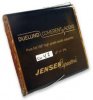
Here's the best description I have found.
The Duelund Coherent Audio Virtual Stack Foil Capacitor
"This new capacitor is the realization of a lifelong ambition. It consists either of pure aluminum foil, pure copper foil or pure silver foil and high-density paper, soaked in pure mineral wax, treated with special lacquers made from natural materials and wrapped in natural paper.
Unlike all other audio capacitors available no form of unnatural sound degrading materials are used. No metallization and plastics such as polypropylene are employed in the construction of these capacitors as the ensuing negative influence on the signal is unacceptable.
The stack-foil design ensures very low inductance, forming a solid block resulting in a form free of internal resonances. While the technical background may sound humdrum, the sonic splendor these capacitors make possible is anything but. The capacitors are made by hand in order to ensure the strictest tolerances possible."
:scratch2:With out a doubt one of the very best capacitors I have ever heard they are so smooth and yet highly detailed it can and does flush out texture that I have never heard from the Forte I also believe with the conjunction of Bob Crites larger and better constructed Autotransformers yielding greater bandwidth in the process the two go hand and hand to bring the mid-range to a level that is as eye opening as the the new Klipsch Palladium IMO.
So the Duelund caps are really quite astonishing IMO!
SET12




