• The move to the new server is done. There are some software and database maintenance updates in process. This has us passing the hat around to help out. We appreciate any donations. Seriously, even a dollar helps. The payment page may be found here - https://www.audiokarma.org/support.html

Nobsound E6 Preamp Uses Directly Heated Tubes

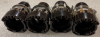
I just got mine hooked up today. Certainly IS microphonic. Considering the design of the chassis, its not a surprise.

If i flick the chassis with my finger it rings like a bell.

The tube sockets have some play and wiggle if you reach in and push on them. So right off the bat I installed silicone tube dampers down low and up high. I made sure the tubes were fully seating by checking the height between the tubes with one having the bottom o-ring and one without.

The sockets are laying right on the fibreglass circuit board, no isolation of any kind, and the circuit board is held in place by sliding into grooves milled into the aluminum outer casing. Then the milled aluminum outer casing's milled aluminum ends are screwed into place.


Mine had considerable hum until i wiggled the tubes around and found a "sweet spot" where they made better connection. While i was wiggling the front tube the led backlighting the tube turned off and on......


Despite this, once i got it settled in, i was quite happy with how it sounds. Better than 2 "high end" preamps i have and better than the Schiit SYS i have. "Better" meaning it sounds fuller, has more air\space around instruments, instruments seem to sound more real.


I think im going to take it back apart and resolder the tube sockets to the board, touch up some other joints, add some foam dampers in between the board and the casing, and clean the tubes pins.


Maybe after l listen to another CD or two.....

 

Attachments

  • IMG_20230121_151723541.jpg
    IMG_20230121_151723541.jpg
    59.5 KB · Views: 67
  • IMG_20230121_151537229.jpg
    IMG_20230121_151537229.jpg
    107.2 KB · Views: 68
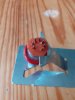
HI just try to clean socket and pin tube sometime i put just a silicon piece and i became better. But when tube are deads it is...
 

Attachments

  • silicon plate.jpg
    silicon plate.jpg
    57.7 KB · Views: 60
I just got mine hooked up today. Certainly IS microphonic. Considering the design of the chassis, its not a surprise.

If i flick the chassis with my finger it rings like a bell.
It seems like the microphonics, if present and troublesome, are related to the individual tubes. Some are obviously a huge problem, others not enough to be concerned about. Luck of the draw, apparently.

I've had no serious issues with either the stock Chinese or the Russian replacements so I guess I've been lucky. The tubes are cheap, though.
Despite this, once i got it settled in, i was quite happy with how it sounds. Better than 2 "high end" preamps i have and better than the Schiit SYS i have. "Better" meaning it sounds fuller, has more air\space around instruments, instruments seem to sound more real.
I'm curious, what "high end" preamps have you compared it with? As I recall the Schiit SYS is a "passive preamp", which is just a volume control.
 
FlaCharlie,

The SYS is a passive volume control\switchbox.

Id rather not say which preamps ive compared the E6 to, because im going to sell them and dont want to hurt the resale value. One is a SS unit from the 80's, the other is a tube unit from the 90's. The tubed unit uses all poly caps and was recently serviced before i bought it, and i retubed it with matched tubes, which did sound better.

The problem i have with it, as i understand it, is that it uses a cathode follower as the output. Sure, Cathode Follower measures good, but doesnt sound good to me.

The SS unit has had some updates, but could probably stand to be serviced (recapped and aligned). Its pretty good, but this little E6 kicks ass.
 
HI just try to clean socket and pin tube sometime i put just a silicon piece and i became better. But when tube are deads it is...

I was thinking of doing something similar, but was thinking of using a thin sheet of cork.

Does that silicone sheet damper seem to make a big difference, or just a little bit?
 
I just got mine hooked up today. Certainly IS microphonic. Considering the design of the chassis, its not a surprise.

If i flick the chassis with my finger it rings like a bell.

The tube sockets have some play and wiggle if you reach in and push on them. So right off the bat I installed silicone tube dampers down low and up high. I made sure the tubes were fully seating by checking the height between the tubes with one having the bottom o-ring and one without.

The sockets are laying right on the fibreglass circuit board, no isolation of any kind, and the circuit board is held in place by sliding into grooves milled into the aluminum outer casing. Then the milled aluminum outer casing's milled aluminum ends are screwed into place.


Mine had considerable hum until i wiggled the tubes around and found a "sweet spot" where they made better connection. While i was wiggling the front tube the led backlighting the tube turned off and on......


Despite this, once i got it settled in, i was quite happy with how it sounds. Better than 2 "high end" preamps i have and better than the Schiit SYS i have. "Better" meaning it sounds fuller, has more air\space around instruments, instruments seem to sound more real.


I think im going to take it back apart and resolder the tube sockets to the board, touch up some other joints, add some foam dampers in between the board and the casing, and clean the tubes pins.


Maybe after l listen to another CD or two.....
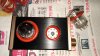
The experience with the ringing seems well established when the chassis is bumped, etc. Did the dampers you placed on the tubes diminish/eliminate the ringing? If it did, that was one consideration I had when I considered altering the tube hole diameter in the chassis and pinching off the lower part of the tube case stem that guides it into place. With the microphonics issue... I thought keeping it in the case might diminish the ringing potentiality. But if the dampers fix the issue, that's a whole lot less work. Link to the dampers or where you found them would be much appreciated.
 
The experience with the ringing seems well established when the chassis is bumped, etc. Did the dampers you placed on the tubes diminish/eliminate the ringing? If it did, that was one consideration I had when I considered altering the tube hole diameter in the chassis and pinching off the lower part of the tube case stem that guides it into place. With the microphonics issue... I thought keeping it in the case might diminish the ringing potentiality. But if the dampers fix the issue, that's a whole lot less work. Link to the dampers or where you found them would be much appreciated.


I didnt try the E6 without the dampers, so idk if they helped or not. I do know that they didnt get rid of the ringing. I got them from Amazon.

https://a.co/d/cmzdnPR
 
Last edited:
Hey FlaCharlie, would an octal socket extender work on these tubes or does it have to be a loctal? I can't seem to find any loctal tube socket extenders.
 
Hey FlaCharlie, would an octal socket extender work on these tubes or does it have to be a loctal? I can't seem to find any loctal tube socket extenders.
Loctal tubes need loctal sockets. Like an octal, they have 8 pins but the octal pins are much thicker.

I've never seen a loctal extender, probably because they are not commonly used tubes and, as far as I know, there is no current production tube that uses a loctal base.

That's why loctals are such great bargains. Compare the prices of the octal base Sylvania 6SN7s to the loctal base 7N7, all of which were made by Sylvania. Other than the base, they are electrically the same tube.

The dealer near me lists 7N7s for $10 and the 14N7, which use a 12.6v heater, are only $7. They list a variety of Sylvania 6SN7s, which range in price from $35 to $150. The most expensive ones have metal bases. All loctals have metal bases, BTW.
 
David Crosby just died yet I find myself listening right now to some 1974 Neil Young - On the Beach. Got some great bass on this LP and the E6 keeps up with every note. Even the vibrations between each bass stroke and all of the rest of the stage sounds like I'm in the room with them playing. This thing (E6) is great.

Got some David Crosby lined up with the Byrds and CSN coming up, but On the Beach is an underestimated, often forgotten LP and it sounds great.
 

Hey Pio1980... I finally had a chance to finish this article you posted. Fascinating, to say the least. I've enjoyed reading about WW2 since my early 20's - some 30 years ago now, but I had never heard this story and how it enabled the British radar effort in the years leading up to the war. Many thanks for posting it.

I've been trying to reference some other tubes that might be compatible with this little Nobsound E7, but it is really slow going. I was hoping from the looks of it that the EF50 might be one, but it doesn't appear on any tube equivalent sheet to the one used in the unit. In fact, there isn't much at all in the way of other tubes at all. Looked at RadioMuseum, Frank's Tube Sheets, and a PDF of PH Brans tube equivalencies. I did order another pair of Russian tubes from TubeStore and they have the 2j27l cross referenced to rv2/4p700. That's a telefunken tube that doesn't look the same, but after a little more research, the 4p701 looks very similar to the stock tube type.

Anyway, I'll keep looking and thanks again for that cool article. Good read.
 
David Crosby just died yet I find myself listening right now to some 1974 Neil Young - On the Beach. Got some great bass on this LP and the E6 keeps up with every note. Even the vibrations between each bass stroke and all of the rest of the stage sounds like I'm in the room with them playing. This thing (E6) is great.

Got some David Crosby lined up with the Byrds and CSN coming up, but On the Beach is an underestimated, often forgotten LP and it sounds great.
Dammit DJF! My hand just flinched toward my wallet...
 
...this is pretty frustrating. I can't seem to find any US tube equivalents to the 2J27L tube. I think we can be reasonably certain from amcrabb that the 2P29L's will work in there, but it's not absolute. I would really like to know if there are any NOS US manufacturers like GE or Sylvania that might have their edition of this tube. I have exhausted my sources, so I'm going to have to put it out there to the greater group to try to determine. There are certainly many loctal tubes out there, but I can't find a datasheet on the 2J27L, so attempting to match specs is not possible right now. I did find a datasheet on the 2P29L, which will be nice to reference if/when the 2P29L is proven, but not much at all on the 2J27L. This info was on tubestore:

Russian 2J27L HF pentode tube. Equivalent to the RV2, 4P700.
  • Filament voltage, V: 2.2;
  • Filament current, mA: 57;
  • Anode voltage, V: 120;
  • Anode current, mA: 1.9;
  • Screen voltage, V: 45;
  • Screen current, mA: 0.4;
  • Control grid voltage, V: 0;
  • Mutual conductance, mA/V: 1.25;
  • Anode impedance: 700k ohms;
  • Dimensions: 65mm x 31mm.
 

Attachments

...this is pretty frustrating. I can't seem to find any US tube equivalents to the 2J27L tube. I think we can be reasonably certain from amcrabb that the 2P29L's will work in there, but it's not absolute. I would really like to know if there are any NOS US manufacturers like GE or Sylvania that might have their edition of this tube. I have exhausted my sources, so I'm going to have to put it out there to the greater group to try to determine. There are certainly many loctal tubes out there, but I can't find a datasheet on the 2J27L, so attempting to match specs is not possible right now. I did find a datasheet on the 2P29L, which will be nice to reference if/when the 2P29L is proven, but not much at all on the 2J27L. This info was on tubestore:

Russian 2J27L HF pentode tube. Equivalent to the RV2, 4P700.
  • Filament voltage, V: 2.2;
  • Filament current, mA: 57;
  • Anode voltage, V: 120;
  • Anode current, mA: 1.9;
  • Screen voltage, V: 45;
  • Screen current, mA: 0.4;
  • Control grid voltage, V: 0;
  • Mutual conductance, mA/V: 1.25;
  • Anode impedance: 700k ohms;
  • Dimensions: 65mm x 31mm.
I had the 2P29L working fine in my E6 for four days. I just preferred the sound of the 2J27L. The E6 did generate heat with the 2P29L, but it never felt excessively hot (my class AB headphone amp runs a lot hotter in comparison).

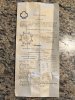
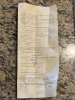
Here is the sheet inside the box of the 2Ж27Л or 2J27L. Sometimes it is referred to as a 2Z27L, 2SH27, or 2ZH27L.

https://www.diyaudio.com/community/threads/2j27l.334572/


49CD168A-3E20-45A8-A8AA-11E59F99FE2D.jpeg
E77819D4-05A0-4DA0-A299-01366B1A1C74.jpeg
 
Last edited:
I've been trying to reference some other tubes that might be compatible with this little Nobsound E7, but it is really slow going. . . . I did order another pair of Russian tubes from TubeStore and they have the 2j27l cross referenced to rv2/4p700. That's a telefunken tube that doesn't look the same, but after a little more research, the 4p701 looks very similar to the stock tube type.
Those Telefunken tubes (4P700 / 4P701) will definitely not fit. I'm not sure what the sockets they use are called (bayonet, maybe?) but they're definitely not loctals.

Some eBay listings for the 2J27L also list the 4P700 in the title so they may be electrically equivalent. And I found one post on DIY by a Russian poster that also indicates this. The data sheets are in German, of course, but the tubes themselves don't look like anything I've seen. They remind me of some of the so-called "acorn" tubes that have pins coming out the sides.

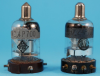
Here's a pic of the 4P700 tubes and the sockets.
4P700 Tubes.png
4P700 Sockets.png
Bottom line, tube rolling options for the E6 seem to be limited to the Chinese and Russian versions of the 2J27L and the 2P29L will also work but the long term effects of its higher filament current are unknown. But they're likely OK.

As mentioned, the main difference between the two is that the 2J27L has a mu (amplification factor) of ~16 while the 2P29L has a mu of ~8.

I've only seen Russian versions of the 2P29L but I assume there is also a Chinese version. In general, old production Chinese tubes are pretty much considered inferior to the Russian versions.
...this is pretty frustrating. I can't seem to find any US tube equivalents to the 2J27L tube. . . . I would really like to know if there are any NOS US manufacturers like GE or Sylvania that might have their edition of this tube. . . . There are certainly many loctal tubes out there, but I can't find a datasheet on the 2J27L
Almost all the American loctal tubes were made by Sylvania regardless of how they are branded. I think there was one type that was made by National Union, but it was one of the more common ones. They are mostly 6.3v (numbers begin with 7) and 12.6v (numbers begin with 14) but they did make some "battery tubes". Those have numbers that begin with 1 and typically have 1.4v heaters.

I breadboarded the 1LE3 (which is not usable in the E6). I think I mentioned it in the first post? I would be surprised if there is an American loctal that would be usable. There are many "battery tubes" that start with "1" but I don't think many are loctals. If you want to search through them all to sort out the loctals and then go through all of them to see if they're electrical equivalents, be my guest.

The "1" tubes start about half way down this page and continue on the next page.

https://tubedata.edebris.com/sheets14.html

But even if there is one that's electrically similar it would be very difficult to use. For one thing, the metal bases of American loctals are glued to the glass and can not be removed. So they would not fit in the E6 unless you removed the guide pin. But if you try to cut the guide pin off you risk cutting the tube "stem" that protrudes from the bottom. If you do that you lose the vacuum and the tube is useless. So, even if you found one that's electrically equivalent (not just the heater voltage and current) you would have to mount regular loctal sockets to a normal chassis, not a PC board, etc, etc.

So, if you want to explore "battery tubes" (most of which are not loctals and some of which do not start with "1") it would be much easier to just start from scratch and do a proper DIY build.

Here's a data sheet for the 2J27L, though not the same one as you might find packed in the tube box like the one above. It's in pdf which can be enlarged to show detail.
 

Attachments

Those Telefunken tubes (4P700 / 4P701) will definitely not fit. I'm not sure what the sockets they use are called (bayonet, maybe?) but they're definitely not loctals.

Some eBay listings for the 2J27L also list the 4P700 in the title so they may be electrically equivalent. And I found one post on DIY by a Russian poster that also indicates this. The data sheets are in German, of course, but the tubes themselves don't look like anything I've seen. They remind me of some of the so-called "acorn" tubes that have pins coming out the sides.

Here's a pic of the 4P700 tubes and the sockets.
View attachment 2782674
View attachment 2782675
Bottom line, tube rolling options for the E6 seem to be limited to the Chinese and Russian versions of the 2J27L and the 2P29L will also work but the long term effects of its higher filament current are unknown. But they're likely OK.

As mentioned, the main difference between the two is that the 2J27L has a mu (amplification factor) of ~16 while the 2P29L has a mu of ~8.

I've only seen Russian versions of the 2P29L but I assume there is also a Chinese version. In general, old production Chinese tubes are pretty much considered inferior to the Russian versions.

Almost all the American loctal tubes were made by Sylvania regardless of how they are branded. I think there was one type that was made by National Union, but it was one of the more common ones. They are mostly 6.3v (numbers begin with 7) and 12.6v (numbers begin with 14) but they did make some "battery tubes". Those have numbers that begin with 1 and typically have 1.4v heaters.

I breadboarded the 1LE3 (which is not usable in the E6). I think I mentioned it in the first post? I would be surprised if there is an American loctal that would be usable. There are many "battery tubes" that start with "1" but I don't think many are loctals. If you want to search through them all to sort out the loctals and then go through all of them to see if they're electrical equivalents, be my guest.

The "1" tubes start about half way down this page and continue on the next page.

https://tubedata.edebris.com/sheets14.html

But even if there is one that's electrically similar it would be very difficult to use. For one thing, the metal bases of American loctals are glued to the glass and can not be removed. So they would not fit in the E6 unless you removed the guide pin. But if you try to cut the guide pin off you risk cutting the tube "stem" that protrudes from the bottom. If you do that you lose the vacuum and the tube is useless. So, even if you found one that's electrically equivalent (not just the heater voltage and current) you would have to mount regular loctal sockets to a normal chassis, not a PC board, etc, etc.

So, if you want to explore "battery tubes" (most of which are not loctals and some of which do not start with "1") it would be much easier to just start from scratch and do a proper DIY build.

Here's a data sheet for the 2J27L, though not the same one as you might find packed in the tube box like the one above. It's in pdf which can be enlarged to show detail.

I saw the RV2/4P700's. It definitely won't fit. Lol. But there is a RV2/4P701 that is referenced in one of the equivalent sheets I have. It has all the specs of the 700's but a loctal base and aluminum container like we have with the 2J27P, but I haven't been able to locate it anywhere in my pitbull-like search yesterday and early today. But it's odd that there are no alternative notations for the tube as there are with the 6ak5. There are many equal or near equivalents to those with other notations like EF95, 5654's, etc., none with this tube. Odd.

Here's the RV2.4P701 datasheet...
 

Attachments

The 1V battery Loktals in RCA's RC-18 (1956)
View attachment 2782768

source: https://worldradiohistory.com/BOOKSHELF-ARH/RCA-Books/RCA-Receiving-Tube-Manual-1956-RC-18.pdf
There are probably some 3V filament morphs, as well.

Thanks for this. I'll look into these. In looking earlier, I found these notations that were mentioned as potential equivalents to the RV2/4P701's. RV2,4P701~ [1C4 - 1M5G1

I'll keep looking. I was number jumbling earlier and just got tired of going back and forth between different references. Many thanks for that link. You've given me my next line of research.
 
I saw the RV2/4P700's. It definitely won't fit. Lol. But there is a RV2/4P701 that is referenced in one of the equivalent sheets I have. It has all the specs of the 700's but a loctal base and aluminum container like we have with the 2J27P . . . Here's the RV2.4P701 datasheet...
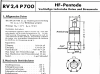
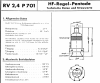
Actually, if you look at the data sheet you'll see that the 701 is the same type of tube as the 700. Both data sheets use the same illustration. You can see the pins sticking out of the side and the top cap.
4P700.png
4P701.png

Thanks to @mhardy6647 for the list of loctal "1v" battery tubes!

As I mentioned, I've used the 1LE3 in a breadboard. It was extremely microphonic but sounded good, although the 2P29L sounded better. I have some of the 3v loctals and at some point I'll probably breadboard something with them. Likely an all loctal amp. Not anytime soon, though.

But, again, to use them you would need to find one that matches the electrical specs of the Russian tubes closely enough that the E6 circuit would work. You would also need to use regular loctal sockets that mount to the top of a chassis. And if you're going to go that far, you can mount any type of socket (not just loctals) and use any type of tube (not only "battery types"). So that it really becomes a DIY build, not a mod of the E6.

IMO, if you really want to get into playing with a variety of tubes you should just start breadboarding and building stuff using point to point wiring, so you can make circuit changes easily.
 
Last edited:
Back
Top Bottom