

You are using an out of date browser. It may not display this or other websites correctly.
You should upgrade or use an alternative browser.
You should upgrade or use an alternative browser.
Nobsound E6 Preamp Uses Directly Heated Tubes
- Thread starter FlaCharlie
- Start date

amcrabb
New Member
I have my pipe cutter on standby. I’m still waiting for my Ebay order to arrive. I purchased the 2J27L as well as the 2P29L tubes. Can anyone confirm if the 2P29L will safely work in the E6?Found some on Epay and pulled the trigger.
I have my pipe cutter on standby. I’m still waiting for my Ebay order to arrive. I purchased the 2J27L as well as the 2P29L tubes. Can anyone confirm if the 2P29L will safely work in the E6?
In the first post FlaCharlie said it should work, but draws about double the heater current. So i'd guess as long as your power supply and the E6 traces are up to it, they should work.
amcrabb
New Member
I’m using a 4000mA psu. I’m not sure what the criterion for a “stout filament supply” are? I thought that might also have to do with the capacitors converting the 5V into 105V. The Nobsound website says:In one of these threads it was said it should work, but draws a bunch more heater current, so as long as your power supply and the E6 traces are up to it, they should work.
- Anode supply voltage: DC 105V (don't touch the socket when E6 is powered)
- Filament cathode supply voltage: DC 2.2V
amcrabb
New Member
I can’t find any documentation on how much of the 5V at 350mA it is sending at 2.2V (at unknown mA) to the filament. I imagine a good portion of the 350mA is being used for the 105V into the ”plate”.
- Input voltage: DC 5V (5.5mm*2.5mm)(>350mA)
- Anode supply voltage: DC 105V (don't touch the socket when E6 is powered)
- Filament cathode supply voltage: DC 2.2V
Last edited:
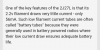
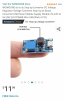
So the E6 had to use something like this to boost the voltage. If you look in between the tube sockets, you can see the top of a small coil's bobbin.
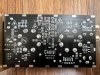
There have to be parts on the bottom of this board.
My E6 should be here Friday. I'll pop it apart and post pics.
There have to be parts on the bottom of this board.
My E6 should be here Friday. I'll pop it apart and post pics.
Attachments
Last edited:

45rpmspinner
Super Member
tone is far better and the microphonics are far less troublesome
Did bass response improve?
In my system it was severely lacking with the chinese tubes.
I also had terrible microphonics with them.
Actually, never heard anything like it before.
In my initial set-up the feedback was so bad that the bell sound kept increasing in volume.
Obviously, I shut it down fast.
No problem [except for the lack of bass] once I cut the amp gain.

FlaCharlie
Super Member
So the E6 had to use something like this to boost the voltage.
My workbench is occupied with a DIY amp project and likely will be for quite a while so I haven't opened up my E6 to take measurements. But I assume the manual is correct that they're using 105v on the plate. Obviously, they're using some type of boost circuit to get that since the input voltage is only 5v.I just took mine apart:
View attachment 2769785
I'm not familiar with these types of boost circuits since I'm mostly into traditional tube circuits that use power transformers. Frankly, I don't really care how they work and I certainly don't plan to try to modify it. Best not to mod something that you don't fully understand.
The little FX preamps run their tubes at abnormally low voltage, which is their biggest limitation. But the plate voltage of 105v would be considered a "normal" voltage for these tubes. That, and the fact that the tubes are directly heated, is what made me want to try the E6. So, if there are no issues with the tube's operating points I don't have any concerns about the PS.
Edit: thanks for posting the pic of the underside of the board. As I expected, it's populated with tiny SMD (surface mount) parts which makes mods nearly impossible unless you have the specialized equipment necessary, including a microscope. Waaay over my head.
As for the possibility of using the 2P29L . . . it would likely be OK but I don't want to recommend it since I haven't tried them yet.I purchased the 2J27L as well as the 2P29L tubes. Can anyone confirm if the 2P29L will safely work in the E6?
The most obvious difference is that the filaments (which run on the same voltage) draw 2x the current. I suppose if someone wants to wing it and plug them in, the thing to pay attention to would be heat. The E6 runs very cool but if you dropped in the 2P29Ls and noticed a significant increase in temperature, I'd pull them out. The tubes themselves wouldn't feel particularly hot but something on the board might get hot, which could cause damage.
I'm sure I'll try some eventually, since I do have them in stock, but I'd prefer to be able to use a meter to see how they affect the voltages. If the filament supply can't handle the extra current, in addition to a significant increase in temperature you would expect that the voltage on the filament would also drop significantly.
That's not to say there might not be other changes to the operating points as the 2P29L (not just the filaments) may draw more or less current and end up with a higher or lower plate voltage as a result. And this might also affect temperature.
But all of this is speculation. Chinese gear sometimes uses parts (resistors and caps, for example) that are run near their limits so they may not be able to handle much additional stress. There is no schematic that I know of and tracing one from a board is not something I've ever tried. Everything I work on and build uses point to point wiring with "normal" sized parts.
And it's not clear what, if any, advantage a 2P29L might offer. The other significantly different spec, besides the filament current, is that it has about half the gain of the stock tube.

drjohnnyfeva
Well-Known Member
I did not take a pic of the bottom, but I did take a pic of the tube before taking the aluminum case off. The easiest way to find the proper orientation for the tube without the case is to mark the side of the tube where the little alignment protrusion is on the aluminum post before removing it completely from the case. You'll notice in the pic that the tube socket has the little notch, align the notch and the mark you made on the tube, and insert. I didn't know how to use a multimeter to find if it I mixed it up, so I followed FlaCharlie's directions in his early posts.
I'm also awaiting for Fla Charlie to clear his bench, because I'd like to experiment with that other tube too. I got my Russian tubes from ebay.
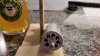
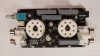
I can't put an arrow on the pic, but you should be able to see the little guiding rail on the aluminum shell and where that aligns into the unit with the small notch in the socket on the side where the volume knob is. Good luck.
I'm really satisfied with how this thing sounds. Glad FlaCharlie found it and shared it.
I'm also awaiting for Fla Charlie to clear his bench, because I'd like to experiment with that other tube too. I got my Russian tubes from ebay.
I can't put an arrow on the pic, but you should be able to see the little guiding rail on the aluminum shell and where that aligns into the unit with the small notch in the socket on the side where the volume knob is. Good luck.
I'm really satisfied with how this thing sounds. Glad FlaCharlie found it and shared it.
amcrabb
New Member
As for the possibility of using the 2P29L . . . it would likely be OK but I don't want to recommend it since I haven't tried them yet.
The most obvious difference is that the filaments (which run on the same voltage) draw 2x the current. I suppose if someone wants to wing it and plug them in, the thing to pay attention to would be heat. The E6 runs very cool but if you dropped in the 2P29Ls and noticed a significant increase in temperature, I'd pull them out. The tubes themselves wouldn't feel particularly hot but something on the board might get hot, which could cause damage.
I'm sure I'll try some eventually, since I do have them in stock, but I'd prefer to be able to use a meter to see how they affect the voltages. If the filament supply can't handle the extra current, in addition to a significant increase in temperature you would expect that the voltage on the filament would also drop significantly.
That's not to say there might not be other changes to the operating points as the 2P29L (not just the filaments) may draw more or less current and end up with a higher or lower plate voltage as a result. And this might also affect temperature.
But all of this is speculation. Chinese gear sometimes uses parts (resistors and caps, for example) that are run near their limits so they may not be able to handle much additional stress. There is no schematic that I know of and tracing one from a board is not something I've ever tried. Everything I work on and build uses point to point wiring with "normal" sized parts.
And it's not clear what, if any, advantage a 2P29L might offer. The other significantly different spec, besides the filament current, is that it has about half the gain of the stock tube.
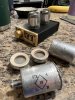
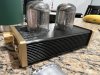
I ordered the 2J27L on Ebay first, but I’m still waiting on them and the 2P29L arrived today. I just decided to wing it. I really appreciate your feedback and cautious advice FlaCharlie! So far, so good with the 2P29L. I have been feeling the bottom of the case periodically to check for noticeable heat. I have only had the unit on with them for a short while, but I don’t notice any more heat than with the stock tubes. As far as performance goes, the sound is similar to the stock tubes, but I might like these a bit more. I will have to listen to them longer to describe them better. Immediately, I want to say they sound fuller, and there is no obvious bass roll-off like I initially noticed with the Chinese 2J27L. The gain is less than the stock tubes like you predicted, but there is still a decent amount of gain; I think the 8dB you mentioned sounds about right. Thanks, again, for all of your advice! And thank you to everyone else for sharing all of your experiences with the E6 as well.
Last edited:
Did bass response improve?
In my system it was severely lacking with the chinese tubes.
I also had terrible microphonics with them.
Actually, never heard anything like it before.
In my initial set-up the feedback was so bad that the bell sound kept increasing in volume.
Obviously, I shut it down fast.
No problem [except for the lack of bass] once I cut the amp gain.
Bass seemed the same. Highs and midrange sounded a lot better.
amcrabb
New Member
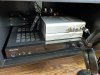
I have a raspberry pi Roon endpoint (Ropieee XL) with three DACs plugged into it. The DAC feeding into the E6 is the E1DA 9038D portable DAC/Headphone amp (ESS Sabre ES9038Q2M based). The 9038D gives the best performance with its output set to 97 out of 100 which ends up at around 2.5V. I like to run the E6 at max volume so that I get the most gain and can hear the effects of the tubes. The E6 is plugged into my Schiit Jotunheim (1st gen) headphone amp/pre-amp. I primarily listen on headphones. My favorites, right now, are the HiFiMan Edition XS. The Jotunheim is also a pre-amp for my Pioneer amp with 20 year old Klipsch 8ohm bookshelf speakers. Most of the time I am listening on the Edition XS. Roon gives me a lot of options to mess with the sound; though, when I am listening through the E6, I mostly just use upsampling and PEQ to match my preferences.FlaCharlie, Redstarjedi and Amcrabb, what other gear are you running?
Source-Nobsound E6-Amp-Speakers ?
Any other gear inline? EQ's or DSP?
Last edited:
amcrabb
New Member
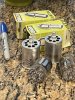
For the last three days I’ve been listening quite a bit to the 2P29L running through the E6. Even though it was warmer, I didn’t notice any excessive heat touching the case of the E6. So I think the 2P29L are a safe option. Ultimately, I have decided that I prefer the sound of the 2J27L regardless if they were Chinese or Soviet made. Initially, when I heard the 2P29L I thought they had a fuller sound than 2J27L which I liked a lot. But after a while, I found the sound to be more fatiguing. It became apparent to me that there was more noise and distortion with the 2P29L. I’m kind of sensitive to the 3rd harmonic; it can make certain instruments sound more interesting, but after a while it starts to get to me. According to Ale at https://www.bartola.co.uk/valves/2016/06/12/2p29l-preamp-and-driver-for-4p1l-pse-amp/, the 2P29L need an additional 70V to the 105V on the anode that the E6 provides in order to perform their best. Maybe the E6 just isn’t doing the 2P29L justice. Having said all that, I still enjoyed listening to them! To me, their tonal response was spot on right away, and I still think they have a fuller sound than the 2J27L. But I really like the delicate, airy sound of the 2J27L. Check out the FFTs here https://www.bartola.co.uk/valves/2017/06/23/2ж27л-2z27l-dht-preamp/. Today, I received shipment of the Soviet made 2J27L. I think these are the tubes I will be keeping in the E6.
Last edited:
FlaCharlie
Super Member
My setup is super simple. I stream via WiFi to an old Apple Airport Express. The Airport Express has a dual purpose audio output jack. It either uses its internal DAC and outputs analog or the same jack can be used to send the digital signal, using an optical cable, to an external DAC. I've just been using the internal DAC, which sounds quite good.FlaCharlie, Redstarjedi and Amcrabb, what other gear are you running?
Source-Nobsound E6-Amp-Speakers ?
Any other gear inline? EQ's or DSP?
From there it goes into the E6 and from the E6 into the amp. Right now I'm back to using the little SE 6BQ5 amp that has no input tubes of its own. I've alternated between that and the Aiyima A07 Class D amp. Speakers are a pair of Axiom M3 Ti mini monitors.
That's it, very basic.
I did put in the Russian tubes but I've just been putting some hours on them playing background music. At some point I'll A-B them with the original Chinese tubes using the same piece of music.
FlaCharlie
Super Member
Thanks for volunteering your E6 as the guinea pig for the 2P29L and for your impressions on the sound. I haven't tried them yet but I'm sure I will.For the last three days I’ve been listening quite a bit to the 2P29L running through the E6. Even though it was warmer, I didn’t notice any excessive heat touching the case of the E6. So I think the 2P29L are a safe option. Ultimately, I have decided that I prefer the sound of the 2J27L regardless if they were Chinese or Soviet made. Initially, when I heard the 2P29L I thought they had a fuller sound than 2J27L which I liked a lot. But after a while, I found the sound to be more fatiguing. It became apparent to me that there was more noise and distortion with the 2P29L. I’m kind of sensitive to the 3rd harmonic; it can make certain instruments sound more interesting, but after a while it starts to get to me. According to Ale at https://www.bartola.co.uk/valves/2016/06/12/2p29l-preamp-and-driver-for-4p1l-pse-amp/, the 2P29L need an additional 70V to the 105V on the anode that the E6 provides in order to perform their best. Maybe the E6 just isn’t doing the 2P29L justice. Having said all that, I still enjoyed listening to them! To me, their tonal response was spot on right away, and I still think they have a fuller sound than the 2J27L. But I really like the delicate, airy sound of the 2J27L. Check out the FFTs here https://www.bartola.co.uk/valves/2017/06/23/2ж27л-2z27l-dht-preamp/. Today, I received shipment of the Soviet made 2J27L. I think these are the tubes I will be keeping in the E6.
As I mentioned in the initial post, the European DIY guys have been experimenting with the various Russian loctal "battery tubes" for quite a while. These guys are all about measurements and, from an engineering standpoint, lower distortion is preferable.
So the operating point he chose for the 2P29L produced the lowest distortion measurements. Another factor to consider is that he was using the 2P29L in an amp and the tube is being used to drive the output tube. In such a situation running the preamp tube at higher current is often desirable, depending on the drive requirements of the particular output tube. So his operating point was also chosen with this in mind.
And if you look at the 2P29L triode curve graph, you will notice that his op points (~170v, 15mA) are right at the maximum plate dissipation of 2.7w, which is indicated by the dotted line.
But numerous alternative operating points could be used and even though the distortion might be a bit higher the difference would be inaudible because the levels of distortion that are being measured are incredibly minute.
I don't routinely draw load lines. I have to re-educate myself on the procedure every time I do. But if you look at the curves he posted you can see that there are many possibilities that don't look to be much different, in terms of linearity, from the operating point that he chose. As he points out, these are very linear tubes.
A linear operating point will have less distortion and, when depicted graphically, it will be at a spot where the distance between the curves is as equal as possible. For example, his operating point puts the grid voltage near the -10v curve and the distance between that and the -5v and -15v curves is very consistent.
But an alternative operating point of 105v at 10mA will put the grid voltage at -5v and the distance between that and the 0v and -10v curves is essentially just as consistent. The difference is that this operation point will provide less drive voltage since it can't swing as far before it hits the 0v curve. If you're driving an output tube, this might (or might not) be a limitation, depending on the drive requirements of the particular output tube.
When used in an external preamp, the difference is much less likely to be an issue. In a stand-alone preamp voltage amplification is more important than current. And, while sophisticated equipment might reveal that distortion at his operating point might be lower, numerous alternative operating points are also extremely linear and differences will not be audible.
Of course, you need to measure in order to see exactly what voltages the 2P29L is seeing in the E6. The operating point (plate voltage, cathode current) is likely totally different from that of the 2J27L because, other than having the same pinout and similar filament requirements, it's a totally different tube.
On a side note, and to maybe put this in perspective . . . here are the triode curves for the 6AK5 that's used in the popular FX preamps.
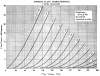
I don't recall the specifics but when I breadboarded it using the stock FX operating points I also drew a load line. The stock operating point is somewhere around 50v and 1mA or so. That puts it way down in the lower left corner where the curves are absolutely horrible in terms of linearity. Yet nobody listens to it and says that it sounds horribly distorted.
amcrabb
New Member
What can I say. I’m a sensitive guy. If I was listening primarily through my speakers I don’t know if I would be able to tell the difference between the 2P29L and the 2J27L. Even when I use different headphones (6XX and DCA Aeon Closed) than my HiFiMan Edition XS, the differences are more subtle; the Edition XS have more energy in the upper treble. After long listening sessions with my favorite headphones even subtle harmonic distortion can get to me. That still didn’t stop me from enjoying the 2P29L for a solid three days. I did really like their fuller sound. I just had to take breaks from time to time. I don’t have any measuring gear, but, empirically, without music playing, I could hear noise sooner with the 2P29L when I would turn up the nob on my headphone amp.Thanks for volunteering your E6 as the guinea pig for the 2P29L and for your impressions on the sound. I haven't tried them yet but I'm sure I will.
As I mentioned in the initial post, the European DIY guys have been experimenting with the various Russian loctal "battery tubes" for quite a while. These guys are all about measurements and, from an engineering standpoint, lower distortion is preferable.
So the operating point he chose for the 2P29L produced the lowest distortion measurements. Another factor to consider is that he was using the 2P29L in an amp and the tube is being used to drive the output tube. In such a situation running the preamp tube at higher current is often desirable, depending on the drive requirements of the particular output tube. So his operating point was also chosen with this in mind.
And if you look at the 2P29L triode curve graph, you will notice that his op points (~170v, 15mA) are right at the maximum plate dissipation of 2.7w, which is indicated by the dotted line.
But numerous alternative operating points could be used and even though the distortion might be a bit higher the difference would be inaudible because the levels of distortion that are being measured are incredibly minute.
I don't routinely draw load lines. I have to re-educate myself on the procedure every time I do. But if you look at the curves he posted you can see that there are many possibilities that don't look to be much different, in terms of linearity, from the operating point that he chose. As he points out, these are very linear tubes.
A linear operating point will have less distortion and, when depicted graphically, it will be at a spot where the distance between the curves is as equal as possible. For example, his operating point puts the grid voltage near the -10v curve and the distance between that and the -5v and -15v curves is very consistent.
But an alternative operating point of 105v at 10mA will put the grid voltage at -5v and the distance between that and the 0v and -10v curves is essentially just as consistent. The difference is that this operation point will provide less drive voltage since it can't swing as far before it hits the 0v curve. If you're driving an output tube, this might (or might not) be a limitation, depending on the drive requirements of the particular output tube.
When used in an external preamp, the difference is much less likely to be an issue. In a stand-alone preamp voltage amplification is more important than current. And, while sophisticated equipment might reveal that distortion at his operating point might be lower, numerous alternative operating points are also extremely linear and differences will not be audible.
Of course, you need to measure in order to see exactly what voltages the 2P29L is seeing in the E6. The operating point (plate voltage, cathode current) is likely totally different from that of the 2J27L because, other than having the same pinout and similar filament requirements, it's a totally different tube.
On a side note, and to maybe put this in perspective . . . here are the triode curves for the 6AK5 that's used in the popular FX preamps.
View attachment 2774121
I don't recall the specifics but when I breadboarded it using the stock FX operating points I also drew a load line. The stock operating point is somewhere around 50v and 1mA or so. That puts it way down in the lower left corner where the curves are absolutely horrible in terms of linearity. Yet nobody listens to it and says that it sounds horribly distorted.
Last edited:
FlaCharlie
Super Member
It's not surprising that listening with headphones might result in different choices than if you use speakers. There are always so many variables that affect what you hear. Everyone has to just go with what works for them in their system.What can I say. I’m a sensitive guy. If I was listening primarily through my speakers I don’t know if I would be able to tell the difference between the 2P29L and the 2J27L. Even when I use different headphones (6XX and DCA Aeon Closed) than my HiFiMan Edition XS, the differences are more subtle; the Edition XS have more energy in the upper treble. After long listening sessions with my favorite headphones even subtle harmonic distortion can get to me. That still didn’t stop me from enjoying the 2P29L for a solid three days. I did really like their fuller sound. I just had to take breaks from time to time. I don’t have any measuring gear, but, empirically, without music playing, I could hear noise sooner with the 2P29L when I would turn up the nob on my headphone amp.
My point was simply that there isn't just one set of operating conditions that can reasonably be used with 2P29Ls, or any other tube. I don't have a scope or any way to measure distortion either. Two tube types might be equally linear but that doesn't mean I will find them equally listenable.