

You are using an out of date browser. It may not display this or other websites correctly.
You should upgrade or use an alternative browser.
You should upgrade or use an alternative browser.
Ohm Acoustics "Upgrades". I Stand Corrected.
- Thread starter MetalDaze
- Start date


@Ohighway I agree I see no cardboard used as mounting plate in your pic but I do see is a bunch of hot glue and a hot mess going on there!Looks like sloppy DIY work vs. a professional?? speaker maker

Ha.... well truth be known the glue on the one just shown was a bead of some type of clear adhesive run along the bottom to help ensure the tweeter stays stabilized. The tweeter is mounted via double back sticky tape. Makes great contact at the back of the tweeter, but along the side of the tweeter it's only a small fraction of the small magnet that makes contact with the tape. So I put some adhesive along the bottom of the modied tweeter faceplate.
But yes as I've mentioned here and other threads, the rest looks frightful. At least some other pictures I've seen they actually cut their cardboard neatly/symmetrically, ditto foam blocks. Here's what the rest of mine looks like.



Donkey Karma
Super Member
Ha.... well truth be known the glue on the one just shown was a bead of some type of clear adhesive run along the bottom to help ensure the tweeter stays stabilized. The tweeter is mounted via double back sticky tape. Makes great contact at the back of the tweeter, but along the side of the tweeter it's only a small fraction of the small magnet that makes contact with the tape. So I put some adhesive along the bottom of the modied tweeter faceplate.
But yes as I've mentioned here and other threads, the rest looks frightful. At least some other pictures I've seen they actually cut their cardboard neatly/symmetrically, ditto foam blocks. Here's what the rest of mine looks like.
View attachment 2163750
View attachment 2163751
Smoke settling here, cardboard used for mounting, defracting, both... I will happily concede and retract my statement of the ultimate use of the Frankenberry cereal box cutouts. Point being its in there.
Most of us(atleast who I have shared thoughts with) that have been inside those Schrödinger's cat boxes/mystery cans seem to agree that the craftsmanship/quality of work appears to be well below where it should.
I would also be more than happy to give them a personal pass on any of it IF they weren't intentionally trying to mislead their customers and also appearently trying to goon them on the back end.
Free country, nobody has been forced to buy their products. Most who have seem to love them..
I give them credit for their run in a industry with the survival rate about on par with that of the Chinese River Dolphin.
The fact that the odds are so stacked against you and there are now so many alternatives for the buyer. Maybe trying to support your customers not extort them, be honest about what your actually selling, and supply excellent customer service would put on the right side of Darwin's chalkboard?

joep38
New Member
1) John Strohbeen had a problem when he purchased Ohm Acoustics from Martin Gersten: the Ohm F speaker was not profitable to build and sell. Strohbeen's challenge was to come up with a replacement for the Ohm F that had at least some sonic affinity with it, but could make money. The Ohm F was striking acoustically. It did not sound like other speakers. It also made a powerful impression visually. It looks like something out a science fiction film. Strohbeen's Ohm F substitute was visually unimpressive. It looks like an ordinary woofer turned downward with an ordinary tweeter placed on top. Purely visual comparison to the previous Ohm F was inevitable to the detriment of the new speaker. Solution: hide the woofer and tweeter inside of a perforated metal can. What you cannot see will not discourage you from purchase. The can is not really there to protect the guts of the speaker. It is there to hide the guts. Is this dishonest? I do not think so. It is an adaptation to the tendency most people have to judge speaker sound by speaker looks.
2) David L. Clark (RIP) gave the Ohm Walsh 5 extremely high praise in a June 1988 Audio magazine review. He described the speaker as "a masterpiece of the speaker makers art" or words to that effect. In his 2003 Audio Critic #29 review of the Ohm Walsh 200, Don Keele was very positive in his evaluation. Both Clark and Keele were accomplished audio scientists and engineers, not BS artists and snake oil salesmen. Praise from them counts for something. So even if the post-Ohm F speakers look like crap when you remove the metal cans, at least some genuine experts think that the sound they produce is admirable.
3) The Ohm speakers may have merit even if the business practices of John Strohbeen - as described in this thread - leave much to be desired. Need some help in restoring old Ohm speakers? If you contact Ohm, you might get lucky. You might not. You are likely better off looking for help elsewhere.
4) To the best of my knowledge, only one company other than Ohm has pursued the Walsh idea commercially: German Physiks, with their extremely costly DDD speakers. The fact that only one company has picked up the original Ohm / Walsh approach to speaker building - when the Walsh patent expired in 1986 - is not encouraging.
Happy listening (and tinkering),
Joel Dickman
2) David L. Clark (RIP) gave the Ohm Walsh 5 extremely high praise in a June 1988 Audio magazine review. He described the speaker as "a masterpiece of the speaker makers art" or words to that effect. In his 2003 Audio Critic #29 review of the Ohm Walsh 200, Don Keele was very positive in his evaluation. Both Clark and Keele were accomplished audio scientists and engineers, not BS artists and snake oil salesmen. Praise from them counts for something. So even if the post-Ohm F speakers look like crap when you remove the metal cans, at least some genuine experts think that the sound they produce is admirable.
3) The Ohm speakers may have merit even if the business practices of John Strohbeen - as described in this thread - leave much to be desired. Need some help in restoring old Ohm speakers? If you contact Ohm, you might get lucky. You might not. You are likely better off looking for help elsewhere.
4) To the best of my knowledge, only one company other than Ohm has pursued the Walsh idea commercially: German Physiks, with their extremely costly DDD speakers. The fact that only one company has picked up the original Ohm / Walsh approach to speaker building - when the Walsh patent expired in 1986 - is not encouraging.
Happy listening (and tinkering),
Joel Dickman
Donkey Karma
Super Member
1) John Strohbeen had a problem when he purchased Ohm Acoustics from Martin Gersten: the Ohm F speaker was not profitable to build and sell. Strohbeen's challenge was to come up with a replacement for the Ohm F that had at least some sonic affinity with it, but could make money. The Ohm F was striking acoustically. It did not sound like other speakers. It also made a powerful impression visually. It looks like something out a science fiction film. Strohbeen's Ohm F substitute was visually unimpressive. It looks like an ordinary woofer turned downward with an ordinary tweeter placed on top. Purely visual comparison to the previous Ohm F was inevitable to the detriment of the new speaker. Solution: hide the woofer and tweeter inside of a perforated metal can. What you cannot see will not discourage you from purchase. The can is not really there to protect the guts of the speaker. It is there to hide the guts. Is this dishonest? I do not think so. It is an adaptation to the tendency most people have to judge speaker sound by speaker looks.
2) David L. Clark (RIP) gave the Ohm Walsh 5 extremely high praise in a June 1988 Audio magazine review. He described the speaker as "a masterpiece of the speaker makers art" or words to that effect. In his 2003 Audio Critic #29 review of the Ohm Walsh 200, Don Keele was very positive in his evaluation. Both Clark and Keele were accomplished audio scientists and engineers, not BS artists and snake oil salesmen. Praise from them counts for something. So even if the post-Ohm F speakers look like crap when you remove the metal cans, at least some genuine experts think that the sound they produce is admirable.
3) The Ohm speakers may have merit even if the business practices of John Strohbeen - as described in this thread - leave much to be desired. Need some help in restoring old Ohm speakers? If you contact Ohm, you might get lucky. You might not. You are likely better off looking for help elsewhere.
4) To the best of my knowledge, only one company other than Ohm has pursued the Walsh idea commercially: German Physiks, with their extremely costly DDD speakers. The fact that only one company has picked up the original Ohm / Walsh approach to speaker building - when the Walsh patent expired in 1986 - is not encouraging.
Happy listening (and tinkering),
Joel Dickman
Well put. Said with respect.
Again the take, to my thinking also valid.
The name "walsh".
The misleading art work.
The cans "specifically" produced to withhold from view the actual parts used.
Tell ppl what they are buying. Let them decide.
5s sound good. F's were captivating.
Customers are business partners. Not tools.
In the end all should be able to be said without malice. Points on both sides.
And if you like the way they sound, know what your getting into... Go BIG and enjoy the listen!

Last edited:

MetalDaze
Active Member
I don't open my voice messages frequently since I get an abundance of spam calls.
But cleaning out my inbox I got a voicemail from Ohm. Non specific, but asking for a call back. Which I have not done.
Another forum member posted about his Walsh 4''s In another thread. He Called the factory which ended in a pleasant sounding and organized conversation. Including what may need to be repaired, pricing and an estimated time of completion with where they are now in current production and ordering.
Could it be that someone saw this singular complaint, which evolved into a rather large outcry of a thread?
I have no malice in this. I vented this here simply because I came to the end of my patience and willingness to be cast aside as a customer (Or so it seemed).
I realize this thread came off track for a few posts. Not calling anyone out, but not what I expected as a reaction from the forum.
However if any good can come from this, I hope it's already showing by the interaction and response our fellow forum member got when inquiring about repairing his Walsh 4 cans.
But cleaning out my inbox I got a voicemail from Ohm. Non specific, but asking for a call back. Which I have not done.
Another forum member posted about his Walsh 4''s In another thread. He Called the factory which ended in a pleasant sounding and organized conversation. Including what may need to be repaired, pricing and an estimated time of completion with where they are now in current production and ordering.
Could it be that someone saw this singular complaint, which evolved into a rather large outcry of a thread?
I have no malice in this. I vented this here simply because I came to the end of my patience and willingness to be cast aside as a customer (Or so it seemed).
I realize this thread came off track for a few posts. Not calling anyone out, but not what I expected as a reaction from the forum.
However if any good can come from this, I hope it's already showing by the interaction and response our fellow forum member got when inquiring about repairing his Walsh 4 cans.
joep38
New Member
You are better off not being familiar with the process by which certain things are produced: legislation, computer software, & sausage. Likewise, looking under the metal can of Ohm Acoustics speakers risks spoiling your enjoyment of the music they create.
Happy listening (and tinkering),
Joel Dickman
Happy listening (and tinkering),
Joel Dickman

This is an interesting read indeed. I bought my Walsh 4's in 1986; they were a store demo built in 1984. Ohm refoamed them in 1998 sine they were bottoming out on my then newly acquired Titanic CD. They sounded great when they came back from the refoam. Over the years I've spoken and emailed John and more recently Evan. They've both been very courteous and professional in my dealings with them. But the sound has degraded over the past couple of years and I really cannot afford to upgrade them to the 3000 series for $2750 CDN including shipping. I have over the years criticized the internal construction, specifically the 'Tufflex' sound dampening material which tends to disintegrate over time (15-20 years); this 'Tufflex' is also used on the rear of the cone and is replaced when refoaming. At the time I first purchased these I had Infinity Monitor Jr.'s, I'd heard the F's in a store in the early 80's and they were unreal, just phenomenal. I wasn't shopping for speakers when I purchased the 4's I was browsing for records when in the background I heard at a low volume this incredibly accurate sound of piano & guitar; strolled over to see what was making this very accurate music and it was the Ohms. I didn't care what the technology was or how or where they were made, I bought them because they sounded right. Most likely I'll get them refoamed again.

Donkey Karma
Super Member
I might be interested in an Ohm product if they used a Walsh driver in anything. They don't. So, I'm not interested.
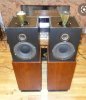
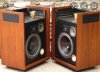
The older Infinites that used actual Walsh drivers are very nice. Worth the effort and easy to work on.
Had both of these models inside out at one point or another. Worth the look.
Attachments
joep38
New Member
HHR is another company.
I would be wary of dealings with Dale Harder of HHR. Harder claims that he is many hundreds of years old and is an alien soul from the Pleiades star cluster. Not a promising person to advance the Walsh speaker idea.
Then again, if he really IS an alien soul from the Pleiades, maybe he can incorporate some futuristic alien technology into his Walsh speaker copies.
Happy listening (and tinkering),
Joel Dickman


THF2
Where we are going, there are no roads
My $.02...
JohnS is a brilliant person who is more of a visionary than a business man. While I do not disagree or challenge any of the claims made in this thread, it does not warrant any personal attacks against him.
I know him and yes, he can be stand-off ish but, he is a kind man that should not be attacked.
I sold many of the Ohm products. Some were good. Others were terrific. And still others were crap.
I as others have said would like them to succeed.
complain about customer service as I know that this is important to those in this community and has caused inconvenience and expense but, please do not get personal on JS.
JohnS is a brilliant person who is more of a visionary than a business man. While I do not disagree or challenge any of the claims made in this thread, it does not warrant any personal attacks against him.
I know him and yes, he can be stand-off ish but, he is a kind man that should not be attacked.
I sold many of the Ohm products. Some were good. Others were terrific. And still others were crap.
I as others have said would like them to succeed.
complain about customer service as I know that this is important to those in this community and has caused inconvenience and expense but, please do not get personal on JS.
Last edited:

robobxman
Roll me away tonight...
My $.02...
JohnS is a brilliant person who is more of a visionary than a business man. While I do not disagree or challenge any of the claims made in this thread, it does not warrant any personal attacks against him.
I know him and yes, he can be stand-off ish but, he is a kind man that should not be attacked.
I sold many of the Ohm products. Some were good. Others were terrific. And still others were crap.
I as others have said would like them to succeed.
complain about customer service as I know that this is important to those in this community and has caused inconvenience and expense but, please do not get personal on JS.
Thank you for saying this. I have a friend who visited John in Brooklyn - my friend even brought his wife along - and John could not have been nicer. I myself have had good experiences with John and Evan. In fact, I just shipped my Walsh 4 cans to be refoamed and will be sure to report back with my customer service impressions. If things go well, I want readers of this thread to appreciate the counterpoint.
MetalDaze
Active Member
Thank you for saying this. I have a friend who visited John in Brooklyn - my friend even brought his wife along - and John could not have been nicer. I myself have had good experiences with John and Evan. In fact, I just shipped my Walsh 4 cans to be refoamed and will be sure to report back with my customer service impressions. If things go well, I want readers of this thread to appreciate the counterpoint.
Agreed. In all my visits and conversations with both John and Evan, they were always very polite and happy to talk shop and life with me.
This thread began and is still pertaining to the holes in their customer service as well as the lack of quality control I've experienced on multiple occasions. With a sort of "Ho-Hum" response from Ohm - which is unacceptable for a transactional business accord.
I have not & do not condone the personal jabs taken here by some participants in the thread. I've said it multiple times now. If there are any mods reading - can someone redact some posts which seem to be upsetting other forum members?
I'd like to keep this thread somewhat on track. It seems to be taking a late nose dive.
MetalDaze
Active Member
Why are people sending them drivers to be refoamed? These are traditional woofers that anyone with refoaming skill could do for considerably less money.
C'mon now man. You act as if it's your money being spent. I was unhappy with my most recent interaction, and posted about it.
That's it. I tagged you in my first post bc I felt you had a point, where I couldn't see one before this thread.
I'm not trying to single handedly take down their business from behind a keyboard.
It's nobody's business what a customer does with their belongings.
And although my experience has been less than stellar, I only stated my claim - not actively deter people from their company.