• The move to the new server is done. There are some software and database maintenance updates in process. This has us passing the hat around to help out. We appreciate any donations. Seriously, even a dollar helps. The payment page may be found here - https://www.audiokarma.org/support.html

Once more Sansui transistor substitutions

Sansui transistor substitution collection

Hi, I've been busy figuring out transistor substitutions for my AU20K. While at it I also went through BA-2000 and AU-717 service manuals to find other transistors used originally in these things and searched the forum. The info is scattered in many many threads, maybe there already is a collection of these somewhere but I didn't find it. Meanwhile I have found many more references for other Sansui model's transistors and suitable substitutions in the forum. They are also listed below. If there was any doubt in the discussion about suitability I didn't add them to the list.

Here is the list I gathered from AK Exclusively Sansui -section. So, its not an AU20K list but rather a general Sansui list. If you spot an error please point it out, I'll update the list. Also if you know better or more suitable substitutions or transistors which are missing from this list please let us know. All additional info like if the pin order differs from original, case type, ideal usage etc. is welcome.

If there is more than one Substitution it means there is more than one option. Ie. somebody on this forum has suggested or even used these types.

Note: the suffixes might be suspect on some of these so double check from the specsheet what they mean. These transistors are all something that has been suggested by reputable forum users but frankly I don't know what most of the suffixes mean or if they are the optimal for the use. Please recheck before using and use at your own risk.

Note 2: complementary pairs have not been marked. If you need them in pairs google for the datasheet or search Mouser etc. vendor sites for the the substitute and you will find the datasheet. It usually says what the correct complementary pair is.


Original ---- Substitution(s)
2SA561 --- KSA733C (C-suffix= collector center)
2SA562 --- BC327
2SA606/2SC959 --- NTE129MCP (Complementary pair product #)
2SA706 --- KSA1381ESTU, BD136
2SA726 --- KSA992FTA/-FBU, BC560
2SA733 --- KSA733C (C= collector center)
2SA745 --- MJ15004G, upgrade: MJ21193
2SA747 --- MJ21193G (for example AU-9900/11000 output)
2SA750 --- KSA992FBU
2SA818 --- KSA1381 (pin order!), KSA1142, (2SA0914?)
2SA839 --- MJE15035, 2SC1669
2SA847 --- KSA992
2SA850 --- KSA1013, KSA992
2SA896 --- KSA1381ESTU (pin order!)
2SA899 --- KSA1142, KSA1220AYS, KSA1381
2SA908 --- MJ21193G, MJ21195G (for example AU-20K output)
2SA914 --- KSA1142, KSA1381
2SA917 --- 2N5400 (pin order!)
2SA939 --- KSA1381, KSA1220AY
2SA958 --- ??
2SA968 --- MJE15033
2SA981 -> MJ21193G and
2sc2261 -> MJ21194G
2SA1105 --- 2SA1695
2SA1106 --- 2SA1695 (avail. fr. Digikey), NJW1302G

2SB327 --- KSA1220A
2SB507 --- MJE15033G
2SB507(E,F) --- KSA1010Y
2SB526 --- MJE15033
2SB527 --- MJE15033, KSA1220
2SB528 --- 2SA1837 (TO220, fully insulated case)
2SB536 --- KSA1304Y, MJE15033G
2SB537 --- MJE15031G
2SB545(A) --- MJ21193G

2SC458 --- 2SC2240, 2SC1345
2SC735 --- BC337
2SC871 --- 2SC2240, KSC1845, or even BC549C or BC550C (pin out differences!)
2SC945 --- KSC945C (C= collector center)
2SC983 --- KSC1845
2SC1116 --- MJ21194G (for example AU-9900/11000 output)
2SC1124 --- KSC3503DSTU (pin order!)
2SC1313 --- KSC1845FTA (Must install them backwards of original 2SC1313 which is BCE the KSC1845FTA is ECB.)
2SC1364 --- KSC945C (best if used on protection board), KSC2690 (for more demanding use)
2SC1400 --- KSC1845
2SC1402 --- MJ21194
2SC1403A --- MJ15003G, upgrade MJ21194
2SC1585 --- MJ21194G, MJ21196G (for example AU-20K output)
2SC1628 --- KSC3503 (pin order!), (2SC1953?)
2SC1669 --- MJE15034
2SC1708 --- KSC1845
2SC1735 --- KSC2383, KSC1845
2SC1811 --- KSC3503ESTU
2SC1904 --- KSC3503, KSC2690AY
2SC1951 --- ZTX694B
2SC1953 --- KSC2682, KSC3503
2SC959/2SA606 --- NTE129MCP (Complementary pair product #)
2SC1983 --- TIP112F or KSD1273Q
2SC2071 --- KSC3503, KSC2690AY
2SC2238 --- MJE15032
2SC2261 -> MJ21194G
2SC2580 --- 2SC4468
2SC2581 --- 2SC4468 (avail. fr. Digikey), NJW3281G

2SD188(A) --- MJ21194G
2SD247 --- MJ15003G
2SD313(E,F) --- KSC2334Y
2SD356 --- MJE15032
2SD357 --- KSC2690A, KSC2073
2SD381 --- KSC3296Y, MJE15032
2SD382 --- MJE15030G, MJE15032


------------------------

Here is some diode and zener subs I've seen mentioned while collecting transistors:

Diodes/rectifiers:
10D1 --- 1N5392, 1N5393
10D2 --- 1N5392, 1N5393
30D2 --- 1N5402G
1S1588 --- 1S2473, 1N4148
1S2473 ---- 1N4148, 1N4149
VD1212 --- 2pcs of 1N4148 connected in series
1S1850 --- MUR1620CTG (TO220) - or use 1N5393G (200V 1.5A) or 2A03 (200V/2A) to make your own Common Cathode -diode pack
1S1850R --- MUR1620CTRG (TO220) - or use 1N5393G (200V 1.5A) or 2A03 (200V/2A) to make your own Common Anode -diode pack

Zeners
EQB01-22 --- BZV85-C22 or 1N4748A
RD-13A --- TZX13A-TR
RD-15E --- ??? Maybe 1N5245BTR, comments?
RD-22E --- ??? Maybe 1N5251BTR, Comments?


I've noticed I myself have difficulty sometimes finding this thread so here are some search terms: substitution, substitutions, subs, substitute.

Is there one for the C1345 transitors
 
Is there one for the C1345 transitors
It depends a bit 'where' it is being used (PSU? Driver board? etc...), but in the vast majority of cases the KSC1845 will do it, and in the remainder KSC1815 is the one. (this is due mainly to the higher 'collector current capability' of the KSC1815, which might be an issue depending on where the original was/is used).
 
2sc536e leaking badly,Sound break
In my opinion it is not correct to say a 'transistor is leaking' unless it has a resistance reading from Collector to Emitter, and is thus passing current (leaking) when it should not be.

With Germanium transistors 'Leakage' was very common and almost an 'expected' characteristic. However, with Silicon transistors this is virtually unheard of unless the transistor is actually faulty, with open or shorted junction(s) or low or non existent hFE, or some other characteristic that is out of limits.
 
Last edited:
i think i need to add another article about the sound of transistors. because i feel each transistor has a different characteristic sound so that people can choose the right place to put them. and it is mostly related to the frequency mhz and hfe. for example high frequency mhz i feel that it gives a faster sound, the music feels faster each instrument sound is played faster ends faster.
 
i think i need to add another article about the sound of transistors.
If you do, you'll be entering highly contentious territory, so I wish you good luck. I personally don't think transistors 'have a sound' - circuit arrangements are designed to achieve a circuit specification, and transistors are chosen for their characteristics to achieve that specification. I'll agree that fT and hfe are important characteristics and replacing transistors with lower spec' substitutes can cause a change in the presentation of sound, but that doesn't mean that 'in and of themselves' transistors 'have a sound'. You also touch on things regarding 'bandwidth' and 'slew rate' and maybe 'voicing' these parameters have a complex relationship, which I don't fully understand, so I'll be interested to see what light you can shed on this. ;)
 
Last edited:
i think i need to add another article about the sound of transistors. because i feel each transistor has a different characteristic sound so that people can choose the right place to put them. and it is mostly related to the frequency mhz and hfe. for example high frequency mhz i feel that it gives a faster sound, the music feels faster each instrument sound is played faster ends faster.
Looking forward to reading your article!
 
i think i need to add another article about the sound of transistors. because i feel each transistor has a different characteristic sound so that people can choose the right place to put them. and it is mostly related to the frequency mhz and hfe. for example high frequency mhz i feel that it gives a faster sound, the music feels faster each instrument sound is played faster ends faster.
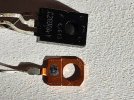
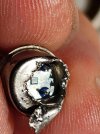
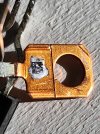
maybe just need 1 starting article and need many people to contribute their opinions, each person gives their own experience on 1 or 2 types of transistors. Here is the image of ksc2690 and 2sc959
2sc959 gives a thicker, warmer sound than ksc2690 50% if compared by switching left and right channels. If compared in terms of technical parameters, ksc2690 has higher index in all aspects
462574617_1811792062959173_5703341715470145103_n.jpg462563647_9152383651441361_7647254740747102364_n.jpg462571734_1227555511866108_4715641824041883624_n.jpg
 

Attachments

  • 462574617_1811792062959173_5703341715470145103_n.jpg
    462574617_1811792062959173_5703341715470145103_n.jpg
    136.3 KB · Views: 3
  • 462563647_9152383651441361_7647254740747102364_n.jpg
    462563647_9152383651441361_7647254740747102364_n.jpg
    105.5 KB · Views: 3
If you do, you'll be entering highly contentious territory, so I wish you good luck. I personally don't think transistors 'have a sound' - circuit arrangements are designed to achieve a circuit specification, and transistors are chosen for their characteristics to achieve that specification. I'll agree that fT and hfe are important characteristics and replacing transistors with lower spec' substitutes can cause a change in the presentation of sound, but that doesn't mean that 'in and of themselves' transistors 'have a sound'. You also touch on things regarding 'bandwidth' and 'slew rate' and maybe 'voicing' these parameters have a complex relationship, which I don't fully understand, so I'll be interested to see what light you can shed on this. ;)
try it and feel it. you will believe it is true. it is the same as carbon resistors, carbon film and metal film resistors. it is also a very controversial issue. i am not an expert in amp electronics but i spend time feeling each resistor each transistor. unlike the repairmen who just know how to replace the whole thing. to make the amp work regardless of how it sounds. i try to mount it on one channel first and listen to see if there is any difference. and then i mount it on 2 channels and listen for 3 days to 1 week. maybe on 2 channels it gives a more harmonious sound, more pleasant to listen to, maybe it will be harder to listen to. , too shrill or too low... i believe that repairmen can never do that. because they don't have much time. so they think it doesn't happen. and they don't believe it
 
maybe just need 1 starting article and need many people to contribute their opinions, each person gives their own experience on 1 or 2 types of transistors. Here is the image of ksc2690 and 2sc959
2sc959 gives a thicker, warmer sound than ksc2690 50% if compared by switching left and right channels. If compared in terms of technical parameters, ksc2690 has higher index in all aspects
View attachment 3340292View attachment 3340296View attachment 3340298
i just ordered 2sc959 unused old stock. for $17.50 + shipping is $21 for 2. i also saw them selling a whole set to replace the f1180 driver circuit with all ksc2690 and 1120 o_O , and the sales are so much, it's heartbreaking for those who bought it and replaced it. the sales of that product are also the number of people who lost the sansui sound. but they don't know:(
 
2SA606/2SC959 --- NTE129MCP (Complementary pair product #)
i just got the toshiba tta004 and ttc004. from digikey. i tested it in place of the 2sa606 and 2sc959. the sound completely changed. the mids are back and level with the treble and bass. the mids are neither bright nor thick. average. more instrumental. feels like a cheap rechargeable speaker from aliexpress. i took it apart and threw it in a corner. probably just to replace power supplies. luckily i only bought 14 in total
 
For the above problem, I am happy Sansui provided this midrange control knob on my AU888 amp.

My 2 cents:

There are many ways to influence the sound just by psychoacoustics, which includes reading internet forum info, ranging from transistor or solder sound to whatever some golden ear writes one should hear in the pricy cable domain.

Now, the golden ears, the forum techs, and anybody in between on this forum usually have one thing in common: they are getting old, their ears are deteriorating, but their writing abilities seem in no way affected.:biggrin:

This leads to any comment about how somethings sounds to a "hear nor there" to me, and as a tech I am happy to ignore it all.:)
 
At first I thought like you. It was funny when I read those golden ear articles. But one day I accidentally broke a resistor. But in that emergency I found a resistor with the right value, and unfortunately there was only one. And I had to attach it to one side. Then I don't know why I accidentally turned the balance knob a lot on that channel. Maybe while tightening the screw to tighten the pad holding the volume knob, I accidentally turned it with pliers. And then when I turned on the machine, I heard the sound was so strange today. It was so catchy. This song and this high-pitched part were what made me lean forward. Sometimes I sang along. From that day on, every time I replaced anything, I replaced one side first. And listened to it many times. Sometimes it took me 30 minutes to hear the difference. I also have to use a cable to convert from a 1-channel DAC to a 2-channel DAC to make the sound even, because there are some songs that have different sounds in terms of instruments on the left and right channels. Spend a few hours trying out what you haven't felt yet, if you discover something new like me. It will be very interesting. Because there are many people who can feel it, not just the golden ears. I am an amateur, but I can still feel it. I think a technician should find out why he can't feel what a normal person can feel. There are some technicians who have "oscilloscope" syndrome. It's not strange for people who have it.
there are many reasons why a technician doesn't know.
1. because if they know that the replacement loses the sound signature, it will be difficult to do the job. because they won't find the oem parts to replace it.
2. just make it work and not have trouble during the warranty period. it doesn't matter if it sounds as good as before.
3. there are technicians who know it but they have to pretend to say no because of the above 2 reasons. and they don't want it to spread further. don't want people to know more because of the above 2 reasons. and they always put it out when they come across it on the way.
4. there are technicians who are just a certificate. their skills are even worse than a normal DIYer. they are bad at everything but they have a technician certificate:biggrin:
 
Last edited:
For the above problem, I am happy Sansui provided this midrange control knob on my AU888 amp.

My 2 cents:

There are many ways to influence the sound just by psychoacoustics, which includes reading internet forum info, ranging from transistor or solder sound to whatever some golden ear writes one should hear in the pricy cable domain.

Now, the golden ears, the forum techs, and anybody in between on this forum usually have one thing in common: they are getting old, their ears are deteriorating, but their writing abilities seem in no way affected.:biggrin:

This leads to any comment about how somethings sounds to a "hear nor there" to me, and as a tech I am happy to ignore it all.:)
I never use the bass treble or mid knobs on the tone board. because "sound imaging" type players never like that. :biggrin:
 
Back
Top Bottom