• The move to the new server is done. There are some software and database maintenance updates in process. This has us passing the hat around to help out. We appreciate any donations. Seriously, even a dollar helps. The payment page may be found here - https://www.audiokarma.org/support.html

Onkyo tx-4500 vs tx-5000 or tx-6500 vs tx-7000

Here is an interesting article written on a discussion forum by one of the designers of the TX2500 and TX4500. I have the TX4500 and have also purchased the M505 power amp and P303 pre amp (in transit) as per this article. I hope it sheds more light on the early Onkyo's.

Hi guys,

Maybe I can answer some of the questions regarding Onkyo. I started working for Onkyo in 1975 right out of college with a degree in electrical engineering. Originally when I started there, their product line up was the TX220, TX330, TX440, TX560, TX670, and TS500 and a bunch of speakers that were AR wanna be's. To be blunt, the TX220, TX330, and the TX440 used power modules with limited slew rate and frequency response and were dull and sounded pretty awful. I don't know if you know the history of Onkyo but in Japan, they were known as Osaka Onkyo and started as a speaker manufacturer. They originally came to USA as a joint venture between themselves and Mitsubishi and failed miserably at selling Onkyo speakers. Mitsubishi and Onkyo parted ways after about 6 months after I was hired and Onkyo started concentrating on achieving better sounding receivers and tuners. The first attempt was the Onkyo T-4055 tuner which had an awesome review in Absolute Sound. After the review came out I remember that we never could keep the tuners in stock. When we were ready to start conceiving the new receiver line, we came up with a different look than the last product line as it became known as the TX2500 and TX4500 (We didn't have enough budget to develop a complete line then). It's hard to imagine but this was Onkyo's last ditch effort to survive in the audio world and they put all their marbles into these 2 receivers. Onkyo was definitely ahead of its time because they realized the importance of a good phono preamplifier even when their older separates were made (A-7022 and A-7055). If you compare the transient response of the phono preamps in those units to their peers, it was immediately obvious. In our earlier test, we would inject a pulse followed by a since wave and check the dilation of the pulse into the sine wave and the phono preamps were outstanding! The TX2500 and TX4500 incorporated these design parameters so their phono section sounded remarkably good (This is preHolman's white paper of phono preamp TIM). We also upgraded the analog tuners. The TX2500 had the servo lock tuning and the TX4500 had the quartz lock tuning. The quartz lock tuning worked remarkably well and the tuning accuracy was only limited to the quartz time base in each unit. Keep in mind that this is predigital tuner days for receivers. Then we concentrated on the power amplifiers. The power amplifier section of the receivers rivaled Harman Kardon's receivers by achieving low tilt figures for the low frequency and high slew rate for the upper frequency response without sacrificing hum and noise like HK did. If there's any negative comment regarding their product line was that the tone control/line preamp amp lacked the same type of clarity and transient response. The success of TX2500 and TX4500 catapulted Onkyo into the audio world and then the development of the TX1500 and TX8500 began to create a full line of receivers. A few years later, the Mark II series of the original line was introduced but it was a variation on a theme of the original product line. Another interesting product line that you might be able see on ebay is their original Integra line. If you ever have a chance, check out the P303 preamp and M505 power amp. They both have unique circuitry and cosmetics that might interest the collectors. The is literally a straight line preamp with a MC stage with gain. The front panel is sparse but the sonic characteristic is phenom. The M505 (105 wpc) is a bit underpowered but the transient response is awesome. As years progressed, Onkyo because less interested in the sonics and more in profits and I left the company (I think in 1978) to pursue product development in separates with Nikko to revamp the Beta, Gamma, and Alpha separates. As of now, I still have a TS-500 Quad Receiver, T-4055 tuner, TX4500 MkII, and a broken TX4500. I'm looking for a new glass front panel for the TX4500 because the shipper that sent the TX4500 packed it so poorly that it damaged the glass. I still have sentimental attachments to alot of their product because it brings back great memories of the earlier stages of my career in the audio industry. Someday when I actually can find time, I'd like to restore the TX4500 and redesign the tone control circuitry to match the rest of the receiver.

Wtih warmest regards,

Tom Ishimoto
Northridge Electronics

Has anyone ever bench tested the TX-5000 to see if thr RMS rating is higher then adertised? Because i remember mine banging 4 15" woofers HARD years and years ago haha good times
 
With them being “sleepers no more”? They demand full dollars now and worthy of every penny towards resto.
(Time is mostly always a friend to quality.)
 
Has anyone ever bench tested the TX-5000 to see if thr RMS rating is higher then adertised? Because i remember mine banging 4 15" woofers HARD years and years ago haha good times

Everything made after 1974 has a bench number well above their rating because a bench number is frequently a single channel, 1kHz tone done to 1% THD which is roughly clipping. The spec number was:
1) amp preconditioned for a hour at 1/3 power the highest heat producing power level
2) RMS power
3) both channels driven
4) specified frequency response, generally 20-20k but small units might have a higher number on the low end such as 40-20k
5) specified load, 4 or 8 Ohms, generally
6) specified THD

Modern "bench" numbers will not reproduce those operating conditions and leave most bench numbers 10-25% higher than spec.

I call foul when folks state a bench number as rated output without saying it is a bench number but if it is stated as a bench number it is all good. I can easily figure out what actual comparable numbers will be whether bench or spec numbers are given.

Since the bench number and the spec number are just test results they only serve as a guide. We listen to music not test tones and that is a different demand on an amp. FTTc specs were just to put everyone on the same page. Older spec sheets sometimes have 5 or 6 power ratings. Confusing to the consumer back then.
 
Last edited:
The TX-5000 was my first ever receiver with balls about 17 years ago i just won the bid on Ebay for one in great shape i own a bunch of high powered stuff but will bring back a ton of memories seeing this old WIDE monster again! has anyone ever bench tested the TX-5000 to see if the RMS rating is higher then advertised? Because i remember this thing banging 4 15" Woofers HARD great memories cant wait to see it again! :)
Welcome to ak OHFJ.

Banging 4-15s has a lot to do with the sensitivity of the speaker. Many 15s are designed to party hardy with not a lot of power. Bang away.
 
Bench #s mean little to me. What they sound like is the true judgement. If I like the sound, it is okay with me, even if it is Bose. I have 4 different Onks, TX-55?, TX-4500, TX-4500II, TX-8500MkII. The TX-55 is the Integra model that is silver and as ugly as an old boot, but it sounds great and was the center of my Bedroom system for many years until I came upon a Sansui Eight. The 8500MkII has recently returned from a rehab by blhagstrom. It had the digital readout and the tuner scale. The digital dropped out before I bought it and I had bl disconnect it from power as I never listen to radio. It looks better now. Talk about sound, I can easily say that the Big Onk is the nicest sounding receiver I have ever has. I have used it with numerous speakers and never came upon one that the 8500 did not like. It is now feeding my TimeWindows, but they have developed a tweeter issue and are taken apart for a while. Both 4500's are in need of service, but were great performers and I would recommend them to anyone. They have seriously good tuners. When they were working when I lived about 40 miles West of Orlando, I was able to pickup Orlando and Tampa stations with ease. The 6500 and 2500 are both known for exceptional tuners.
 
Old thread but what the hell. I agree with most of what everyone has said. The #500 MKII's are my favorites, they all sound wonderful. I have sold the TOTL Sansui and Marantz gear off and kept the MK II's.
 
Another vote for these being great receivers. Just picked up a 6500 MKii and wow...I had just restored a SX-950 a bit ago and this amp is easily at the same build quality. Might have to keep this one.
 
Wow, great thread and old, I was such a youngster back then but my Onkyo's still get some desk time and they still work great. Unfortunately my link is broken but plug it into the Wayback Machine and there's still some good stuff on that website.
 
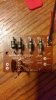
I made a big boo-boo i picked up a wounded TX-5000 an just happened to have a set of 100v 15,000uf caps sitting around for a different project i put them in and blame a blue flash it burnt or shorted the little board that sends power off in every direction is this because the caps are to powerful? I mean i thought the voltage didn't matter they just can hold more juice... What happened here guys i about cried! Any thought?
 
I made a big boo-boo i picked up a wounded TX-5000 an just happened to have a set of 100v 15,000uf caps sitting around for a different project i put them in and blame a blue flash it burnt or shorted the little board that sends power off in every direction is this because the caps are to powerful? I mean i thought the voltage didn't matter they just can hold more juice... What happened here guys i about cried! Any thought?
Not a big fan of using a DBT huh.....you need to change that.

"Too powerful" - what does that even mean? Did you check to see if you put them in backwards or left a wire dangling? You obviously shorted something out.
 
I dont no if you guys have seen the inside of this unit but holy moly they tie everything directly to the caps! about 9 wires for ground and 9 power wires give or take i didn't count i will admit what happened was when i was putting the second cap in and wiring it up one of the wires slipt and touched the other terminal and it made a spark and right then and there i had a bad feeling i contiuned to wire it up and when i was done i hit the power but and bam FUSE toasted and mind you this unit only has the 1 fuse i played with it for awhile it blew fues after fuse i then started digging deeper i tied unhooking the amp channels it did not fix the issue so i kept looking i unscrewed that little board and on the back side it was burnt badly this had to had happened when i hit the power button the first time that one little short from the cap could have caused this much damage? Mind you this unit worked before i did the swap but the caps were leaking i also wonder if the caps came pre charged at 100v and if that caused the issue or if the short killed partially killed the transformer? I found another board on eBay but im scared that it will just burn this new board... This receiver looks BRAND new i bought this amp because it was the first real receiver i got when i was 15 years old!! Im now 32 and dieing of cancer i wanted my amp back and i wanted it to perform at its best now shes dead please help :( P.S. *Sad guy here in Maine*
 

Attachments

  • 46522695_2320133141556152_1922877366888038400_n.jpg
    46522695_2320133141556152_1922877366888038400_n.jpg
    36.2 KB · Views: 32
  • 46765688_2165546780363821_2533136543988580352_n.jpg
    46765688_2165546780363821_2533136543988580352_n.jpg
    46.7 KB · Views: 29
Not a big fan of using a DBT huh.....you need to change that. "What do you mean by that what is DBT???"
Read around a little more on AK...a Dim Bulb Tester. Prevents the exact situation you're in and is mentioned in 99% of restore threads on here.
Might want to get this one to someone who's done this a couple times.
 
Love these older Onkyo's. My first ever Goodwill find was an A-10 with "no sound". It was missing the jumpers on the back. I still have that one and it remains a favorite. Since then I have acquired a TX-2500 which is fantastic, and two TX-8500's which are just impressive in every way. My son is currently disturbing the peace at his dorm with one of the 8500's and a pair of ADS 1290's. He claims it's a good way to meet neighbors.

Love the Oinkers!
 
Awww I have two tx-82's, no stk's Liked my better half's so much I bought another and two orig new remotes. Lttle puppies sound nice and I don't play them enough and don't take up much shelf space. Tv rca option hook up, too. Love onkyo's but hate their service manuals. lol..among many.
bink
 
I realize this thread started years ago, so FWIW -- I just bought a minty Onkyo T-4055 and searched high-and-low online for the Absolute Sound shootout referenced by a number of enthusiasts here and elsewhere. I finally found someone who had the magazine in question, 1975 Volume 2 #6, and who kindly sent me page photos of the remarks for the Onkyo. The tuner shootout also featured the Pioneer TX-9100; Harman Kardon 14; Harman Kardon 15; Yamaha CT-800; Yamah CT-7000; Sequerra Model 1; Sherwood SEL 300; McIntosh MR-78; McIntosh MX-110; Marantz 10B.

Here is the text of the T-4055. (I do not have images or text for the other tuners.)
++++++
Why did I end up testing the Onkyo (apronounced ON-KEE-O)? Actually, my arm was twisted a little bit by my local Atlantis Sound dealer. He kept insisting the unit was great and that for only $239 was, in fact, a steal. Well, friends, he was right. The 4055 stole the show with its performance by pulling in all but one of the 35 stations that the top three could pull in and it did it with similar quieting and lack of interference. This tuner is pleasingly styled and appears to be of moderately good construction.

Naturally, it has only the barest of features, but they are really the only ones that the average listener might need. Unless one lives near a WFMT, I can see no reason to waste any more money on a tuner; the Onkyo is by far the best buy of this tuner review and it even has an AM section if you can stand it. (AM, that is). One of the Onkyos I tested (I tried three to be sure because I couldn't believe it was so good) had a minor defect that caused the tuner to have very poor separation (only 15 dB). In my simulated FM station test, the good Onkyo had a slight coloration in the lower midrange causing a male voice to sound just a shade deeper and warmer than really should be. The upper midrange was also a shade veiled but very smooth. Most of our listening panel members (eight of them) preferred the euphonics of this tuner over the sound of the deadly accurate ones. Peace!
 
Back
Top Bottom