• The move to the new server is done. There are some software and database maintenance updates in process. This has us passing the hat around to help out. We appreciate any donations. Seriously, even a dollar helps. The payment page may be found here - https://www.audiokarma.org/support.html

Passive subwoofer vs. Active subwoofer

SweetRolls

New Member
Hi, I have a budget of $100 and I'm wanting to add some bass to my PC setup. I'm trying to decide whether I should go for a used passive subwoofer, or a used active one. The idea of a passive subwoofer really appeals to me because of the flexibility. With an active sub, I would be limited to the built-in amp, which may or may not be good quality. I have an active Sony sub that runs out of steam too early. Therefore, I'm strongly considering a passive subwoofer, especially since they're so cheap. Are there any downsides to passive subs that I should be aware of?
 
Register to hide this ad
I gave up on powered subs many years ago because it’s just a matter of time before the built in amp craps out. I’ve had Klipsch, Polk Audio, M&K, and Velodyne. All have suffered failed amplifiers. Now I only use passive subs(2) and an outboard amplifier. No more problems. What do you plan on powering a passive sub with? Is that included in your $100 budget?
 
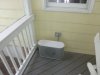
True passive subs are not that common. This outdoor Marcato passive sub has no amplifier of it's own but shares the same amp that powers the main speakers. The wall plug power cable goes to a fountain.

P8260002.jpeg
 
Last edited:
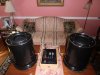
Some might classify these bucket sub as passive but unlike the Marcato having their own dedicated outboard amp ( in my way of thinking ) makes them active.

P5080061.jpeg
 
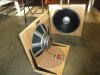
It can be done with some easy diy. I salvaged these Sansui woofers from the curb and with the low pass filter they can be powered by any amp that might be collecting dust. An older AV receiver worked great.

View attachment 2085576

But how well do they do low deep bass? Depending on your taste in music, a low pass filter and a woofer in an open baffle may not do it.
I've tried powered Subs and have settled on passive subs with a nice honking amp. Generally larger woofer (15s and 18s), but the right 12s can be good.
I guess it depends on your PC setup and what you use it for, and where.

Edit: 16 inch woofers - very cool - could not tell that from the pix!
 
Last edited:
But how well do they do low deep bass? Depending on your taste in music, a low pass filter and a woofer in an open baffle may not do it.
I've tried powered Subs and have settled on passive subs with a nice honking amp. Generally larger woofer (15s and 18s), but the right 12s can be good.

Those are 16 inch woofers which easily cover 40 hz and most recorded music doesn't go that low. What's missing is the ear popping room pressurization, visceral impact and the ability for bass to travel through walls waking your sleeping wife and the neighbors next door. The advantage of OB bass is that it's more natural sounding and accurate than box bass.
 
If the driver/s and amplifier don’t share the same housing then those are passive subs.

The problem with that definition is there's no distinction between the truly passive sub which derives it's power from the same amp that powers the main speakers and the sub that's powered by it's own outboard plate amp.
 
There are a few subs out there that have pass thrus for the main speakers. The economic and easy solution.

A truly passive sub like my Marcato has four speaker input terminals ( connected from the single main amp ) and eight output terminals ( connected to the stereo speakers ). The Marcato receives it's power from the single main amp as it's parasitic and then shares that same power with the two main stereo speakers. It's crossover point is fixed and not adjustable. Some of the early passive subs used the same configuration.
 
Ive never had issues with active subwoofers and I still have my original PSB sub which is going on 15 + years without any issues. Sony, Polk, etc, the mass market stuff is crap and are one note boomers. If you go active which I recommend, then look at Rythmik, SVS, HSU, Paradigm, or Outlaw subs.
 
Last edited:
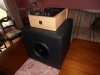
This is a Parts Express kit sub. The plans called for the plate amp to be mounted within the sub box. I elected to make a simple frame for the plate amp so it could be used externally and placed on the rack with other gear with connection to the sub via speaker wire. That way the sub doesn't have to be near a power outlet and if the plate amp died I'd only have to replace it. The other advantage is that it's easier to connect and power two 8 ohm subs from a single plate amp as the power output is almost doubled.

P7300001.jpeg
 
A truly passive sub like my Marcato has four speaker input terminals ( connected from the single main amp ) and eight output terminals ( connected to the stereo speakers ). The Marcato receives it's power from the single main amp as it's parasitic and then shares that same power with the two main stereo speakers. It's crossover point is fixed and not adjustable. Some of the early passive subs used the same configuration.

yes, but that same sub could have it's own amp while the mains are run full range off another amp. Passive only means it's not active, as in no ability to adjust it's output or low pass setting included with the sub.

I've had both variations, passive I built myself, and passive purchased as a package unit with built in low/high pass like the Canton Plus C.
 
The thing with most powered subs is the Active Xover, if you go with passive and an outboard amp you still need an electronic X-ove

Many amps these days, especially professional ones, come with built-in line level crossover functions.
 
Back
Top Bottom