• The move to the new server is done. There are some software and database maintenance updates in process. This has us passing the hat around to help out. We appreciate any donations. Seriously, even a dollar helps. The payment page may be found here - https://www.audiokarma.org/support.html

Passive subwoofer vs. Active subwoofer

Ah, that is a good point. I have a pair of JVC full-range speakers coming in the mail that I plan to use in my PC setup. At this point, is it even possible for me to get a good subwoofer for under $100, or should I just save my money?

Dayton Audio Sub 1200's from Parts Express, a bit over your budget but a great sub at the price. Not to mention Parts Express customer service is second to none.

Screenshot_20210103-162451.png

currently out of stock, it's that much of a bargain. and I'm sure it's praises sung here haven't hurt either lol.

I've had two for 8yrs without issue. But even if the plate amp did crap out you now have a 12" passive sub you could always attach an amp to.
 
Another option is the Polk PSW10 that can often be had for under 100 dollars. Has speaker level inputs (a must if you are hooking to a receiver that does not have a sub pre-out) and does not sound bad with music.
 
The Parts Express sub is out of stock. Monoprice has an 8" powered sub that works well in smaller rooms and reasonable volumes. It also costs less ($65) than the Dayton Sub800.

I hooked up a buddy who lives up the street with a pair of Dayton B-652 Air's and the Monoprice sub. He is very happy with the sound of the combination.
 
The Parts Express sub is out of stock. Monoprice has an 8" powered sub that works well in smaller rooms and reasonable volumes. It also costs less ($65) than the Dayton Sub800.

I hooked up a buddy who lives up the street with a pair of Dayton B-652 Air's and the Monoprice sub. He is very happy with the sound of the combination.

Those Dayton Air's have also intrigued me, how's the sound quality with the AMT tweeter? I have a pair of B-652's with the polycarbonate dome tweeter, it sounds ok at best.
 
Those Dayton Air's have also intrigued me, how's the sound quality with the AMT tweeter? I have a pair of B-652's with the polycarbonate dome tweeter, it sounds ok at best.

The Airs are little better, and their construction shows it. I'm talking from experience with both the Air bookshelf and tower.
 
I guess we could vote to decide if these are active or passive. :D

View attachment 2086087
If not housed in the same enclosure they are passive. Every speaker or subwoofer requires amplification. My main speakers are powered by the amplifier built into my surround receiver. No one is going to say they are active speakers because the amplifier doesn’t live in the same housing as the speakers and I don’t have to plug in my speakers to an ac outlet. So by that rationale my subwoofers are being powered by an amplifier that resides separate from them by about 20’ of speaker wire. That means the subwoofers are passive. If I attach the amplifier to the subwoofer cabinets then I could call it a powered(active) subwoofer. Separating the amp from the subwoofer drivers is what determines whether it is a passive or active system. The benefits of me using a plate amp that does not live in the same cabinet as the subwoofer driver/s are:
1. Reliability. The plate amplifier is housed in an enclosure that has a grill on the top and on the bottom so cool air can enter the bottom and heat exits the top. It is not subjected to the higher temperatures as when an amplifier is confined to a box using only the aluminum plate as the heat sink.
2. The sub plate amp can reside alongside my receiver which means a very short line level(RCA) cable feeding the signal to the amplifier. I’d rather have 20’ speaker cables than a 20’ line level RCA cable.
3. Flexibility. I use two subwoofers instead of one and they are both powered by the same amplifier. Two subwoofers is always better than one for smoothing out bass response. I can place my subwoofers where they sound best and not limited to placing them where there’s an ac outlet. I can also try different subwoofer drivers using the same amplifier.
 
I gave up on powered subs many years ago because it’s just a matter of time before the built in amp craps out. I’ve had Klipsch, Polk Audio, M&K, and Velodyne. All have suffered failed amplifiers. Now I only use passive subs(2) and an outboard amplifier. No more problems. What do you plan on powering a passive sub with? Is that included in your $100 budget?
Owned my Dayton SB1000 powered amp for 7 yrs now, used every day, not one issue. $119 shipped.
 
If not housed in the same enclosure they are passive. Every speaker or subwoofer requires amplification. My main speakers are powered by the amplifier built into my surround receiver. No one is going to say they are active speakers because the amplifier doesn’t live in the same housing as the speakers and I don’t have to plug in my speakers to an ac outlet. So by that rationale my subwoofers are being powered by an amplifier that resides separate from them by about 20’ of speaker wire. That means the subwoofers are passive. If I attach the amplifier to the subwoofer cabinets then I could call it a powered(active) subwoofer. Separating the amp from the subwoofer drivers is what determines whether it is a passive or active system. The benefits of me using a plate amp that does not live in the same cabinet as the subwoofer driver/s are:
1. Reliability. The plate amplifier is housed in an enclosure that has a grill on the top and on the bottom so cool air can enter the bottom and heat exits the top. It is not subjected to the higher temperatures as when an amplifier is confined to a box using only the aluminum plate as the heat sink.
2. The sub plate amp can reside alongside my receiver which means a very short line level(RCA) cable feeding the signal to the amplifier. I’d rather have 20’ speaker cables than a 20’ line level RCA cable.
3. Flexibility. I use two subwoofers instead of one and they are both powered by the same amplifier. Two subwoofers is always better than one for smoothing out bass response. I can place my subwoofers where they sound best and not limited to placing them where there’s an ac outlet. I can also try different subwoofer drivers using the same amplifier.

I think I'll start referring to my subs as externally active.
 
For me active vs passive is only meaningful when I'm purchasing a subwoofer.
Anything I have cobbled together is just a subwoofer (or bass helper).
 
Those Dayton Air's have also intrigued me, how's the sound quality with the AMT tweeter? I have a pair of B-652's with the polycarbonate dome tweeter, it sounds ok at best.

I have a set of the AIRs. Bought because they were inexpensive and I wanted to check them out and also because I just rebuilt my M&K Volkswoofer (sub) and wanted some small speakers to ply with it. The AIRs are a good little speaker. Very bass shy though. Also pretty cheaply built, very light and lots of thin wood and plastic. That side when used with a good sub and crossed over right they sound pretty darn good.

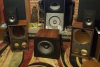
Here is a crappy pic but you can see the AIRs and M&K.

upload_2021-1-4_10-8-25.png
 
So back to the original post. I have never had a really high end sub but have had a lot of medium to cheap ones. IMHO dont even bother if you are not going to go all in and get al least a real good one. Cheap ones end up in a disjointed sound, frustrations and boomy one note bass. Yes, I'm sure there might be some instances where it will work but solid tight MUSICAL sub bass (under 50?) is not as easy to do as it seems. Do some research and then look for the best used sub you can find for $100.

I will also say I strongly prefer SERVO controlled subs for music. It might just be the ones I have come in contact with but they are more musical, have WAY more control, are way easier to integrate because they dont have boomy one note base with tons of overhang. My old rebuilt M&K has a real amp, no plate amp, huge transformer, sealed / braced cab and has so much more control over the driver than the pile of powered none SERVO subs I have here. There is no comparison.

So from my perspective get one of the good inexpensive subs mentioned here (Dayton, Polk etc) and then start saving for a real sub if that's where you want to go.

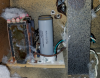
huge transformer and caps, 3/4 trapezoidal cab with big thick bracing, Threaded nutserts... These are things needed to make good solid bass to 30hz or so that is not floppy sounding. You should see the control this thing has over the driver when doing 25hz and lower test tones. It is fascinating to watch. Ever seen 6hz? Crazy stuff.

upload_2021-1-4_10-20-29.png

upload_2021-1-4_10-20-57.png

upload_2021-1-4_10-21-17.png

upload_2021-1-4_10-21-55.png
 
A few screws or hot glue can determine if a sub is passive or active. Interesting.

Interesting, but I'd have to agree.
Same goes for a preamplifier and a power amplifier, vs an integrated amplifier. Or a subwoofer and bookshelf speaker, vs a tower.
 
An active sub comes with a built in amp. A passive sub does not and needs external amplification. Simple.

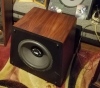
My kit sub came with an amp with mounting options of either internal or external. So where I decided to locate the amp determines if it's active or passive. If it's bolted to the top of the sub it's passive but if it's one inch inside it's active. Simple? :idea:
 
My kit sub came with an amp with mounting options of either internal or external. So where I decided to locate the amp determines if it's active or passive. If it's bolted to the top of the sub it's passive but if it's one inch inside it's active. Simple? :idea:

Too bad it's not a Nelson-designed amplifier, because then I'd say you'd have to actively bolt the active Pass amp, to activate it passing for passive.
 
My kit sub came with an amp with mounting options of either internal or external. So where I decided to locate the amp determines if it's active or passive. If it's bolted to the top of the sub it's passive but if it's one inch inside it's active. Simple? :idea:
I believe that if the amp is attached that makes them powered/active. If it is a separate amplifier that is not attached and can easily be used with a different subwoofer without adapters or modification then the sub is passive.
 
Back
Top Bottom