• The move to the new server is done. There are some software and database maintenance updates in process. This has us passing the hat around to help out. We appreciate any donations. Seriously, even a dollar helps. The payment page may be found here - https://www.audiokarma.org/support.html

PCB trace repair question

Willy6

AK Subscriber
Subscriber
Has anyone used a trace repair silver conductive pen before?If so how well do they work?What are the pros and cons?
 
Register to hide this ad
Hi Willy, I do not know if this will work for your application but I have used this with great results. Back side has adhesive for sticking to the boards. You will have to cut the width down with a razor blade. After applying clean with a Q-tip and some rubbing alcohol lightly before soldering. Make sure you solder both ends to your other traces. It is called copper foil for stain glass. Hobby Lobby should have some. Here is a link for what it looks like.
https://www.hobbylobby.com/Crafts-H...er-Stained-Glass-Foiling-Tape---3-16"/p/21962
 
Hi Willy, I do not know if this will work for your application but I have used this with great results. Back side has adhesive for sticking to the boards. You will have to cut the width down with a razor blade. After applying clean with a Q-tip and some rubbing alcohol lightly before soldering. Make sure you solder both ends to your other traces. It is called copper foil for stain glass. Hobby Lobby should have some. Here is a link for what it looks like.
https://www.hobbylobby.com/Crafts-Hobbies/Glass-Crafting/Stained-Glass-Tools/Copper-Stained-Glass-Foiling-Tape---3-16"/p/21962
I actually have some of that but I was just wondering how well those silver conductive pens work?
 
I haven’t used the pen for repairs so can’t give any first hand experience but I’d worry about thermal cycles causing the new “trace” to open up.
I’ve used the methods described above many times with great results.
 
I've used the Caig CircuitWriter Pen. It has some silver in it and is very conductive. It did/does work, but it's really hard to coax the fluid out. When it does release its conductive fluid, it either came out in a blob, or so thin that it wasn't effective with its small, plastic tip applicator which doesn't meter the flow very well, if at all.

The workaround is to vigorously try and coax a few drops out on a sheet of paper or something, and then coat a toothpick with it and then use that as your applicator. The more times you try and use it for the next project, the harder it becomes to get the fluid out.

I have a lot of fluid left in mine, about 90%, but the pen tip gets dried out on the inside or something, making it ineffective except for depositing a blob on a piece of paper (if you're lucky). I've considered cutting the pen open to save the fluid somehow and put it in a small, sealed container or something.

It's not all bad though. I've used it to bridge broken copper traces as well as carbon traces. The fluid is HQ when it can be extracted. I usually just scrape away the green pcb coating and solder in saved copper-core capacitor leads I've snipped from recaps to bridge those missing gaps in circuit board traces. There are many ways to fix traces, one should never lose hope if accidentally lifting a trace or slicing through one.
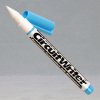

20210216_194009.jpg
 
Has anyone used a trace repair silver conductive pen before?If so how well do they work?What are the pros and cons?
Yes, and like anything else it really depends on your application whether it's a good fit or not.

I used one to fill in a break on a sliding potentiometer. Fortunately the break wasn't in a part of the resistive track the the sliding contacts went over, so it worked well.

For breaks in PCB traces most of us do what @WaynerN recommends.
 
Back
Top Bottom