• The move to the new server is done. There are some software and database maintenance updates in process. This has us passing the hat around to help out. We appreciate any donations. Seriously, even a dollar helps. The payment page may be found here - https://www.audiokarma.org/support.html

Pilot 240 motorboating

James Cox

AK Subscriber
Subscriber
Alright so ive got a real stumper here. I purchased a pilot 240 integrated tube amp a couple of years ago from a kid on clist who had been using it as a bass guitar amp. When i got it one of the powertubes was redplating and there would be a crazy thumping, motorboat sound. This was my first tube amp and i hadnt yet got into the repair side of things so i called my buddy who builds tube guitar amps. He said bring it down and lets recap the power supply and change the coupling caps and see if that helps. He replaced the can caps by using discrete components under the chasis. It worked for about 6 months then i moved it and the soumd started again. Simce then ive replaced every cap and even some resistors. After working great for about a 8 or 9 months the sound is back. It happens about 75% of the time as soon as the tubes warm up. Sometimes it doesn't start until i mess with the volume control. Also the redplating has stopped and i ended up changing the socket that had the redplating tube because it was too loose to retension. Any ideas? When i get in at the shop later i can take pics and maybe even record a sound file if that would help
 
Register to hide this ad
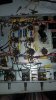
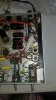
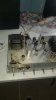
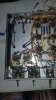
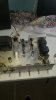
Also it blew the loudness switch when i tried to use it when trying to figure out what was causing the sound. I replaced it and it worked well for a month or 2 and the after unhooking the speakers and moving stuff around the sound started again. Heres some pics
20200909_120725.jpg 20200909_120259.jpg 20200909_120305.jpg 20200909_120303.jpg 20200909_120722.jpg 20200909_120307.jpg
 
Are the output tubes any good? If one of those outputs was cooking red it may be toast, and possibly thats contributing to issues here.

Usually motorboating is power supply problems, but if the caps are new that may not be it. Poor grounding from the new caps to the chassis could do it though. So could significant changes in value of the power supply or coupling caps. Are the old power supply caps completely removed from the circuit? Looks like one may have a wire going to it but I can't quite tell. Pics resize to tiny so its hard to see.
 
You may need some more decoupling from the stages, by adding caps to the PSU rail. Try this, clip another 20mfd/500VDC electrolytic cap parallel to each stage, one-by-one. See if adding to one particular stage reduces the motorboating. That stage is the one that needs more filtering. Maybe, add another similar value cap, in parallel? :idea:
 
the stock design should have been adequately decoupled. I'd verify the cap values reasonably match the original before adding more. No experience with this specific model but I doubt this would have left the factory with that much of an obvious design flaw.
 
Sorry gadget, i missed your comment. The tubes are good. After changing the tubes and caps the redplating stopped but these tubes that are installed now have never redplated. The old filter caps are out of circuit but the ground lugs are still being used. Would that cause a problem?
 
The replacement caps we used for the filter caps are all within 20% of the factory specs and if there was no exact replacement available when rounded up instead of down. Used 47uf instead of 40uf for one of the filter stages but all the rest are pretty much spot on. When i powered it up just now it wouldnt make the noise but i know as soon as i put the cover bavk on and hook.it back up itll start again
 
The replacement caps we used for the filter caps are all within 20% of the factory specs and if there was no exact replacement available when rounded up instead of down. Used 47uf instead of 40uf for one of the filter stages but all the rest are pretty much spot on. When i powered it up just now it wouldnt make the noise but i know as soon as i put the cover bavk on and hook.it back up itll start again

Try the extra cap. See you can temporarily secure & insulate it and place the cover back on.
 
he replacement caps we used for the filter caps are all within 20% of the factory specs and if there was no exact replacement available when rounded up instead of down. Used 47uf instead of 40uf for one of the filter stages but all the rest are pretty much spot on.

ok, that should be fine. Just wanted to make sure it wasn't a huge change from original. Original tolerance was usually at least 20% anyway. I have occasionally seen where cathode caps or coupling caps get bumped to excessively huge values trying to get more bass response and that can cause stability problems too.

recycled ground lugs is fine, just wanted to verify the + lugs weren't still connected. Also good deal on the never-roasted tubes. Just wanted to make sure there weren't any obvious easy things to look at.

honestly new power supply and coupling caps are where I would have started with the problems you had too. Those issues are classic bad cap symptoms.

might be worth doing some in-circuit checks on resistors to see if any are way out. I found a bunch in my Pilot SA-260, mostly the 2w carbon resistors in the power supply.
 
I always thought id have to remove the resistor from the circuit to get an accurate reading. Can i check the resistors while they are still connected? Im fairly new to all this. Ive completed 4 or 5 rebuilds on vintage tube stuff but im still learning the theory behind everything.
 
See now heres the frustrating part is now i cant get it to make the noise but when it does it comepletly overpowers the music and usually happens at start up. It will usually go up to 7 or 8 months at a time and then the noise will start and itll do it for a few days then go back to normal. I just dont understand what could be happening thats so intermittent like that. I have a friend that wants to buy the amp from me but i dont want to sell it unless i can be sure its not going to start making this noise again
 
Alright, there it goes! So i decided to let it warm up for a min, then turned the volume just a bit to where i could just barely hear the music. It played like that for about a min or so, then i when i turned the volume up just a bit the noise started again. It seems like if it doesnt happen upon start up its good until i touch the volume or balance controls.
 
I always thought id have to remove the resistor from the circuit to get an accurate reading. Can i check the resistors while they are still connected? Im fairly new to all this. Ive completed 4 or 5 rebuilds on vintage tube stuff but im still learning the theory behind everything.

No. You need to pull one leg to get an accurate resistance reading.
 
Alright, there it goes! So i decided to let it warm up for a min, then turned the volume just a bit to where i could just barely hear the music. It played like that for about a min or so, then i when i turned the volume up just a bit the noise started again. It seems like if it doesnt happen upon start up its good until i touch the volume or balance controls.

Check the grounding points of those pots to the chassis. You may have a cold solder. Are the threaded nuts tight onto the chassis?

Are the internal chassis connections to the volume and balance pots coax cables? Or simple single or multi-stranded wire? May need coax to avoid stray EMF signals getting into the input/gain stages.
 
I always thought id have to remove the resistor from the circuit to get an accurate reading. Can i check the resistors while they are still connected?

Depends on where the resistor is. Many will read just fine in circuit. Anything across the resistor will make it read low, and resistors almost always fail high in value. If it reads high out of spec in circuit, its bad. If it reads low or weird, then one end has to come out. With stuff connected to tubes, effectively one end isn't connected to anything since the elements in a tube are not physically tied to anything inside the bottle.
 
Its just simple multistrand wire running from the pots. Ill try tightening the nuts amd look for grounding issues and see where that gets me.
 
Alright so i tested some resistors and they all seem ti be within spec. The ground connections seem good too. Is it possible this could be a bad output transformer? Ive never had one go bad so not sure what it sounds like. Ill take a video of the noise and post a link here to see what everyone thinks
 
heres a link to a short video i made showing the sound. I have a 20uf 500v cap on the way to see if adding capacitance helps at all. The only tube i havnt changed is the rectifier but i dont think a failing rectifier would make that kind of noise.
 
Back
Top Bottom