• The move to the new server is done. There are some software and database maintenance updates in process. This has us passing the hat around to help out. We appreciate any donations. Seriously, even a dollar helps. The payment page may be found here - https://www.audiokarma.org/support.html

Pioneer SX-980 Protection Relay Kicking Out

Yes, it does. The whole ground plug thing seems a little silly, considering the ground wire and the neutral wire are both tied to the same buss bar in the breaker panel.

The function of the Neutral and Ground are intended to be different. Neutral carries the return current flow from the Hot side, Ground is a safety function keeping everything at earth ground potential so its case/chassis is at 0 voltage related to the world around the user.

Just a refresher: When I originally suspected the AC power, I subbed in a 20vac wall wart for the 21vac supply from the receiver. The wall wart was plugged into the same outlet as the receiver, but the relay cycling never happened while using it - the relay engaged normally. So, when considering that my incoming power might be coming through an AFCI, why would using a different transformer make any difference when plugged into the same source as the receiver's transformer? Things that make you go hmmmm.....

Loading/distortion on the SX-980 transformer secondary side would not be present on a different transformer. Hmmmm . . . :dunno:
Maybe the problem is not in the Protection circuit, but elsewhere in the amp and the relay cycling is a symptom.
 
Last edited:
The function of the Neutral and Ground are intended to be different. Neutral carries the return current flow from the Hot side, Ground is a safety function keeping everything at erth ground potential so its case/chassis is at 0 voltage related to the world around the user.


Loading/distortion on the SX-980 transformer secondary side would not be present on a different transformer. Hmmmm . . . :dunno:
Maybe the problem is not in the Protection circuit, but elsewhere in the amp and the relay cycling is a symptom.
I got as far as pulling FU3 & FU4 while monitoring the 21vac supply with the scope. Pulling either or both of those two fuses cleared up the clipping of the AC signal I was seeing before. Which lead me to the +65vdc/-65vdc supply as possibly being a suspect. About that time, I received my second SX-980 and I checked the AC voltages coming from that same secondary winding - all clipped, just like on the original receiver. A little too coincidental for me, so I didn't investigate the power supply any further. The second SX-980 relay cycles, same as my original, so I'm getting it cleaned up, de-oxed, and re-lamped and am hoping to have it home today to see how it behaves plugged in there. That will tell me a lot about what's going on.

Still waiting to find out about whether we have AFCIs installed here - I'm betting we do. I did some investigating into AFCIs. Not a lot of info available on them, but what I did see leads me to believe they likely have no intrusion on incoming power - the sensors I saw were all passive. But, who knows?
 
just for fun try putting the cover back on the unit if you haven't tried already .
This isn't exactly apples to apples but, after I put the cover on my second SX-980, I plugged it in and turned it on. The relay was still cycling. Which is okay, because the next stop for this receiver is my house, where I'll find out of the relay cycles there or not. Interestingly, before I put on the bottom plate and top cover, I plugged in my second receiver to verify the newly-installed LED lamps were working correctly and the relay latched and stayed engaged, as normal. WTF - this one has never done this before, except for being run through the DBT - same as my original receiver. Out of curiosity, I unplugged it and reversed the power plug in the socket - the relay started cycling. I turned the power plug around three more times - every time getting the same result - relay cycling on one plug orientation and latching using the other plug orientation. And then, with the covers on, cycling regardless of plug orientation.

I'm assuming covers on really didn't make any difference - this problem is so on the verge of being present (or not), that it's almost impossible to make yes/no calls with the flaky results I've gotten. All I know for sure is that the receivers work using the DBT. My first receiver also works without the DBT, but protection board resistor R11 bypassed and R12 removed (didn't try this on the second receiver - that one's going home with me to see if it operates correctly on my house current).
 
I think it's safe to say I have a definitive result. I brought my second SX-980 home last night, which had just been at the shop with the relay cycling. It's kinda funny - I didn't even bother taking it out of the truck, and plugged it in right there in the passenger seat using an extension cord ran from the garage. The relay latched and stayed that way - cool. So I put the receiver on my garage workbench (I'm working on re-siding part of the garage), grabbed some decent speakers and let it play for a good two hours - no problems at all. I'll run it some more through the weekend, just to be sure.

In the mean time, the original receiver will get the Frankenstein protection board replaced with a spare, untouched board. I don't have wire-wrapping tools, and am not sure I'd want to do that, anyway, due to the amount of wire it would use up - and the leads are short-enough as it is. So, I plan to solder the wires onto the protection board pins. I'll solder on the upper end of the pin, so I stay away from the other end that's soldered to the board trace. I've got some forceps I can use as a heat sink, as well. Once that's done, I'll use the DBT, since that seems to remove my funky power issues (for whatever reason), to test the receiver. On Friday, I'll replace the power supply board Q1, Q4 & Q5 per Mark the Fixer's recommendations, re-test it, put it together and take it home for the official power test there.

I'd really like to bring one of the two SX-980s back to the shop and see what can be done about the power issue. I'd like some resolve on this, so if others on AK register the same relay cycling complaint, they can be reliably informed that they might have an incoming power problem. Hopefully that can be pinpointed to the use of an AFCI in the circuit path. I need to find out if AFCIs are being used and if mine can be temporarily (or permanently) changed out to a regular breaker. If that's not possible, I might go as far as purchasing one to try in my breaker box at home. I beilieve Square D is used here - I want to stick with the same brand.

A note on the second SX-980 receiver: I was very surprised on what a low--mileage receiver this seemed to be. No heat marks on the power supply board from the heat-sinked transistors. And, most surprisingly, I was able to remove the three dial lamp sockets, replace the lamps with LEDs, then re-insert the sockets without breaking the plastic tabs on the sockets - pretty rare for these not to be brittle and already broken.

 
I got the protection board soldered in. Powered the receiver up with the DBT connected to verify operation. Works okay. Then, just for fun, I plugged the receiver directly into the outlet. Working just fine for about an hour so far - another WTF. We'll see how long it runs like this. Normally I've seen no relay cycling when plugging in first thing in the morning - usually on a Monday. But it usually only lasts a couple hours at most. Anyway, the protection board soldering went okay - the insulation on a couple of the wires shrunk back more than I liked, but they'll be fine.

This the spare protection board that hasn't had any work done to it. I did temporarily connect this board up to the receiver several times through the relay cycling ordeal to make sure I had done anything detrimental to the Frankenstein board. Every time I connected this board up, the relay would cycle on it, as well. Until now, anyway - this just gets stranger and stranger.

I've discovered the relay contacts aren't real great on this spare protection board. I'm hoping I can easily remove the cover and apply a little DeOxit to them.
20180927_102118 (Small).jpg

Edit: After about a 3-hour runtime, the protection relay started cycling, again. I was actually relieved. The bad incoming power theory still stands.
 
Last edited:
use some heat shrink over the leads before you solder, it helps with the insulation wicking back

Search the threads i recall someone having a similar issue with AC line and a 1280 iirc
 
just been thinking about what might be the problem with the utility power supply .. i wondered if it was a 3 phase incoming supply . just an academic thought .
 
use some heat shrink over the leads before you solder, it helps with the insulation wicking back

Search the threads i recall someone having a similar issue with AC line and a 1280 iirc
Thanks for the tip! I'll try that next time around.

RedK9258 posted this link - probably the one you're thinking of?
http://audiokarma.net/forums/index.php?threads/issue-with-pioneer-sx-1280-on-afci-circuit.770793/
This thread ended up without a specific resolution - he had the receiver repaired by a local shop, but nothing more definitive than that. If there was something replaced in his receiver to stop the relay cycling, I'll be damned if I can say what it was. I would have to re-read the thread but the only thing I know of that will cause that problem is the loss of AC to the protection board while the other DC supplies to it remain steady. So, if he blew that particular fuse between the time he had the receiver at the location with the AFCI and the location with a regular breaker, that would cause the relay cycling to continue, even though the receiver was brought back to the location where it originally worked. I dunno - it's an incomplete case. I would like to bring this thread to a conclusion so others can benefit from some finality.
 
just been thinking about what might be the problem with the utility power supply .. i wondered if it was a 3 phase incoming supply . just an academic thought .
I'd say it's very likely we have three-phase power in the building - there's several exhaust blowers in the upper level for ventilation of the labs, plus larger heat pump motors for heat/chill water circulation in the building. I'd like to borrow a spare AFCI breaker from here and install it in my square D box in one of my outbuildings at home and see how the receivers behave when ran through it.
 
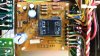
I replaced Q1, Q4 & Q5 on the power supply board of my original SX-980 with Mark the Fixer's recommended replacements. Remounted the power supply board and got everything inside buttoned up. Before putting the bottom cover, I decided to take a non-standard approach to alleviating the problem of flaky protection relay contacts. From the traces on the bottom of the protection board, I determined which end of the relay the contacts were in, then drilled two small holes in the relay cover, which just allowed the DeOxit straw to go through. I applied a couple squirts, then used compressed air in one of the drilled holes, leaving the other one as sort of an exhaust port. I cleaned and sealed both holes shut with 3M trim & emblem adhesive.20180928_090014 (Small).jpg

I figured I had nothing to lose - if it doesn't work, I needed to replace the relay, anyway. Works just fine, now - I don't have to bump the volume control to get audio going. BTW, I did rule out the pots and switches as being the source of the problem - just a slight tap on the relay case would give me sound.

The cover is back on with the receiver connected up to DBT. Working fine. I'll bring it home today and make sure (hopefully) it works on line power there. I'd love to get to the bottom of this relay cycling issue in my shop at work. I'd like to either have the AFCI breaker replaced with a regular breaker that feeds my shop outelts or plug in an AFCI breaker at home to see if it makes a difference there. I'll post any relevant results I get back.

I'd like to take this opportunity to thank all those who offered advice during this ordeal. Your knowledge of receiver electronics is simply indispensable! I know your time is valuable, which makes your contributions here even more appreciated. A special thanks to Merlynski, who has been in there swinging at this problem from the get-go! I learned a ton! Twelve pages-worth! And thanks to Audiokarma for hosting this great source for knowledge!
 
Those DEC relays they used are problematic for sure, esp if the coil current is low.
Arc fault breakers are no good (trip too easy) for a shop, they are intended for bedrooms where kids stick metal crap into outlets. :-)
 
Those DEC relays they used are problematic for sure, esp if the coil current is low.
Arc fault breakers are no good (trip too easy) for a shop, they are intended for bedrooms where kids stick metal crap into outlets. :)
I'm told the AFCIs are local code for new construction - but for what kind of new construction, I'm not sure. I never stuck any metal objects into outlets when I was a kid, but I do remember wiring a 115vac plug for a dead short, not knowing much of anything about anything, then handing it to my electricity-unknowing grandma, who dutifully pushed it into her kitchen receptacle. This was followed by an immediate BANG at the outlet, as the pennies she likely had stuck in her fuse box conducted perfectly and fried my handiwork in two. No burns, luckily. Just a surprised and trying-not-to-be-pissed-off-at-a-six-year-old grandma!
 
am thinking phases out of balance combined with the breaker .. just a thought ... am just learning about those afci breakers ..https://en.wikipedia.org/wiki/Arc-fault_circuit_interrupter
i dont know what to make of this only tie in i see with the unit is the AC sensing .
"AFCIs do not detect low line voltage. Low line voltage can cause electromechanical relays to repeatedly turn off and on. If current is flowing through the load contacts it causes arcing across the contacts as they open. The arcing can oxidize, pit and melt the contacts. This process can increase the contact resistance, superheat the relay and lead to fires. Power fault circuit interrupters are designed to prevent fires from low voltage across loads.[citation needed]"
 
am thinking phases out of balance combined with the breaker .. just a thought ... am just learning about those afci breakers ..https://en.wikipedia.org/wiki/Arc-fault_circuit_interrupter
i dont know what to make of this only tie in i see with the unit is the AC sensing .
"AFCIs do not detect low line voltage. Low line voltage can cause electromechanical relays to repeatedly turn off and on. If current is flowing through the load contacts it causes arcing across the contacts as they open. The arcing can oxidize, pit and melt the contacts. This process can increase the contact resistance, superheat the relay and lead to fires. Power fault circuit interrupters are designed to prevent fires from low voltage across loads.[citation needed]"
Interesting. I was looking at the internal operation of AFCIs (or trying to), but I couldn't find specific information - like a schematic. Only block diagrams.

On another note, I brought home my original SX-980 that I worked on for a couple months during this whole ordeal. It, like my other SX-980, had the relay cycling today at work before I brought it home. I plugged it in here and ran it for about three hours with no problems at all - sounds nice. Sooo, we've reached a milestone in the quest for answers to the cycling relay. It's definitely input power-related. I intend to keep going with this and drill down to the root cause. So far it's: Relay cycling? Connect it up to a DBT and see if it goes away.
 
i have also tried to find inherent faults with the afci by searching the google . i have come to the conclusion this problem as yet is not a recognised fault . i expect trying an afci at home will give some direction to go in .. i cant help thinking the phases are out of balance most of the time though .. i wondered if you could easily plug in on a different phase ?
 
Not sure. I'm waiting for the electrician to show up in my building do I can run all this by him. I'm not familiar-enough with building power to know if switching phases is an easy task. But, like you said, dropping a AFCI in my breaker box at home would reveal a lot. Maybe I should start a GoFundMe account for a $35 AFCI breaker.
 
i thought you could borrow the one that is on the suspect line .
If I could get into the electrical room with the breaker panels, I'd do it myself. But, since I can't, I'll have to slum and ask somebody to get me in there. The electrician is a pretty good ****, so I don't think getting access/breaker changed will be too much of a problem. Or, he could grab me a spare breaker if there's one laying around in there.

In the mean time, I'm working on a Realistic STA-2080 with a distorted right channel and a weak left channel. I posted on AK about it - I was looking for common problem areas that might save me slugging through that compressed and grainy schematic. Yuk.
 
Back
Top Bottom