• The move to the new server is done. There are some software and database maintenance updates in process. This has us passing the hat around to help out. We appreciate any donations. Seriously, even a dollar helps. The payment page may be found here - https://www.audiokarma.org/support.html

Post your photography!!

Before getting another lens that you think will solve some problem, it's worthwhile to use a depth of field calculator to compare your present lens at its closest distance to the new lens at the new distance you intend to use it at to reduce the amount of cropping. It's good to know the depth of field as well as the crop, in case you don't like the trade-off.
 
Before getting another lens that you think will solve some problem, it's worthwhile to use a depth of field calculator to compare your present lens at its closest distance to the new lens at the new distance you intend to use it at to reduce the amount of cropping. It's good to know the depth of field as well as the crop, in case you don't like the trade-off.

I've been shooting macro for a while now, so shallow DoF is just part of the reality of this type of photography.

But, after doing some research, that Laowa 180mm macro isn't a good choice for shooting bugs/bees as I want to do. It has a unique dual mode AF where it only will AF down to a certain distance (30cm to 1.5 meters), then it's manual. Not what I want. It's a very good lens, and very reasonably priced too. I like the other Laowa lenses I have (2X and 2.5-5X), but there's no point in buying this one. Those are manual focus lenses and won't work for bugs so well. They could be used, but the success rate would be low. Well, lower than AF, which isn't great either.

I have a Raynox DCR-150 macro lens I use on my macro tube setup and decided to try that on the end of my 70-300 G. That means I can't mount the flash ring on the end of the lens, so I mounted the flash bracket that came with the Godox MF12 flash dental kit on my camera. It's a bit unwieldy, and will take some work to get used to it. I think I'll be able to swing the flashes in closer to the lens to reduce the leverage they apply. Should be able to reduce the power required by the flashes by doing that as well. When shooting in continuous mode, at high power (1 to 1/2) the flashes can't keep up with the exposure rate.

i-KwFtRBs-5K.jpg


I took some test shots in my apartment, and it's going to be a challenge using this setup. DoF is short, probably just under .2" (5mm).

Here are a few test shots.

i-Gz9nGpC-5K.jpg


i-6hXKM4n-5K.jpg


I took the diffusers off because they really increase the flash power required. I might need to come up with another diffuser I cobble together. The exoskeleton on insects might reflect too much light. Bees won't be quite as bad, but the potential to blow out areas is there.

My A7R IVa isn't the best choice for this type of photography either, but it's good enough.

 
I've been shooting macro for a while now, so shallow DoF is just part of the reality of this type of photography.

But, after doing some research, that Laowa 180mm macro isn't a good choice for shooting bugs/bees as I want to do. It has a unique dual mode AF where it only will AF down to a certain distance (30cm to 1.5 meters), then it's manual. Not what I want. It's a very good lens, and very reasonably priced too. I like the other Laowa lenses I have (2X and 2.5-5X), but there's no point in buying this one. Those are manual focus lenses and won't work for bugs so well. They could be used, but the success rate would be low. Well, lower than AF, which isn't great either.

I have a Raynox DCR-150 macro lens I use on my macro tube setup and decided to try that on the end of my 70-300 G. That means I can't mount the flash ring on the end of the lens, so I mounted the flash bracket that came with the Godox MF12 flash dental kit on my camera. It's a bit unwieldy, and will take some work to get used to it. I think I'll be able to swing the flashes in closer to the lens to reduce the leverage they apply. Should be able to reduce the power required by the flashes by doing that as well. When shooting in continuous mode, at high power (1 to 1/2) the flashes can't keep up with the exposure rate.

i-KwFtRBs-5K.jpg


I took some test shots in my apartment, and it's going to be a challenge using this setup. DoF is short, probably just under .2" (5mm).

Here are a few test shots.

i-Gz9nGpC-5K.jpg


i-6hXKM4n-5K.jpg


I took the diffusers off because they really increase the flash power required. I might need to come up with another diffuser I cobble together. The exoskeleton on insects might reflect too much light. Bees won't be quite as bad, but the potential to blow out areas is there.

My A7R IVa isn't the best choice for this type of photography either, but it's good enough.
For out in the field shots for flying insects, bees, butterflies, etc, I really like my Oly 12-150(24-300eq),f4 Pro lens for active insects on my Panasonic G9. DoF on M4/3 is a bit of an advantage and the G9 tracks movement pretty well.
 
A few more of the bees. This bee had a huge amount of pollen on its legs. You can even see it's track through the echinacea flower. I was wondering if it was losing as much as it was gaining.

Echinacea makes for a poor background for these types of bees. Their color blends in with the flower itself, so there isn't much contrast between them.

i-8FsR4FN-X5.jpg


i-nsZ64QS-4K.jpg
 
For out in the field shots for flying insects, bees, butterflies, etc, I really like my Oly 12-150(24-300eq),f4 Pro lens for active insects on my Panasonic G9. DoF on M4/3 is a bit of an advantage and the G9 tracks movement pretty well.

I'll probably consider a different body at one point, but I've spent enough on photography over the last year, although it'll be another Sony. I should be able to get some good shots with the A7R IVa. Maybe not that setup I'm using now, however. AF on that camera isn't that fast, and with that DoF, it's going to be difficult. I'm thinking I'll try letting the AF focus, then use the focus lock button on the lens and move the camera slightly during a burst.

I'll dump this one here. The haze from the flash diffuser is noticeable in this one, and it didn't quite clean completely up in PP. This is some interesting lawn art I ran across.

i-vfdQr7C-5K.jpg
 
I found a small spider in my apartment in a window frame in the corner of the room. Apparently it's not bothered by being blasted by flashes either. It hasn't moved. Could be dead, not sure.

I've gone through several cycles of trying to get decent shot of it, and ultimately the DoF is just not enough for a spider that's only 1/8" (3mm) long and probably 1/16" (1.5mm) tall.

This is about the best I can do with it. I never got a shot where it was fully in focus.

i-SCFLpZX-4K.jpg


I thought about what else I can use, and the Laowa 90mm 2X macro won't give me a substantial gain in DoF. Looks like I'm back to my Sony 90mm 1X macro. I'll shoot some test shots to see what I can get out of it.

Frankly, I'm not disappointed that I can't use the 70-300mm/Raynox with that obnoxious flash bracket. That seemed like it was going to be a PITA to use.
 
After some tinkering with the settings for the 90mm macro, I managed to get a decent shot of that poor spider. It was not dead after all. It moved toward the end of the torture session...err...I mean test shots. I tried a small aperture setting of f20, resulting in very little detail due to diffraction. Backed off to f11 and that improved the images quite a bit.

That little spider was a good test case. I was able to eliminate some of the possibilities I thought might work. Most everything I shoot outdoors will be far larger than that spider.

Yeah, the lens is dirty. I'll clean it before going out tomorrow.

i-hVf8wqn-X5.jpg


I went back and looked at some of the bugs/bee images I shot last October. I had a fair amount of success at that time with this same setup. I suppose I'm always looking to see if there's an improvement possible. This is probably posted somewhere here in this thread already.

i-hctp8v5-5K.jpg
 
I went out and shot any insect/bee I could find that flies, and some ants.

These were shot with a Sony A7R IVa, Sony 90mm macro with two Godox MF12 flashes on a ring mount on the end of the lens. These were shot at roughly 1:1, 1/200 exposure, f11, ISO 250.

This one isn't the sharpest image, but I really liked how what appear to be two mosquitos (not sure) were captured in a web where they're both in the exact same pose.

i-cPS953f-5K.jpg


Most of these images are heavily cropped, and I mean really big crops.

The abdomen on this fly is silver, which looks great.

i-v4DkWgD-X5.jpg


I managed to get a few shots of wasps -- and not piss them off in the process.

i-MFpgz8Z-X5.jpg


i-Rkw6Prh-X5.jpg


Unfortunately the bumblebee shots have a darker background which doesn't provide very much tonal contrast.

i-SdfxXSk-X5.jpg


i-H3dcMmr-4K.jpg


i-X6CXw9G-4K.jpg


i-Q4TMjD8-X5.jpg


i-3jvxqcj-5K.jpg


i-8Dsk82d-X5.jpg


i-M6ftWKF-X5.jpg


i-Ffn62NX-4K.jpg


Some of the images I need to work on yet. I got one of that dragonfly (correction - that's a damselfly) launching off the leaf it is on.

I didn't see too many bees overall. Some bumblebees were working over some really small flowers, but they were just too fast to track. I've noticed that when they land on a larger flower with more pollen they stay on it for a long time. Big flowers good, small flowers bad.

It seemed that everything that flies was just walking around on leaves for the most part. I got out early, probably about 7:30, so the bees/wasps and everything else were sunning themselves trying to gather some heat most likely.
 
Last edited:
I've been shooting macro for a while now, so shallow DoF is just part of the reality of this type of photography.

But, after doing some research, that Laowa 180mm macro isn't a good choice for shooting bugs/bees as I want to do. It has a unique dual mode AF where it only will AF down to a certain distance (30cm to 1.5 meters), then it's manual. Not what I want. It's a very good lens, and very reasonably priced too. I like the other Laowa lenses I have (2X and 2.5-5X), but there's no point in buying this one. Those are manual focus lenses and won't work for bugs so well. They could be used, but the success rate would be low. Well, lower than AF, which isn't great either.

I have a Raynox DCR-150 macro lens I use on my macro tube setup and decided to try that on the end of my 70-300 G. That means I can't mount the flash ring on the end of the lens, so I mounted the flash bracket that came with the Godox MF12 flash dental kit on my camera. It's a bit unwieldy, and will take some work to get used to it. I think I'll be able to swing the flashes in closer to the lens to reduce the leverage they apply. Should be able to reduce the power required by the flashes by doing that as well. When shooting in continuous mode, at high power (1 to 1/2) the flashes can't keep up with the exposure rate.

i-KwFtRBs-5K.jpg


I took some test shots in my apartment, and it's going to be a challenge using this setup. DoF is short, probably just under .2" (5mm).

Here are a few test shots.

i-Gz9nGpC-5K.jpg


i-6hXKM4n-5K.jpg


I took the diffusers off because they really increase the flash power required. I might need to come up with another diffuser I cobble together. The exoskeleton on insects might reflect too much light. Bees won't be quite as bad, but the potential to blow out areas is there.

My A7R IVa isn't the best choice for this type of photography either, but it's good enough.
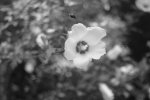
I took that flower and bug photo with my fuji x-pro-1 and Yashica manual ML 35m f 2.8 hand held.
 
After pixel peeping on those images I shot yesterday, I think I'm losing a little detail due to diffraction at f11. The ideal aperture for that lens to gain DoF but avoid diffraction is f8, so I went back to my trusty pet spider and shot an image at that aperture.

i-mhrFQs5-X4.jpg


I decided to use the jpeg generated by the camera, because the balance, color sharpness and detail is so good it's very very difficult to duplicate it by manually editing the RAW file. I've gotten close, but not quite as good as this. I used some different diffusers on the flashes for this shot. It reduced the reflections quite a bit.

I believe this to be better than the f11 image I posted a few days ago.

The next 4 days here are going to be brutally hot, 92F - 94F (33C - 34C), so I'll probably not be wandering around taking pictures through that stretch. I'll see what I can do once the temperature has dropped to where it's not so hot in the mornings.

In the meantime I've learned a few editing techniques that might allow me to improve some images I have enough for posting. Learning how to edit images is a chore, but a necessary tool in digital photography.

I taped a scale to the window frame to provide an idea of the size of the spider.

i-p4kGwL8-4K.jpg
 
Experiments with ICM (intentional camera movement):

Album includes a pic of the setup and album description gives details.

1782854824523.png
 
Back
Top Bottom