• Please note that Audiokarma will be offline briefly for updates early on Monday morning, September 28th.

Quad Sansui problem; help???

It isn't a matter of cold solder joints, that's when a solder connection gets moved before the solder cools, giving the joint a frosty appearance.
It's an issue of the design, connections go from one board to another via a pass thru joint, where typically theres a brass rivet thru a connection that has been soldered. Thermal expansion and contraction, over time cracks this solder joint, sometimes you can simply re-flow the solder joint but if you don't put a wire in there it will crack again.
Do you have a good meter?
Go to a thrift store near you, buy an el cheapo clock radio, take it home, make sure it works.
With it up-plugged, desolder and remove a couple of resistors, and a couple capacitors, clean them up and re-install them. See if it still works.
look at the manual for your meter to see how the diode function works.
Tell us about what equipment/tools you have.


Firstly, thanks for clearing up the cold solder joint thing. And with this, today I took the driver board "Sansui F-2624", which there are two of, out to examine it under a magnifying glass. I was looking for cracks in joints, and for damage to resistors among other things (because resistors show when they are damaged better than other components). I noticed little tiny cracks in some of the welds on that board. As well as one resistor which showed some odd discoloration. When I get back to school I will test the resistor. I am thinking that testing the same resistor both on the other side of that board and the matching resistor on the other board (the same kind "F-2624) should give me a reading that I can compare the aforementioned odd-color resistor. Am I on the right track as far as testing that resistor goes?

The reason I was looking for damage done to resistors and other components on that board is because my teacher suggested doing so to try to see if did more damage to other components with my (stupid) test.

And still on the cold solder thing, by putting a wire do you mean of solder or an actual wire such as copper wire. If it is a copper wire is it just to reinforce the weld?


Now, as in meters, I am using my teacher's meters. He has about 3 digital multimeters, 2 of which being of high quality. Not that I know much about them, though. I say they are of high quality because my teacher said so. He has the manuals for them so I will read it over to see how I can test using the diode function.

He also has about another 3 big vintage analog multimeters. But not with nearly as many functions.

Oh and 2 ohmmeters, both analog.

I will try your suggestion about finding a muy-malo radio that still works.

Equipment and tools. Well, I am not sure of the extent of equipment/tools available in my teacher's 3 storage rooms, but I will try to remember what I saw and post it.

He has the meters mentioned above, oscillators, a lot of power supply units, soldering equipment, nice big magnifying glasses with 2 bright lights, the basic tools such as screwdrivers (powered too), allen wrenches, files, measuring equipment (as in linear distances), wire cutters and strippers, etc. Also he has a huge selection of wire: from over 40 ga to 2 ga. Large selection of resistors, diodes, motors, transformers, capacitors, fuses, some transistors and some relays. Oh and I have a well-lit, clean place to work in.. as well as test speakers.

I know there is a ton more stuff but, if you are asking for something specific please tell me so that I can check if I have it available to use.

Thank you for posting that thread. I have been looking for information as much as I can. Between normal school, this class, and other things I have to do, it has been hard to do research as much as I would like. But I am certainly doing it every day and putting a great amount of time and effort. And since I am being patient, I chose to follow you guys' suggestion and study as much as I can before actually doing something to it.

But at this point, is it safe for me to order a new output transistor? Or should I wait until I get the "diode" readings on a meter to make sure it is no good? I can't do anything with it until monday, but that is when research time comes :)

And lastly, Scott, I appreciate your suggestion. And I have read and re-read those posts many times, believe me :o Which have actually encouraged me to continue, but this time using patience, caution, and intelligence, among other things. From what I have read the best guy to fix this thing is "quadbob", but I am not in a position that allows me to pay for the "very expensive" job. So I will continue working on this, following the good instructions AKers provide me.

Btw, the exact output transistors are available. As well as matching capacitors. Both cheap. But I will make sure not to fry anything else. And the reason WHY I may have damaged the capacitor is because I was trying to figure what the problem was. I was, for example, not aware of the fact that this sansui had balanced npn/pnp output transistors. Now I know. And I will use this knowledge and the rest that I obtain to conquer this beast.

Oh, and before I forget. The readings on the capacitor I may have damaged are: CEO 4W 63V 33µf Nippon Chemi-com SL. Picture below.


I will continue reading all weekend, thanks guys!
 

Attachments

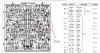
  • Sansui F-2624 Shematic w:anno.jpg
    Sansui F-2624 Shematic w:anno.jpg
    115.5 KB · Views: 21
Betomon, having read this thread, I'd like to suggest you pay heed to the comments you've received and step back from this project. This is not the way to learn electronics and before all is done I can almost promise you that you will end up doing more harm than good. This isn't a computer to which you are slapping in a new sound card. Component level troubleshooting is as much an art as it is a learned skill and it must be performed (for the most part) with the power on. While most of the voltages in there aren't too bad, some of them around the main caps and the power transistors and the PS can be quite nasty. I can appreciate your enthusiasm and resolve, but I really believe you ought to rethink this. When you said your electronics instructor doesn't know much about troubleshooting transistors — that's when I became fairly convinced this project is doomed. There's a lot of folks that could do the job for you on this site. I know you're concerned about money, but maybe you could work something out where the tech holds your equipment until you've finished some acceptable payment schedule. After wards you'd have yourself a real nice amp.

I spent almost 30 years as either an electronic tech, instructor or authoring electronic courseware, you don't learn electronics by picking up a copy of the latest Grob or Malvino and opening it up to page 271.

Well, that's my 2 cents. Do what you want, but please be careful.
 
Betomon, having read this thread, I'd like to suggest you pay heed to the comments you've received and step back from this project. This is not the way to learn electronics and before all is done I can almost promise you that you will end up doing more harm than good. This isn't a computer to which you are slapping in a new sound card. Component level troubleshooting is as much an art as it is a learned skill and it must be performed (for the most part) with the power on. While most of the voltages in there aren't too bad, some of them around the main caps and the power transistors and the PS can be quite nasty. I can appreciate your enthusiasm and resolve, but I really believe you ought to rethink this. When you said your electronics instructor doesn't know much about troubleshooting transistors — that's when I became fairly convinced this project is doomed. There's a lot of folks that could do the job for you on this site. I know you're concerned about money, but maybe you could work something out where the tech holds your equipment until you've finished some acceptable payment schedule. After wards you'd have yourself a real nice amp.

I spent almost 30 years as either an electronic tech, instructor or authoring electronic courseware, you don't learn electronics by picking up a copy of the latest Grob or Malvino and opening it up to page 271.

Well, that's my 2 cents. Do what you want, but please be careful.

Interesting, I was putting a post together in my head similar to this. I would like to reiterate what hashman is saying here.
This isnt the way to learn electronics, I have had no formal training, but a very good friend of mine is as exceptional audio based electronic tech/designer. I have learned so much from him, and its not over a beer at the bar, its in a controlled situation much like a "classroom" situation, this is because he is so anal, but I wanted to learn, and electronics is not something you do in an afternoon.

You can do reading, but if you have nobody to explain it to you it wont be of much use if you arent understanding what youre reading........


This sort of work requires a certain type of mind for diagnostics and fault finding. As hashman says its not a case of reading page 271 and then you know it.
It takes many hours of of patience, experiences, lateral thinking and logic.

At the end of the day you could electrocute yourself, or do some real damage to this receiver which would be a shame.
As it stands, if you leave it for a Tech now, the repair to get it running is probably not that difficult.
It may not even be that expensive.........................
 
Hey guys, Im back.

I know its been a while, but, with so many projects, I just didnt have time to work on the quad. Until now that is.. :yes:

I realize most of you want me to drop this project, and I understand why. But I learned my lesson, and I'm not giving up or getting ahead of myself again. Also, I know this is probably one of the best sources of help for my quad problems. Therefore, I don't want to lose this source, and I don't want to lose your support by giving up on me. I saw the help many of you gave to others, so I know the help is here :)

Anyway, even though I didn't work on my Sui this whole time, I did read lots. There were a LOT of informative posts. Hours and hours spent reading, which is not a problem. So, I ordered replacement output transistors from ON Semiconductor, and they arrived yesterday (6 pnp, 6 npn.. I decided to do all of them with a couple extras).

So, this is the update I guess:

I'll run you through my "progress" today:

-I took my Sui out and unscrewed the heatsinks
-I carefully matched the new transistors with the old ones by testing their polarity and making sure the pins went in the way they were supposed to (also of course matched the npns and pnps)
-I put the heatsinks back on
-Made sure it had all fuses
-Plugged it in
--- Flipped the switch ON, and.....

All 4 power meters jumped just a tiny bit, but nothing else. No lights, no clicks, no nothing. I came to the conclusion that this little spike to the meters was probably just the remaining juice in from last power-up. because no consequent power-ons did it again, or anything else for that matter.

Let me just remind you that it DID fully power on before, but now.. its as if the outlet was shot. Yet, the outlet was fine..

I looked at connections.. caps, anything I could, but I didn't see any kind of shorts. Also, when I powered it on there was no smoke or burning smells (thankfully). The only thing i've changed is fuses and the output transistors (2SA746 = MJ21193G and 2SC1115 = MJ21194G)

So, maybe this is something really stupid, or really simple. I looked at the power fuse but it didnt "look" blown. I'll test it tomorrow. Also, where could I start? Maybe going in with a voltmeter and checking where the power ends? Because there is just absolutely no sign of power anywhere just by looking at it.


Please don't dismiss my problem, and please know that I have no hard feelings for anything that was said.. I'm just looking for some help. Also, paying for repairs to be made by someone else is out of the question in terms of cash for me, so.. thanks for the suggestion.

Can you guys shine some light on this rather old case? I would very, very much appreciate it.
 
Why did you replace the output transistors? What was the course of diagnoses that led you to replace them?

Transistors are not like light-bulbs, you dont just simply put them in and throw the switch.......

You might have just smoked a whole new set of transistors, possibly......

To get some constructive help from the forum here, it would be better if you asked and then did what we recommend, rather than do something, power it up, then post when it doesnt work.....:thmbsp:
 
Ok well, what led me to believe that it was the output transistors was the fact that two of them tested much much lower than all of the ratings of the other ones. Initially i was just going to buy two of them, but I decided it'd be better just to put in a whole new set.


I would do what you guys said in terms of troubleshooting.. but nobody is telling me what to do other than "stop." Remember, I decided to go ahead and do this project.. so, could someone please just tell me what is going on?

The reason I put them in without asking first is because every time I wanted to do something everyone told me I should just step back. Well I dont want to step back. And if I blow a cap, well then ill buy the cap. I'm just trying to say... it is, after all, my choice. And i made my decision.

It does not power on. Suggestions?
 
Betomon.......don't worry......but, please listen to the gurus(kevzep, trnsfmr, others)..they helped me fix my 9001. You will need to change all the fusible resistors on both f2624 boards, caps too......then you MUST check all the transistors(out of circuit), especially on the LF channel. TR6 , TR2 and TR4......I took ALL mine out and tested them.......TR6 and TR10 were the problems on mine. Check the drivers too. After you have done all this....put it back together....and NOW you have to follow a special procedure to get it out of protection..........................using earphones.
This is the ONLY way to get it out of protection.
There is A LOT of information in my FIX thread: 'qrx9001 low output"

Check it out.
 
Betomon,

Hi, I just saw this thread. Here's how it goes here. You ask for help, which you have done. The help will be offered in this manner: Someone who is knowledgeable will ask you a lot of questions. You will probably be asked to do some measurements or test some aspect of operation or perhaps test a transistor, and report back what you found. This could go on for a few postings. Then a course of action will be offered up to you, which you would then do and report on what happened. You don't do anything else, you don't go willy nilly changing out parts.
It's a slow process, but it can work. There are people here who enjoy helping others get this gear working. It's challenging and fun.

You have been doing this in a very different manner. Sansui lovers, here on this list, find this very frustrating. They really love this gear, and they genuinely want to see it working and being used and enjoyed.

The problem you first reported on here in this thread, the condition of your unit when you got it, would have been very easy to fix (at least compared to where you are now). The next "fix" where you replaced the transistor at school, and then replacing all the output transistors, with the subsequent worsening of conditions, have taken you in a backwards direction.

I work on 9001's all the time, and helped Anderslober get his going. I have a restoration service, making these things like new again. The single fuse blowing would have led to a fairly quick fix, if that was all that was wrong. Now, the problem in your unit as it is now, is a real head scratcher. When something won't even turn on, it's tough to figure out what to do next. At this point you have multiple problems in your unit, and the more different problems there are, the harder it is. Read Anderslober's thread, he had many problems with his and it was really tough to get it going.

The others were telling you to stop. I think at this point, most of us here, would watch what you are doing, with shaking heads, and be saying to ourselves something like, "if only he would listen.....". Unless you change your approach and attitude about how you are going to go about this, I don't think much more help will be offered here.

Your 9001 is now dead in the water. It's either a parts unit or a big repair bill. You should think about what I have said for a while. Apologies on your part are in order. This is the most helpful bunch of guys you will find anywhere. Think about it.
 
trnsfmr, kevzep, other gurus......Betomon is a bit frustrated. Been there me'self. I know he's desperate to get the 9001 going again......and I actually think he really does appreiciate the help you guys give him......he just shows it in a funny way!;-)

Betomon.....I am positive you can do it yourself with some advice from the fellas.....but, you have to slow down a bit...........

Check all fuses again,(physically!).... main fuse especially....all outputs again....make sure orientation is correct.........start fixing the boards......tr's and fusible's.......and
don't power ON anything ,until you get a kinda' green light..........now I will watch the thread and let the gurus give it a go....

Afterall, it would be a DARN shame if the 9001 ended up as another anchor......IF it does...DIBS ON A COUPLE OF KNOBS!;-))))))))

It was really GREAT when mine got gonig again...the BEAST almost got me, but, hang in there....feeling was fantastic!
 
Ok well, what led me to believe that it was the output transistors was the fact that two of them tested much much lower than all of the ratings of the other ones. Initially i was just going to buy two of them, but I decided it'd be better just to put in a whole new set.


I would do what you guys said in terms of troubleshooting.. but nobody is telling me what to do other than "stop." Remember, I decided to go ahead and do this project.. so, could someone please just tell me what is going on?

The reason I put them in without asking first is because every time I wanted to do something everyone told me I should just step back. Well I dont want to step back. And if I blow a cap, well then ill buy the cap. I'm just trying to say... it is, after all, my choice. And i made my decision.

It does not power on. Suggestions?

Okay point 1, you believe there were blown output transistors, we need more information, how did you test them exactly? What function did you use with your multimeter to obtain readings? Finally what were these readings, we need numbers, not "one was low, and one was high".

Point 2, The reason we say stop, is because we are not there, we cant see exactly what is happening , and all we have is communication via thread postings. Its all about what you put down here in this thread.
We cant offer diagnoses and give direction if you race ahead doing other things because we then dont know what is going on, with everything you do there could be more problems confusing the issue we are working on, there are specific procedures and methods of doing things, and if you cant follow instructions, post, wait for our replies follow more instructions, and so on this will not work, and this is evident with you amplifier being "dead in the water" as Jim said in the last post.

Point 3, absolutely, its your choice, but if you want to go forward and not backwards, you need to start listening and do exactly what we say, nothing more. Ask us questions along the way, be friendly, currently your attitude suggests you are frustrated because we want you to slow down.
Aderslober, and Trnsfmr are two guys Ive worked with very recently to bring back a QRX-9001 from the dead, it took hundreds of posts and went on for about 3 weeks, but we had success....and it was fun, I personally enjoy helping people.
Now you are here because you want help, so ask questions, follow instructions, report back, go slow, dont do anything unless we ask you to, this is how it works.
If you do these things you will get you amplifier going....

Now, you replaced the possibly blown transistors? The problem doing this then just turning the unit on is this.... New transistors need to be biased, and given they are substitutes they may bias a bit differently from the originals.
Something will cause the transistors to blow, either the speaker terminals being shorterd out, or another component failing further up the chain in the driver stage, or both.
There are "typical" problems with these amplifiers as anderslober pointed out, which can cause problems like this too.
So there will more than likely be other failed components contributing to the symptom, we need to test various parts of the driver boards.
So to fit the transistors and turn the amp on without testing anything as though they were light bulbs? You tell me why we say stop.

Your decision which is fine, has now brought you to the unit not even powering up now.....

The mains fuse is probably blown now, the reason the mains fuse is blown is because probably the new transistors are blown now, which means they are shorting out the main DC supply through the output transistors and to ground.

The course of action now is up to you. I can help you, or any number of members here, particularly Trnsfmr who is very experienced with these amplifiers, an since Trnsfrmr and myself have done a marathon with anderslober its all fresh in our minds.....

May I suggest a slightly more humble approach, so , when you are ready lets go......:thmbsp:
 
trnsfmr, kevzep, other gurus......Betomon is a bit frustrated. Been there me'self. I know he's desperate to get the 9001 going again......and I actually think he really does appreiciate the help you guys give him......he just shows it in a funny way!;-)

Betomon.....I am positive you can do it yourself with some advice from the fellas.....but, you have to slow down a bit...........

Check all fuses again,(physically!).... main fuse especially....all outputs again....make sure orientation is correct.........start fixing the boards......tr's and fusible's.......and
don't power ON anything ,until you get a kinda' green light..........now I will watch the thread and let the gurus give it a go....

Afterall, it would be a DARN shame if the 9001 ended up as another anchor......IF it does...DIBS ON A COUPLE OF KNOBS!;-))))))))

It was really GREAT when mine got gonig again...the BEAST almost got me, but, hang in there....feeling was fantastic!

Anders, we keep telling you, you are now one of the gurus. :yes: You have real, extended battlefield experience. That counts for an awful lot.
 
Cool guys, these last posts are appreciated tons. A very nice change. I apologize for seeming rude at times, but.. I know you all understand that I am in a frustrating position. I read anderslober's thread before posting again and it was encouraging. I dont want to come off as stubborn or impulsive, so please don't think I am disregarding your advice. I just want to let you all know that, I will take this as slow as i need to because, I am not in a hurry, and it will receive all the time it requires so that the outcome is greatly rewarding to me. It will be the best reward if it works. The dead in water thing is not very encouraging.. :S

Ok, so, about the original output trs: one 746 tested in the 100-120 range when using the diode function. Compared to the others which were around 500-600. So this means that it was not fully blow, just way off spec correct? I believe I remember another one that might have tested a little lower; I apologize for not remembering exactly. I will start writing things down, and perhaps take the sansui home because at times it seems like my teacher just watches me screw up without stopping me. I now know that he mostly knows about basic electronics, not audio related.

Today, I took the power fuse out and tested it for continuity. It was good. Then I plugged it in and checked with a multimeter if the switched and unswitched outlets on the unit was getting any power. They both were. Unswitched got 118V and switched got around 75V. But when I switched it on (Sorry, I wont switch it on again until you guys tell me to) it got the full 118V. Also, while on, I took a multimeter and tested voltages across the fuses. They werent getting any power. But the purple cables directly to the side of the fuses that connect to the board they are on.. I tested that for power using the purple cable and the source of power (plug) and it did in fact receive 118V. This means that the transformer is good, correct? I apologize if I wasent supposed to do that either.. audiokarma is blocked at school :S


But ok. I put it all back together and left it alone until I receive instructions. No more initiatives from me. Please accept my apologies. Lets roll :)
 
I wonder if you could be having the same AC problem that Anders started with. I suppose it's worth a try. There are two 3.9 ohm resistors on the power supply board, right next to the relay. Check and see if they are good. They should read 3.9R. You may have to lift one end of each to be doubly sure.

These resistors were open on Anders' 9001, which would not allow the unit to start up. These resistors are in series with the AC line until the big caps charge up. Once they are charged then the relay closes, shorting out the resistors and giving full voltage to the power transformer. If they're open, the AC never happens, cause the relay never closes.

If they are bad, you will have to get replacements.

Glad you decided to let us help you. We do have a sense of humor. at least some of us. Anders just drinks coffee. :D
 
Last edited:
I was concerned that this post would deteriorate and need moderator attention, thanks gentlemen for working with the OP on this issue.
You guys are simply the best!
 
OY....trnsfmr....I do to have humor! I drink so much coffee, that I laugh when someone farts!

Anyway...Betomon.......are you on the case?
 
OY....trnsfmr....I do to have humor! I drink so much coffee, that I laugh when someone farts!

Anyway...Betomon.......are you on the case?

I dont need coffee to laugh at that!!!!!!!

Betomon, how are you going? we are all watching and waiting for your next report..........
 
Back
Top Bottom
