Right you are, Ray, it's compensation for the HF driver response, just like we've been discussing in other threads relating to Altec and Electro-Voice crossover design. The hint above is that when the filter frequency shifts downward, there's an obvious increase in output in that region, indicating it's set where it is to knock down a peak in the response.
Indeed, a little more measurement reveals what's going on:
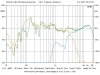
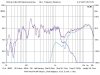
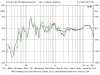
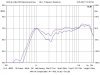
1) Response of the AR4x tweeters with no highpass filter. There's a 10 dB peak at the low end. That's HUGE, folks. :yes:
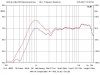
2) Response of the pair with the stock 20 uF in series, and 15-Ohm "pot" in parallel. Not quite flat, for other reasons, but the objective is clear.
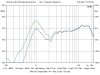
3) Tweeter #1, before and after.
4) Tweeter #2, before and after.
5) Both shown simultaneously.
AR used a 2+ kHz electrical highpass filter to accomplish a 1.2kHz (or 1.4 kHz, depending upon the woofer lowpass filter used in combination,) acoustic crossover with this specific tweeter response.
Puzzle solved.... :thmbsp:
Indeed, a little more measurement reveals what's going on:
1) Response of the AR4x tweeters with no highpass filter. There's a 10 dB peak at the low end. That's HUGE, folks. :yes:
2) Response of the pair with the stock 20 uF in series, and 15-Ohm "pot" in parallel. Not quite flat, for other reasons, but the objective is clear.
3) Tweeter #1, before and after.
4) Tweeter #2, before and after.
5) Both shown simultaneously.
AR used a 2+ kHz electrical highpass filter to accomplish a 1.2kHz (or 1.4 kHz, depending upon the woofer lowpass filter used in combination,) acoustic crossover with this specific tweeter response.
Puzzle solved.... :thmbsp:


 Not me, I don't have a problem with collecting too many speakers. In the garage. Or office.


 :
: