

You are using an out of date browser. It may not display this or other websites correctly.
You should upgrade or use an alternative browser.
You should upgrade or use an alternative browser.
Recapping AR-4X
- Thread starter mxlews
- Start date

gkimeng
Forum Mod, ClassicSpeakerPages.net
Feel around the frame and try to determine if the grille frame is a panel with cutouts or a solid wood frame. My early-model AR-6 had grill frames built from strips of solid wood about 1/2" x 1/4" that pretty much shattered no matter what I did to try to ease them out. The panels can take a lot more force.I have a tool I made that should allow me to get them off (2" wide rigid metal "hook" that allows me to get behind the grill edge.), but am uncomfortable about how much pressure these can take before they tear or are otherwise damaged.

outlawmws
On the Run
Well, this set had hot glue holding the grills on. The frames were Masonite, and was fairly thick (5/16ths?), however the openings were trimmed to within an inch of the edges all around, and left one 1 inch wide "strut" between the woofer and tweeter. This set has doped cloth surrounds, and the one I have open looks good!
One thing I have always noticed about running speakers that have been sitting around unused. It often seems to take them a while to "warm up" and not sound muddy. These were no exception. At first they sounded like crap. I played with the tweeter controls, and they improved slightly, but still stunk. I left them running for a couple of hours (I was not around to listen) and this evening they are sounding much better.
I still have to re-glue one of the terminal plates as it was knocked loose, and they probably need recapping at least (If not reworked ala this thread…), But first things first, I need to get these working 100%. I rather doubt I’ll replace both drivers, but the waveguide/horn idea does look interesting!
Another Q on the Tweeter. I was reading about the 2” domes and these initially looked like that might be the case, however on closer inspection, this set appears to have a 5/8” dome inside a very shallow cone or near horn, did I misunderstand something?
One thing I have always noticed about running speakers that have been sitting around unused. It often seems to take them a while to "warm up" and not sound muddy. These were no exception. At first they sounded like crap. I played with the tweeter controls, and they improved slightly, but still stunk. I left them running for a couple of hours (I was not around to listen) and this evening they are sounding much better.
I still have to re-glue one of the terminal plates as it was knocked loose, and they probably need recapping at least (If not reworked ala this thread…), But first things first, I need to get these working 100%. I rather doubt I’ll replace both drivers, but the waveguide/horn idea does look interesting!
Another Q on the Tweeter. I was reading about the 2” domes and these initially looked like that might be the case, however on closer inspection, this set appears to have a 5/8” dome inside a very shallow cone or near horn, did I misunderstand something?
gkimeng
Forum Mod, ClassicSpeakerPages.net
That sounds like the Roy Allison-designed cone/dome combo tweeter first used in the AR-6 and later in the 4xa and a bunch of other smaller AR speakers in the 70's and 80's. According to the AR timeline on CSP this tweeter was not in the 4x, but there are known instances of AR switching in new parts late in a model's life.Another Q on the Tweeter. I was reading about the 2” domes and these initially looked like that might be the case, however on closer inspection, this set appears to have a 5/8” dome inside a very shallow cone or near horn, did I misunderstand something?
outlawmws
On the Run
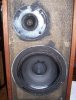
Pics of the drivers would be of assistance at this point.... :yes:
Pix!
I tried upping the volume a bit, and immediately turned it back down. I’d forgotten about the terminal plate needing re-glued and that it was an “air leak”; that poor woofer was distorting and thrashing itself for moment! I glued it back in place last night, and will re-test after everyone else is awake around here. At low volumes these didn’t sound half bad.
I’m hoping the Allison tweeters are an improvement over the 2” cones mentioned as not so great. I’ll take these open in a bit and look at the caps with an eye towards recapping.
Attachments
outlawmws
On the Run
Offshoot topic. I have a set of AR8Bs that I refoamed and plan to use near range in a work office (Someday…). I'm planning on A/B'ing the 8Bs with the 4x's in a shoot off for that position since they are both fairly small.
How are the Econo waveguide mods for near range listening? Some speakers don't fare well near range and low volume, which is the trick here; I want to be able to hear it without disturbing the cube occupants nearby.
How are the Econo waveguide mods for near range listening? Some speakers don't fare well near range and low volume, which is the trick here; I want to be able to hear it without disturbing the cube occupants nearby.
gkimeng
Forum Mod, ClassicSpeakerPages.net
I’m hoping the Allison tweeters are an improvement over the 2” cones mentioned as not so great. I’ll take these open in a bit and look at the caps with an eye towards recapping.
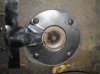
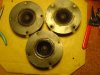
This is the 2.5" 4x cone tweeter, which fits into the same recess as the 3.5" cone from the earlier 4. The AR-6/4xa cone/dome has a smaller flange, a more pronounced "bullet" shaped center dome and a raised cone. It is an improvement over the earlier cones, but in wider HF dispersion rather than higher HF levels. The speakers are still voiced to the same "AR sound."
Attachments
gkimeng
Forum Mod, ClassicSpeakerPages.net
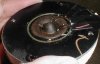
It doesn't show well in that photo, unfortunately, but the center dome comes to a blunt bullet-like point that extends out beyond the raised rim of the cone. Here's one from my spares box:I'm seeing nothing Allison there.
Attachments

Last edited:
outlawmws
On the Run
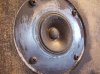
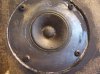
Close-ups’. I think these resemble the ones Zilch posted, but as I said before, the dished part between the dome and the outer flange does not look like it provides any active sound like a cone would, so I assume it is for reflecting/guiding.
Attachments
gkimeng
Forum Mod, ClassicSpeakerPages.net
They look like the same ones to me, and if they are the center piece is not a dome, it's just the dust cap of a 2.5" cone driver. The domed portion of the Allison cone/dome tweeter is not round, it's a convex cone with a blunt point, Look at the driver sideways, and the center should extend out beyond the outer flange.Close-ups’. I think these resemble the ones Zilch posted, but as I said before, the dished part between the dome and the outer flange does not look like it provides any active sound like a cone would, so I assume it is for reflecting/guiding.
Last edited:

Allison went on to expand upon the concept, and ultimately achieved the objective in his own products.
By then, omni was all but dead in the marketplace.
Others are now doing some of the same, but thus far, missing the directivity mark; waveguides get it better.... :yes:
http://www.zaphaudio.com/offaxis.html
http://www.madisound.com/catalog/PDF/h1499.pdf
By then, omni was all but dead in the marketplace.
Others are now doing some of the same, but thus far, missing the directivity mark; waveguides get it better.... :yes:
http://www.zaphaudio.com/offaxis.html
http://www.madisound.com/catalog/PDF/h1499.pdf
Last edited:


shacky
Addicted Member
Best I know, he installed them in his AR4xs.
Maybe Duff'll bring his down next time he comes this way, and we'll sort it out. :yes:
Thinking it through, the original pot MIGHT maintain a more constant speaker voice with varying tweeter levels than just a straight L-Pad, depending upon what the actual impedance values are. Thus, the hybrid (L-Pad plus parallel resistor) solution developed by RoyC to mimick the pot would appear to be a preferred replacement path, subject to confirmation via actual performance measurements:

I was hesitant to put the wire colors on there, as I don't have any AR4x here to verify. I'll fix it later, if necessary....
Zilch - I'm doing a pair of 4X's that have had work done so they aren't factory fresh. Still the colors do look a little off. The schematic on CSP's shows yellow from Base on pot to tweeter.
Might be good to check for accuracy.
http://www.classicspeakerpages.net/...ginal_models_schematicss/ar-4x_schematic.html
Edit - I now see you have an L-Pad in the mix. I've wondered how to convert the pot settings to the L-Pad. I wonder if I did my AR 5's correctly.
Last edited:
shacky
Addicted Member
Well I went back to page 2 to look at OP pictures of stock 4X. Green wire to tweeter is on middle (base) of pot and yellow is on #2.
So I figure that's right. And right or wrong I moved my wires as such.
I'm confused though - looking at the schematic from CSP's. :scratch2:
So I figure that's right. And right or wrong I moved my wires as such.
I'm confused though - looking at the schematic from CSP's. :scratch2:
Read the text, Shacky.
The one pictured is a heretofore undocumented early variant with a 2nd order lowpass and woofers that play higher than, but not as low as, more common later versions.
The green lead on the "B" terminal is definitive, as is the dual capacitor. Erroneously, previously considered a "user mod" on CSP.... :yes:
The one pictured is a heretofore undocumented early variant with a 2nd order lowpass and woofers that play higher than, but not as low as, more common later versions.
The green lead on the "B" terminal is definitive, as is the dual capacitor. Erroneously, previously considered a "user mod" on CSP.... :yes: