• The move to the new server is done. There are some software and database maintenance updates in process. This has us passing the hat around to help out. We appreciate any donations. Seriously, even a dollar helps. The payment page may be found here - https://www.audiokarma.org/support.html

Refurbishing Denon Direct Drive TTs

These days finding a good tech locally who works on TTs is quite troublesome.

There is no need for tech who works on TTs. There is needed technician who is familiar with Ohms law who can read schematics. So "tech vulgaris".
Any tech who can repair tuner will be able to repair this. Tech who works on TTs is need if you should repair tonearm, for example. So mechanics. But it is not this case.
 
These days finding a good tech locally who works on TTs is quite troublesome.
Bada-BINGO! I bought the table with the full understanding that it is (approx) 43 years old and the old components SHOULD be swapped, for that purpose alone. The recap was planned in advance to even knowing about the speed issue.

The solution is ALWAYS "simple" once it is figured out. Until that time, it's still a SOB for whoever the technician is.

The old IC semiconductor never had any thermal paste applied. That was also planned. Telling me to take it to a technician that doesn't exist around here, isn't being helpful, it is trolling.
 
Bada-BINGO! I bought the table with the full understanding that it is (approx) 43 years old and the old components SHOULD be swapped, for that purpose alone. The recap was planned in advance to even knowing about the speed issue.

The solution is ALWAYS "simple" once it is figured out. Until that time, it's still a SOB for whoever the technician is.

The old IC semiconductor never had any thermal paste applied. That was also planned. Telling me to take it to a technician that doesn't exist around here, isn't being helpful, it is trolling.
I did not imagine you live in desert where no one can read schematics. Old components, including capacitors, of this Denon ages well. So if you do not understand what is in schematics you should find technician with primary school education, nothing advanced. It is up to you when it is good advice and when it is trolling.
 
There is no need for tech who works on TTs. There is needed technician who is familiar with Ohms law who can read schematics. So "tech vulgaris".
Any tech who can repair tuner will be able to repair this. Tech who works on TTs is need if you should repair tonearm, for example. So mechanics. But it is not this case.
We are on totally different tracks here. I can read schematics very well and have been doing Ohm’s Law calcs for decades. And I’ve even fixed my DP-62L and my son’s Yamaha TT. But I wouldn’t trust me with someone else’s TT repair. Just look at the work in this thread done by a professional guy who owned the unit. These things are complicated beyond the schematics.

Then there’s cost. It would probably cost a large percentage of the value to get it repaired. Why not get a donor unit?

Even for non-mechanical repairs, there are butchers out there who might get it working again, but are not reliable, careful, or thoughtful. For me, no thanks on a random repair shop for this type of repair. I’ll rely on the differing opinions and excellent help from the folks here on AK.
 
Just look at the work in this thread done by a professional guy who owned the unit

Well this work was great butchery. ;) But anyway - this guy believe table can be repaired with try and error method. So if he replace all parts, table will work. But it will not. And there will be the same butchery, when this table will go to next owner. To do something you should know basics at least, not only have some soldering skills.
 
Well this work was great butchery. ;) But anyway - this guy believe table can be repaired with try and error method. So if he replace all parts, table will work. But it will not. And there will be the same butchery, when this table will go to next owner. To do something you should know basics at least, not only have some soldering skills.
It is obvious you are worthless to add anything constructive and/or helpful when it comes to my turntable that you admittedly know nothing about, but continue to try to force your opinion on others along with your false assumptions. If you knew half as much as you think you do, you'd be dangerous.:rolleyes:
 
It is obvious you are worthless to add anything constructive and/or helpful when it comes to my turntable that you admittedly know nothing about, but continue to try to force your opinion on others along with your false assumptions. If you knew half as much as you think you do, you'd be dangerous.:rolleyes:
You want for someone to help you repair your table by distance when you do not understand simple things and not familiar with electronics? Good luck.
 
You want for someone to help you repair your table by distance when you do not understand simple things and not familiar with electronics? Good luck.
And you continue with your false assumptions and accusations about something you have no clue about. Please stop your trolling.
 
Well this work was great butchery. ;) But anyway - this guy believe table can be repaired with try and error method. So if he replace all parts, table will work. But it will not. And there will be the same butchery, when this table will go to next owner. To do something you should know basics at least, not only have some soldering skills.
The bloke that owned this table was a TV repair man. My problem was not trying to fix a faulty turntable but my problem was reversing the mess he had done, only then could I start fault finding.
I have 4 SP10MK2 and I have recapped them all. I strongly disagree that 40 year old plus electronics should not be recapped. Yes I agree about fault finding, but a,slightly leaking cap can cause all sorts of strange issues, faults that come and go so eliminating this potential problem is a good plan. On my SP10MK2s they all had dead or leaking caps on the psu's even though 3 of thrm appeared to be working. On the forth one the cap took out an ic which shows the importance of swapping out old caps. A recapped and calibrated and of course lubed SP10MK2 should last another 40 years but just fixing the issues leaving the old caps is a failure waiting to happen as caps have a limited life.
Re the Denon, when the pots were connected properly and the circuit connected properly and the caps replaced, I still had speed issues. At the time I did not have my own scope, I borrowed on from time to time.
Without a scope I came to the conclusion that the recorded signal on thr platter was damaged as the rest of the circuit tested fine.
Recapping the table apart what I have said before was more important as the Tech had not had in stock the correct caps and had linked some to get different values so a total mess. The pots he had chosen were massive. The whole board needed some sort of order before I worried about testing.
Chris
 
My 2c.
Replace caps, then test the pots are working throughout the range.
Detox the 33 and 45 switches.
Set the heads to be as close as possible but not touching.
Check wiring to the heads, too.
Chris
 
These are basically simple re tachometer fb control system, iirc.
The head picks up an AC signal prerecorded onto the inner platter rim surface, its then integrated to a DC voltage level of strength related to platter rotation rate and amplified to drive an AC passive platter motor throttle consisting of a Graetz diode bridge in series with the AC platter spindle motor, the bridge having power transistor across the points where dc output would normally appear. This throttle arrangement allows a DC only power gain device to control AC voltage level to the motor.
Ingenious! SONY uses a similar arrangement on their AC DD turntables.
 
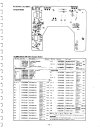
Someone please post a schematic.
These aren't good. I'm thinking of scanning and posting the whole manual here to help others. Can't join Vinyl Engine and no other resource for this info for free that I am aware of. But here are the two models Euro and American. I don't know if the Japanese models are different enough or not. Doesn't seem to be great differences so far though.
 

Attachments

  • American.jpg
    American.jpg
    133.9 KB · Views: 7
  • Euro PDF.pdf
    Euro PDF.pdf
    105.6 KB · Views: 4
  • euro.jpg
    euro.jpg
    124.5 KB · Views: 7
These aren't good. I'm thinking of scanning and posting the whole manual here to help others. Can't join Vinyl Engine and no other resource for this info for free that I am aware of. But here are the two models Euro and American. I don't know if the Japanese models are different enough or not. Doesn't seem to be great differences so far though.
Control sections should be identical, only differences probably the AC side.
 
These aren't good. I'm thinking of scanning and posting the whole manual here to help others. Can't join Vinyl Engine and no other resource for this info for free that I am aware of. But here are the two models Euro and American. I don't know if the Japanese models are different enough or not. Doesn't seem to be great differences so far though.
A screen grab of the skiz should suffice for the present purposes.
I'm working off a smartphone and 8" basic tab here.
 
@Squirrel! Since this is a Japan-sourced TT, are you running it on 100v? Sorry if this is obvious to you but I have seen some other folks try running Japan-market Denons on 120v because the plug looks like a regular US plug. Good luck. These are great decks when working properly.
 
@Squirrel! Since this is a Japan-sourced TT, are you running it on 100v? Sorry if this is obvious to you but I have seen some other folks try running Japan-market Denons on 120v because the plug looks like a regular US plug. Good luck. These are great decks when working properly.
I appreciate the suggestion. Yes, I bought this 2 weeks before the TT was delivered. I think it is working correctly as I checked the output voltage was 100v.
 
Back
Top Bottom