The picture shows a single phase powersupply for Garrard or Thorens.The website a 2 phase supply for Russco turntables.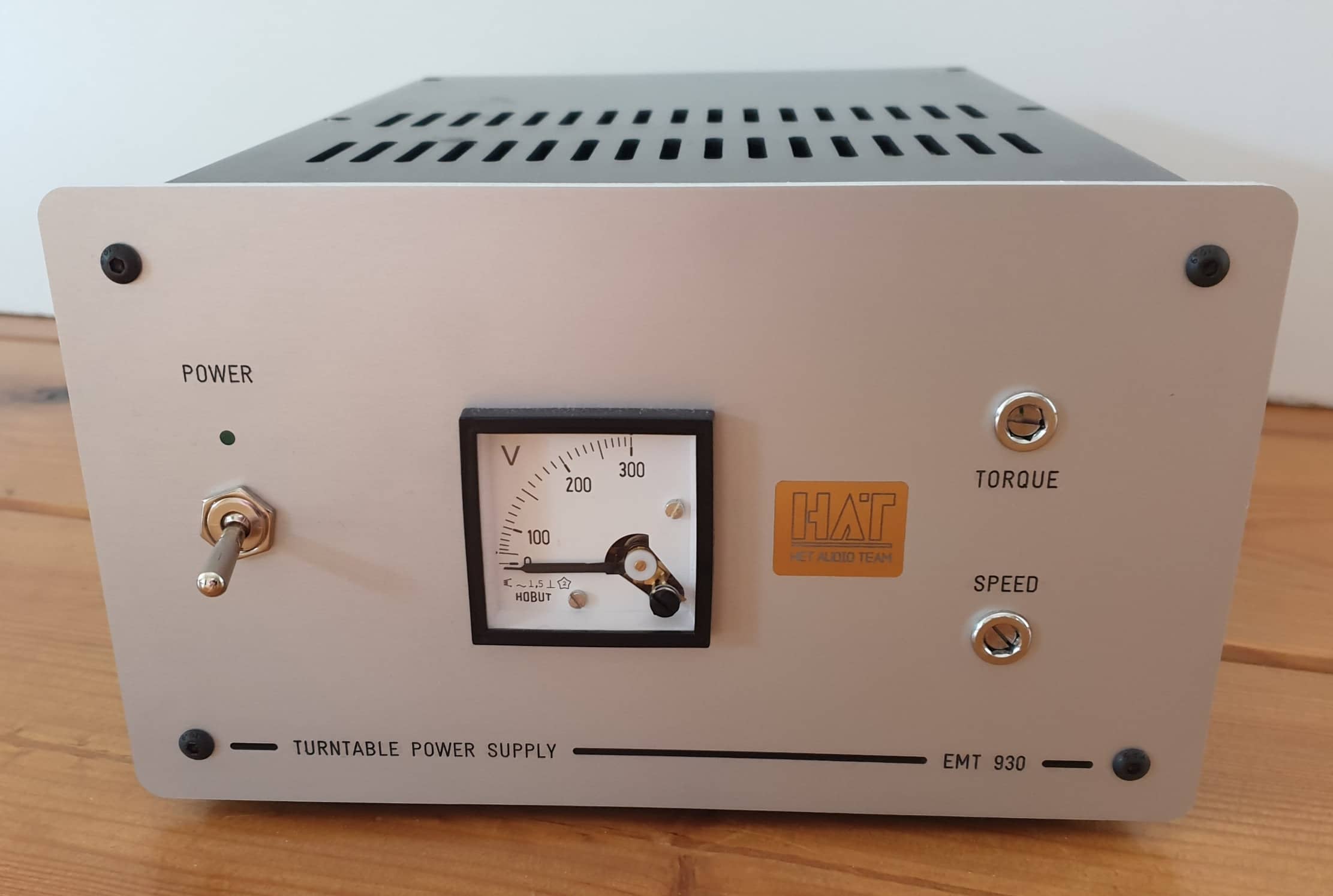
H.A.T. CPS-2 - Thorens TD124 - H.A.T Hanze Hifi webshop
De jongste telg van het H.A.T. geslacht is de CPS-2 (Clean Power Supply 2). Het is een apparaat dat in staat is om de vervuilde netspanning op te schonen.shop.hanzehifi.nl
FWIW, the motor noise has been significantly reduced by adjusting the mounting screws, reducing the supply voltage and better grounding.


You are using an out of date browser. It may not display this or other websites correctly.
You should upgrade or use an alternative browser.
You should upgrade or use an alternative browser.
Russco Cue Master build
- Thread starter Blackdog61
- Start date
Indeed custom building in this case for PC who also use a two-phase.Ok, is this your product?

adnick
Addicted Member
Have used the one above or one like it on my Garrard 301, Fairchild 412, ROK TR 43H and on the Russco Studio Pro….Have not used it with my early TD 124, even though it and the 301 both use shaded pole motors, the 301 motor is almost twice the wattage and the TD 124 motor is very sensitive to Hz changes….plus I’m satisfied with the TD 124 speed bias. Know that some vary the speed options when building for the TD 124….
My Russco was the quietest when the 33 pot ( Hz control) was used at 110v and the table shifted as normal between 33 & 45…it would certainly run 33, 45 & 78 but the motor was a bit noisier….however I’ve never serviced the motor yet so that’s probably part of it :-(
There’s lots of different controller design options, the multiple speed one from the eBay seller that he advertised for Fairchild & ROK tables is a possibility, it’s a couple hundred dollars and I’m sure it could be modified to be more ergonomic. Might have to purchase one and try it out, but my granddaughter’s 13th birthday party is coming up and she lives in France, so it’s gonna have to wait a bit…..
Andy
My Russco was the quietest when the 33 pot ( Hz control) was used at 110v and the table shifted as normal between 33 & 45…it would certainly run 33, 45 & 78 but the motor was a bit noisier….however I’ve never serviced the motor yet so that’s probably part of it :-(
There’s lots of different controller design options, the multiple speed one from the eBay seller that he advertised for Fairchild & ROK tables is a possibility, it’s a couple hundred dollars and I’m sure it could be modified to be more ergonomic. Might have to purchase one and try it out, but my granddaughter’s 13th birthday party is coming up and she lives in France, so it’s gonna have to wait a bit…..
Andy

It’s my turntable and I can do what I want. Due diligence was exercised before doing this and I am pleased to say that it significantly lowered the motor noise coming through the platter. I would estimate that at any reasonable listening level the motor noise picked up by the stylus is half the level it was. The picture reflects one layer of 80 mil sound deadening material (similar to dynamat). The first run was beneficial so I added another layer around the outside 1-3/4”. One and only one iPhone test showed a Wow figure of .1% so I don’t see any downside. That noise was the major concern with this but it’s been put to bed.

Listening at a pretty high volume now and between tracks I heard some rumble and very little hum. When I started dealing with the background noise the motor hum was much more intrusive than the rumble.
I emailed Abe about the noise from the Delrin idler and he responded to say that sometimes they benefit from running in to break in the bronze bearing. I’m doing that and do believe it is helping. Since I had the dynamat at hand I added some to the idler arm I made from the engineered wood, stacking it up almost touching the wheel and a few layers on the bottom as well. The pakkawood is made from layers of ebony veneer and some type of phenolic resin, and although it is very stiff and dense it may have been vibrating due to the thinness. I will have some teflon washers in a few days to hopefully quiet things down more. 
adnick
Addicted Member
In my personal experience W&F was never an issue with the Russco, my objective was to reduce noise, and that was a very successful endeavor from stock to my finished product.
Abe is certainly correct, run in time is required and I’d found that running the idler as close to the top of the platter as possible also helped….
You’re continually making progress, it’s the sum of the efforts
Abe is certainly correct, run in time is required and I’d found that running the idler as close to the top of the platter as possible also helped….
You’re continually making progress, it’s the sum of the efforts
OK, I’m really done with this thing. Not honest.
After raising the capstan and carefully centering it I added Teflon washers to raise the wheel and discovered that adding them to the bottom axle raised the arm, causing it to drag the platter. The dynamat added about 3mm to the bottom of the platter. I added them under the wheel and it is riding near the top of the axle. I did raise the platter when I redid the main bearing.
The result of all of this is the idler noise is much better and it is running at speed.
It was about 32.5rpm after this but I may have gotten oil on the capstan. After thoroughly cleaning it and the idler wheel it is dead on.
After raising the capstan and carefully centering it I added Teflon washers to raise the wheel and discovered that adding them to the bottom axle raised the arm, causing it to drag the platter. The dynamat added about 3mm to the bottom of the platter. I added them under the wheel and it is riding near the top of the axle. I did raise the platter when I redid the main bearing.
The result of all of this is the idler noise is much better and it is running at speed.
It was about 32.5rpm after this but I may have gotten oil on the capstan. After thoroughly cleaning it and the idler wheel it is dead on.
adnick
Addicted Member
That’s greatOK, I’m really done with this thing. Not honest.
After raising the capstan and carefully centering it I added Teflon washers to raise the wheel and discovered that adding them to the bottom axle raised the arm, causing it to drag the platter. The dynamat added about 3mm to the bottom of the platter. I added them under the wheel and it is riding near the top of the axle. I did raise the platter when I redid the main bearing.
The result of all of this is the idler noise is much better and it is running at speed.
It was about 32.5rpm after this but I may have gotten oil on the capstan. After thoroughly cleaning it and the idler wheel it is dead on. View attachment 3168283
I dug out my variac and am experimenting with it. It seems like 100V may be a sweet spot for significantly minimizing motor noise without affecting sound quality, but I’m going to play with it. After about two hrs at 100V the motor didn’t seem overly warm. The Delrin idler is still making some noise and I hope it quiets down. Still, I’m very happy with this. There is just a bit of ambient noise in the silent grooves.
To anyone who may be reading this or any other idler thread, I believe the significant gains are worth it. Most things in life involve trade offs and this is certainly the case with a big old idler deck.
To anyone who may be reading this or any other idler thread, I believe the significant gains are worth it. Most things in life involve trade offs and this is certainly the case with a big old idler deck.
adnick
Addicted Member
Werner over at Lencoheaven has done considerable testing with reduced voltage with his Russco, and I’ve done some; seems every table is slightly different, my Russco Studio Pro is quieter at 105-07v
Some have noted that an in series bulb wit wattage to provide the same voltage (100v in your case) is even better at noise reduction….
My big ROK is quieter at around 100v also.
Andy
Some have noted that an in series bulb wit wattage to provide the same voltage (100v in your case) is even better at noise reduction….
My big ROK is quieter at around 100v also.
Andy
I’m a bit stupid on the bulb thing. It would be nice to try that if you or someone would draw it out for me.Werner over at Lencoheaven has done considerable testing with reduced voltage with his Russco, and I’ve done some; seems every table is slightly different, my Russco Studio Pro is quieter at 105-07v
Some have noted that an in series bulb wit wattage to provide the same voltage (100v in your case) is even better at noise reduction….
My big ROK is quieter at around 100v also.
Andy
adnick
Addicted Member
It’s just a dim bulb tester with probably a 60-75 watt bulb, the most difficult part is finding the wattage that provides your target voltage….Garrard published a paper recommending an in series lightbulb as a speed controller for the 301, prior to building my own speed control it was what I used on my 301 to reduce the voltage and enhance the eddy brakeI’m a bit stupid on the bulb thing. It would be nice to try that if you or someone would draw it out for me.
One thought on your idler noise, too few or too many washers can cause noise, too many can also prevent the table from reaching the correct speed ….
Going to stick with the variac for a bit because the motor hum is negligible. The hunt now is to minimize rumble. After fashioning a Blue Tak stylus cleaning device I could really hear the increased noise level with the idler engaged, and the difference between stock and delrin wheels.
Last night I focused on centering the motor capstan. Previous efforts were frustrating because it seemed the slightest adjustment, or thought, made it worse. I FINALLY got it right and the rumble is much lower. The original wheel is still quieter than the delrin one which kind of baffles me. I adjusted the idler pressure by setting the stylus in Blue Tak, turned up the volume and adjusted the screw for minimal rumble through the speakers. The speed is about 1% fast at this point but it is what it is.
I will buy the heavier and hopefully more true arm from Serge in the hope that part of the issue is with my arm. It may be just the slightest bit out of square which could cause some issues.
Getting that capstan perfectly centered was a pain in the A$$ but worth it.
Last night I focused on centering the motor capstan. Previous efforts were frustrating because it seemed the slightest adjustment, or thought, made it worse. I FINALLY got it right and the rumble is much lower. The original wheel is still quieter than the delrin one which kind of baffles me. I adjusted the idler pressure by setting the stylus in Blue Tak, turned up the volume and adjusted the screw for minimal rumble through the speakers. The speed is about 1% fast at this point but it is what it is.
I will buy the heavier and hopefully more true arm from Serge in the hope that part of the issue is with my arm. It may be just the slightest bit out of square which could cause some issues.
Getting that capstan perfectly centered was a pain in the A$$ but worth it.
Last edited:
adnick
Addicted Member
Going to stick with the variac for a bit because the motor hum is negligible. The hunt now is to minimize rumble. After fashioning a Blue Tak stylus cleaning device I could really hear the increased noise level with the idler engaged, and the difference between stock and delrin wheels.
Last night I focused on centering the motor capstan. Previous efforts were frustrating because it seemed the slightest adjustment, or thought, made it worse. I FINALLY got it right and the rumble is much lower. The original wheel is still quieter than the delrin one which kind of baffles me. I adjusted the idler pressure by setting the stylus in Blue Tak, turned up the volume and adjusted the screw for minimal rumble through the speakers. The speed is about 1% fast at this point but it is what it is.
I will buy the heavier and hopefully more true arm from Serge in the hope that part of the issue is with my arm. It may be just the slightest bit out of square which could cause some issues.
Getting that capstan perfectly centered was a pain in the A$$ but worth it.
View attachment 3177822
Have you measured the idler shaft (top/bottom) to determine how much wear? Then determine the clearances on the two idlers in question…
Depending on the above….You also could ask Abe for another rubber ring.
I bought some rubber bands to stretch around the platter as a bit of fun but they significantly reduced rumble and are actually fun. There is a black one running below the orange one. It hangs just a hair below the edge of the platter.

Yes, idlers can run quietly.I’ve been working to lower the noise floor. In an earlier post I documented using grommets on the motor but it turned out that the standard aluminum spacers are better. Vibrations felt by touching the motor and consequential hum through the stylus are lower. While I was in there, I added a layer of dynamat to the plinth under the platter hoping that vibrations between the three motor mounts and main bearing would be diminished. I don’t know if it helped. Tiring of the idler wheel rumble from the delrin wheel, I soaked the original in brake fluid for several days and cleaned it well. I had previously turned it and surfaced it and believe it is in excellent condition. Idler rumble is much better than it has been previously. A 6mm Herbie’s mat is a $100 splurge but it was the cherry atop this banana split. The noise level is now well below the groove noise in the vinyl and for all intents, inaudible. I’m sure when I really crank the volume it will be audible, but at any reasonable level, I simply can’t hear it.
Attachments


Jukin Jay
Geek
It could be magnetic pickup from the motor if it hums with the stylus at groove height. With no record on it, powered on and out of gear, if you sweep the arm across its path without quite touching the platter, is there any hum?Really stoked about this. One minor thing I should address is there is a hum with the stylus in the groove. 1-2mm above the groove it doesn’t hum. Is there a connection I missed? I mounted a Shure M55 with VividLine cart and it is ultra smooth.
Jukin Jay
Geek
From the Cue-Master manual:I have adjusted that stop by backing it out just enough to engage and spin the platter with sufficient torque to overcome some resistance from a finger against the edge. It’s probably no more than a half turn beyond getting the platter spinning. I read that somewhere on the Russco web archives but can’t find it now.
OPERATION AND ADJUSTMENTS: Turntable speed is controlled by 3 factors: (1) speed of motor
in RPM (2) diameter of motor pulley (capstan) (3) diameter of inside rim of turntable. Diameter of
idler has no effect on table speed, hence no speed change occurs as idler wears. Speed change is made
by placing speed change arm in one of the three slots, top for 33-1/3, middle for 45, and bottom for
78 RPM.
"Neutral" positions are provided between the slots, and when not in use the shift arm
should be left in neutral position to prevent "flats" on the idler.
Each of the slots has an adjustable stop which limits the travel of the arm. While a slight change can
be made in table speed by adjusting these slots, their purpose is to limit the pressure between motor
pulley-idler and table rim. INITIAL ADJUSTMENT IS AS FOLLOWS: Screw in (clockwise) (45RPM)
screw until motor ceases to drive table, then back out screw slowly until just enough pressure is
applied to give satisfactory acceleration. Best results will be realized by using the least possible pres-
sure consistent with adequate driving power. Too much pressure will cause undue wear on the idler,
cause incorrect speed, and introduce vibration.
IDLER ADJUSTMENTS: Note that the motor is attached to its hanger with screws or bolts through
elongated holes. If, due to wear, (reduction of diameter) of the idler, it becomes impossible to secure
adequate driving power with the shift arm at the extreme left hand end of the speed selector slot,
moving the motor toward the rim of the table will give correct driving pressure more toward the cen-
ter of the speed change slot. If a new idler makes it impossible to obtain a 'neutral,
" the motor is
simply moved away from the table rim until a suitable arm position in the slot is obtained. Older
tables did not include the slotted motor hanger, but the same effect can be obtained by moving the
entire table toward or away from the shift arm.
Running slightly fast may be a feature, not a bug. These were designed for radio stations. Playing records a bit fast meant more time for commercials.
None at all. I have almost eliminated the hum by doing a few things.It could be magnetic pickup from the motor if it hums with the stylus at groove height. With no record on it, powered on and out of gear, if you sweep the arm across its path without quite touching the platter, is there any hum?
-dynamat on the bottom of the platter and top of the plinth between the rubber mounts and main bearing
-6mm Herbie’s mat
-after experimenting with rubber grommets between the motor and sub chassis I returned to the aluminum spacers. This virtually eliminated motor vibration other than some fan noise. Getting this right was huge.
-I am using a variac to reduce the voltage to 100VAC.
The hum never seemed like what you get with a Grado on an AR with the later hurst motor. This Russco seemed like motor vibration was traveling through the spindle and into the platter. It was also getting past the motor mounts and through the tonearm. I could feel that. Although it was minimal it wouldn’t take much. It is now a very quiet turntable.