

You are using an out of date browser. It may not display this or other websites correctly.
You should upgrade or use an alternative browser.
You should upgrade or use an alternative browser.
Sansui Eight help - hum on one channel
- Thread starter KeithD
- Start date
-
- Tags
- sansui eight


I'm starting to put together a BOM for replacing the rest of the e-caps in the Eight. I was looking at the Tone Board (F-1235) and the Elna Silmic II replacements at Mouser. Mouser has no stock for several of the voltage values I need. Just wondering if it is better to stick with the Elna Silmic II line and put in higher voltage caps that are in stock, or use a different line/brand of e-caps in those positions to match the voltages. Here's what I have so far that is available:You could recap the entire thing just using Nichicon finegold, just like Sansui only used the same grey Elnas - it wasn't until a few years after the Eight, that Sansui began to use different colored caps based on their duty (power supply, signal, coupling etc) I honestly wouldn't worry too much about that part, the sound is already build into the design. By using dedicated caps for various positions you might gain a tiny bit longevity or a tiny bit better detail in a specific freq range.....but likely beneath anything you could credible discern in a blind test. However many of us use this formular:
Tone board: Elna Silmic II
Power supply: Nichicon UPW
Equalizer (phono board): Elna Silmic II
Driver board Nichicon audiograde KG, KZ or Finegold, and a wima in the C801 position.
That's it. Can't go wrong. Once it's up and running you can always revisit it later and try a tweak here and there, with the benefit of now having established a Sonic baseline - that's the fun part.
C7007/8 33µF 16 V --> 33µF 25V RFS-25V330MG3#5
C7009/10/25/26 10µF 25 V ---> 10 µF 35 V RFS-35V100ME3#5
C7041/2 100µF 25 V --> 100 µF 50V RFS-50V101MI5#5
I have not selected film caps for the low capacitance ones yet (too man options!). I used Wima
MKS4B041002C00JF00 (1µF/50V) for C801 on the driver boards.
I also noticed that film caps are available in values up to and past 100 µF. Are e-caps better at these higher values? I was thinking of using films for caps below 10 µF.
OK, you also mentioned in that earlier post that I could use Nichicon fine gold. I looked at some of those, and actually they are cheaper. Is there any advantage to the Elnas vs. Nichicon fine gold?I'd stick Silmics, then accept a higher voltage - 16 to 25 or 25 to 35v is not an issue. Yes, the Wima polyester series is pretty doable up to 10 Uf when choosing the mks2 series. I believe the lead spacing remains 5 mm all the way up to 10uf

I always use Fine gold where I can. If you get them from a reputable place like mouser, they are almost always very close to the spec uf, and typically pretty low ESR according to my peak atlas ESR70+. Other caps I have gotten in the past were typically all over the 20% tolerance. The trick when buying them is in multiples at 10 or above or 100. The price comes down drastically at 10, and then again at 100
Thanks, decided to go with the Nichicon fine gold. I usually buy from Mouser unless they don't have stock of critical parts, then Digikey is my next choice. Here are my parts lists with the replacements I selected for the head amp and tone control boards. Voltages in red are closest match to what was on the board.I always use Fine gold where I can. If you get them from a reputable place like mouser, they are almost always very close to the spec uf, and typically pretty low ESR according to my peak atlas ESR70+. Other caps I have gotten in the past were typically all over the 20% tolerance. The trick when buying them is in multiples at 10 or above or 100. The price comes down drastically at 10, and then again at 100
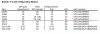

Recapped head amp and tone control boards. Some how I missed ordering replacements for the two tantalum caps on the head amp board. I pulled one and it was dead on for capacitance value. So, I'll leave those two in for now and put replacements on my next Mouser order. I checked the capacitance of all e-caps I pulled and they ranged from 30 to 100% over value! Pretty much every e-cap I have pulled from the Eight has been well out of spec. Either this unit was abused, or (more likely), these were not a good batch of caps originally. You can tell Sansui took extra care with these boards. All e-cap positions have BOTH + and - legs marked on the board.
There are a lot of e-caps on the tuner boards - especially the MPX unit. If I replace those, will I likely see improved tuner performance? Will it need an alignment after replacing the e-caps? Not sure I'm going to tackle that as the tuner works fine right now. Just want to know what I'd be getting into.
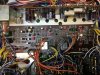
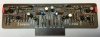
There are a lot of e-caps on the tuner boards - especially the MPX unit. If I replace those, will I likely see improved tuner performance? Will it need an alignment after replacing the e-caps? Not sure I'm going to tackle that as the tuner works fine right now. Just want to know what I'd be getting into.

That's what happens to electrolytics that are past their sell-by date - normal stuff, and Sansui seemed to be pretty careful with components and suppliers.I checked the capacitance of all e-caps I pulled and they ranged from 30 to 100% over value! Pretty much every e-cap I have pulled from the Eight has been well out of spec.

I know that's conventional wisdom, John, but I've never had a project where every cap I pulled was out of spec. When I recently recapped the driver and PS boards on my 9090, only one cap was out of spec.That's what happens to electrolytics that are past their sell-by date - normal stuff, and Sansui seemed to be pretty careful with components and suppliers.

It's about five years difference, but yes, the Eight could very well have been abused (or the 9090 was treated gently or seldom used.) When I got the Eight there were several fried resistors on one driver board, and a couple of fried OTs. I've just not see where all e-caps are out of spec, but granted I have only serviced about 10 receivers/amps since I started in the hobby, so not much experience to go on.But isn't the 'Eight' about 4-6 years older than the 9090? - and your Eight may have been left on 24x7 whereas the 9090 might have been lightly used and not subjected to high/low temperatures?

kevzep
Its all about the Music
I have, all the time, nothing unusual about that.......I know that's conventional wisdom, John, but I've never had a project where every cap I pulled was out of spec. When I recently recapped the driver and PS boards on my 9090, only one cap was out of spec.
Every cap I pulled from the Eight I just restored was well out of spec, as were many of the caps I just pulled from a G9700.....
kevzep
Its all about the Music
No it will be fine it wont need alignment, replace all the e-caps and replace anything 1µF or less with a film type, it will reduce the distortion. However, I find those discrete MPX circuits almost always benefit from alignment.There are a lot of e-caps on the tuner boards - especially the MPX unit. If I replace those, will I likely see improved tuner performance? Will it need an alignment after replacing the e-caps? Not sure I'm going to tackle that as the tuner works fine right now. Just want to know what I'd be getting into.
As an example, the rated THD on the TU999 is 0.3%, after I recapped if and strategically upgraded a lot of caps to film, and modified the final LPF block, I had the distortion down to 0.047%.....Damn thing sounds insane!!
I've been using Wima film caps for 1µF and lower, but I also used film caps for the values below 10µF on the tone control board. I'm hoping this is ok. I don't really use the tone controls on the Eight other than the Loudness switch.No it will be fine it wont need alignment, replace all the e-caps and replace anything 1µF or less with a film type, it will reduce the distortion. However, I find those discrete MPX circuits almost always benefit from alignment.
As an example, the rated THD on the TU999 is 0.3%, after I recapped if and strategically upgraded a lot of caps to film, and modified the final LPF block, I had the distortion down to 0.047%.....Damn thing sounds insane!!
I have more than one tuner that needs alignment. It's a matter of finding someone within driving distance who does alignment. I've got a request in to Mark at Absolute Sound Labs in Minneapolis. They don't list Sansui as one of the brands they work on, but I'm hoping they will do tuner alignments on them... I'm looking forward to significant improvement on my 9090, which is not very good at pulling in stations, but really should be.
kevzep
Its all about the Music
Yeah no problem if you can get 'em in there, I think it makes quite a big difference.I've been using Wima film caps for 1µF and lower, but I also used film caps for the values below 10µF on the tone control board. I'm hoping this is ok. I don't really use the tone controls on the Eight other than the Loudness switch.
Buy some gear and learn how to do it, get a few old tuners and practice, its a little bit Voodoo, how you hold your tongue, witchcraft, and some basic understanding of how tuners work....I have more than one tuner that needs alignment. It's a matter of finding someone within driving distance who does alignment.
I'd never aligned a tuner until about 3 or 4 years ago, never needed to, but I have found there's quite a good little market for doing it, as so many people are buying this old gear and want it all working properly......
You can get good test gear on the used market for cheap as chips.....go for it!!
I've been tempted to do this. The local guy who does repair on vintage equipment does not do alignments. Says it's too troublesome for him to do.Buy some gear and learn how to do it, get a few old tuners and practice, its a little bit Voodoo, how you hold your tongue, witchcraft, and some basic understanding of how tuners work....
I'd never aligned a tuner until about 3 or 4 years ago, never needed to, but I have found there's quite a good little market for doing it, as so many people are buying this old gear and want it all working properly......
You can get good test gear on the used market for cheap as chips.....go for it!!
I have access to an oscilloscope that goes up to 108 MHz, but not a signal generator that goes that high. I also don't have the ceramic or plastic adjusting tools. What would you recommend for test equipment? I'm interested to learn. All of my receivers could stand to have the alignment checked, and I just bought a TU-9900 to pair with my AU-9900, so that will need to be checked too.
kevzep
Its all about the Music
I don't get these tech that say things like that, RF is not the witchcraft they think it is. Its good to get into because no many people are doing it.I've been tempted to do this. The local guy who does repair on vintage equipment does not do alignments. Says it's too troublesome for him to do.
I have access to an oscilloscope that goes up to 108 MHz, but not a signal generator that goes that high. I also don't have the ceramic or plastic adjusting tools. What would you recommend for test equipment? I'm interested to learn. All of my receivers could stand to have the alignment checked, and I just bought a TU-9900 to pair with my AU-9900, so that will need to be checked too.
You dont need a scope for anything but putting it on the TAPE REC outputs, which is measuring the Audio, sometimes its necessary to use it in various places such as this last tuner I was working on, I was testing the IF amp to see if that was amplifying the IF (10.7MHZ), but a 100MHZ can do that easily, in fact I was using my old TEK465 to do that.
So, you need a RF signal generator, most have AM and FM with a simple 400hz and 1khz oscillator you can modulate on the carrier wave. The HP I have is very accurate and very easy to use.
I have a HP8657A
You need a Multiplex generator, which is the stereo encoding. I have a Panasonic VP7633A, there are better ones around although it does the job pretty well.
You also need a VTM (Vacuum Tube Multimeter), great for probing about and peaking out various things lile IF stages, I have a RCA Voltmyst, has a really large Meter on it, easy to see.
The most important thing for tuner alignment is a Distortion analyser, this will be the most important piece of equipment you'll buy, I have a Keithley 2015THD, its easy to use, digital readout, it can do a bunch of other stuff too and is a 4 digit multimeter as well, great tool.
I also have a tracking generator and a TEK spectrum analyser which is not necessary, but its great for doing a visual peaking out of RF stages.....
I like doing tuner alignments and repairs, its interesting to see the different designs and how they perform, I like modifying them and getting them to exceed their original performance.
Working on tuners can be a bit time consuming sometimes, but if they are your own tuners, no drama!!
kevzep
Its all about the Music
Yes I did the Multiplex board on the eight, I just used WIMA film in the signal path, UPW for power, and I think I used some UKL Low Leakage for some signal path caps too...By the way, Kev, did you recap the tuner and MPX boards on the Eight? If so, what series of caps did you use? Not sure what I should be selecting for that project.