• The move to the new server is done. There are some software and database maintenance updates in process. This has us passing the hat around to help out. We appreciate any donations. Seriously, even a dollar helps. The payment page may be found here - https://www.audiokarma.org/support.html

Sansui Product History: Amplifiers 1967-2000

@Sansuiman
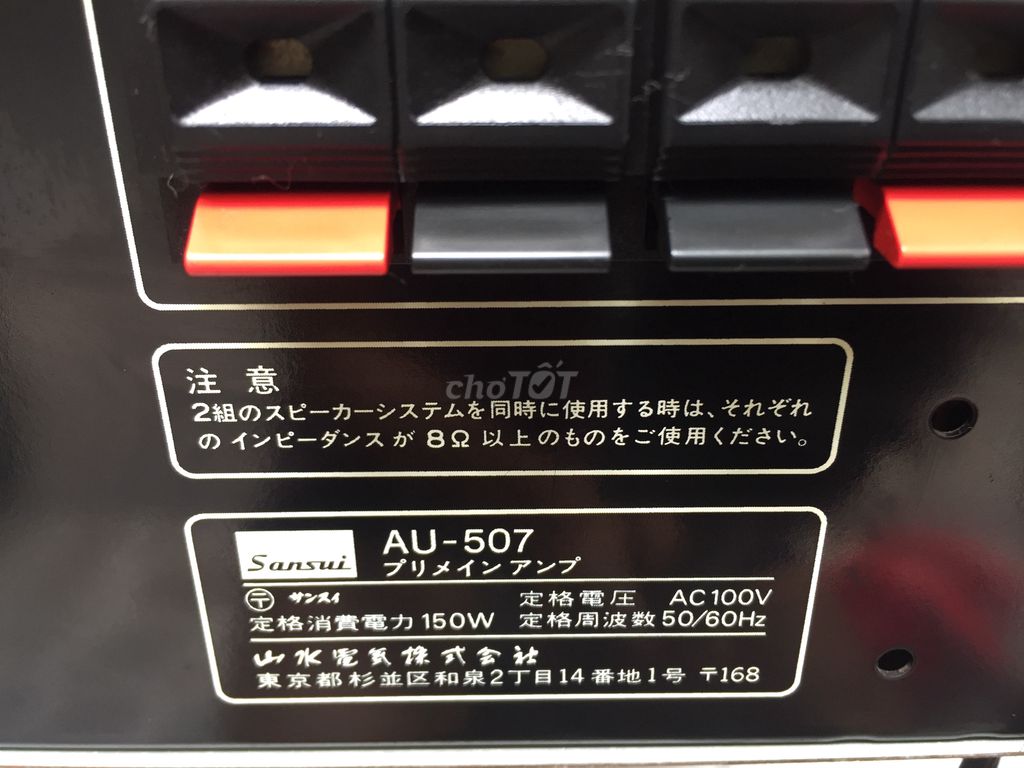
Hifi Engine was correct on the the AU-505 @ 12 watts (12 watts per channel RMS, both channels driven, 20Hz to 20kHz at rated distortion)
 
Last edited:

Nice finds - thanks! - I will add these later today. Keep them coming if you find more model omissions.
 
Last edited:

OK I captured everything, almost. I cannot find power for the AU-33 - that machine is like a ghost - nothing out there except for your photos - you or anyone have power spec? What looks like the int equivalent AU-4400 is rated at 20 watts which I went with. Odd the AU-33 was not named the AU-44 going with the AU-22 = AU-2200 theme.

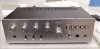
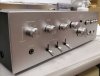
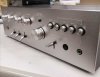
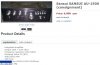
Also looks like the AU-2000 JDM version of the AU-505 international pushes a full extra watt - 13 watts AU-2000 vs 12 watts AU-505? The AU-2000, four digit number is kind of odd considering it's First Generation design, it's 1973 release year does line up with the Second Generation start which introduces four digit number series' though.
 
Last edited:

Nice. You know it's going to be interesting when the web address string includes multiple Japanese characters and ends with _SANSUI :). OK those are all captured. No power information for the AU-1500, though. Found a listing showing 58 watts but that seems high???
 
The AU 1500 seems to be identical to the exported AU 3900. Both are 22 Wpc. 58 Watts is the rated power consumption. I suspect the AU 1100 was its domestic predecessor with the chrome toggles. An earlier model AU22? had a din jack in the front for tape, with no Stereo/mono switch, but instead a mic selector. The volume setting for mic in the later versions allowed a mic to mix with whatever was selected I.e. Aux Tuner Phono. The AU33 pictured above appears identical in many ways to the 4400/4900.

Last night, I found an AU 3500 on a Russian (Moscow) site for sale about a year ago.

Edit: I am guessing that the AU 22 and AU 33 models found here are prototype amps of which very few were ever manufactured. I am also guessing the only rationale for their model numbers was their watts per channel they put out before distortion kicks in. This breaks with Sansui's numbering traditions. I suspect if this puzzle were done 20 years ago there would still be individuals within the Sansui ranks with living memory of the decisions made.

2nd Edit. We seem to have 24 AU-22's and 4 AU-33's in our serial num database. It is not possible to estimate how many were manufactured since multiple model types rolled off the assembly in any given month, but they were production models. Where is all this stuff today?
 
Last edited:
192783-7cd6f71b-sansui_au4400.jpg


https://audio-database.com/SANSUI/amp/au-5500-e.html


Here what I found
AU-22 STK016
AU-2200 STK016
AU-3300 NEC D188A B545A TO-3
AU-3500 NEC D188A B545A TO-3
AU-1100 TO-66
AU-1500 B509D TO-66
AU-3900 sanyo B509D TO-66
AU-4400 2sc1444 TO-66
 
Last edited:
Just a suggestion, you seem to be separating the "generations" by model numbers, but I wonder if you could indicate within "First Generation" those amps that are direct coupled vs. capacitor coupled? I'm much less familiar with the "Third Generation", but is there a further breakdown there also between the regular direct coupled amps and the DD/DC design?
 
@Peter lye Thanks for all of the new models - and for exorcising those rare pieces! I'll work on adding them all tonight. I have been saving screenshots of the listings you are posting. I'll include them in the thread.

@KeithD Yes for sure. Once we get the list (mostly) complete those would be interesting and useful categories to add along with - CC/DC/STK#/output transistor/VFET/any other valuable spec details? etc - thanks for the suggestion! And @Peter lye thanks for adding in the STK/output transistor spec a few posts above.
 
Last edited:
Nicely done, a lot of work!
Just to stir up some discussion. .
When do "we" decide when the next generation begins. Circuit topology, cosmetic design?
For example:
I would call first generation SS:
AU-777
AU-222
AU-555
AU-999

Second generation:
AU-666
AU-888

The following models are like a mix between first and second ( to be honest this is also applying to the AU-999) Cap coupled and quasi complementary outputs with the cosmetic design of the DC coupled circuit.
( For the AU-999 the opposite except the quasi complementary outputs).

AU-555A
AU-505
AU-101

But, I can live with calling all these models first generation. I would prefer to have a difference between quasi/ full complementary.

After this come the AU-x500 models
As far as I know this was a small line up.
AU-6500
AU-7500
AU-8500
AU-9500
There circuit design develops through the AU-5500/7700 and AU-2900/7900.
Here the cosmetic design is going back to the AU-777 with a twist.
Is this second generation?
The cosmetic design changes with the AU-5500-7700 through the AU-2900-7900, circuit is basically the same.
For me this is at least third generation.
Then it gets easy to the next generation ( fourth?), AU-607/707, different cosmetic design, layout and circuit.
For me the AU-D607/707/907/X1/907LIMITED belong to the same generation, but not to the AU-607/707, so fifth generation.
Why? In the AU-607/707 only dual-jfet differential in the output stage, no diamond differential, no high speed circuit and transistors in the Darlington stage.
I am curious what other people think of this generation division!

 
Nicely done, a lot of work!
For example:
I would call first generation SS:
AU-777
AU-222
AU-555
AU-999

Second generation:
AU-666
AU-888

The following models are like a mix between first and second ( to be honest this is also applying to the AU-999) Cap coupled and quasi complementary outputs with the cosmetic design of the DC coupled circuit.
( For the AU-999 the opposite except the quasi complementary outputs).

AU-555A
AU-505
AU-101

But, I can live with calling all these models first generation. I would prefer to have a difference between quasi/ full complementary.

After this come the AU-x500 models
As far as I know this was a small line up.
AU-6500
AU-7500
AU-8500
AU-9500
There circuit design develops through the AU-5500/7700 and AU-2900/7900.
Here the cosmetic design is going back to the AU-777 with a twist.
Is this second generation?
The cosmetic design changes with the AU-5500-7700 through the AU-2900-7900, circuit is basically the same.
For me this is at least third generation.
Then it gets easy to the next generation ( fourth?), AU-607/707, different cosmetic design, layout and circuit.
For me the AU-D607/707/907/X1/907LIMITED belong to the same generation, but not to the AU-607/707, so fifth generation.
Why? In the AU-607/707 only dual-jfet differential in the output stage, no diamond differential, no high speed circuit and transistors in the Darlington stage.
I am curious what other people think of this generation division!

"Just to stir up some discussion"
Yes. Please do :)

"When do "we" decide when the next generation begins. Circuit topology, cosmetic design?"
The way I broke the groups out was by major form factor. The listed generations "look" significantly different by groups, and these form factor steps seem to also represent major shifts in topology. Going more granular with topology and other design/engineering changes and details under the form factor generations would be super helpful and informative. Does this sound like a good approach? The objective here should be to provide useful and interesting development information a collector and or restorer would want and or need to know, and insure the list and information still communicates well. There is a lot of scattered information on the web and an enormous resource of knowledge in AK - this list looks like it's becoming a really good and comprehensive distillation. I've already learned a lot over the last few weeks of this discussion.

As soon I can catch the list up with @Peter lye model contributions it would be great to start on these additional design/engineering details, and also move into the Fourth and Fifth generations with whatever structure seems to make the most sense.

Definitely interested in all contributions and ideas to make the list "better".
 
Last edited:
Some pictures from the Sansui HiFi component series book.
Here you can see the release year according Sansui and some models next to/ on top of eachother to give a good idea from the design.

20221109_223215.jpg

20221109_223205.jpg


20221109_223126.jpg

20221109_223112.jpg

You can see here how different the AU-888 is from the AU-777/999 and AU-9500.
Also it is interesting to see that the AU-555A, AU-505 and AU-101 are not seen in this history or on Yahoo-auction-japan. Although there is an AU-2000 that looks like a silver AU-505 (not in this book, but you can see them in Japan).
Some really interesting models. Especially the QA-6000 in the design of the AU-7700.

16680302984171048830819373419531.jpg

Some prices from current products at the time of the release of this book (1977).

16680305368291850959164528981224.jpg


1668030586530193954436152615645.jpg
 
Back
Top Bottom