

You are using an out of date browser. It may not display this or other websites correctly.
You should upgrade or use an alternative browser.
You should upgrade or use an alternative browser.
SONY TA-1066: recap and restoration
- Thread starter Wombaton
- Start date

Wombaton
Active Member
Transistor mysteries
I am repeating here a shortened version of my list of transistors from post #2 that was compiled from the service manual:
Q101,Q201 | Phono amp | 2SC632A
Q102,Q202 | Phono amp | 2SA705
Q103,Q203 | Flat amp | 2SC632A
Q104,Q204 | Paraphase amp | 2SC632A
Q105,Q205 | Paraphase amp | 2SC632A
Q106,Q206 | Predriver | 2SA678
Q107,Q207 | DC bias supply | 2SC634A
Q108,Q208 | Driver | 2SC1124
Q109,Q209 | Driver | 2SA706
Q110,Q210 | Power amp | 2SC1061
Q111,Q211 | Power amp | 2SA671
The underscored 2SC632A, 2SC1124 and 2SA706 are identified as 'bad actors' by the AK community.
However, this list changed dramatically after an inspection of what is actually installed on the PCB (changes shown in bold):
Q101,Q201 | Phono amp | NEC C900 U34 (by case marking) [1]
Q102,Q202 | Phono amp | 2SA705
Q103,Q203 | Flat amp | NEC C900 U34 (by case marking) [1]
Q104,Q204 | Paraphase amp | 2SC632A
Q105,Q205 | Paraphase amp | 2SC632A
Q106,Q206 | Predriver | 34 A735 7 (by case marking) [2]
Q107,Q207 | DC bias supply | C1364 137 (by case marking) [3]
Q108,Q208 | Driver | 2SC1124
Q109,Q209 | Driver | 2SA706
Q110,Q210 | Power amp | 2SC1061 [*]
Q111,Q211 | Power amp | 2SA671 [*]
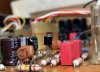
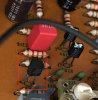
[1] Assuming that 'NEC C900 U34' == 2SC900, it is a poor substitute for 2SC632A, since its max Ic is ten times lower. So, although 2SC900 is NOT on the AK 'bad actor' list, my intention is to replace all of these with KSC1845F.
[2] Now, this one in the 106,206 position is a total mystery, as there is no 2SA735. If anyone can determine what that is (from the photo?), I'd be most grateful. It is staying put for now.
[3] C1364 == 2SC1364 in the 107,207 position actually is a legit replacement for 2SC634A, although with a lower hFE. Staying put.
[*] It looks like power outputs have been repaired in the past. One channel has the original combo of 2SC1061 / 2SA671, while the other has a combo of RCA SK3054 / RCA SK3084:
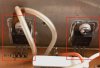
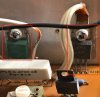
I wonder what to do in this case. The outputs are working and I have not observed any obvious asymmetry in their performance. On the other hand, nor have I tried any bias adjustments or done really critical listening. If it is advisable to replace these with symmetric output couples (with whatever feeble gain matching I could do with a simple TC1 tester), I guess I can make that happen. Would appreciate any advice here!
In general, it is remarkable how much the actual transistor roster differs from one in the manual. With the exception of the power outputs case (obvious repair), it is difficult to say with certainty if all other substitutions are original (done by SONY?) or later replacements (if they are, they have been done with quality equaling the original assembly).
THX!
I am repeating here a shortened version of my list of transistors from post #2 that was compiled from the service manual:
Q101,Q201 | Phono amp | 2SC632A
Q102,Q202 | Phono amp | 2SA705
Q103,Q203 | Flat amp | 2SC632A
Q104,Q204 | Paraphase amp | 2SC632A
Q105,Q205 | Paraphase amp | 2SC632A
Q106,Q206 | Predriver | 2SA678
Q107,Q207 | DC bias supply | 2SC634A
Q108,Q208 | Driver | 2SC1124
Q109,Q209 | Driver | 2SA706
Q110,Q210 | Power amp | 2SC1061
Q111,Q211 | Power amp | 2SA671
The underscored 2SC632A, 2SC1124 and 2SA706 are identified as 'bad actors' by the AK community.
However, this list changed dramatically after an inspection of what is actually installed on the PCB (changes shown in bold):
Q101,Q201 | Phono amp | NEC C900 U34 (by case marking) [1]
Q102,Q202 | Phono amp | 2SA705
Q103,Q203 | Flat amp | NEC C900 U34 (by case marking) [1]
Q104,Q204 | Paraphase amp | 2SC632A
Q105,Q205 | Paraphase amp | 2SC632A
Q106,Q206 | Predriver | 34 A735 7 (by case marking) [2]
Q107,Q207 | DC bias supply | C1364 137 (by case marking) [3]
Q108,Q208 | Driver | 2SC1124
Q109,Q209 | Driver | 2SA706
Q110,Q210 | Power amp | 2SC1061 [*]
Q111,Q211 | Power amp | 2SA671 [*]
[1] Assuming that 'NEC C900 U34' == 2SC900, it is a poor substitute for 2SC632A, since its max Ic is ten times lower. So, although 2SC900 is NOT on the AK 'bad actor' list, my intention is to replace all of these with KSC1845F.
[2] Now, this one in the 106,206 position is a total mystery, as there is no 2SA735. If anyone can determine what that is (from the photo?), I'd be most grateful. It is staying put for now.
[3] C1364 == 2SC1364 in the 107,207 position actually is a legit replacement for 2SC634A, although with a lower hFE. Staying put.
[*] It looks like power outputs have been repaired in the past. One channel has the original combo of 2SC1061 / 2SA671, while the other has a combo of RCA SK3054 / RCA SK3084:
I wonder what to do in this case. The outputs are working and I have not observed any obvious asymmetry in their performance. On the other hand, nor have I tried any bias adjustments or done really critical listening. If it is advisable to replace these with symmetric output couples (with whatever feeble gain matching I could do with a simple TC1 tester), I guess I can make that happen. Would appreciate any advice here!
In general, it is remarkable how much the actual transistor roster differs from one in the manual. With the exception of the power outputs case (obvious repair), it is difficult to say with certainty if all other substitutions are original (done by SONY?) or later replacements (if they are, they have been done with quality equaling the original assembly).
THX!
Last edited:

Oldsansui441
Super Member
Hi, if in doubt on the outputs TIP41C and TIP42C will do nicely. In regards to the 2SA735, the "A" looks a little strange from what l can see, is it possible that is a Matsushita (Panasonic) symbol and not an A. There is a 2SC735 small signal transistor that does exist, not saying this is the case here though.

gdbk
New Member
I really appreciate folks who are willing to put the time and effort into restoring older hi-fi gear.
I live in Japan and am involved in the Hi-Fi/High-End industry working mainly as a technical translator for one company at this time but it's a full salary job regardless of if they have documents for me to translate.
What I wanted to let you know about if you haven't been told this already is that Nichicon the capacitor company states clearly that all of their electrolytic capacitors regardless of model or style have a 10 year shelf life from the date of manufacture. The Electrolytics become unstable and they can't assure or guarantee the performance or reliability after 10 years. Resistors wise you have a huge selection and choice. I'm a huge fan of Dale resistors, the NS line specifically. Vishay is another that I use, their VSR line of resistors. Philips/Vishay is also nice sounding. I have no idea why Takman is favoured by so many as they tend to have a rolled off top and bottom end in sound and they lack a sense of timing that the Vishay VSR's have. Their 0.6watt resistor won't even sweat running them at 1.5watts constantly as I have and do.
In any case, good job on what you're doing. In today's throw-away generation I am a fan of restoring older equipment. There's a tone that can't be found in "vintage" equipment and it's a good tone!
I live in Japan and am involved in the Hi-Fi/High-End industry working mainly as a technical translator for one company at this time but it's a full salary job regardless of if they have documents for me to translate.
What I wanted to let you know about if you haven't been told this already is that Nichicon the capacitor company states clearly that all of their electrolytic capacitors regardless of model or style have a 10 year shelf life from the date of manufacture. The Electrolytics become unstable and they can't assure or guarantee the performance or reliability after 10 years. Resistors wise you have a huge selection and choice. I'm a huge fan of Dale resistors, the NS line specifically. Vishay is another that I use, their VSR line of resistors. Philips/Vishay is also nice sounding. I have no idea why Takman is favoured by so many as they tend to have a rolled off top and bottom end in sound and they lack a sense of timing that the Vishay VSR's have. Their 0.6watt resistor won't even sweat running them at 1.5watts constantly as I have and do.
In any case, good job on what you're doing. In today's throw-away generation I am a fan of restoring older equipment. There's a tone that can't be found in "vintage" equipment and it's a good tone!
Wombaton
Active Member
Hi, if in doubt on the outputs TIP41C and TIP42C will do nicely. In regards to the 2SA735, the "A" looks a little strange from what l can see, is it possible that is a Matsushita (Panasonic) symbol and not an A. There is a 2SC735 small signal transistor that does exist, not saying this is the case here though.
@Oldsansui441: THX again for your advice! I am not sure what to do about the outputs -- trying to solicit more advice at the moment. Got some additional choices for their replacement on my list: either KSD526Y / KSB596 or MJE150332G / MJE15033G. I have prior experience with the MJE1503xG series. Very beefy transistors, some of which happen to be in short supply at the moment.
Re mystery 'A735' transistor, SC735 is a good guess! However, here it cannot be an 'SC' one, as per schematic it is a PNP, while SC == NPN. In any case, whatever it is, I do not see a '735' on the original AK 'bad transistor' list, so probably it is Ok to keep for the time being.
Wombaton
Active Member
The early to mid 70's Sony equipment looks great. Much of it was well built and thought out. I have a Sony TA-3200F power amp. It has features I haven't seen on other power amps from that time.
I am surely envious of the TA-3200F power amp!


Lavane
Lunatic Member
It does have some features you don't see on many power amps. Built in speaker switching, two inputs, power output selector and gain controls.I am surely envious of the TA-3200F power amp!
gdbk
New Member
Have you tried looking for older, early 90's automotive amplifiers by Soundstream? They used a triple Darlington Array in their amplifiers and they were seriously robust. I had one for years and I only replaced it because I needed more power. I bet that some hi-end car audio amplifiers had some excellent transistors!
Wombaton
Active Member
Have you tried looking for older, early 90's automotive amplifiers by Soundstream? They used a triple Darlington Array in their amplifiers and they were seriously robust. I had one for years and I only replaced it because I needed more power. I bet that some hi-end car audio amplifiers had some excellent transistors!
@gdbk: Welcome to the forum! PLZ keep in mind, though, that this thread is discussing rather specific issues for a particular model of a SONY integrated amp. I do not believe that Darlington arrays harvested from some other amplifier will be helpful in this case. On the other hand, there are other threads around here (Unknown ancient transistors?) where such information would be more appropriate.
Re Nichicon electrolytics shelf life, etc.: I assume that whatever new Nichicon caps we purchase today to replace decades old electrolytic caps in vintage equipment (these are definitely out of spec) have been produced recently and have no problems with reliability. There is a useful newbie guide to capacitors posted around here that has much more information and is worth checking out:
https://audiokarma.org/forums/index.php?threads/newbie-cap-replacement-faq-primer.920473/
It is safe to assume that most other members know this stuff already

gdbk
New Member
@gdbk: Welcome to the forum! PLZ keep in mind, though, that this thread is discussing rather specific issues for a particular model of a SONY integrated amp. I do not believe that Darlington arrays harvested from some other amplifier will be helpful in this case. On the other hand, there are other threads around here (Unknown ancient transistors?) where such information would be more appropriate.
Re Nichicon electrolytics shelf life, etc.: I assume that whatever new Nichicon caps we purchase today to replace decades old electrolytic caps in vintage equipment (these are definitely out of spec) have been produced recently and have no problems with reliability. There is a useful newbie guide to capacitors posted around here that has much more information and is worth checking out:
https://audiokarma.org/forums/index.php?threads/newbie-cap-replacement-faq-primer.920473/
It is safe to assume that most other members know this stuff already
Got to inform you that I have been in the Hi-Fi industry professionally for 29 years now. Nichicon states very clearly and has manufacturing dates on their capacitors. Ten years regardless of use and they need to be replaced simply because they are electrolytic. Mostly all Nichicon caps are rated at 2000 hrs, the high temp bi-polar caps are upwards of 5000 hrs. Yes, it's safe to assume as you say, but a lot of people haven't been in the industry professionally for as long as I have. And I know I still have a lot to learn. As you said, you do not believe, but you do not know. So take your own advice? It's always worth looking for transistors from old gear that is still within spec. Modern replacements are not the same as the original, they might be better, or they might be worse. Data sheets and spec sheets do not tell the whole story about how they sound in a circuit but I'm positive that you know that since you seem to think that I am new to this sort of thing. I'm only new to the forum. I will now ignore you as you don't seem to have anything positive or productive to say. You've been a member of the forum since 2020, me, 2018. I just never posted before. Bye now!
Last edited:
Wombaton
Active Member
Brief update on transistor replacement
Here is what was done:
Phono amp: Q101/201 NEC C900 --> KSC1845F
Flat amp: Q103/203 NEC C900 --> KSC1845F
Paraphase amp: Q104/204, Q105/205 2SC632A --> KSC1845F (*)
Driver: Q108/208 2SC1124 --> Toshiba TTC004B (**)
Driver: Q109/209 2SA706 --> Toshiba TTA004B (**)
No issues, everything works fine after these upgrades and no errors found in PCB markings.
(*) I hit a particularly nice batch of KSC1845F transistors on the reel that had exactly the same specs. I used some from that batch to replace the Q104/105, Q204/205 differential pairs. This amp has no adjustments for DC offset bias. After replacing the differential pairs with KSC1845F, I did a crude measurement of DC offset getting < 9 mV on the R and < 10.5 mV on the L. Not bad at all! My hope is that, considering where these transistors are located (see image), they do not experience too much of a temperature gradient between them.

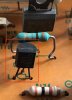
(**) For these replacements it is important to keep in mind that the old 2SC1124 / 2SA706 drivers have a EBC pinout (confirmed per service manual and direct tester check), while the new Toshibas have a ECB pinout. That is why they ended up twisted a bit in the picture above. They also need a larger diameter drill bit to clean out the PCB holes for mounting.
Here is what was done:
Phono amp: Q101/201 NEC C900 --> KSC1845F
Flat amp: Q103/203 NEC C900 --> KSC1845F
Paraphase amp: Q104/204, Q105/205 2SC632A --> KSC1845F (*)
Driver: Q108/208 2SC1124 --> Toshiba TTC004B (**)
Driver: Q109/209 2SA706 --> Toshiba TTA004B (**)
No issues, everything works fine after these upgrades and no errors found in PCB markings.
(*) I hit a particularly nice batch of KSC1845F transistors on the reel that had exactly the same specs. I used some from that batch to replace the Q104/105, Q204/205 differential pairs. This amp has no adjustments for DC offset bias. After replacing the differential pairs with KSC1845F, I did a crude measurement of DC offset getting < 9 mV on the R and < 10.5 mV on the L. Not bad at all! My hope is that, considering where these transistors are located (see image), they do not experience too much of a temperature gradient between them.
(**) For these replacements it is important to keep in mind that the old 2SC1124 / 2SA706 drivers have a EBC pinout (confirmed per service manual and direct tester check), while the new Toshibas have a ECB pinout. That is why they ended up twisted a bit in the picture above. They also need a larger diameter drill bit to clean out the PCB holes for mounting.
Last edited:
gdbk
New Member
There are cross-reference charts clearly showing replacements for the 2SA735.
I can purchase them new in Japan if you'd like 2SA735 right?
use google translate to view the page:
https://wakamatsu.co.jp/biz/products/detail.php?product_id=10110118
Shipping within Japan is bizarley expensive as most shops want a minimum order, but if it's something you need. I found it in 2 minutes.
You're welcome.
Cheers
I can purchase them new in Japan if you'd like 2SA735 right?
use google translate to view the page:
https://wakamatsu.co.jp/biz/products/detail.php?product_id=10110118
Shipping within Japan is bizarley expensive as most shops want a minimum order, but if it's something you need. I found it in 2 minutes.
You're welcome.
Cheers
Last edited:
gdbk
New Member
Also found this site
https://www.littlediode.com/components/2SA735.html
Not sure about how trust worthy this shop is and the price is pretty crazy.
https://www.littlediode.com/components/2SA735.html
Not sure about how trust worthy this shop is and the price is pretty crazy.
Last edited:
Wombaton
Active Member
There are cross-reference charts clearly showing replacements for the 2SA735.
I can purchase them new in Japan if you'd like 2SA735 right?
use google translate to view the page:
https://wakamatsu.co.jp/biz/products/detail.php?product_id=10110118
Shipping within Japan is bizarley expensive as most shops want a minimum order, but if it's something you need. I found it in 2 minutes.
You're welcome.
Cheers
Well, I am glad that 2SA735 was found. There is a very useful Excel sheet going around (made by @eizner23 if I am not mistaken) that compiles possible replacements for many older transistors. So, when I mentioned that 'A735' was missing, what I meant was that it is missing in that sheet.
Although I appreciate the offer, I do not believe that it is necessary because (to my incomplete knowledge) 2SA735 has not been flagged as a troublesome transistor. Therefore, the ones I have in the SONY amp are staying put. They are surely not making any noise, as far as I can tell.
Now, regarding other stuff: I do not question your professionalism, but I am making a point that this thread discusses a TA-1066 restoration. If we start discussing a lot of loosely related things here, this thread will definitely lose focus. Therefore, other interesting discussions, such as Nichicon electrolytics reliability (very important!), probably deserve to take place in their own threads, so that AK-ers could properly appreciate this information.
gdbk
New Member
You're right on the second part, people should be told the "facts of life" when it comes to electrolytics.
I can be a resource for you if you decide that you want to replace an otherwise blank listed part with virtually no information on English based websites.
Fortunately we have Audio Otaku or geeks in Tokyo in Akihabara or Electric Town which is now widely a maid cafe area. And full grown men buying dolls and buying clothes for them. Yeah, I know creepy.
The shop I linked to you is literally one of the very few places where you can find those hard to find parts.
Keep up your resto-mod! I think it's totally worth it.
Cheers.
I can be a resource for you if you decide that you want to replace an otherwise blank listed part with virtually no information on English based websites.
Fortunately we have Audio Otaku or geeks in Tokyo in Akihabara or Electric Town which is now widely a maid cafe area. And full grown men buying dolls and buying clothes for them. Yeah, I know creepy.
The shop I linked to you is literally one of the very few places where you can find those hard to find parts.
Keep up your resto-mod! I think it's totally worth it.
Cheers.
Wombaton
Active Member
Also found this site
https://www.littlediode.com/components/2SA735.html
Not sure about how trust worthy this shop is and the price is pretty crazy.
Looks like there is an NTE equivalent for 2SA735 closer to home (I have no experience with this store):
https://weisd.com/products/588932-2sa735-nte-equivalent-nte159-pnp-audio-amplfier-tr
Clicking on the 'new replacement part' link takes one to the NTE159 page that includes a data sheet.
Lavane
Lunatic Member
Little Diode has been useful for me in the past when looking for certain old stock parts. They are trustworthy.Also found this site
https://www.littlediode.com/components/2SA735.html
Not sure about how trust worthy this shop is and the price is pretty crazy.
gdbk
New Member
Little Diode has been useful for me in the past when looking for certain old stock parts. They are trustworthy.
Norton flagged the site as unsafe, I disregarded the notice to follow the link. Good to know they are trustworthy, but the price was somewhere above 14 pounds sterling. The Japanese site sells them at below 90yen a piece. much less than a dollar a piece. If I was to say order 2, I would be paying nearly 10x in just shipping. The same goes for taking the train to get there which takes just over 45 minutes. The store is 2 minutes walking from the station. But it's more intelligent still to mail order the transistors since they have a small store front with so many thousands of parts!
As long was we geeks continue to restore vintage gear, these stores will never go out of business, that is until the parts run out of stock.
Oldsansui441
Super Member
trying to solicit more advice at the moment. Got some additional choices for their replacement on my list: either KSD526Y / KSB596 or MJE150332G / MJE15033G. I have prior experience with the MJE1503xG series. Very beefy transistors, some of which happen to be in short supply at the moment.
The MJE's are very fast compared to the originals, that is one reason l suggested the TIP's. I have also used the MJE's as drivers many times in other suitable amplifiers.
The KSD526/KSB596 you listed would also be fine choices as would BD911/BD912.
Re mystery 'A735' transistor, SC735 is a good guess! However, here it cannot be an 'SC' one, as per schematic it is a PNP, while SC == NPN. In any case, whatever it is, I do not see a '735' on the original AK 'bad transistor' list, so probably it is Ok to keep for the time being.
Fair enough, yes l hadn't looked at the schematic to confirm that minor detail
 .
.DC offset getting < 9 mV on the R and < 10.5 mV on the L. Not bad at all! My hope is that, considering where these transistors are located (see image), they do not experience too much of a temperature gradient between them.
Nice clean work BTW and those are excellent offset figures.
Last edited:
Lavane
Lunatic Member
I normally go to Little Diode for those hard to find old stock parts that are just a better fit than something modern. It can be hit and miss though. The last items I bought from them were some arcane old regulators. I didn't want to modify the PCB and connections for something modern in a different package. The prices are higher. Probably due to tariffs. I know anything I get from England costs a lot more.Norton flagged the site as unsafe, I disregarded the notice to follow the link. Good to know they are trustworthy, but the price was somewhere above 14 pounds sterling. The Japanese site sells them at below 90yen a piece. much less than a dollar a piece. If I was to say order 2, I would be paying nearly 10x in just shipping. The same goes for taking the train to get there which takes just over 45 minutes. The store is 2 minutes walking from the station. But it's more intelligent still to mail order the transistors since they have a small store front with so many thousands of parts!
As long was we geeks continue to restore vintage gear, these stores will never go out of business, that is until the parts run out of stock.