• The move to the new server is done. There are some software and database maintenance updates in process. This has us passing the hat around to help out. We appreciate any donations. Seriously, even a dollar helps. The payment page may be found here - https://www.audiokarma.org/support.html
Still an accepted term. But I understand how some people are uptight about things that do not matter.

Everyone in this thread understands the term and how it is being used.

Carry on with your nits

At the very same time, people in the hifi hobby bicker about what constitutes a "sound stage" while others bicker about whether its even a real thing...with many insisting it's another figment of the imagination of over-invested audiophiles. I laugh lest I cry.
 
At the very same time, people in the hifi hobby bicker about what constitutes a "sound stage" while others bicker about whether its even a real thing...with many insisting it's another figment of the imagination of over-invested audiophiles. I laugh lest I cry.
I have said it many times, I am mostly here for the audiophoollery entertainment AK provides. I am laughing in most threads.

Edit: audiophiles and audiophools are two different things. :idea: well maybe not for some
 
Imaging, soundstage, envelopment, depth, it's all fake and a result of room dimensions and speaker placement.
Every once in awhile I hear an instrument being played back that sounds real which almost never happens. This is what is impressive, startling and enjoyable about sound reproduction. As I said it almost never happens because hi end audio is a swindle for dopes like us expecting something better to come along.

Sounds like your speakers are letting you down that's too bad or you just want to argue something. I find most songs have plenty of it. Depth and instrument placement is harder to come by as I do not listen to that type of music where they would try harder to capture that, but when it's there you can hear it.

50% of it is your mind in placing them which seems fake but it's doable and something you can't convince yourself of in a recording that doesn't have it.

Unlike most I feel a brighter room is needed to capture it the best, and why many took great efforts in reflecting speakers.

If one has speakers that you turn balance left or right and you just have a speaker kind of sitting there not filling the
space around it (what I would call easy to listen to or a non-fatiguing) speaker just won't cut it. A speaker that plays all the notes but is "not' willing to reveal all the harsh that is present in live music will be less reveling. Just one of mine will put up a 8-foot wall of surround around it no matter where you place it vs the very popular most loved speakers where a lone speaker is just sitting there sounding good but that's it.

Its essential to get speakers that are much bigger than themselves ( the lone speaker is the center of a wall of sound around the speaker but to your eyes and brain you should not be able to focus directly and single out the cabinet as the starting point.) to enjoy all the effects one can pull out of music, when both are playing, but many do like this type and label them shrill or harsh when often they are just reproducing what is there you just don't like it, but the ability is crucial when extracting nuances

Live music isn't nice, and your speakers shouldn't be either if you want a concert in your room. Which is why I always seek wide dynamic speakers that can be harsh but they didnt put it there they just reveal it so you have to live with it if like me you really enjoy the separation and effects of whatever you listen to which to me is one of the most enjoyable things about listening as there is (and often why the song is so cool or enjoyable.) a lot of cool stuff in there, but you need to recreate it live and not mask all the yucky stuff that's in there too.
 
Last edited:
At the very same time, people in the hifi hobby bicker about what constitutes a "sound stage" while others bicker about whether its even a real thing...with many insisting it's another figment of the imagination of over-invested audiophiles. I laugh lest I cry.

FWIW. Well then, nobody seems to want to admit, or at least, been willing to convey here, that sitting in front of their speakers, that since they are not at the studio, or in the recorded captured musical concert hall, that the reproduction, no matter how excellent the recording, playback equipment is the whole playback experience is really just an attempt of sonic illusion" of being present at the recorded environment.. o_O, :eek:

Serious attempts at playback will always be the attempt to try to recreate the mind`s ear "sonic illusion" from some time past audio recorded captured musical event no matter the recording technique`s spatial cues, whether truly naturally captured or artificially contrived.. :oops:, ;)

Just some noise, from me.. :crazy:
Carry on, folks, I`ll let myself out. :bye:
 
While it needs to be "in the recording" some speakers just don't do a good soundstage and/or imaging because of design or placement, even if it is in the recording.

And I'm not talking small, cheap speakers. The big JBL L200/L300s have lousy soundstage and imaging compared to what's out there (e.g., Harbeths, Magico, the Mermans). Even the review of the new JBL 15"/horn 2-way notes these problems, though not in so many words.

The horns are "phasey" and don't produce a solid focused image, be it in the center or not, regardless of how the horns are wired for phase with the woofers (IME L200/300). Same with the horns/tweeter interface, though not to the same degree. Some frequencies will always result in nulls while others in peaks, and this is both between the woofer/horn, and pair of speakers.

Additionally, the horn typically adds length and makes it so the drivers cannot be time coherent, unless bi-amped/delayed. I'm thinking that there are a world of speakers in use with horns and wave guides that suffer a similar fate. And this is worsened, significantly, by placing the speakers too far apart.

I'm thinking that perhaps some denyers just haven't listened to the right material on the right system.
 
One of the major reasons I favor planar speakers is because of their sound staging ability. When I first heard a pair (1976) I was blown away by the depth of the image. I was used to great left right imaging, but I'd never heard depth like they produced.
 
Did you ever listen to Sade's "Is It a Crime" (listening specifically for the congas in the background) ...
I just finished listening to it across three systems, followed by a couple reference tracks and back again. I've enjoyed her "best of" album for years with that track included. I know and enjoy it well.

Think of times when your perspective about music reproduction got instantly recalibrated after hearing particular systems and recordings. For me, I count four significant events since I was a teen. The last one raised the bar in transparency significantly and taught me a lesson along the way. I always brought music when I visited a reviewer friend on Long Island. A favorite piece of music of mine at the time was from a Dead Can Dance album. The first thing Harry commented when we played it on his spectacular system was its lack of apparent depth. Transparency and articulation were good but sure enough, on that system it's true character was laid bare.

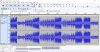
I need to carefully qualify my opinion in this case. IMHO, the Sade music similarly renders little real longitudinal depth between instruments and voice, despite the careful use of reverb with each - as heard on the music system. While rendered both clearly and dynamically, the congas are right there with her voice. Don't get me wrong - I think this is a wonderfully recorded album! Here's a glimpse of its wide dynamics via Audacity:

sade.jpg


Two out of three isn't bad at all. :)
 
Last edited:
One of the major reasons I favor planar speakers is because of their sound staging ability. When I first heard a pair (1976) I was blown away by the depth of the image. I was used to great left right imaging, but I'd never heard depth like they produced.
My first recalibration of just how realistic an audio system could be occurred in 1974 hearing Tympani IIIs tri-amped with Audio Research electronics. Gobsmacked.
 
I just finished listening to it across three systems, followed by a couple reference tracks and back again. I've enjoyed her "best of" album for years with that track included. I know and enjoy it well.

Think of times when your perspective about music reproduction got instantly recalibrated after hearing particular systems and recordings. For me, I count four significant events since I was a teen. The last one raised the bar in transparency significantly and taught me a lesson along the way. I always brought music when I visited a reviewer friend on Long Island. A favorite piece of music of mine at the time was from a Dead Can Dance album. The first thing Harry commented when we played it on his spectacular system was its lack of apparent depth. Transparency and articulation were good but sure enough, on that system it's true character was laid bare.

I need to carefully qualify my opinion in this case. IMHO, the Sade music similarly renders little real longitudinal depth between instruments and voice, despite the careful use of reverb with each - as heard on the music system. While rendered both clearly and dynamically, the congas are right there with her voice. Don't get me wrong - I think this is a wonderfully recorded album! Here's a glimpse of its wide dynamics via Audacity:

View attachment 2636843


Two out of three isn't bad at all. :)
Appreciate the time you took to listen to the track and your perspective. Not sure what to say except I hear the congas deeper in the sound stage than the other instruments and her voice. I distinctly remember when I got my Magnepan MMG's...my first dipole speakers...and listened to that track and how I was amazed at the perception of depth I'd never heard from that particular instrument in that particular tune. The speakers that preceded the MMGs were Vandersteen 2ci's, and they aren't particularly shabby when it comes to image and sound stage resolution. But the Maggie's added more depth than I'd heard before, period.
Oh well. Care to try another? The music is not necessarily my cup of tea, though I do find it entertaining. The band is Gogol Bordello and the track is "Start Wearing Purple". At around the 2:30 mark during a break in the song, a guy in the background sings the chorus acapella, and he seems to be coming from way back behind where all the other sonic content is presented in the playback. I've used that more than a few times to demonstrate sound stage depth to those who have never experienced it.
 
Care to try another? The music is not necessarily my cup of tea, though I do find it entertaining. The band is Gogol Bordello and the track is "Start Wearing Purple".
Found it with Qobuz on the "Voi-La Intruder" album.

I'm happy to give it a whirl, but I confess my references are largely acoustical.
 
Ok. I gave it a listen. Yes, "Wearing A Purple" is kinda out there.

The passage to which I think you refer is the voice with moderate reverb followed by an overdub of a previous phrase using some delay and a touch of attenuation to *connote* distance.

Fun, but...sorry not real to these ears. :)
 
Appreciate the time you took to listen to the track and your perspective. Not sure what to say except I hear the congas deeper in the sound stage than the other instruments and her voice. I distinctly remember when I got my Magnepan MMG's...my first dipole speakers...and listened to that track and how I was amazed at the perception of depth I'd never heard from that particular instrument in that particular tune. The speakers that preceded the MMGs were Vandersteen 2ci's, and they aren't particularly shabby when it comes to image and sound stage resolution. But the Maggie's added more depth than I'd heard before, period.
Oh well. Care to try another? The music is not necessarily my cup of tea, though I do find it entertaining. The band is Gogol Bordello and the track is "Start Wearing Purple". At around the 2:30 mark during a break in the song, a guy in the background sings the chorus acapella, and he seems to be coming from way back behind where all the other sonic content is presented in the playback. I've used that more than a few times to demonstrate sound stage depth to those who have never experienced it.

Nice, my alerts are saying you quoted me in this post but its @E-Stat :)

Exit: @tomlinmgt I am not seeing it if you did is why I mention it :thumbsup:
 
Last edited:
Ok. I gave it a listen. Yes, "Wearing A Purple" is kinda out there.

The passage to which I think you refer is the voice with moderate reverb followed by an overdub of a previous phrase using some delay and a touch of attenuation to *connote* distance.

Fun, but...sorry not real to these ears. :)

Thanks for playing!
 
Here is yet another example of the usefulness of having access to a high quality lossless streaming service. Qobuz has about half a dozen of their albums. I just needed to locate the track. I doubt you'd find many AKers who just happened to have that oddball track. ;)

It helps connect experiences for folks who would otherwise share in person.
 
Here is yet another example of the usefulness of having access to a high quality lossless streaming service. Qobuz has about half a dozen of their albums. I just needed to locate the track. I doubt you'd find many AKers who just happened to have that oddball track. ;)

It helps connect experiences for folks who would otherwise share in person.

Absolutely. I only know about that band because another AKer recommended I give them a listen and I found their stuff on Mog. That was almost ten years ago...and I can't possibly count how many times since then that I've been able to instantly find music others have recommended and given it a listen thanks to a streaming service. It's simply unmatched in that capacity. And that's enormously valuable to me.

And once I get my new listening space up and operating and have a better than decent rig set up in there, you can bet your backside I'll be hitting you up for some song lists so I can hear some of these exquisite live capture recordings you speak of.
 
Last edited:
Here is some fun for those that like to follow the bouncing ball around the sound field.
https://archive.org/details/PowaySymphonyOrchestra?and[]=date:2017-11-19*
All safe, free downloads, authorized by the orchestra.

What it is, is two, two channel stereo master recordings, of a classical orchestra concert. The mics were out at 2nd row, center.
There is also a third version, for comparison, where the two stereo recordings were simply overlaid over each other, to create a four mic mix, from two stereo masters.
In this image, you can see my microphone array, at least in part. There are three mics of four visible. There are two miniature omnidirectional mics, DPA 4060 pair, spaced about 36" apart on a spreader bar, and, a pair of wide-cardioid Line Audio CM3 as wide-ORTF stereo (20cm at capsules, 110º combined off-axis response; like this-> \___/ ). They were captured as discrete stereo tracks, but arranged as a four channel array, and later mixed in what is referred to as the Faulkner Technique (a variant of,..), a four channel recording technique.
A1.jpg

My array is somewhat hidden by the maestros pants. You can see the right CM3 wide-cardioid mic, barely, as the blackness between his knees; the left CM3 is obvious and outside his left knee (I'm actually out at 2nd row for mics, and balcony for pics). You can also see the miniature omnis as little blips sticking up at the end of the spreader bar.
The larger mic, on the podium, at his feet, is for the house PA, for spoken word; not mine.
 
Last edited:
Back
Top Bottom