

You are using an out of date browser. It may not display this or other websites correctly.
You should upgrade or use an alternative browser.
You should upgrade or use an alternative browser.
Soundstage from two channels: where does it come from?
- Thread starter MarmotDavid
- Start date


three-track deck
Apologies for the diversion, but I'd like to thank you for (what was for me) an interesting diversion. I had no idea that this was a thing.

JoeESP9
ESL's & tubes since 83
Apologies for the diversion, but I'd like to thank you for (what was for me) an interesting diversion. I had no idea that this was a thing.
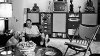
There were also 3 track decks used in some homes. How about Ol' Blue Eyes at home?

Attachments
Last edited:

Apologies for the diversion, but I'd like to thank you for (what was for me) an interesting diversion. I had no idea that this was a thing.
IIRC, Tusk was recorded on the 3-track deck.

MarmotDavid
New Member
I see what you are saying here. There would be no way to measure the subjective perception of soundstage for the reasons you nicely stated.OK...,
Let's say that the "expansion" of sound is due to panning and phasing cues, speaker/listener placement, and the electronic components (e.g., separation).
Therefore, the sounstage/imaging will vary with the components, the piece of music being played (because of the way the engineer engineered it), the speakers, and distance/toe between/of the speakers, how far the listener sits, and the acoustics of the venue. To quantifiably measure soundstage/imaging would then require all of these parameters to be the same so that we can look at each component individually. There is no accepted set-up of all of these parameters that would allow for an objective and repeatably measureable sounstage/imaging.
I was thinking of a different way to measure, more of an objective bench measurement. So, say someone developed some analytical software that would extract spatial cues (phasing, separation, other cues) as a data set from a known given recording that we all generally agreed (subjectively) had ample imaging material built into the recording, like some of the recordings being discussed in this thread. This proposed analytical program would be in the domain /skillset of someone with an acoustic engineering background. Say such a data set (let's call it the" reference data set") was as much as possible, devoid of any alteration by an amp, preamp, DAC or other audio device in this first step. In the second step, the same original reference recording is then run through the component being tested and the same analytical program is then run on the signal that is output from the component being tested, producing a data set for spatial cues from the component being tested (the "tested data set"). Finally, in a third step, the "reference data set" and the "tested data set" could be compared to see how much of a deviation there is and also compared to the deviations of many tested components. This kind of test could only be used, I think, for components in the signal path like preamps and power amps. If I had the skill to do this work, I'd like to do it myself. This kind of comparison of data sets might lead to an understanding of why and how certain components pass the spatial cues through their circuitry/ topology. I'm sure what I am proposing is full of many technical issues yet to be solved, but the outline of the concept is interesting to me. Maybe there is something like this already in practice in amplifier development circles or in some obscure article in the Journal of Audio Engineering.
Last edited:
L. Larabee
Active Member
I see what you are saying here. There would be no way to measure the subjective perception of soundstage for the reasons you nicely stated.
I was thinking of a different way to measure, more of an objection bench measurement. So, say someone developed some analytical software that would extract spatial cues (phasing, separation, other cues) as a data set from a known given recording that we all generally agreed (subjectively) had ample imaging material built into the recording, like some of the recordings being discussed in this thread. This proposed analytical program would be in the domain /skillset of someone with an acoustic engineering background. Say such a data set (let's call it the" reference data set") was as much as possible, devoid of any alteration by an amp, preamp, DAC or other audio device in this first step. In the second step, the same original reference recording is then run through the component being tested and the same analytical program is then run on the signal that is output from the component being tested, producing a data set for spatial cues from the component being tested (the "tested data set"). Finally, in a third step, the "reference data set" and the "tested data set" could be compared to see how much of a deviation there is and also compared to the deviations of many tested components. This kind of test could only be used, I think, for components in the signal path like preamps and power amps. If I had the skill to do this work, I'd like to do it myself. This kind of comparison of data sets might lead to an understanding of why and how certain components pass the spatial cues through their circuitry/ topology. I'm sure what I am proposing is full of many technical issues yet to be solved, but the outline of the concept is interesting to me. Maybe there is something like this already in practice in amplifier development circles or in some obscure article in the Journal of Audio Engineering.
The swindle of hi end audio is the brain-dead adherence to stereo reproduction and these attendant 'technical' questions about theoretical reasons for 'whatever’ instead of facing the facts. Such as listening to any tv commercial in DD5.1 vs almost all cd quality recordings in 2 ch. and hearing the professionalism of a surround format recording that offers an ease of listening that proves the shortcomings of stereo because all of these bullshit impressions of imaging, soundstage, depth, etc. are fixed values baked into the format and never questioned from system to system.
There is a repeatability to surround reproduction that allows for, on the one hand, an easier interpretation of the quality of the recording and, on the other hand, it being so uniformly agreeable to most listeners, questions of accuracy or euphonics need not to be asked.
When engineers in the movie industry (the best) decide to record popular music in a multichannel format the premium audio business is dead as a doornail.


The swindle of hi end audio is the brain-dead adherence to stereo reproduction and these attendant 'technical' questions about theoretical reasons for 'whatever’ instead of facing the facts. Such as listening to any tv commercial in DD5.1 vs almost all cd quality recordings in 2 ch. and hearing the professionalism of a surround format recording that offers an ease of listening that proves the shortcomings of stereo because all of these bullshit impressions of imaging, soundstage, depth, etc. are fixed values baked into the format and never questioned from system to system.
There is a repeatability to surround reproduction that allows for, on the one hand, an easier interpretation of the quality of the recording and, on the other hand, it being so uniformly agreeable to most listeners, questions of accuracy or euphonics need not to be asked.
When engineers in the movie industry (the best) decide to record popular music in a multichannel format the premium audio business is dead as a doornail.
It is a different sense of envelopment between the two formats. Additionally, how many people dedicate the time and $$$ for the other three+ speakers to that of two mains? Finally, there is still plenty to be gained by speakers that soundstage/image well in presenting a solid image when used in 5.1+ channel formats. Not everything is dead center nor off to one side or the other.

mfrench
Addicted Member

In this one, you can hear exactingly precise details, i.e., elevations, the soloists distance from the mics and the direction the player is facing, and precise localization of a 20'+ wide sound field of players. The soloist will regularly walk around the binaural head, and play solos to it, and, also play to the audience. The head is essentially just outside of what would be a presumed line that would close the ensembles U shape. And, yes you can capture that type of detail with two channel stereo.
That two channel effort was backed up by another stereo pair recording just in the image-left at center height on the side.
As a 45 year live music remote recordist, two channel stereo specialist, I beg to differ about sound effect guys being the best at recording music.
Why so low with the head? because of the audience, and that their enjoyment comes first. I don't block sight lines with big mic arrays. I stay at the height of the music stands, or below, and disappear into their blackness.
JoeESP9
ESL's & tubes since 83
The swindle of hi end audio is the brain-dead adherence to stereo reproduction and these attendant 'technical' questions about theoretical reasons for 'whatever’ instead of facing the facts. Such as listening to any tv commercial in DD5.1 vs almost all cd quality recordings in 2 ch. and hearing the professionalism of a surround format recording that offers an ease of listening that proves the shortcomings of stereo because all of these bullshit impressions of imaging, soundstage, depth, etc. are fixed values baked into the format and never questioned from system to system.
There is a repeatability to surround reproduction that allows for, on the one hand, an easier interpretation of the quality of the recording and, on the other hand, it being so uniformly agreeable to most listeners, questions of accuracy or euphonics need not to be asked.
When engineers in the movie industry (the best) decide to record popular music in a multichannel format the premium audio business is dead as a doornail.
Oh boy! That's just what I needed. A relative newbie telling me I've been doing it wrong.

NH-MAN
Addicted Member
The swindle of hi end audio is the brain-dead adherence to stereo reproduction and these attendant 'technical' questions about theoretical reasons for 'whatever’ instead of facing the facts. Such as listening to any tv commercial in DD5.1 vs almost all cd quality recordings in 2 ch. and hearing the professionalism of a surround format recording that offers an ease of listening that proves the shortcomings of stereo because all of these bullshit impressions of imaging, soundstage, depth, etc. are fixed values baked into the format and never questioned from system to system.
There is a repeatability to surround reproduction that allows for, on the one hand, an easier interpretation of the quality of the recording and, on the other hand, it being so uniformly agreeable to most listeners, questions of accuracy or euphonics need not to be asked.
When engineers in the movie industry (the best) decide to record popular music in a multichannel format the premium audio business is dead as a doornail.
Thanks for letting me know I am Brain dead for enjoying all that 2 ch has to offer all this time. I have never had the need for 5channel music maybe the speakers you have had really suck at reproducing all the cool stuff I have been hearing all this time.
Professionalism of surround sound seems a lot easier when you have Mutiple speakers to play with than just two.
Thanks for telling us both formats have effects imbedded into them as I wasn't sure.
I cannot think of any need for 5 channel music listening as I have never ever seen an instance where the musicians are scattered around the room in a circle with the audience in the middle. So, that would be dumb and not realistic at all other than someone liking it for whatever reason, but it would be everything other than realistic.
NH-MAN
Addicted Member
As far as I am concerned live music isn't all that spectacular there is no real sound stage or such but there is plenty of dynamics to it being there in the moment from whoever is playing but realistically it's just noise from a stage in front of you sitting in the Audience.
The biggest part for me when listening to music is hearing all the artificial stuff in recorded music. I try to listen to and find all of it and its correlation to the song as a whole it can be extremely immersive, fun, startling at time as it catches you off guard with something they throw in but in no way would I expect anything like it live. It's what they wanted it to be in the end. I only seek out speaker's that are very dynamic and much bigger than themselves as its critical to hearing and enjoying all the cool stuff embedded which is a priority for me.
Those who do not seek out such will not be impressed or believe all the things I can recreate are even there.
When recorded they try to make a sweet spot for you which isn't there live to help immerse you since you are not there in the moment when all your senses were being very active and entertained.
Studio music they just try to make "THIER" sound and I enjoy all they do to it and how it came out. They can make it wild or smooth which makes and sets the image they have in their head they want you to hear. Its wont sound that way live but we know and are ok with that as it will be replaced with all the sensory information one gets "watching" live"
Many won't add much as you are home in a sweet spot listing but since the did not add a lot they can sound surprising the same live even though you are just sitting somewhere in the audience. They didn't add a lot in the studio so just playing it the same with all the right pieces is doable live.
I do not go see a lot of bands play but if I do it will be ones that I know will sound and can recreate live extremely close to how they recorded it as I will enjoy the show that much more as there will be no holes to fill in vs what I am used to hearing in the recorded version.
Dark Side of the Moon was maybe just an example of an album that was probably one of the first most immersive albums that any crappy stereo could help you get lost in its effets or soundstage and that was its point but it is not going to happen live, but you will still enjoy them live.
The biggest part for me when listening to music is hearing all the artificial stuff in recorded music. I try to listen to and find all of it and its correlation to the song as a whole it can be extremely immersive, fun, startling at time as it catches you off guard with something they throw in but in no way would I expect anything like it live. It's what they wanted it to be in the end. I only seek out speaker's that are very dynamic and much bigger than themselves as its critical to hearing and enjoying all the cool stuff embedded which is a priority for me.
Those who do not seek out such will not be impressed or believe all the things I can recreate are even there.
When recorded they try to make a sweet spot for you which isn't there live to help immerse you since you are not there in the moment when all your senses were being very active and entertained.
Studio music they just try to make "THIER" sound and I enjoy all they do to it and how it came out. They can make it wild or smooth which makes and sets the image they have in their head they want you to hear. Its wont sound that way live but we know and are ok with that as it will be replaced with all the sensory information one gets "watching" live"
Many won't add much as you are home in a sweet spot listing but since the did not add a lot they can sound surprising the same live even though you are just sitting somewhere in the audience. They didn't add a lot in the studio so just playing it the same with all the right pieces is doable live.
I do not go see a lot of bands play but if I do it will be ones that I know will sound and can recreate live extremely close to how they recorded it as I will enjoy the show that much more as there will be no holes to fill in vs what I am used to hearing in the recorded version.
Dark Side of the Moon was maybe just an example of an album that was probably one of the first most immersive albums that any crappy stereo could help you get lost in its effets or soundstage and that was its point but it is not going to happen live, but you will still enjoy them live.
Last edited:
NH-MAN
Addicted Member
Dark Side of the Moon was maybe just an example of an album that was probably one of the first most immersive albums that any crappy stereo could help you get lost in its effets or soundstage and that was its point but it is not going to happen live, but you will still enjoy them live.
Funny thing about DSOTM is moving up the Audio ladder from some, I would say decent all-in ones from the seventies to eighties that had good size speaker boxes but just a decent 5 or 6 ich driver in them except for the obvious abilty to play higher and lower notes you don't really gain much over the immersive qualities of some of the songs with a nicer system. It just wasn't needed to get your depth, spaciousness and everything put into it, a full ranger was perfectly capable of it and actually better than a lot of other speakers no matter the cost. I think the ability to sound so cool on an average kids' stereo made your friends want the album to and why they sold alot as they knew it would sound cool and spacy while they were sitting at home all stoned chilling out with what they had;
I am typing on an old Lenovo laptop its nothing special and its nothing I seeked out but what it amazingly can do is recreate any effects embedded in a song. It just has two tiny oval speakers that look like mini versions of the KEF oval woofer.
so it has these in the front facing down and the first reflection point would line up where one's ears would be sitting at it and at the same width as your ears are from each other. They are amazing little things as what frequencies they can do are astonishingly perfect and as good as my system upstairs.
Any hoo even though they are right here Infront of me this thing can make any sound stage that's embedded in much sound exactly like it would up stairs. The laptop can do it all from not sounding like its Infront of me to being 4ft wide from each side of it and everything in between. I can't count how many times i have heard things in a song that startled me bad enough I was what the f was that as your looking around the room as it didn't come from right here in front of me. Dont know how it does it and it doesn't matter, but I know when I go up stairs it will all be present on my system. Kudos to whomever made these little speakers they blow my mind daily.
So, I guess I do not understand those that might deny all these things exist in a recording as they are there and real and if you are not hearing it like I do it just might be that is not the sound you are seeking as it is there you just might need a speaker that is different from your Ideal to get it all.
I stumbled upon an old laptop that can create an 8 ft circle around you (boggles my mind) but is repeatable upstairs. I choose speakers for the ability to do such things the laptop, well sometimes people make things that come out right and i got lucky and get to enjoy their job well done.
like people who enjoy deep bass or sweet highs seek what they like I seek wide and dynamic where this all comes alive. A little 5 inch speaker can many others don't do it very well, actually a lot don't do it very well.
Last edited:
Those of use with “premium audio” didn’t purchase it for pop music.When engineers in the movie industry (the best) decide to record popular music in a multichannel format the premium audio business is dead as a doornail.
At the expense of confusing the issue with facts, MC versions of pop music have been available on SACD and DVD-A for over twenty years.


tomlinmgt
Lunatic Member
The swindle of hi end audio is the brain-dead adherence to stereo reproduction and these attendant 'technical' questions about theoretical reasons for 'whatever’ instead of facing the facts. Such as listening to any tv commercial in DD5.1 vs almost all cd quality recordings in 2 ch. and hearing the professionalism of a surround format recording that offers an ease of listening that proves the shortcomings of stereo because all of these bullshit impressions of imaging, soundstage, depth, etc. are fixed values baked into the format and never questioned from system to system.
There is a repeatability to surround reproduction that allows for, on the one hand, an easier interpretation of the quality of the recording and, on the other hand, it being so uniformly agreeable to most listeners, questions of accuracy or euphonics need not to be asked.
When engineers in the movie industry (the best) decide to record popular music in a multichannel format the premium audio business is dead as a doornail.
Word salad with a BS vinaigrette dressing.
HungryEars
Well-Known Member
I had a pair of BT speakers that had a dual mode 2 run each of them as a left and right channels that created an atmos effect....the thing about them is they had 3 radiator panels. one on each side and on the back, a huge pair of BT speakers with 30 watts i think it was each, each had 2 3.5 inch woofers and 2 tweeter. I feel like it created a dipole type effect and the softwear was designed to take advantage of the effect of the 3 dimensional sounds. working phase into it.
the sound was really cool, but i choose to take one to work and one at home. still have one, but it will go to new work place, the old one was trashed at old job.
I think a few years back the direct reflecting speakers would be good for creating soundstage. but more a synergy between the speakers and the recording process is the secret to soundstage....less to do with amps and pre amps...unless you have some surround sound type encoders running.
the sound was really cool, but i choose to take one to work and one at home. still have one, but it will go to new work place, the old one was trashed at old job.
I think a few years back the direct reflecting speakers would be good for creating soundstage. but more a synergy between the speakers and the recording process is the secret to soundstage....less to do with amps and pre amps...unless you have some surround sound type encoders running.
L. Larabee
Active Member
A question asked hundreds of times over the years with twenty different answers, and that just in one thread. Someone is definitely full of **** or aiming to keep the less informed in the dark about the possibilities in sound reproduction.Word salad with a BS vinaigrette dressing.
The OP’s original claim of stereo not having 3 dimensions for starters and, the advantage of multichannel to allow audiophiles a chance to ignore that unbearable urge to listen critically at every opportunity and ruin any reason to pursue this in the first place.
tomlinmgt
Lunatic Member
A question asked hundreds of times over the years with twenty different answers, and that just in one thread. Someone is definitely full of **** or aiming to keep the less informed in the dark about the possibilities in sound reproduction.
The OP’s original claim of stereo not having 3 dimensions for starters and, the advantage of multichannel to allow audiophiles a chance to ignore that unbearable urge to listen critically at every opportunity and ruin any reason to pursue this in the first place.
I can say with absolute certainty that any and every person who is participating in this discussion that has experienced a three- dimensional sound stage and knows how to achieve it is more than willing to help others achieve it, too. This notion that there's some deliberate intent to keep it secret or keep those who haven't experienced it in the dark or whatever is laughably absurd. Where the hell do you come up with that stuff???
I've tried to address your second paragraph, but it's about as coherent as a triple stack of Kabuki speakers.

I want the 3D in front of me, not me in the middle of it.
All audiophiles I know listen critically when they get something new or change something, but most of the time they listen for enjoyment.
All audiophiles I know listen critically when they get something new or change something, but most of the time they listen for enjoyment.