
QuarterCuban
New Member
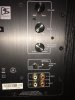
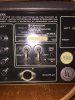
How can I connect my sub? I don't want to blow anything up. The bridges and "power in" throw me off.



"Inputs and outputs are line-level RCA. The outputs are high-passed."
I found this info but I don't know what it means...


"Inputs and outputs are line-level RCA. The outputs are high-passed."
I found this info but I don't know what it means...

roger2 said:... routed through a high-pass filter in the sub, which would affect sound quality to some unknown degree....whether this is audible, or not, depends on the quality of that filter and will be up to your ears to decide.
...
"Inputs and outputs are line-level RCA. The outputs are high-passed."
I found this info but I don't know what it means...
What frequency does it list for the high pass?
What are the speakers you'd be using in this setup?
I couldn't find info in the frequency of the high pass.
The speakers at the present time are Klipsch RB-51 II bookshelf speakers but who knows what might fall in my lap in the future..
I'm liking the idea of not using the subs filter at all...
Certainly your call, but with a bookshelf speaker there is very valid point to unburden them by not sending frequencies they can't reproduce well.
It's rather cliche, but trying it both ways is pretty valid in this case. Knowing the HPF would help but if it's not listed it's not listed.
Of bigger consideration than the quality of the filter, I think, is whether the filter aligns well with the characteristics of the main speakers.
What frequency does it list for the high pass?
What are the speakers you'd be using in this setup?
It could be a factor ....if the sub had no crossover frequently adjustment knob. Even without the adjustment, I disagree that how well the filter "aligns with the main speakers" is a bigger consideration, although I do agree that it would be more significant in that case.
The sub could possibly employ cheap or inferior components, or poor design, in its HPF as what happens in the main speakers (fed through the sub's line outs) may not have been a high priority of the sub manufacturer. The intent of my post was simply to make the OP aware of the possibility, as it is not possible to speak in certain terms here. Depending on the ear of the listener and the quality of the main speakers, neither of which is known, sound quality could be compromised by the sub's HPF. Remember, the frequencies produced by the main amp/speakers contains the bulk of the audible frequency range including the frequencies to which human hearing is most sensitive.
85Hz isn't too bad. I was hoping it wouldn't be something like 120Hz.
Don't know which you will ultimately prefer, but I think it's worth trying. Especially if you like to get cranky with the system every now and then.


