• The move to the new server is done. There are some software and database maintenance updates in process. This has us passing the hat around to help out. We appreciate any donations. Seriously, even a dollar helps. The payment page may be found here - https://www.audiokarma.org/support.html

sunday morning organ salvage comin down...

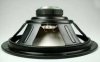
Its permmagnevox you want fieldmagnevox.

The ones I was referring to have coils of wire instead of permanent alnico magnets in the motor assembly they require a separate power supply or for the feild or you'll barely get sound out of them.
Alnico is good, but it loses magnetism over the years. Feild coils get remagnetized every time you put current through them, so your motor never suffers age fatigue...
My personal opinion is that they are some really excellent drivers...
The alnico version should be alot of the same good stuff, but without the need for a separate power supply...

Don't most field coil designs use the coil as the filter inductor for the power supply? That eliminates the need for a separate supply. Maybe this is only applicable to class A amps with constant current draw. Not something I've studied...

Jack
 
Sometimes but not always.
I couldn't say "most"
Most of it was in the dump prior to my birth...

What I've tended to find, is that cheaper units did steal power from the power amplifier, or put to use power that needed to be dumped somewhere (field coil or choke) think tombstone radios...

Bigger organs and professional distributed sound systems tended to use separate power supplies or run them as their own B+ node. Keep in mind that by the 70s most of that equipment had been pulled from service and virtually none of it is still in its original application today.
Most is landfill but collectors have horded their bits too, and what survived is what we get to see and learn from.
 
Last edited:
Lots of good field coil speakers out there ,Jensen made some good one as well as others that command $$.,there's even high price floor radios that came with some of these speakers that people strip out the speaker and sell it separately from the radio it was in .It's shame that some of those radios land up in the dump or parted out.
 
Its permmagnevox you want fieldmagnevox.

The ones I was referring to have coils of wire instead of permanent alnico magnets in the motor assembly they require a separate power supply or for the feild or you'll barely get sound out of them.
Alnico is good, but it loses magnetism over the years. Feild coils get remagnetized every time you put current through them, so your motor never suffers age fatigue...
My personal opinion is that they are some really excellent drivers...
The alnico version should be alot of the same good stuff, but without the need for a separate power supply...

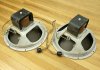
got me curious. never head of that type of driveer. the pics i posted--is that field coils?
 
Yours looks to me to be a permanent magnet version which is very similar.
Probably uses the same frame voice coil and cone, just a different motor.
And the Jensen field coil speakers are not a lot different. Magnevox and Jensen were in cahoots for a while,but i don't remember all of the history on the topic.
 
PS, if your gonna be taking an amp from an organ, check out the Hammond H-111. Years ago I had the amp & separate power supply from one and it was to me the "Holy Grail" of organ amplifiers. It was a 3 channel amp, two of the channels being push pull EL-84s, and the bass channel was push pull 5971s. The power supply had two 5AR4s, one dedicated exclusively to the 5971s and the other powered the EL-84 channels plus the tone tubes (A bunch of 12AX7s if I recall correctly, which were on a third chassis that I didn't keep). I used the EL-84 sections as left and right midrange & highs, and of course the 5971 section as a center channel bass. In short, it cranked & sounded great, after I had my fun with it I sold it to a fellow tube amp hobbyist for a pretty tidy sum, the tubes alone were worth good money even way back then.

PS, If you have a source for schematics, check out the H-111 and I'll bet it ends up on your wanted list ;)
 
That AO-63 doesn't look like what I had. Mine had a separate power supply chassis with one huge power transformer, two chokes, and two 5AR4 rectifiers. The amp Chassis had 4 EL-84 and two 5971 tubes as well as some smaller tubes which I believe at least some of were 7199s . I may be off on the model number, I was almost certain it was an H-111 but it's been so long I could be mistaken.
 
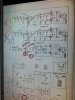
I found a not so great looking copy of the H-111 schematic out here in internetland, and this schematic is the amp I had. Disregard the red writing on it, the image is not mine. The three separate amps were all on one chassis, with the power supply separate.

IMG_1837 (1).jpg
 
That AO-63 doesn't look like what I had. Mine had a separate power supply chassis with one huge power transformer, two chokes, and two 5AR4 rectifiers. The amp Chassis had 4 EL-84 and two 5971 tubes as well as some smaller tubes which I believe at least some of were 7199s . I may be off on the model number, I was almost certain it was an H-111 but it's been so long I could be mistaken.
You are absolutely correct. The AO-63 that I have is from the E-100 series, not H-100. My poor memory was triggered by the mention of 7591 output tubes. Very sorry.

Jack
 
PS, if your gonna be taking an amp from an organ, check out the Hammond H-111. Years ago I had the amp & separate power supply from one and it was to me the "Holy Grail" of organ amplifiers. It was a 3 channel amp, two of the channels being push pull EL-84s, and the bass channel was push pull 5971s. The power supply had two 5AR4s, one dedicated exclusively to the 5971s and the other powered the EL-84 channels plus the tone tubes (A bunch of 12AX7s if I recall correctly, which were on a third chassis that I didn't keep). I used the EL-84 sections as left and right midrange & highs, and of course the 5971 section as a center channel bass. In short, it cranked & sounded great, after I had my fun with it I sold it to a fellow tube amp hobbyist for a pretty tidy sum, the tubes alone were worth good money even way back then.

PS, If you have a source for schematics, check out the H-111 and I'll bet it ends up on your wanted list ;)

oh man that sounds really cool. ima hunt for pics.
 
ive finished the complete disassembly of one organ and the removal of audio components of another, and i have some questions i reckon the community may help teach and inform me.

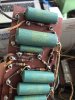
1. the caps and resistors of use to anyone? if so, do i try to de-solder or just clip em out?

32C71B31-BB50-4094-9D4B-72521802CB5D.jpeg E834B22B-1941-445A-8C74-7C65464B97B9.jpeg
B1A29595-3886-47D4-8202-341C4B96722A.jpeg

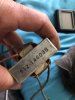
2. theres one of these on at the end of every bosrd/section lf the tone generator. the darker beown appears to be wax. what is it? anyone have an idea?
800B12EA-B790-49E2-93F4-4D4411B3705E.jpeg

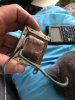
3. this lil transcormer-lookin component look familiar?
0172FDA5-DCFC-477E-943B-7DB46B080073.jpeg
 

Attachments

  • B9EC0C19-D80B-4844-A2E1-68798A1BD08E.jpeg
    B9EC0C19-D80B-4844-A2E1-68798A1BD08E.jpeg
    88.3 KB · Views: 6
IMO, new caps are too cheap to use components that are already 50 years old. That's especially true when the older parts might determine the safety of the tubes that surround them. :)

Jack
 
IMO, new caps are too cheap to use components that are already 50 years old. That's especially true when the older parts might determine the safety of the tubes that surround them. :)

Jack
You can test those caps by tossing them into an empty garbage can. If they go "clunk" when they hit the bottom, they're bad. Seriously - they're electrically leaky.


hahahaha! roger that. i know some old caps are very popular. thanks you guys.
 
Back
Top Bottom