The FIRST CARDINAL SIN of working on electronics repair, ESPECIALLY in unfamiliar territory, is to work TIRED!!!! It would have been better to just knock off after building the dim bulb tester, and RECHECK your work the next morning when you are fresh.
The last guy that jumped the gun that badly BLEW UP his amplifier section.
THE NEXT STEP WAS TO TURN DOWN/OFF THE BIAS WHICH WOULD HAVE BEEN TOO MUCH FOR JUST TWO TRANSISTORS. I didn't want to load you down with too much, including finding the correct two pots of four. (I now know it's the one in the exact center of each amp board)
BIAS = HEAT, and too much heat causes thermal runaway, and with the old grease etc and unknown tightness of the transistors,I don't know how much heat they could take.
We would have done this bias adjustment after briefly powering up with NO SOUND, as the outputs are in a precarious state, with unknown heatsinking abilities, and continued ONLY if the protection clicked on, connecting the speakers.
With the bias off, we could have risked about a watt of output, which without bias would have sounded crappy.
Then we would have just let it sit with the volume off for a while and see if the protection continues to stay off. There's a lot of other circuitry that could go bad.
After a while we would have tried to set a low bias, and taken voltage readings in the amp to gauge it's health. An amplifier can pass some sound even when mortally wounded, until the outputs blow.
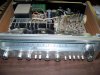
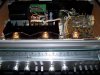
Right now the BEST thing to do is CLEAN the CRAP out of the circuits, who KNOWS what is being shorted out. That cleaning will take hours, paintbrush, vacuum, toothbrush and elbow grease time. At least the BOTTOM of the chassis should be cleaner.
I now have to stop and think about what you did and saw, and what damage could have happened and how to proceed from here. Did you put your finger on the transistors in back when you were "loosing sound", were they HOT???



 Don't dispair, it is expected even with it being old and very dirty inside. That's why Mark stated this: "


 They don't ship to Canada