This is what makes it possible for anyone to change out the battery . We're not there yet , but this point was forgotten .This is why we need battery stations. Instead of charging batteries, you create a battery that can be be easily pulled out and replaced at the charging station. I came up with this idea 20 years ago and I have yet to see anyone else talking about it. Seems like the obvious fix. But, of course the batteries will need to be synced up and everyone is racing to create a better battery!!! Free market solutions right?


You are using an out of date browser. It may not display this or other websites correctly.
You should upgrade or use an alternative browser.
You should upgrade or use an alternative browser.
Tesla Truck revealed and it may be a joke.
- Thread starter petes'picks
- Start date
The technology for machines to guide one object to another and make the connection should not be that difficult . If you say it's too expensive , have you priced a new double wall storage tank with double wall piping , cathodic protection for piping and tank plus the cost of the pump , hose and nozzle with breakaways ?

WillVT
Super Member
That's not really the issue. When you fill your car with 20 gallons of gas, you don't physically put that gas in your car yourself. A machine does it. It would be the same idea with battery swapping.When you say "you replace the battery pack," exactly who are we talking about?
Your wife? Your daughter? Your teenage son?
Your venerable father in his mid 70s or 80s?
Nah, thats not really a handy technology that way.
Thats why no one is headed that direction.
One of the biggest issues of Battery Swapping, is standardization and compatibility. Each car company has their own battery and enclosing structure, often built into the structural integrity of the vehicle.
There is some talk of advances in Flow batteries, in which you would simply pump in an electrolyte in the same way you pump gas now. I'm not too familiar with the process, but researchers are working on it, and it sounds interesting. It could even take advantage of a lot of the gasoline piping system we have now.

In the early days of petrol sales, you cranked 10 gallons into a glass ball on the pump, put the nozle & hose in your car, then let it gravity feed to your tank.
Since there is no actual system to swap battery packs,anything said is pure conjecture - but the laws of physics about a finite xxx amp/hour battery device
is that there will be a mass and a weight.
We can speculate on slmaller, lighter batteries - but there is still a certain Amp/hour potential needed to move the car for an hour or so
I did a quick google - How much AH battery is used in Tesla car?
Tesla offer different battery sizes - 60kWh, 90kWh etc and the battery voltage is 375 Volts.
To convert Wh to Ah, simply divide Wh by the voltage. Amp-hours is not a useful measurement unless you know the voltage those Amps are being delivered at.
So, a 60kWh battery would be a 270Ah, or 270,000mAh (at 375 Volts)
Oh, and you talk about standardized battery packs. Thats all well and good, but competing companies often want their OWN system to be the standard -
look at the struggle for charging technology plugs and feed capacity.
look at the struggle for charging technology plugs and feed capacity.
WillVT
Super Member
Exactly. It's a shame when this kind of competition gets in the way of progress.
In India, there actually are some battery swapping stations being built, but for small 2 and three wheeled vehicles. The batteries weigh about 26 pounds, and are swappable by hand. Drivers only pay for the cost of the electricity.
In India, there actually are some battery swapping stations being built, but for small 2 and three wheeled vehicles. The batteries weigh about 26 pounds, and are swappable by hand. Drivers only pay for the cost of the electricity.
You could have a torpedo shaped battery, and a vehicle with two battery slots. The empty slot could be used for cargo.
To change batteries, you'd just drive into the 'new' battery which would be stuck out on a pole. Swapped the cable, then extract the dead battery with a reverse method. Have a little flip up nose cap for aerodynamics.
To change batteries, you'd just drive into the 'new' battery which would be stuck out on a pole. Swapped the cable, then extract the dead battery with a reverse method. Have a little flip up nose cap for aerodynamics.

Beatnik
What's this ?
From WHO? That not Chevy's car, its simply a Concept vehicle - no basis in reality,
other than ChipFoose or one of those kinda guys ...
“General Motors has the in-house talent required to create a concept like the E-10,” said Campbell. “With the innovative thinking and expertise our performance team, electrification team and many others at GM bring, this project went from concept to running vehicle in 18 weeks to demonstrate what the future of an eCrate propulsion system and hot rodding could look like.”
https://media.chevrolet.com/media/u.../Pages/news/us/en/2019/nov/sema/1104-e10.html
and actually it was a Chevy vehicle from date of birth.
Last edited:


You could have a torpedo shaped battery, and a vehicle with two battery slots. The empty slot could be used for cargo.
To change batteries, you'd just drive into the 'new' battery which would be stuck out on a pole. Swapped the cable, then extract the dead battery with a reverse method. Have a little flip up nose cap for aerodynamics.
This kind of outside the box thinking gives it a chance to work and eliminates most human limitations .
WillVT
Super Member
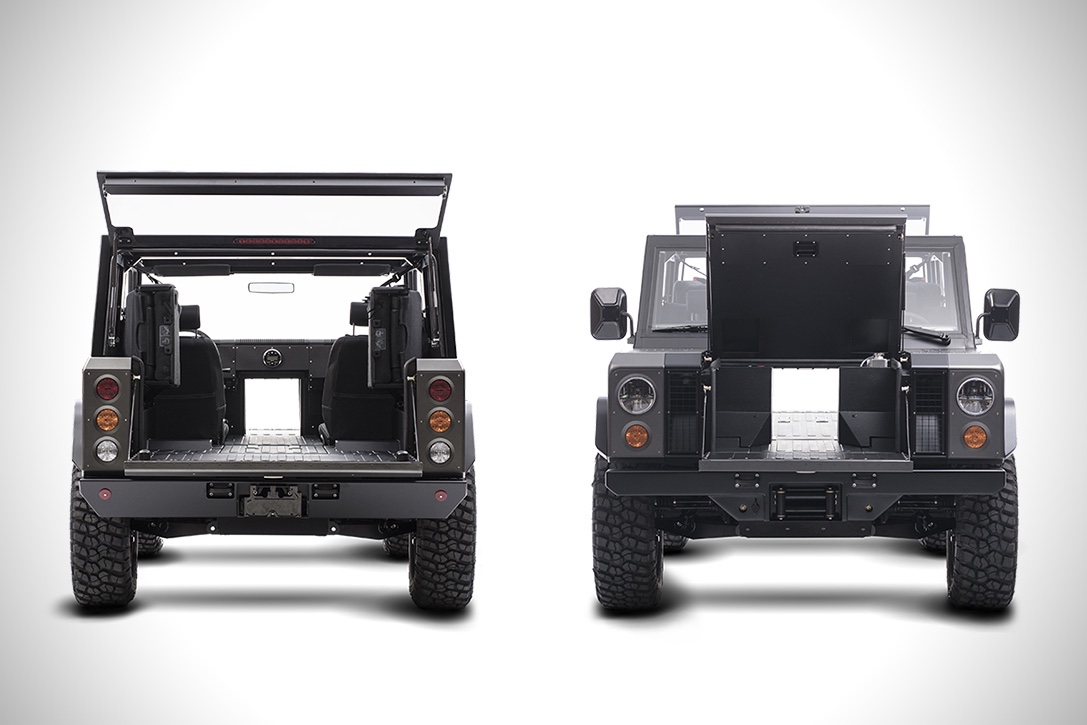
That pic
That picture is the Bollinger I posted the video about. That's the cargo compartment that goes all the way from front to back. The battery is below and not swappable.
You could have a torpedo shaped battery, and a vehicle with two battery slots. The empty slot could be used for cargo.
To change batteries, you'd just drive into the 'new' battery which would be stuck out on a pole. Swapped the cable, then extract the dead battery with a reverse method. Have a little flip up nose cap for aerodynamics.
That picture is the Bollinger I posted the video about. That's the cargo compartment that goes all the way from front to back. The battery is below and not swappable.
I'm talking about swapping a 2000 pound battery in the same amount of time it takes to fill the gas tank in an ordinary car.
Minimal downtime for the vehicle.
Here's the crude idea. The vehicle is about the size of a Hum Vee. It has two passenger compartments, one on each side. The battery is about 18 feet long, two feet tall, and two feet wide.
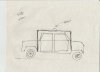
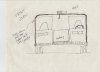
When it is running close to being dead, you'd drive up to a rack with a fresh battery waiting. Hoist the dead battery up, and insert the fresh battery.
Leave the dead battery to be charged. The charging rack would basically be an I-Beam that would insert down the center of the battery.
Minimal downtime for the vehicle.
Here's the crude idea. The vehicle is about the size of a Hum Vee. It has two passenger compartments, one on each side. The battery is about 18 feet long, two feet tall, and two feet wide.
When it is running close to being dead, you'd drive up to a rack with a fresh battery waiting. Hoist the dead battery up, and insert the fresh battery.
Leave the dead battery to be charged. The charging rack would basically be an I-Beam that would insert down the center of the battery.
I did a quick web search - How many cars and trucks are registered in the US?
Google replied:
How many registered motor vehicles are there in the U.S.? Some 272.48 million vehicles were registered here in 2017.
The figures include passenger cars, motorcycles, trucks, buses, and other vehicles.
I just don't see this as a viable, sustainable approach on that kind of scale -
winching 1 ton battery packs in and out of standardized motor vehicles ...
even if we could get everyone interested in an E-vehicle to drive something like a Hum Vee.
I am personally more inclined to something a bit larger than my Honda Fit or the Chevy E-bolt
I'm talking about swapping a 2000 pound battery in the same amount of time it takes to fill the gas tank in an ordinary car.
Minimal downtime for the vehicle.

Mystic
We're all born mad
I'm talking about swapping a 2000 pound battery in the same amount of time it takes to fill the gas tank in an ordinary car.
Minimal downtime for the vehicle.
Here's the crude idea. The vehicle is about the size of a Hum Vee. It has two passenger compartments, one on each side. The battery is about 18 feet long, two feet tall, and two feet wide.
View attachment 1687049
View attachment 1687050
When it is running close to being dead, you'd drive up to a rack with a fresh battery waiting. Hoist the dead battery up, and insert the fresh battery.
Leave the dead battery to be charged. The charging rack would basically be an I-Beam that would insert down the center of the battery.
You should show a copy of this rendering to Trey Parker.


NH-MAN
Addicted Member
I'm talking about swapping a 2000 pound battery in the same amount of time it takes to fill the gas tank in an ordinary car.
Minimal downtime for the vehicle.
Here's the crude idea. The vehicle is about the size of a Hum Vee. It has two passenger compartments, one on each side. The battery is about 18 feet long, two feet tall, and two feet wide.
View attachment 1687049
View attachment 1687050
When it is running close to being dead, you'd drive up to a rack with a fresh battery waiting. Hoist the dead battery up, and insert the fresh battery.
Leave the dead battery to be charged. The charging rack would basically be an I-Beam that would insert down the center of the battery.
doable as they do it with forklifts in wharehouses but the lines would be long

A past customer of mine recently purchased a 2015 Nissan Leaf in mint condition with mileage in the low 30s. He had no desire for an EV but the price of $6,500 was too good to resist. (From the Nissan dealer no less). His electric bill has also increased $150 - $200 per month directly related to charging. Due to the age of the battery, the charging range had decreased to 85% of maximum and heater operation decreasing travel range considerably further in cold weather. He said frankly he'd be better off with a gasoline powered Versa - but of course would have been more money than the Leaf in the same condition and mileage.
Mystic
We're all born mad
...He said frankly he'd be better off with a gasoline powered Versa...
Lol, first glance @ this post I thought you'd written "Vega". Who knows, maybe he'd have been better of w/ that!

petes'picks
Super Member
How anyone would consider swapping their brand new battery for a battery at a fueling station that maybe 8 years old and have a 32 mile range is beyond me. WOuld fueling stations be responsible for replacing dead batteries or would they just pass the $5K cost onto customers and would congress force every manufacturer to use same size battery? Not in our lifetime.
Last edited: