Im sorry but I found this confusing. So the DHO is overkill and you recommend the Sigol? They are the same price point. Is it just a personal preference thing? Does the Sigol do things the DHO won't? I don't have a preference either way I'm just trying to decode the pros and cons here.


You are using an out of date browser. It may not display this or other websites correctly.
You should upgrade or use an alternative browser.
You should upgrade or use an alternative browser.
The case of the possessed Sony TA-N77ES
- Thread starter Nick89rs
- Start date

I have no preference for Rigol or Siglent and have no way of telling which one is right for you. Maybe there are comparisons online between the two or general reviews. Or shootout videos on YT. My Rigol DSA800 is a decent piece of equipment and I could imagine the Rigol scope is as well but I just don't know. Their support software sucks, that's for sure.

I always preferred Analog scope with CRT's Love my little 2335
they come upon cheap on the bay and usually work well, I got mine over 10 years ago and had no issues till this year.
Athanasios
they come upon cheap on the bay and usually work well, I got mine over 10 years ago and had no issues till this year.
Athanasios
I appreciate this opinion and tip however im a little gun shy about buying used and working electronics on ebay as thats why im currently in this predicament and i wouldnt even be aware if a used unit was not working correctly. i guess i just need to know if a 2 channel scope is all i really need or if there are other important features i consider before i pull the trigger on something. My ears are very much open in regards to that.I always preferred Analog scope with CRT's Love my little 2335
they come upon cheap on the bay and usually work well, I got mine over 10 years ago and had no issues till this year.
Athanasios
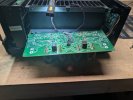
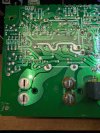
Just for curiosity sake I unattached that board and had a look at the back side hoping for something obvious. Nothing jumped right out at me.
Attachments


spicer
Lunatic Member
Quick answer is any working two channel scope will be fine, all you need.I appreciate this opinion and tip however im a little gun shy about buying used and working electronics on ebay as thats why im currently in this predicament and i wouldnt even be aware if a used unit was not working correctly. i guess i just need to know if a 2 channel scope is all i really need or if there are other important features i consider before i pull the trigger on something. My ears are very much open in regards to that.
After confirming it is not the relay, use the scope when it is not working to see if that is the interruption point. If not and after careful board inspection, magnifying glass, having spent a few years as a bench tech, time is money, I would reflow each solder joint on the board, fixed many intermittent problems this way, often beats time spent tracking down a bad solder joint. I say this with experience using a good solder station, no bridges and overheating of components. Not at all comfortable giving advice to others without day to day practical experience but that is one approach. I doubt it is a component failure... transistor, capacitor, other, but could be, that is where 'freeze spray' often helps. I think it is a bad connection to board or bad solder joint, not unlikely to be one of the relays but they can be tested for continuity through their contacts. I've seen solder joints that look fine but aren't. Intermittents can be tough to find. You should obtain the schematic, the service manual will provide block diagram and board layout, very helpful. That amplifier has a very good reputation.

dr*audio
Fish fingers and custard!
He tapped the relays and it didn't make it work. (That's what I got from his comment.) Then put it in Mono and it made it distorted on both channels. The relays are what do that, I think, so I conclude that one or both are toast. The scope will tell for sure. We had a Rigol at work and it was fine.Disagree. He tapped the relays like there's no tomorrow and it made no difference. I do suspect Q301. I've had several bad 2SK109s. This is another type (K244) but still. I do agree that this is the moment to get a scope and start probing away.
dr*audio
Fish fingers and custard!
If the relays have a clear plastic lid on them, you can remove them and open the top and clean the relays. This works with low current relays because they don't get burnt or pitted like speaker relays. You wet a piece of paper with Deoxit D5 and draw it through the contacts.
i have the schematic and the full service manual but to say im rough at reading it is an understatement. I have a Hakko FX888 soldering station and have successfully build FPV drones with it but ill admit to being nervous about trying to reflow every connection on that board, not from a time investment but from a "thats a lot of chances to screw something up badly" standpoint. Scope is ordered but will take a couple of weeks to get here.Quick answer is any working two channel scope will be fine, all you need.
After confirming it is not the relay, use the scope when it is not working to see if that is the interruption point. If not and after careful board inspection, magnifying glass, having spent a few years as a bench tech, time is money, I would reflow each solder joint on the board, fixed many intermittent problems this way, often beats time spent tracking down a bad solder joint. I say this with experience using a good solder station, no bridges and overheating of components. Not at all comfortable giving advice to others without day to day practical experience but that is one approach. I doubt it is a component failure... transistor, capacitor, other, but could be, that is where 'freeze spray' often helps. I think it is a bad connection to board or bad solder joint, not unlikely to be one of the relays but they can be tested for continuity through their contacts. I've seen solder joints that look fine but aren't. Intermittents can be tough to find. You should obtain the schematic, the service manual will provide block diagram and board layout, very helpful. That amplifier has a very good reputation.
Think i should wait for the scope or just give reflowing a shot first?
Do a reflow, All you need to do is heat the solder joints till the melt and move to the next one, if any look like they could use some more solder add it.Think i should wait for the scope or just give reflowing a shot first?
I would also clean the sole side of the boards with DeNatured alcohol and a tooth brush to remove any old flux and the moisture barrier they add.
I fixed many non working amps just doing that first.
Athanasios
spicer
Lunatic Member
I would reflow but again I have experience on the bench in a high volume shop and am hesitant to give opinions on something I can't take responsibility for. A good tool is a lighted magnifying glass for inspection. I would reflow. You have a good soldering station and a degree of experience. Nashou66 and Dr. Audio give good advice. I would suggest you invest in a good pair of protective eyewear against solder splashes, flips, wire pokes. It is easy to be complacent with safety. Take care.i have the schematic and the full service manual but to say im rough at reading it is an understatement. I have a Hakko FX888 soldering station and have successfully build FPV drones with it but ill admit to being nervous about trying to reflow every connection on that board, not from a time investment but from a "thats a lot of chances to screw something up badly" standpoint. Scope is ordered but will take a couple of weeks to get here.
Think i should wait for the scope or just give reflowing a shot first?
Last edited:
Ok, I started picking away at the reflow. Being pretty liberal with added flux and only adding solder where it looked required. I started out at 315c because Google said to but was having pretty terrible results so I went to 350c to get on and off the components faster. Here is the section I did. It's making me nervous as hell because I love this amp and don't want to kill it.
Can I get an honest assessment of if it's looking ok or should I stop here and reassess what I'm doing?
Can I get an honest assessment of if it's looking ok or should I stop here and reassess what I'm doing?
Attachments

Looks good but first clean the board. See that wrinkly finish, that is a moisture barrier they add at the factory after the board is populated. you will get better reflow results of all that is cleaned off. I use Denatured alcohol and a tooth brush or a short bristled paint brush I cut down some to make it firmer,Ok, I started picking away at the reflow. Being pretty liberal with added flux and only adding solder where it looked required. I started out at 315c because Google said to but was having pretty terrible results so I went to 350c to get on and off the components faster. Here is the section I did. It's making me nervous as hell because I love this amp and don't want to kill it.
Can I get an honest assessment of if it's looking ok or should I stop here and reassess what I'm doing?
as to be able to scrub the board.
Athanasios
I stopped. just that little bit i did broke something. tried putting the amp all back together just to verify i was not doing more harm than good and the amp will not come out of protection now. Going to think on this for a day and try and figure out if its worth me continuing to do this or not because i seem to actively be ruining this amp.Looks good but first clean the board. See that wrinkly finish, that is a moisture barrier they add at the factory after the board is populated. you will get better reflow results of all that is cleaned off. I use Denatured alcohol and a tooth brush or a short bristled paint brush I cut down some to make it firmer,
as to be able to scrub the board.
Athanasios
Last edited:
dr*audio
Fish fingers and custard!
Reflowing without adding fresh flux or flux bearing solder is a no no.Do a reflow, All you need to do is heat the solder joints till the melt and move to the next one, if any look like they could use some more solder add it.
I would also clean the sole side of the boards with DeNatured alcohol and a tooth brush to remove any old flux and the moisture barrier they add.
I fixed many non working amps just doing that first.
Athanasios
I was for sure using ample flux and a little bit of extra solder for heat transferReflowing without adding fresh flux or flux bearing solder is a no no.
Last edited:

restorer-john
Addicted Member
It could be a bad solder joint on the input connector on the driver board
You're on the money there. This is common on several TAN77es units I repaired. The left channel input centre pin of each RCA. It even happened on one of my 77es amps causing a low/distorted level on both left channel inputs, which sounded all the world like a speaker relay classic fault.
Because it's the left channel used for BTL input, the problem appears in bridged mono as well.
Remove the input board and suck/clean/resolder the left centre pins of each RCA.

I knew I had a picture. This is the actual N77es board on my unit before the fix.

Last edited:

So when the tech said everything was okay, he never connected to any speakers to check whether it played music on both channels? How did he know it was "okay"? Using a signal generator and a scope?A month later i get a call. The very nice gentleman cant get it to do anything wrong. He holds onto it for a few days and tells me to come get it. I show up and sure enough its been running steady into a dummy load and is just amplifying its little heart out.
I take this thing home and on the two hour ride we have a talk. I explain that ive been waiting a long time to own it and id really appreciate if this was the end of this little spat. The amp did not respond, it just sat there belted in and silent for the entire ride.
Thanks,
Nick
Thanks! And sorry about the problems!

restorer-john
Addicted Member
How did he know it was "okay"?
That's the thing. It's intermittent and even just the weight of the RCA lead can 'fix' it. I bet the tech tested it and it worked perfectly.
Funny, I put off doing my own TAN 77es for about a year or two because I "knew" it was the speaker or input relay and I could be bothered pulling the unit down. I also "knew" it couldn't be the RCA input jacks because I tried both fixed and variable and both lefts behaved the same. I just got out another TAN-77es and put the unit on the back burner until I had space on the bench for the monster.
But I was wrong. Two left centre pin RCA bad solder joints. Sony didn't use anywhere near enough solder (that's original factory in the above pic) on the lefts for some reason and dis-similar metal corrosion on the pins did the rest. In the end, all it took was 10 minutes to fix as the input board is easy to remove and work on without dismantling anything.
Well i seem to have bricked something with my reflow job but im curious enough to tear things down a little further and have a look at these jacks before i go back and try to figure out what i screwed up in the reflow.That's the thing. It's intermittent and even just the weight of the RCA lead can 'fix' it. I bet the tech tested it and it worked perfectly.
Funny, I put off doing my own TAN 77es for about a year or two because I "knew" it was the speaker or input relay and I could be bothered pulling the unit down. I also "knew" it couldn't be the RCA input jacks because I tried both fixed and variable and both lefts behaved the same. I just got out another TAN-77es and put the unit on the back burner until I had space on the bench for the monster.
But I was wrong. Two left centre pin RCA bad solder joints. Sony didn't use anywhere near enough solder (that's original factory in the above pic) on the lefts for some reason and dis-similar metal corrosion on the pins did the rest. In the end, all it took was 10 minutes to fix as the input board is easy to remove and work on without dismantling anything.