• The move to the new server is done. There are some software and database maintenance updates in process. This has us passing the hat around to help out. We appreciate any donations. Seriously, even a dollar helps. The payment page may be found here - https://www.audiokarma.org/support.html

The Idiot's Guide to Using DeOxit (revisited)

Thanks. This thread reminded me to try DeOxit on an old volume pot that was unbalanced until the volume was up higher than I wanted (and no one likes to adjust the balance control). I gave it the D5 then F5 fader treatment. Problem solved. And probably mentioned in earlier posts, I also noticed the nozzle can be adjusted from 1-low to 3-high. Hard to imagine needing anything but the smallest possible mist on home audio gear.

You have learned the secret of Caig DeOxit tiny amounts is all you need. I use the brush on, and needle applicators. it is not designed for mass hosing. I personally use MG Chemical Super Wash for general hosing. This is a non-conductive circuit board cleaner.
 
It's been a while, but I was having some intermittent right channel loss on my Sony STR-6046A. It was remedied temporarily with a gentle nudge of the selector knob, but that was becoming a more frequent requirement, so I decided to pull it and clean it.

Broke out the old spray cans of DeOxit and did the whole cleaning since I had the cover off anyway. I noticed some general oxidation on the speaker connects, which I thought was odd. Anyway cleaned the whole thing, with a lot of focus on the selector knob, cleaning that twice with the the straight D5 spray followed by the Gold. Hooked it back up after sitting for a while and it works like a charm again.

Of note, the oxidation seems to be caused by the chlorine we keep in the pool shed/house by our pool where this unit is in almost constant use during the Spring, Summer, and Fall. I never put two and two together until this time, but there are times when the scent of chlorine is noticeable in the shed. So I googled "Chlorine and Electronics" and was quickly enlightened. Apparently this is the cause of my problems and it has occurred with two or three receivers I've swapped out over the years out there. I had previously figured that it was weather related change because the unit is in place year round and Maryland gets all the seasons. So, for information's sake, here's an excerpt of an article I read that has made me move any chlorine products for our pool to another location.

" With regard to cleaning up after rodents, chlorine substances may be a winner from a sanitation standpoint, but it’s a potential disaster equipment-wise, he says. Chlorine substances are corrosive to aluminum and copper and will wreck electronics.​
As readers may know, smoke from PVC ruins all it touches; the same is true for Clorox, and you can’t clean it up. Even using it on the floor near the air intake for a transmitter can cause corrosion problems.​
Inside an enclosed antenna tuning unit, the resultant fumes can take their toll on copper coils and strap. Lawrence’s advice is to check the ingredients of any cleaning compound you intend to use, to prevent these headaches."​

https://www.radioworld.com/columns-and-views/chlorine-products-electronics-dont-mix

Hopefully this resolves the scratchiness and channel loss issues for me. ;) DeOxit to the rescue once again!
 
You have learned the secret of Caig DeOxit tiny amounts is all you need. I use the brush on, and needle applicators. it is not designed for mass hosing. I personally use MG Chemical Super Wash for general hosing. This is a non-conductive circuit board cleaner.
I recently bought a can of that MG Super Wash on a whim, and it indeed is a great all-around electronics cleaner. I'm working on an old amp stored in an attic that is covered in dust and cobwebs, and this stuff works wonders just by spraying it on the board. Seems less 'dangerous' than even basic contact cleaner type products.

As for Deoxit, a little goes a long way... It's not really meant to drench parts, certainly not pots or anything with fiber or wafer type boards.
 
Im a bit confused. To clean and protect all the pots, switches and jacks what should I buy? There are a ton of different deoxit products.
 
Im a bit confused. To clean and protect all the pots, switches and jacks what should I buy? There are a ton of different deoxit products.
Take a look back to posts #543-552 or so... The small bottles are concentrated and a little goes a long way and can be placed very accurately. The larger spray cans are fine and work too, but they are not precise and they are dilute. The spray cans have been compared to carpet bombing while the the smaller ones with droppers are precision attacks. Either will do the trick. If you have lots of plastic, Fader Lube has been recommended. If not, the cleaning with the regular red spray first and then returning with the Gold for the final run works great.
 
Im a bit confused. To clean and protect all the pots, switches and jacks what should I buy? There are a ton of different deoxit products.
It is interesting that I finally found a use for the spray G5 Gold. My Logi Ergo Trackball. The scroll wheel stopped working. With nothing to lose I hosed slot the scroll wheel moves in to the point I had the G5 dripping from the bottom. set it aside for 24 hours and now it works perfectly.
 
One more use for the needle applicated G5 Gold. The MMCX connector on earphones. I use Shure Earphones they have detachable cable that use the MMCX connector. If you are replacing the tow rope heavy duty Shure cable with better aftermarket one like the FiiO sliver cables I use you want the MMCX plug to be a very tight fit, a tiny amount of G5 Gold facilitates the plug properly seating.
 
Take a look back to posts #543-552 or so... The small bottles are concentrated and a little goes a long way and can be placed very accurately. The larger spray cans are fine and work too, but they are not precise and they are dilute. The spray cans have been compared to carpet bombing while the the smaller ones with droppers are precision attacks. Either will do the trick. If you have lots of plastic, Fader Lube has been recommended. If not, the cleaning with the regular red spray first and then returning with the Gold for the final run works great.
I did go back to post 543-552. Thank you for directing me to that info!
 
One more use for the needle applicated G5 Gold. The MMCX connector on earphones. I use Shure Earphones they have detachable cable that use the MMCX connector. If you are replacing the tow rope heavy duty Shure cable with better aftermarket one like the FiiO sliver cables I use you want the MMCX plug to be a very tight fit, a tiny amount of G5 Gold facilitates the plug properly seating.
On the note of other uses. My 1997 Ford 150's automatic window and lock switches were not operational and I was about to pay for new window motors, lock relays, and wiring, but my car dude suggested taking a day to remove the door panels to spray everything in the door I could find with contacts and trying to get some to the motor connects too. Did it with D5 spray and it did the trick. Windows and locks work like new. I also fixed one of those old Merlin hand held games from the 1980's by cleaning the battery connects and inside the thing anywhere I saw corrosion. Works like new again too. ;) I feel like the Gus from Big Fat Greek wedding with his Windex, with all the ways I've used it. Haven't tried it to see if it heals cuts faster, tho. ;) :)
 
Does anyone know of any pictures or videos I could use for reference? I've read this post and while it's pretty clear, I still think some visual examples might help me before I try to open up my turntable to clean it for the first time.
 
On the note of other uses. My 1997 Ford 150's automatic window and lock switches were not operational and I was about to pay for new window motors, lock relays, and wiring, but my car dude suggested taking a day to remove the door panels to spray everything in the door I could find with contacts and trying to get some to the motor connects too. Did it with D5 spray and it did the trick. Windows and locks work like new. I also fixed one of those old Merlin hand held games from the 1980's by cleaning the battery connects and inside the thing anywhere I saw corrosion. Works like new again too. ;) I feel like the Gus from Big Fat Greek wedding with his Windex, with all the ways I've used it. Haven't tried it to see if it heals cuts faster, tho. ;) :)
I did such once due to my Tahoe's Windshield Wipers were acting up. Found out about it one needed day up in the mountains in Cloudcroft NM at 7500', it started raining, and heavy fog and I got nothing. Luckily, I had a fresh application of Rain-X on all glass and made it home.

First suspect was the Controller Board for the Wiper Motor, opened the case (torx screws), yanked the board, sprayed everything with D5, all connections, and re-lubed the arm shaft-gears with Synth Grease, re-assembled, totally fixed!
 
On the note of other uses. My 1997 Ford 150's automatic window and lock switches were not operational and I was about to pay for new window motors, lock relays, and wiring, but my car dude suggested taking a day to remove the door panels to spray everything in the door I could find with contacts and trying to get some to the motor connects too. Did it with D5 spray and it did the trick. Windows and locks work like new. I also fixed one of those old Merlin hand held games from the 1980's by cleaning the battery connects and inside the thing anywhere I saw corrosion. Works like new again too. ;) I feel like the Gus from Big Fat Greek wedding with his Windex, with all the ways I've used it. Haven't tried it to see if it heals cuts faster, tho. ;) :)
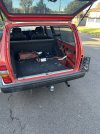
I can totally relate to the Gus analogy. Have just picked up a 36 year old '88 Volvo 240 wagon with electrical connectors & components that are a little crusty. So far has remedied inoperable interior lights and door switches (front and rear), under hood light, window washer motor, third brake light and the the notorious rear lights which were giving a bulb out signal even though they were working.

I have hit any visible earth screws for extra measure.

A can of D5 is now a permanent fixture in the glovebox. I never would have known about De-Oxit if it weren't for AK and glad it has graduated from Yamaha CR-420 switches and a JBL L-19 pots to the Volvo.

I pointed CAIG to this thread a few years back and they became site sponsors/advertisers for a while.


IMG_3201.jpg
 
Last edited:
Newby question....if I'm looking to cleaning a volume switch, can it be done without taking the unit apart?
 
The only type of volume control you can clean without taking off covers or front panel are slider controls. What unit are you trying to clean? Its gonna depend on if the volume pot has openings that are easy to access or if the the pot is sealed that will determine on how easy your units volume pot will be to spritz with cleaner.
 
The only type of volume control you can clean without taking off covers or front panel are slider controls. What unit are you trying to clean? Its gonna depend on if the volume pot has openings that are easy to access or if the the pot is sealed that will determine on how easy your units volume pot will be to spritz with cleaner.
The unit is a Marantz 2330B
 
Back
Top Bottom