• The move to the new server is done. There are some software and database maintenance updates in process. This has us passing the hat around to help out. We appreciate any donations. Seriously, even a dollar helps. The payment page may be found here - https://www.audiokarma.org/support.html

Tonearm dampening

VintageDutch

Active Member
Hi,,

I am in the procces of remoddeling, upgrading, rebuilding,nicer making of a Audion or Marlux MX-960.Audion  clean.png
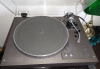
It is not a bad TT, has it flaws and probably be never top of the line, but I like tinckering with it...and after a heafty repair witch I had to do myself, I now stript the plinth from ist's original gray vinyl crap, creating a blanc canvas to do some DIY magicwith near factory standard components...

One of the things I hate is it's half automatic gizmo... so that is gone... :-)
The other things are all that plastic moldings.... they need to go...and I have a plan for it...Simpelfi and fill the gaps with real wood...and replace that horreble neon bulb with a soft glowing miniture light bulb in a small turrent instead of the big nose on top of the TT
One thing Iám not sure about is the mounting of the tonearm..

I was thinking to "mechanicly uncouple" it from the TT plinth using some layers of sandwitched Neopreen...
The goal is to get even less mechanical noise into the tone arm....

What do you guy's and girlls think? Worth trying? Was it already done? What where the results and what where the pitfalls?
 
Register to hide this ad
Lots of mechanical noise gets to the tonearm via the platter, so isolating the tonearm really doesn't solve much, and as Rothwellaudio said, the tonearm needs to be coupled rigidly or weird things are going to start to happen, like alignment issues, dull sounding, other thing. Elastomers also like to compress over time, so you would have that going on as well.
 
Not so fast, the Well Tempered Lab Turntable arm is anything but coupled to the deck and it's the best sounding table I have. But I must add, the tonearm "base" is rigidly coupled to the plinth, only the arm tube is decoupled and filled with sand for damping.

That said, I wouldn't put too much time and energy into trying to elevate the table when the outcome will just be a crapshoot. Easier on the wallet and with a more assured outcome would be to sell the table and put the funds toward something better.

If you like tinkering then I recommend a table that the arm is more readily changed, etc. Trying to modify this table will most likely just be an exercise in frustration.

But if you insist on moving forward might I suggest damping the plinth with some Dynamat, an upgrade in cartridge and call it a day?
 
Last edited:
Sure guy's .. I know there are way better TT's, and way wors...This one has a Wood(isch) plinth, nice little "Marantz" 4 pole DD motor.
The way I see it it is an open invitation to do some tinkering...

But Hee Hoo... out goes the Decoupling idea...I see the pointed problems...Thats why were here right.... To tell the tail, get heard, get told, and learn...Atleast IMHO

Mechanicly decoupling of the base Chasis.....could be tricky.... since the DD motor is mounted on it and de Chasis hard to the Plinth...since the DDmotor is also the axel of the platter....it seems tricky to me ..

Idea's on that one?

Transfomer and PCB, will be remounted in and on rubber (washing mashine like but smaller. so screw-rubber-screw) , mechanicly not connected directly to the plinth..
 
If there are empty cavities in the plinth you could try to stuff them with plasticine type modelling clay for added dampening and mass. I have combined this with led shots on a Lenco L75.
...bevare/caution when handling led.
 
Plasticine should never dry out... in theorie...
What is the advantage to Real hardwood glued into those cavities? Yes sure one is easy to work on...Hardwood is lots more work...But other? Is one better in doing the job of creating mass? And in the long term?
 
Plasticine should never dry out... in theorie...
What is the advantage to Real hardwood glued into those cavities? Yes sure one is easy to work on...Hardwood is lots more work...But other? Is one better in doing the job of creating mass? And in the long term?

Unfortunately I have only used modelling clay for about a year so cannot comment on how long it stays flexible.

But I figure its pretty easy to replace with new if it hardens.

But I think the soft clay has good dampening properties and attaches well to the walls of the plinth and should absorb vibrations and resonances well and is easy to work with.
 
Hi,,


I was thinking to "mechanicly uncouple" it from the TT plinth using some layers of sandwitched Neopreen...
The goal is to get even less mechanical noise into the tone arm....

What do you guy's and girlls think? Worth trying? Was it already done? What where the results and what where the pitfalls?
I have a Rotel RP2500 which is another version of your turntable. I think that basic design was rebranded by lots of different companies.

Before thinking about tonearm damping, look into adjusting the gimbal bearings. Grab the circular support at the pivot and wiggle it around. If there is ANY play in any direction, try and adjust that out. Properly adjusted gimbals should have zero play yet feel perfectly smooth and friction free. On mine, it is not possible to adjust the fore/aft play out of the bearings, and resting a finger on the support while playing a record its easy to feel a ton of vibrations moving thru the arm, and a few specific low notes really resonate the structure.

As a result, that particular turntable, even though it sounds just fine... will never be one of the "good ones" and is relegated to my music library audition station where I can quickly preview records before playing them elsewhere. I bought it used for $50 really for the aesthetics and it serves it role well enough. Hopefully your unit is not like that and the bearings are tight yet smooth.
 
Yes, I checked the tone arm bearing and to me they "feel" fine..
I hope to meet up with a respected TT technician in my neighborhood in the near future to get his meaning about the ToneArm it self.
@psemeraro Your Rotel RP2500 is a Belt drive TT. My Audion/Marlux MX-960 is a Direkt Drive. Your Rotel RP2500 ToneArm looks very simular to mine

But as stated in a few post above... The advice and 96% concensus is "do not bother with the ToneArm Dampening."
When done 100% correctly it Could work, but chances are that new allignment issues do occur with all the negativ results and dissapointments connected..

They other 94 % concensus is that the TT it self is not worth the whole endevour in terms of costs involved, time spend and the minimal effects to gain..

Well... I get that...but then again...I do not see my self stripping down a 2000 Dollar or Euro TT for the fun of it ...

So basicly I have fun tearing down this TT, and now figuring out what I can do to make more "my twist on TT's" but most of all Have fun learning all kind of techniques to improve on the improperly made Japan TT gear...geather knowhow out here, test that knowhow if it works for me, and make this TT nice to look at instead of an other dull grey TT.


Somewhere on the darkside of my basement I have a stript Thorens laying arround (Really!) with will bennefit from all lessons learned...
I feel a Pink Floyd song comming up...
 
Mechanicly decoupling of the base Chasis.....could be tricky.... since the DD motor is mounted on it and de Chasis hard to the Plinth...since the DDmotor is also the axel of the platter....it seems tricky to me ..
Idea's on that one?
Unfortunately, direct drives aren't really compatible with the suspended sub-chassis approach. You could have a suspension system to isolate the whole turntable from external vibrations but you can't isolate the motor from the platter.
 
Wow @Grenadeslio
That is actualy a very good idea... That Plastdip is non conducting I think?
In this aaplication It really would fill allot of Spaces otherwisse never filled... Thanks for that one..!!
 
Well... I get that...but then again...I do not see my self stripping down a 2000 Dollar or Euro TT for the fun of it ...

So basicly I have fun tearing down this TT, and now figuring out what I can do to make more "my twist on TT's" but most of all Have fun learning all kind of techniques to improve on the improperly made Japan TT gear...geather knowhow out here, test that knowhow if it works for me, and make this TT nice to look at instead of an other dull grey TT.
I'm not familiar with that particular turntable but a lot of the cheaper Japanese direct drives are very lightweight and plasticky. Personally, I would address that issue.
 
Unfortunately, direct drives aren't really compatible with the suspended sub-chassis approach. You could have a suspension system to isolate the whole turntable from external vibrations but you can't isolate the motor from the platter.

That was my initial conclusion.... but you puut it in the right right words... mine was more like "How the H**l do I get that FF'en thing to suspend.." Pardon my language... :-)
 
@rothwellaudio
Yes... That Japanees plastic audio stuff does not tickle my fancy... The Wood like types however do...
When I got rid of the outside vinyl stuff the wood frame seem to be a combination of Medium density board, Multplex board and Particicle board...
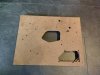
Still ugly as..bare chicken.jpg
 
The plan for now is to atleast fill the bottem hole with "real wood" get it sanded....do drawings, try layouts, rearrange and simpelfy the controls
A nice TT should not need more then two controls... on/off and RPM.... Okay the ToneArm needs it's own set of controls
 
Last edited:
The plan for now is to atleast fill the bottem hole with "real wood" get it sanded....do drawings, try layouts, rearrange and simpelfy the controls
A nice TT should not need more then two controls... on/off and RPM.... Okay the ToneArm needs it's own set of controls
Yes, I'm a big fan of simplicity too. Some turntables are a mass of rattling push rods and levers and cams and god-knows-what. To me they look like something Heath Robinson would dream up after an acid tab :crazy:
 
Yes, I checked the tone arm bearing and to me they "feel" fine..
I hope to meet up with a respected TT technician in my neighborhood in the near future to get his meaning about the ToneArm it self.
@psemeraro Your Rotel RP2500 is a Belt drive TT. My Audion/Marlux MX-960 is a Direkt Drive. Your Rotel RP2500 ToneArm looks very simular to mine

But as stated in a few post above... The advice and 96% concensus is "do not bother with the ToneArm Dampening."
When done 100% correctly it Could work, but chances are that new allignment issues do occur with all the negativ results and dissapointments connected..

They other 94 % concensus is that the TT it self is not worth the whole endevour in terms of costs involved, time spend and the minimal effects to gain..

Well... I get that...but then again...I do not see my self stripping down a 2000 Dollar or Euro TT for the fun of it ...

So basicly I have fun tearing down this TT, and now figuring out what I can do to make more "my twist on TT's" but most of all Have fun learning all kind of techniques to improve on the improperly made Japan TT gear...geather knowhow out here, test that knowhow if it works for me, and make this TT nice to look at instead of an other dull grey TT.


Somewhere on the darkside of my basement I have a stript Thorens laying arround (Really!) with will bennefit from all lessons learned...
I feel a Pink Floyd song comming up...
Thanks for the correction on your unit re direct drive. My Rotel is a "beater" simply for fun and I encourage you to try damping the arm and see if you like it. A quick way to check if basic damping makes a difference or not is to use "friction tape" which is available at hardware stores. It is adhesive impregnated cloth, acoustically dead, and any residual goo when you take it off cleans up instantly with alcohol. It wont address low frequency ringing but it does work on mid and high frequency resonances.

Try spiral wrapping the half of the arm closest to the pivot or two or three rings of tape in strategic places. You might be surprised at how much of the sound of your cartridge is actually the tonearm. You might hate the results but it only cost a few dollars and is easily reversible without leaving a trace. If it makes a difference and you like what you hear then welcome to the rabbit hole. And of course there will always be folks here that insist damping is a waste of time/always worth doing, that mods make turntables better/mods are stupid, etc. I say have fun and enjoy some great tunes.
 
Yes, I'm a big fan of simplicity too. Some turntables are a mass of rattling push rods and levers and cams and god-knows-what. To me they look like something Heath Robinson would dream up after an acid tab :crazy:

Same here... It really was one of the first things I stript out of thisTT.... the half auto...I just do not like it with al the mechanical niknacsandwhatnots
 
Back
Top Bottom