• The move to the new server is done. There are some software and database maintenance updates in process. This has us passing the hat around to help out. We appreciate any donations. Seriously, even a dollar helps. The payment page may be found here - https://www.audiokarma.org/support.html

Top 10 holy grail cassette decks?

Barter Town, Audiogon, USAudio Mart, Garage Sale on the Klipsch forums, Craigslist, FB Marketplace, etc… there are plenty of other places to buy good audio at good prices besides eBay.

I want it delivered and I'm just too busy to be visiting other sites, I do well enough.
 
Grenadeslio, what turntable is that?

It's an original Well Tempered Lab Turntable, good news I've seen 4 more sell for around $800 on eBay the past 12months, current bargain of the analog world in my opinion.

There are some listed for much more but aren't moving, set a search and keep a watch if interested.


https://audiokarma.org/forums/index.php?threads/the-official-well-tempered-audio-thread.898915/

Another company is building new models with a working relationship with the original designer if looking for new.
 
I may have contributed earlier, but I can't find it.
I've moved along a number of machines, and my keepers are the 93/43, the Dragon, the 505, the DR-1, the 300 and, the 1250s. All self-restored. If you were going to rank this list in terms of reliability and ease of service, the Naks would beat the Pioneers in terms of reliability and vice versa for ease of service.
I've spent FAR more time tweaking and keeping all the Pioneers aligned and happy than I have any of the Naks.

1. Pioneer CT-93/95/43 (Tie) This is based foremost on the audio performance and ergonomics. Dolby S should've been licensed by the mid-'80s, and yeah, it makes ALL the difference within the AUDIO and recording function aspect of this list. I listed these in terms of audio first, then reliability and then ease of service.
2. Nakamichi Dragon/CR-7a/DR-1 (Tie) Audio quality-wise they're all within a hair's breadth of each other. All excel with respect to pre-recorded media. The rest is pretty much up to individual taste in terms of ergonomics. Although like the CT-95, it was obvious that the DR-1 was trying to pull back costs a bit. They just hadn't cut into the performance characteristics at the time of the DR series.
3. Nakamichi RX-505 Terrific performance in both directions. Not quite as much recording level headroom as any of the preceding Naks. About even (in terms of mV, not metering) with the Pioneers.
4. Nakamichi BX-300 Great performance and spot-on implementation of Dolby C.
5. Pioneer CT-F1250 It has uniquely good image specificity, probably because of its extended HF PB frequency response. Most were never optimally aligned out of the factory. I bought one (and my cousin bought one) within a few weeks of each other in 1980, and they both exhibited that "Bill the Cat" channel imbalance from the PB alignment forward through the rest of the alignment. I didn't have the guts to go into it myself as a College kid, but I own four now and they are not to be underestimated. Dolby B works okay (not great) on the recording side, but it's hard to get it aligned and keep it aligned for the majority of Dolby B pre-recorded tapes. Not super easy to align. BLE only samples the Right Channel.
6. Denon DRM-800 Nice machine. Mine had issues with EMI rejection. Could've been the plastic in the faceplate. Dolby C works well, which can't be said for every machine from C's heyday, IMO.
7-10. Any number of Sony ES machines from the Cassette Recorder heyday.

I've never owned a Tandberg. I have friends who did and like the Aiwa's they fled to after having owned that brand, service/parts availability, and reliability concerns convinced me to "just keep on lookin' to the East". (C, D, E...)
But I do think they look AMAZING, and when they worked my recollections of the opinions of their owners was that they sounded quite good.

IMO, there is no "ultimate Cassette machine". Just the ones that best fit your priorities and sense of beauty in terms of "Industrial Art". Factor in sample-to-sample variation and manufacturing tolerances and its no surprise that there's as much diversity in the lists as there is.

That said, I love the format. Probably because it rose above its humble "note dictation" beginnings to a level when even TAS (the CT-93 finally broke their "no cassette machine reviews" boycott) had to throw in the journalistic towel just in time for the format's fall from commercial grace.

This brings me to a question: I have several "bonus" issues of TAS's guide to Recommended Components and they all list a review of the Dragon, but it's not in the issue that is specified in the appendix. I have all of the TAS's up through the turn of this Century and I've never happened across it.

If someone knows if it exists, please post an issue/volume number. (I know it was reviewed in a number of other magazines, and I believe I have most of them.)

TIA.
 
Last edited:
Curious
What is a good price for a Tandberg 3014, if it's in good working order?
 
“Good working order” is such a loose term. The 3014 is very pressure roller sensitive, and somewhat belt sensitive. The motors are high torque, and it is entirely belt drive, including the take up & supply reels. No tire to worry about, but plenty of belts. A well serviced one, by someone that has experience restoring one, meaning quality belt & roller replacements, proper heads alignment, lubrication and capacitors replaced and meters & recording alignment is in the $2500-3000 range. If you just own one that works, not serviced, and want to sell, in the $1500-2000 range depending on factors.

It is easier to find them & have them serviced in Europe than in the US. They sell for more in the US. The condition of the heads is paramount, as is the capstan/flywheel. Most any other part can be sourced or repaired, but the heads are fairly unobtainable, and the 3014 has very large flywheels that can snap off the capstan (or bend) in todays gorilla shipping environment if not packed to the teeth.

It is one of the few decks that a NOS unit would be worth the cost of restoration, simply because of the heads. The original belts would be be shot by now, (especially the toothed azimuth belt) and any grease would be glue, but with pristine motors, bearings and heads, and careful work, it would be worth the cost.

After my Revox decks, my 3014 gets the most play time of my non Nakamichi decks, and while the autocal on the B215s is typically more accurate, (3 frequency calibration) the full frontal bias & sensitivity with record head azimuth and test tones, (similar to the ZX-7/9 & 682zx) means it is in the top few decks to be able verify your recordings are calibrated exactly to the tape.
 
Last edited:
Thanks, there was one for sale on the local selling site, condition and price seemed to good to be true, turns out it was a scam.
Incredible how many scumbags are out there trying to scam people.
 
The 3014 and 1000zxl are top scams it seems. There was even a 1000 Tri-Tracer on ebay listed as a 1000zxl (gone now) with all the descriptions for the ZXL. While a nice deck in its day, it is not even close to a 1000zxl. I have a personal friend that lost $4000 on a 1000zxl Limited scam. He should have known better.

Which does bring up the point that besides Holy Grail meaning different things to different people, what was once Holy Grail in its day, may not be if looking at the whole gamut of cassette decks. The 1000 Tri-tracer was in its time the most expensive consumer deck and deserved the title more than any other deck…in 1974. And in a way, it & the 700 Tri-tracer as well, still deserve the moniker because even today, their performance could still be considered (within narrower parameters) outstanding. But there is no doubt what so ever that far later decks built 10-15 years later surpassed them in many ways. (Though weight would not be one of them, except the 1000zxl, which weighs a ton). Those old tracer models all had fully discrete component Dolby B, no ICs in any audio circuit, and enormous flywheels, larger than the 3014 by far, huge, accurate, very wide range, well built meters, adjustable record head with azimuth beacons, and as long as the heads are not worn, still plays and records through 20kHz today. They are a nightmare to service and there is no guarantee of success after spending way too much on one, but if you succeed, they are definitely wonderful to listen to and operate. Similar to a well sought after classic tube amplifier.

The same can be said for the 1000zxl, except it used the standard classic transport, with select heads, same basically as the 680zx. In 1980, when it came out, it, digital meters were very new, and the 1000zxl had then (and still does 40years later) the best that ever were designed. The largest with the most individual segments and switchable peak holding and VU, they are mesmerizing to watch. There is literally more circuitry just for the meters than in all of most normal tape decks built 15 years later. Another absolute nightmare to service, the 1000zxl has 16 different printed circuit boards, and the faceplate alone has 17 different connectors going to 5 different boards and about 30 separate light bulbs. When working properly, it can calibrate for recording any cassette tape made, with a flatter and wider FR than any cassette deck ever made, no contest. It doesn’t even have any tape type switches on it. It automatically determines the best eq, bias, & sensitivity for whatever tape it records, and when that tape is replayed in the deck, it sets the playback, including Dolby, to match. (Of course, playing back those tapes on other decks, means knowing what it was recorded for, and that the deck must have manual setting capabilities) It even had programmable playback of tracks for tapes recorded on it, in any order, including repeat, unheard of in its time. Holy Grail for sure, but for many more reasons, completely impractical to own, including its microwave oven sized footprint. A $200 smartphone has 100 times the computing power (at least). I lost count after around 60 -70 of the individual ICs in the beast, many of them absolutely not obtainable any more.

So sleek modern sports car, or classic vintage sports car or classic muscle car. All desired under different parameters and filling different niches completely.

 
not reading the whole thread, and while they made more expensive decks it's hard to argue with the SQ and rugged build of the pro choice, the Tascam 122.
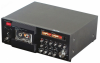
I’ve had two Dragons, a 3014, CR-7a, several JVC dual-wells, and a Tascam 122 MkII that spent its first few years in the possession of Columbia Records in NYC. It then spent several years recording bands in the FOH board rack at the Music Farm in Charleston, SC, in the mid 90’s. All the decks died years ago and were sold for parts… except the Tascam 122 MkII. It’s never been serviced, aside from cleaning heads, capstan, rollers. It has XLR I/O and is currently normalled into my patchbay rack, being used for outboard saturation in a room set up specifically for tracking B3 organ & Rhodes. Bulletproof. Will not die. I’m sure some have, but this one is all original, and that’s gotta be worth something!! PB quality is outstanding.
 

Attachments

  • CBA7E050-1AB9-472A-A38E-51DB258BE8B2.jpeg
    CBA7E050-1AB9-472A-A38E-51DB258BE8B2.jpeg
    123.4 KB · Views: 42
Last edited:
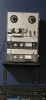
Of course, when I’m more motivated, I’ll use the old girl up on the shelf!!
 

Attachments

  • BDEBED86-B0C3-46C9-9154-4A7AAF812A79.png
    BDEBED86-B0C3-46C9-9154-4A7AAF812A79.png
    496.4 KB · Views: 45
Side question: for playback-quality alone, which deck would you use when capturing CC audio for archival, raw WAVs? Something with balanced outputs, preferably (no RCA jacks).
 
If I only rate sound
Here is a ranking of my pets
1 Tandberg tcd 910 a 911
2 Nakamichi Dragon
3 Revox B 215 S
4 Nakamichi 1000 Zxl
5 Tandberg tcd 3014a
6
7
8
9
10 And here I would put all the other brands that never matured on Nakamichi Revox a Tandberg
11. Pioneer Ct 93
12 Sony Tc Ka 7 es
13 Aiwa xks 9000
14 Technics RSB 100
 
Back
Top Bottom