• The move to the new server is done. There are some software and database maintenance updates in process. This has us passing the hat around to help out. We appreciate any donations. Seriously, even a dollar helps. The payment page may be found here - https://www.audiokarma.org/support.html

Update on new EMIT/EMIM Diaphragms

Status
Not open for further replies.
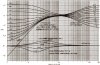
here is something I just received from Bruce Thigpin at Eminent Technology, a frequency response graph of an emim from a test 1999... thought it might be of some interest here. I tried to get Bruce to consider making replacements a few years ago, since he makes a similar planar speaker with his lft series, but his time availability just did not allow taking on another project.

Infinity EMIM frequency response in baffle.jpg

what size baffle board ??

dipole effects will limit the low frequency extension.
 
don't have a clue on how large the baffle board was, the graph is just what it is....

on a secondary note, on my rs4.5's, running an ashley crossover, I like 300hz crossover a lot better than the stock 150hz the speakers used when using the built in passive crossovers. I am running four infinity beta 12" speakers instead of the watkins, wired direct without the passive components. with the ashley, you have a control that you can raise or lower the signal level around the crossover point, that combined with the 300hz crossover, I believe a lot of the mid bass suckout is gone.

sure hope I can afford eight of graz's new diaphrams, baby needs some new shoes...
 
Last edited:
don't have a clue on how large the baffle board was, the graph is just what it is....

on a secondary note, on my rs4.5's, running an ashley crossover, I like 300hz crossover a lot better than the stock 150hz the speakers used when using the built in passive crossovers. I am running four infinity beta 12" speakers instead of the watkins, wired direct without the passive components. with the ashley, you have a control that you can raise or lower the signal level around the crossover point, that combined with the 300hz crossover, I believe a lot of the mid bass suckout is gone.

sure hope I can afford eight of graz's new diaphrams, baby needs some new shoes...

What slope are you using at 300 Hz? I use a 220 Hz crossover at 24 dB/octave with my RS4.5s. I still hear a "suckout". I believe I have a broad shallow dip in response from about 70 Hz to 200 Hz that is causing my suckout. But this conclusion is hard to verify without a spectrum analyzer with better resolution than the one I am using.
 
I always wondered about that - the equalizer is designed to affect the response all the way up to 1000Hz, yet folks biamp these all the time, which negates everything the equalizer does for the low EMIMs. That's one of the reasons why I stayed with single amping.

As an illustration of what I mean, here is a page from a review of the RSIIa, copied from the Infinity Classics.de site. You can see from the graphs on the page (and probably read if you speak German!) that the Contour and Bass Level knobs of the equalizer are designed to address that midrange suckout issue. Also shown is how the Bass Level knob augments the very low bass of the woofers.
 

Attachments

  • RS_II_A_review_deutsch_03.jpg
    RS_II_A_review_deutsch_03.jpg
    146.8 KB · Views: 29
I believe I have a broad shallow dip in response from about 70 Hz to 200 Hz that is causing my suckout. But this conclusion is hard to verify without a spectrum analyzer with better resolution than the one I am using.

You can download a test CD for free from the RealTraps website that has tones from 10Hz up to 300Hz in 1Hz steps. If you have the patience and a Rat Shack meter you can plot your LF response to 1Hz resolution. That ought to tell you if your conclusion is correct.
 
Yes, the equalizer provided by Infinity for the RS-4.5 was also able to alter the frequency response as indicated in this example from the equalizer manual.

I have tried to do this sort of contouring with the equalizer but I never was successful in removing the suckout. I wonder if I should assume that the suckout is higher in frequency than what I have thought, that is around 500 Hz rather than somewhere lower in the bass.
 

Attachments

  • infinity-equalizer.jpg
    infinity-equalizer.jpg
    146.2 KB · Views: 24
Last edited:
You can download a test CD for free from the RealTraps website that has tones from 10Hz up to 300Hz in 1Hz steps. If you have the patience and a Rat Shack meter you can plot your LF response to 1Hz resolution. That ought to tell you if your conclusion is correct.

In fact I use a handheld Phonic PAA2 1/3 octave audio analyzer with the supplied CD of test signals that include pink noise and sine wave sweeps.

Testing with sine wave signals can be tricky because of the peaks and valleys due to room reflections but the pink noise is less susceptable to this. The PAA2 LCD display gives a frequency response indication and with pink noise the in-room RS-4.5 response is pretty flat. However, I think the 1/3 octave resolution of the PAA2 may not be enough to give me the whole picture.
 
In fact I use a handheld Phonic PAA2 1/3 octave audio analyzer with the supplied CD of test signals that include pink noise and sine wave sweeps.

Testing with sine wave signals can be tricky because of the peaks and valleys due to room reflections but the pink noise is less susceptable to this. The PAA2 LCD display gives a frequency response indication and with pink noise the in-room RS-4.5 response is pretty flat. However, I think the 1/3 octave resolution of the PAA2 may not be enough to give me the whole picture.

That's why I suggested the RealTraps downloadable CD. 1/3 octave is not high resolution. If you use the RealTraps test tones your resolution can go down to as low as 1Hz, but it only has tones up to 300Hz.
 
That's why I suggested the RealTraps downloadable CD. 1/3 octave is not high resolution. If you use the RealTraps test tones your resolution can go down to as low as 1Hz, but it only has tones up to 300Hz.

My analyzer is limited to 1/3 octave resolution. I have an analog HP signal generator, I can generate a sinewave test tone at any frequency from 6 Hz to 60 kHz. I find using test tones when making in room measurements is hard especially when trying to determine broad deviations from flat response. They are great for finding narrow peaks and valleys in response though.

Other kinds of test signals like pink noise, warble tones, and sinewave sweeps have been developed to deal with the limitations in discrete sine wave testing. Now if I had an anechoic chamber, the sinewaves would be perfect...

I think the suckout in my Infinities is due to a broad trough in their frequency response over a range from about 70 Hz to 220 Hz or so. To confirm that, I would like to examine the response of the speaker over that range with greater resolution than I can with the 1/3 octave analyzer. While I can try to do that with the sinewave oscillator and Rat Shack meter, the sharp peaks and valleys in response make it hard to get a good picture of the response over such a broad range.

Perhaps one of those MLSSA software packages and a PC is the way to go...:scratch2:
 
Last edited:
EMIM Diaphragm Impressions - Updated

I'm well over 100 hours on the Graz diaphragms now, and my thoughts are distilling down to one key difference from stock - transient response.

The Graz diaphragms are of a somewhat different construction from the stock, one which I believe allows them to respond to the leading edge of signals more quickly, and allows them to capture tiny signals that are smoothed over by the stock. Being a detail freak, I like the change. Perhaps those who like less detail may not. The stock units have a certain smoothness that is appealing, but once I heard the sharper, more detailed sound of the new units, I was hooked. Listening to the stock units is kind of like watching standard definition TV after seeing high definition, you can still see the game and you still know who won, but somehow it just looks a bit less real.

Don't get me wrong, I like the sound of the stock EMIMs very much, that's why I have Infinity speakers. To me, however, the increased realism of the Graz-ed EMIMs is a step up. I would bet though that they will also be less forgiving of poor electronics and source material. To make another HDTV analogy, you will notice the scars and wrinkles on your favorite player/actor's face that you didn't even know were there previously.

I can say one thing for sure. I'm planning to keep my evaluation set (unless Graz comes up with something even better!), and I'll be swapping out the stock units in the other speaker in the next few days, after I do a few more measurements. I await his EMIT diaphragms with much anticipation - more detailed EMITs would really be something, I'll bet!
 
looks like it is time to establish a real selling price, and start an initial run..... if reasonable, I am in for probably 10 pieces....
 
as i mentioned before, max, it would be great if you could do some farfield measurements from your listening position!

i wonder, if the transient response is even better, whether there will be a further disconnect between the woofers and EMIMs on the speakers with no L-EMIM or midbass coupler in between? you haven't noticed that, have you Max? then again, you've probably improved your woofer speed a bit with your mods.
 
No, I haven't really noticed any increased problems with woofer/EMIM integration, but as you said, my crossovers and woofer cabinets are not stock any longer. I will take some further measurements in the next few days, and I'll post the results when I get the OK from Graz (still in the prototype phase).

I'm sure a lot of folks will want to do total swap-outs from stock to Graz, but I think you could also go a pair at a time. For example, you could do the high EMIM pair on RS1b or RSIIb speakers first, then go for the full array if you like the result.
 
The Graz diaphragms are of a somewhat different construction from the stock, one which I believe allows them to respond to the leading edge of signals more quickly, and allows them to capture tiny signals that are smoothed over by the stock. Being a detail freak, I like the change. Perhaps those who like less detail may not. The stock units have a certain smoothness that is appealing, but once I heard the sharper, more detailed sound of the new units, I was hooked. Listening to the stock units is kind of like watching standard definition TV after seeing high definition, you can still see the game and you still know who won, but somehow it just looks a bit less real.

Sounds like they are under damped with a high Q resonance peak. Have you done any objective testing ??

regards
 
I think the suckout in my Infinities is due to a broad trough in their frequency response over a range from about 70 Hz to 220 Hz or so. To confirm that, I would like to examine the response of the speaker over that range with greater resolution than I can with the 1/3 octave analyzer. While I can try to do that with the sinewave oscillator and Rat Shack meter, the sharp peaks and valleys in response make it hard to get a good picture of the response over such a broad range.

Perhaps one of those MLSSA software packages and a PC is the way to go...:scratch2:

It's easy to do with nearfield testing. Set the mic right up near the speaker diaphragm and use a program such as spectra lab etc to do a frequency sweep ;)

181c1fc8.jpg
 
Just want to reaffirm that my main goal here is to make;-

1) Something that solves the problem!
2) Something that people like
3) Something that exceeds expectations
4) Something that will last
5) Something that will not blow apart like some original EMIM's
6) Something in keeping with my Apogee philosophy's
7) Something affordable for people to buy and me to make
8) Something sustainable, with reliable supply (read that I don't hate making!)

The biggest thing here is the variability of the units I have tested. I actually like the stock EMIM sound (no tape on the panel). when they are "right". that is, no wrinkles, and all close on tension. And I like my current version as an expression of "how I would do it", and more so as they are all identical (like lego bricks!). What's my opinion worth - i'm biased (really!)? The taped EMIM's aren't even in the running for comparative measurement. They are a tad "low res". Their damping is achieved in a different way to what I have done with these late- stage-proto/early-production run. Speakers are very subjective, and I know whatever I make some will dislike the product vs stock, even if they were (their not!) stock clones!!!

Might need some extra heads on this...


Take care - Graz
 
Last edited:
Well, my stock EMIMs are the ones with the tape on them, and I agree about their being "low res", as Graz puts it, versus his version. As I stated above, I personally like the "high-res" Graz version, but YMMV.
 
The biggest thing here is the variability of the units I have tested. I actually like the stock EMIM sound (no tape on the panel). when they are "right". that is, no wrinkles, and all close on tension. And I like my current version as an expression of "how I would do it", and more so as they are all identical (like lego bricks!). What's my opinion worth - i'm biased (really!)? The taped EMIM's aren't even in the running for comparative measurement. They are a tad "low res". Their damping is achieved in a different way to what I have done with these late- stage-proto/early-production run. Speakers are very subjective, and I know whatever I make some will dislike the product vs stock, even if they were (their not!) stock clones!!!

Might need some extra heads on this...


Take care - Graz

A couple of questions

what is their free air resonant frequency compared to the original units ??

what is their frequency response compared to the originals ??

what is their sensitivity compared to the originals ??

regards
 
It's easy to do with nearfield testing. Set the mic right up near the speaker diaphragm and use a program such as spectra lab etc to do a frequency sweep ;)

181c1fc8.jpg

Nearfield testing is great for testing individual drivers, it gets around the problems introduced by the reflecting surfaces quite nicely. However, for a speaker with multiple, disparate drivers like the 4.5, you really need to get back a distance into the farfield to allow the drivers to blend in order to get a handle on the composite response of the system.
 
Nearfield testing is great for testing individual drivers, it gets around the problems introduced by the reflecting surfaces quite nicely. However, for a speaker with multiple, disparate drivers like the 4.5, you really need to get back a distance into the farfield to allow the drivers to blend in order to get a handle on the composite response of the system.

Yes you do but bear in mind these things crossover at 300Hz so there is still plenty of scope to check what is happening way below that.

regards
 
Status
Not open for further replies.
Back
Top Bottom