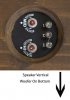
That's odd -- I've owned and seen many of the 2 series, and I don't believe I've ever seen that. Perhaps they were recapped or the pots cleaned, and they took the masonite panels out (why would they do that is a good question), and didn't figure out the orientation correctly when they put them back in.
I don't think the studio monitor idea is likely correct -- were ARs often used that way? I doubt it. Everything about AR literature and the sound actually militates for listening in a more normal mode in a more normal room. Maybe m wrong, but the use of ARs as studio monitors strikes me as a rarity.
I also doubt the cheap and careless labor explanation. Both Ed Vilchur and Henry Kloss cared a good deal about their work force. AR ads featured production workers, and both set up as generous benefits as they could afford -- not because they were bleeding heart liberals but because they thought a happy committed workforce was likely to make better products and show more initiative. And they could afford it -- the companies sold so many speakers that they could worry about quality and employee morale. I think at one point AR made something like a third of the speakers sold in the US. And when Kloss lost control of Advent (because of expenditures on the large screen TV), one of the issues that the bean counters who replaced him beefed about was the on site day care -- which of course allowed his workers to be reliably there when he needed them.
And what happened when the cost cutters came in -- the loss of a really remarkable reputation for value for dollar. And a steady downhill slide into indistinguishable product -- perfectly fine, maybe, but competing with every other average product on the market, rather than dramatically better. What a great marketing plan....