• The move to the new server is done. There are some software and database maintenance updates in process. This has us passing the hat around to help out. We appreciate any donations. Seriously, even a dollar helps. The payment page may be found here - https://www.audiokarma.org/support.html

Vinyl cleaning with enzymes

You spent more than I did, Mark. Mind you, the Loriclone I bought from the person who made it was that much, so you never know. My recommendation was the glue and a GEM Dandy, which can be made for very little. Much better than the Loriclone, and 95% of the UCM.

Spending a whole lot is not necessary and doesn't guarantee better results.
 
I’ve already got a US cleaner and vacuum wand (both for $225 for anyone interested). Hopefully the spindle and spacers can do double duty letting multiple discs cure at once with the glue method. Would you recommend any US recipe after the glue treatment? I’ve got many of the AK approved additives already. Everything goes in a new anti static inner sleeve after cleaning btw.
 
Why no towels btw? I usually use a rack and a small fan, but I’ll sometimes give them a pat with a microfiber cloth or layer with shop towels taking them off the spindle. Should I stop? I’ve also been dusting with microfiber before I play them.
 
Why no towels btw? I usually use a rack and a small fan, but I’ll sometimes give them a pat with a microfiber cloth or layer with shop towels taking them off the spindle. Should I stop? I’ve also been dusting with microfiber before I play them.
Dust. A light pat to speed up drying is probably ok, so long as it's not a full on rub down. You went to all this trouble to remove dust and static, you don't want to be putting it back on the record. I also don't dust the record before play unless it hasn't been cleaned. Instead, I use a dust bug to sweep the record as it plays, which keeps the inner grooves clean as the stylus reaches them. Dusting beforehand means there's 20 ~ 30 mins of dust on the inner grooves by the time the stylus reaches them. I've found this can be a significant contributor to IGD. If you use a dust cover during play, fine, but they bring they're own distortions, so I avoid them. Besides, my current table doesn't come with one.
 
I’ve already got a US cleaner and vacuum wand (both for $225 for anyone interested). Hopefully the spindle and spacers can do double duty letting multiple discs cure at once with the glue method. Would you recommend any US recipe after the glue treatment? I’ve got many of the AK approved additives already. Everything goes in a new anti static inner sleeve after cleaning btw.

After the glue you don't need the UCM treatment assuming you glued up both sides, but you could dip them to kill the static. In my tank I use only a trace amount of quat in DI water but that's only because I use it to polish the record before or after scrubbing it on the dandy. I want to leave a trace amount of quat on the record for static control. And by trace, I mean barely enough to cause slight foaming in a bottle vigorously shaken.

A lot of ppl put their records in new sleeves. I do it sometimes if the original is plain paper. If it's poly lined with branding I use a Swiffer to dust it out. If it's paper with branding I line it with a thin, round bottom HDPE insert. It keeps the historicity of the album and the combination of paper and poly is fairly effective at keeping static down. These are my choices....I have a thing about plastic and try not to collect too much of it. Besides, unless the original is damaged somehow I see no reason it can't be reused with just a simple cleaning.
 
This is helpful, thanks for putting it all down. Does the dust bug track with with the tone arm? Do you do anything to protect the outer grooves once it passes? I’d actually been thinking about building something like it, but if there’s a good version out there I’d be happy to be saved the trouble. (Too many projects already)
 
The Dust Bug was for the classy guy. He was assured that he would have the cleanest records. I couldn’t afford them and if I got one then where would I get the perishables like that unique fiber ‘roller?’ Actually, it was a slider.

Years later I got one cheap.

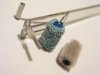
I thought about it. There is no reason why I couldn’t make one myself. Make it modern by using microfiber cloth.

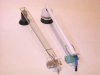
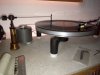
I made this one years ago. I named it, “Dust Stick.” The name stuck.

To modernize Stick, I find it far more effective when I moisten it with my DIY enzyme cleaner.

The original Dust Bug was probably made with a pencil or chopstick.

Now I’m the classy guy (said with a laugh.)

Dust Bug UP.jpg 9h5csw.jpg 2vll7dg.jpg 10qb12e.jpg 35cq77r.jpg 2efupvb.gif
 
Last edited:
Love it! Looks like I have a new project after all. Maybe just the roller on a taped to a swing-arm lap to start with… I have a travel lint roller that size and I can upgrade to something with bearing if it works.

How you get it to track like that in the gif?
 
Glad you like it. It is low tech for the mindless.

For tracking: the ‘secret’ is that cheap, plastic, toy-artist nose-brush. Natural physics. The nose-brush acts like a stylus would: riding the groove is its plastic ‘fibers.’
 
This is helpful, thanks for putting it all down. Does the dust bug track with with the tone arm? Do you do anything to protect the outer grooves once it passes? I’d actually been thinking about building something like it, but if there’s a good version out there I’d be happy to be saved the trouble. (Too many projects already)
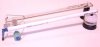
The dust bug tracks if the record is clean and the underhang is set correctly. I have the Tonar No Static arm which I have modified to remove the brush rake angle, lengthen the wand and integrate an arm rest so it doesn't flop around when it's not in use. I had one similar to Tobascokid's a long time ago and if I recall it works pretty much the same way.

I've never given the dust in the outer grooves much thought until you mentioned it lol. I suppose I should be dusting the record after I play it but I try to strike a balance between the intensive cleaning to extract the utmost from these old records with the ease of simply placing one on the platter and spinning it without being too fussy. In practice, I haven't noticed the need to dust it afterwards but it may be simply that I haven't accumulated enough plays for the dust to overcome the dustbug's ability to keep it clean with each play. Time will tell.

dustbug.jpeg
 
I've never given the dust in the outer grooves much thought until you mentioned it lol. I suppose I should be dusting the record after I play it but I try to strike a balance between the intensive cleaning to extract the utmost from these old records with the ease of simply placing one on the platter and spinning it without being too fussy. In practice, I haven't noticed the need to dust it afterwards but it may be simply that I haven't accumulated enough plays for the dust to overcome the dustbug's ability to keep it clean with each play.

I actually meant to correct myself on that! Because of the relationship of circumference to radius comparatively little time is spent in the inner grooves, so less time for dust to settle the farther out you go. Whatever little might land would easily get "bug dusted" next time round. Good process, and VERY elegant setup!
 
But as someone once mentioned many years ago, it seems like some of these exotic, ultra skinny Stylus profiles on many of the very best MC Cartridges do a much better, and much 'faster" job of "getting through these issues, making them much less objectionable.

I've actually been thinking about this. I was thinking that I should make my next stylus the narrowest one I can afford (obvious oversimplification, but for the sake of discussion) because if a lot of the record's damage is on the surface, and I'd be able to "slip past" it to some degree. Also, that the wear on the records (some of which date from the '40s) would be from wider, heavier styluses, and more information would be retained at the bottom of the groove, so I'd want to stylus that's reading from as far down as possible.

Does that make sense? I'm not 100% confident in my understanding of how tip interacts with the interior of the groove so I'm not sure if I'm thinking about this correctly.
 
I've actually been thinking about this. I was thinking that I should make my next stylus the narrowest one I can afford (obvious oversimplification, but for the sake of discussion) because if a lot of the record's damage is on the surface, and I'd be able to "slip past" it to some degree. Also, that the wear on the records (some of which date from the '40s) would be from wider, heavier styluses, and more information would be retained at the bottom of the groove, so I'd want to stylus that's reading from as far down as possible.

Does that make sense? I'm not 100% confident in my understanding of how tip interacts with the interior of the groove so I'm not sure if I'm thinking about this correctly.

It's not so much narrow, but more exotic stylus profiles and the way they are cut do provide larger contact area of the groove walls versus conical, and elliptical.

Such types could be called Hyper-Elliptical, Line Contact, Micro Line, and Shibata.
 
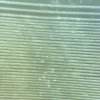
I’m trying the glue method at the moment and thought I’d share this picture of a little piece of dried glue under the microscope. It really shows how massive dust can be relative to the information stored in the grooves
 

Attachments

  • 38F9527B-FD12-4605-8E4E-EC050D9C351E.jpeg
    38F9527B-FD12-4605-8E4E-EC050D9C351E.jpeg
    156.2 KB · Views: 26
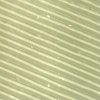
Here’s one I’d already US cleaned. Only small pieces remained to be picked up by the glue:
 

Attachments

  • 62CF5357-A644-470E-B01B-793DBE3C1BBD.jpeg
    62CF5357-A644-470E-B01B-793DBE3C1BBD.jpeg
    128.9 KB · Views: 19
Thank you for some great responses. My “problem” is that I bought a collection of 4000 classical Lp’s for a very good bargain. It needs cleaning, but the actual cost of specialized cleaning fluid would run up.
The special cleaning fluid for textile with the enzymes is not that expensive, but of course I need to be sure if it will do any damage. If not I expect it to be very effective…
I could try post it on a chemist forum.

It is painful work to clean 4000 records.
There are only two ways.
The first way is to take them to a commercial cleaning site. It will cost a lot of money.
The second way is to do everything yourself at home. In this option, for maximum effect, two stages can be carried out. First wash the records by hand.The record label must be protected with special screw-clamped covers. These devices are for sale. You have to buy them. Warm soapy water, moderate concentration of soap in water. Apply a soft, lint-free cloth when washing. This cloth is sold for cleaning LCD monitor screens. Then rinse with a strong jet of clean water. Remove excess water with a medical eyeglass wiper. Wipe with pressure, in a circular motion along the grooves, back and forth. These wipes are available from pharmacies. They are already soaked in the cleaning solution. This solution is harmless to vinyl and dries quickly without residue. He will also clean the record and dry with the remaining
water.
Then buy a machine for cleaning records and use it for further cleaning. The cleaning machine is expensive. But there is no other way. But it may turn out that one first step may be enough if you are good at hand washing the records.
 
Last edited:
"But there is no other way."

Welcome.

You need to research this forum.

I've been experimenting with vinyl records since 1989. If vinyl records have not been lying in the attic for 10 years, coffee is not poured in, or they were not taken by hand during a barbecue, then washing will not work miracles. If the plate was stored in an envelope, does not have a layer of dust, and was handled normally, any washing (ultrasound, washing in a special machine) gives nothing noticeable. If there is dirt, it can be washed off in any way. If the user knows how to do something in a simple way at home and almost free. If the user wants to spend money in addition, then you can buy a washing machine. Or place an order for money to the place where this washing machine is.
But in most cases, on old vinyl records, the sound problem is not from dirt, but from wear on the grooves or bad habits - scratches. They cannot be washed off in the washing machine. There is no miracle.
I just want to talk about my experience.
 
Back
Top Bottom