• The move to the new server is done. There are some software and database maintenance updates in process. This has us passing the hat around to help out. We appreciate any donations. Seriously, even a dollar helps. The payment page may be found here - https://www.audiokarma.org/support.html

VPI Turntable Owners Thread

Nothing surprises me when it comes to dealing with VPI directly. They have had $7,000.00 of my money for months now. I am still awaiting a refund for a returned Tonearm, and shipment of a new FB10 Tonearm. It’s one excuse after another. I recommend going through Music Direct for anything related to VPI.

You may have already but if you haven't, I would reach out to Mat directly, he's pretty active on Facebook in the VPI groups.
 
Regarding oil, I was a small time/part time VPI dealer 85-91, and Harry told me to get a bottle of Mobile 1 oil, dip the bearing in it, let the excess drip off, once a year. I also remember when Sheila gave me his shop number to only call him when I had an actual question. Harry enjoyed chatting.
 
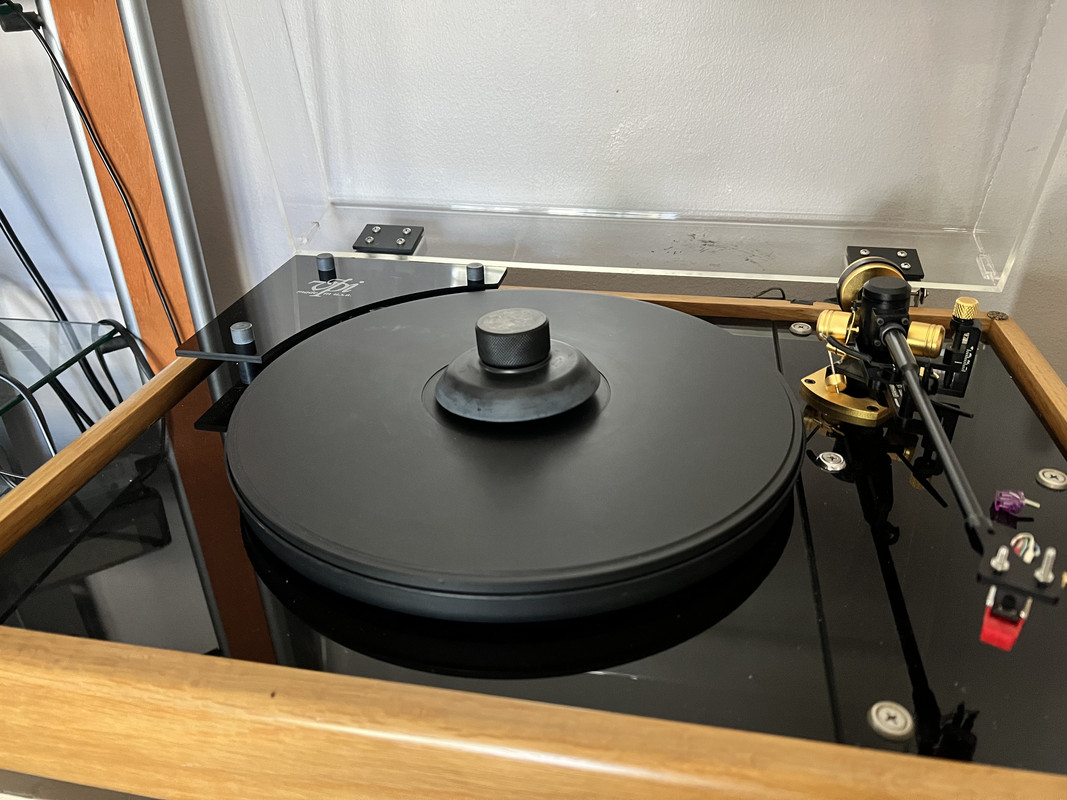
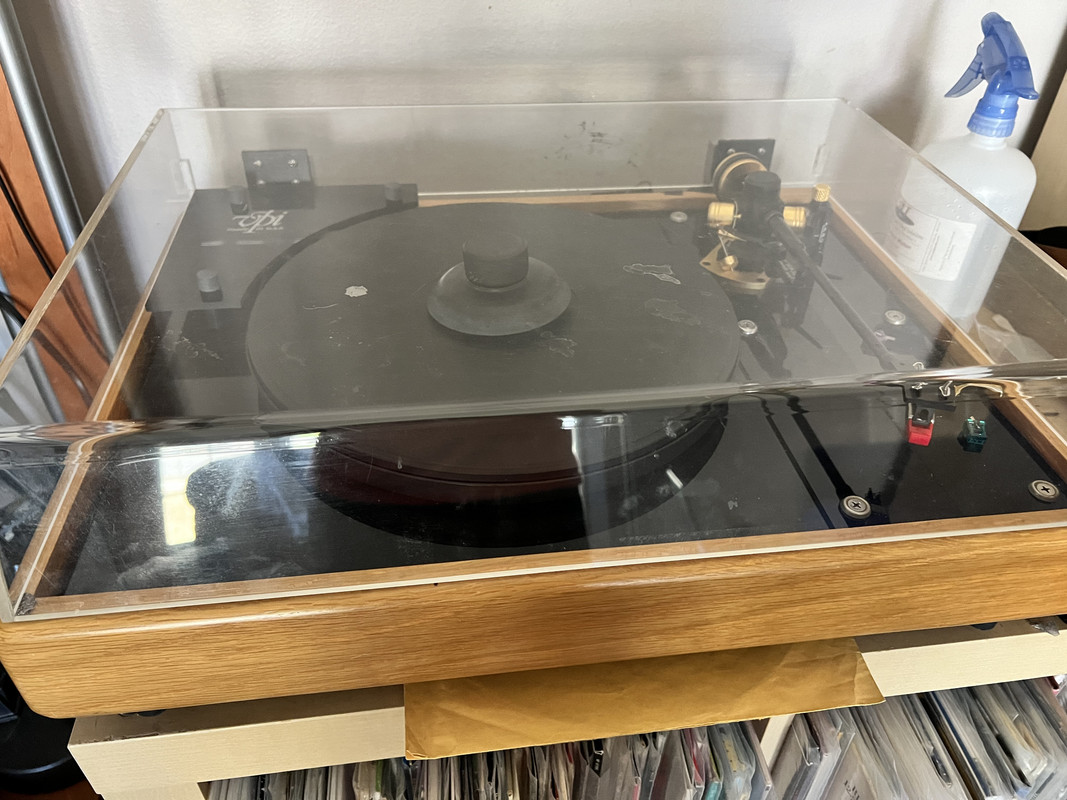
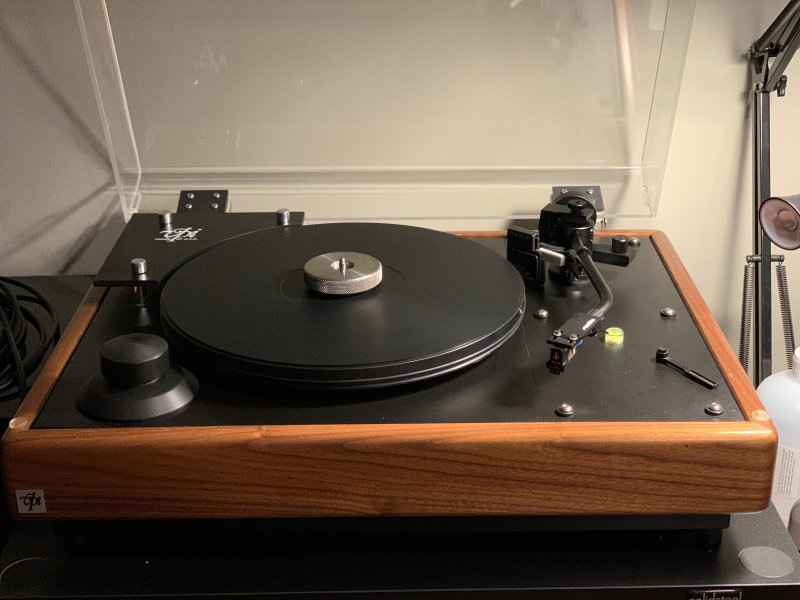
Awhile back I acquired a really nice HW19 with a Graham 1.5 tonearm. At the time it had been identified by the previous owner as a MKII. It's has the smaller acrylic/lead platter that weighs about 10lbs. The other day I noticed for the first time a sign on the back of the walnut plinth ID'ing it as a MK IV. So I suppose this would mean it's either a MKII that got put in a MKIV plinth, or a MKIV that a platter replacement. Is there any other way besides the platter to determine which model this might be?

0579-C464-AEF2-409-E-9436-C70-B6-BA9-F7-F7.jpg


5D5F57D2-3B12-44D2-9437-409CD3B3D322.jpg
 
The acrylic was a MKII option that became standard with the MKIII. In addition to the TNT bearing and platter I seem to recall that the IV also had a slightly better motor than the II/III, although I won't put any money on this. Maybe it's a MKII/III with a MKIV base.

Edit: Another thing to check is the top pads on the suspension springs. The II's 3 small metal inserts were pointed while the III's were domes. The Ii also had a two-piece record clamp and I'm pretty sure the III had the clamp yours has and this clamp is also the IV's. Also, the II's motor assembly had an aluminum pulley which became delrin with the III.
 
Last edited:
Awhile back I acquired a really nice HW19 with a Graham 1.5 tonearm. At the time it had been identified by the previous owner as a MKII. It's has the smaller acrylic/lead platter that weighs about 10lbs. The other day I noticed for the first time a sign on the back of the walnut plinth ID'ing it as a MK IV. So I suppose this would mean it's either a MKII that got put in a MKIV plinth, or a MKIV that a platter replacement. Is there any other way besides the platter to determine which model this might be?

0579-C464-AEF2-409-E-9436-C70-B6-BA9-F7-F7.jpg


5D5F57D2-3B12-44D2-9437-409CD3B3D322.jpg
Awhile back I acquired a really nice HW19 with a Graham 1.5 tonearm. At the time it had been identified by the previous owner as a MKII. It's has the smaller acrylic/lead platter that weighs about 10lbs. The other day I noticed for the first time a sign on the back of the walnut plinth ID'ing it as a MK IV. So I suppose this would mean it's either a MKII that got put in a MKIV plinth, or a MKIV that a platter replacement. Is there any other way besides the platter to determine which model this might be?

0579-C464-AEF2-409-E-9436-C70-B6-BA9-F7-F7.jpg


5D5F57D2-3B12-44D2-9437-409CD3B3D322.jpg

Howdy, firstly I could be color blind, or it's the photo, that your wood base appears to be natural Oak, like mine is, not the Walnut Base.

Honestly, I cannot even recall what the Badge on the back of my Base says, but it did start life as a Junior Model bought new by myself.

All the outer wood bases are of course identical, and I suppose there could be a mish mash of where they used whatever was on hand, and then chose the various platters-etc.

Yours has the separate split inner plinth which attaches to a sub-chassis Sheet. Where there differences in weight of this sub chassis sheet from model to model? That I am not aware of.

My Junior Wood Base had provision for use of the Spring Suspension, the T-Nuts were in place for the Springs to screw in, but came with the Sorbothane Pucks merely placed on top in the routed circular depressions.

The Junior inner Plnith was just simply a solid sheet of Laminated MDF, no detachable armboard, and no sub-chassis sheet.

I might guess there were about 5 different platters that the HW-19 utilized from the factory. The lightest, the Junior Clear Frosted Platter weighed 6lbs. I believe there were two MK-IV Platters. I have a solid Delrin MK-IV Platter with internal lead Ring, 3-point suspension system, and by my bathroom scale weighed 16lbs.

Then there was another, which was a laminate Delrin-Metal Platter which if my memory serves me correctly weighed 18lbs.

Were there possible custom one-offs made by VPI, special order? Possibly?
There were likely other models that may have used one or both of the HW-19 MK-IV Platters, and that might have been the Aries 1. I recall seeing a Aries 1 at MusicDirect many years ago that had an all Delrin Platter.

I'm sure over the years, there were some buying and selling parts at places like Audiogon, where some had upgraded a TNT Table model, or an Aries, to heavier Platters that VPI was then making.

If was often joked that Harry had "upgrades for the upgrades".

And for a short while, I seem to recall Harry making two Super Platters. One was for the HR-X, which I believe weighed 30 lbs, and then a slightly lighter Super Platter which was 25lbs and was a compatible swap-fit for the HW-19 Table, and perhaps some others. (Aries-TNT-etc)

I seem to recall a then price of $1200-$1000 respectively. Try finding one today at those costs.

Of course the other add ons as you know were the SAMA, 2 versions of those, and the Speed Controllers, first the PLC, (2 versions) then the SDS.

 
DSCN0061.jpg DSCN0059.jpg

When I did some upgrades on mine, I had to choose what I wanted to do as far as the Inner Plinth. Go identical per VPI Design and utilize a 2-piece affair, with a removable Armboard, or go with one solid Sheet of Acrylic, which could only use one specific Arm. I chose the latter, and perhaps have some regrets of such.

The differences with my setup, is not using a .500" thick sheet of Black Acrylic mated to the sub chassis sheet, I chose a thicker 1.00" thick Sheet. And yep, I got everything to squeeze in there just perfectly.

Thus my inner Plinth and 10lb Sub Chassis Sheet has more weight and mass versus any stock factory HW-19.

My suspension components to support the Plinth-Chassis Sheet-Platter was 4 Herbies Tall Firm Tenderfeet. They were perfect. My SAMA sits on 4 standard height Herbies Tenderfeet.
 
Last edited:
Howdy, firstly I could be color blind, or it's the photo, that your wood base appears to be natural Oak, like mine is, not the Walnut Base.

Honestly, I cannot even recall what the Badge on the back of my Base says, but it did start life as a Junior Model bought new by myself.

All the outer wood bases are of course identical, and I suppose there could be a mish mash of where they used whatever was on hand, and then chose the various platters-etc.

Yours has the separate split inner plinth which attaches to a sub-chassis Sheet. Where there differences in weight of this sub chassis sheet from model to model? That I am not aware of.

My Junior Wood Base had provision for use of the Spring Suspension, the T-Nuts were in place for the Springs to screw in, but came with the Sorbothane Pucks merely placed on top in the routed circular depressions.

The Junior inner Plnith was just simply a solid sheet of Laminated MDF, no detachable armboard, and no sub-chassis sheet.

I might guess there were about 5 different platters that the HW-19 utilized from the factory. The lightest, the Junior Clear Frosted Platter weighed 6lbs. I believe there were two MK-IV Platters. I have a solid Delrin MK-IV Platter with internal lead Ring, 3-point suspension system, and by my bathroom scale weighed 16lbs.

Then there was another, which was a laminate Delrin-Metal Platter which if my memory serves me correctly weighed 18lbs.

Were there possible custom one-offs made by VPI, special order? Possibly?
There were likely other models that may have used one or both of the HW-19 MK-IV Platters, and that might have been the Aries 1. I recall seeing a Aries 1 at MusicDirect many years ago that had an all Delrin Platter.

I'm sure over the years, there were some buying and selling parts at places like Audiogon, where some had upgraded a TNT Table model, or an Aries, to heavier Platters that VPI was then making.

If was often joked that Harry had "upgrades for the upgrades".

And for a short while, I seem to recall Harry making two Super Platters. One was for the HR-X, which I believe weighed 30 lbs, and then a slightly lighter Super Platter which was 25lbs and was a compatible swap-fit for the HW-19 Table, and perhaps some others. (Aries-TNT-etc)

I seem to recall a then price of $1200-$1000 respectively. Try finding one today at those costs.

Of course the other add ons as you know were the SAMA, 2 versions of those, and the Speed Controllers, first the PLC, (2 versions) then the SDS.

Thanks for your thoughts!

You're right of course the base is oak, not walnut. I get my woods confused.

I previously owned a Scout and a Scoutmaster that I upgraded with several options, including the 2nd version of the Super Platter which you describe, as well as a SDS. Sold it several years ago. I remember the clear platters. As I indicated, this black acrylic platter is about 10lbs on my bathroom scale. Acrylic/lead with a cork bottom.

I just got a nice deal on an SDS, which are increasingly scarce. This table already has rock solid speed, but figured the SDS can't hurt, and is probably not a bad investment.

The Graham is a nice arm, but I might try to put an SME 3009 on it at some point.

Overall I find this table more musical then the other VPI's I owned. From memory those always seemed a bit sterile to me, which is one of the reason I started down the vintage rabbit hole years ago.
 
The acrylic was a MKII option that became standard with the MKIII. In addition to the TNT bearing and platter I seem to recall that the IV also had a slightly better motor than the II/III, although I won't put any money on this. Maybe it's a MKII with a MKIV base.

I believe the very early HW-19 Tables used a German made Motor. I recall trying to aid-help another member here not that long back who had such a motor, but was missing the Pulley.

The Pulley for the Hurst Motor was not compatible, different output shaft size apparently. Thus he had a couple "less expensive options" versus picking up the phone and calling VPI.

Find a good condition Hurst Motor and Pulley, and swap, or find a VPI SAMA. He/we ran a want ad in Audiomart for a SAMA, and he scored .one

After that, and when VPI switched to Hurst, AFAIK, all the HW-19 Tables from the Junior to MK-IV all possessed the same model Hurst Motor. Even the SAMA as well utilized this exact same Hurst motor.

Hope this helps.
 
Last edited:
Thanks for your thoughts!

You're right of course the base is oak, not walnut. I get my woods confused.

I previously owned a Scout and a Scoutmaster that I upgraded with several options, including the 2nd version of the Super Platter which you describe, as well as a SDS. Sold it several years ago. I remember the clear platters. As I indicated, this black acrylic platter is about 10lbs on my bathroom scale. Acrylic/lead with a cork bottom.

I just got a nice deal on an SDS, which are increasingly scarce. This table already has rock solid speed, but figured the SDS can't hurt, and is probably not a bad investment.

The Graham is a nice arm, but I might try to put an SME 3009 on it at some point.

Overall I find this table more musical then the other VPI's I owned. From memory those always seemed a bit sterile to me, which is one of the reason I started down the vintage rabbit hole years ago.

My Table always ran slow from day 1. Sure, steady, but none the less slow. One of the pulleys that was available for the Hurst Motor, and I believe VPI does carry at present day, was a stepped pulley, meaning you could slightly alter platter speed by where you placed the drive belt on the Pulley.

Such might've helped me many years ago, but was unaware such a part perhaps existed, thus the SDS was required. Of course the fine tuning the SDS provides got things nuts on.

For many years, I did possess the KAB Strobe Disc, and Battery Powered LED Light. A little pricey, but a good tool to have on hand.
 
I believe the very early HW-19 Tables used a German made Motor. I recall trying to aid-help another member here not that long back who had such a motor, but was missing the Pulley.

The Pulley for the Hurst Motor was not compatible, different output shaft size apparently. Thus he had a couple "less expensive options" versus picking up the phone and calling VPI.

Find a good condition Hurst Motor and Pulley, and swap, or find a VPI SAMA. He/we ran a want ad in Audiomart, and he scored a SAMA.

After that, and when VPI switched to Hurst, AFAIK, all the HW-19 Tables from the Junior to MK-IV all possessed the same model Hurst Motor. Even the SAMA as well utilized this exact same Hurst motor.

Hope this helps.

Not looking for help, but thanks anyway. :thumbsup:

I became a VPI dealer at the 1985 Chicago CES where VPI introduced the MKII and it had a Hurst motor. The original 19 may indeed have had been German powered, but I don't recall. Harry and I had a very nice chat and the reason he went from the all metal original platter to the whatever it was made from, the black one, was audiophile/reviewer misperception that metal rings.
 
Last edited:
Thanks for your thoughts!

You're right of course the base is oak, not walnut. I get my woods confused.

I previously owned a Scout and a Scoutmaster that I upgraded with several options, including the 2nd version of the Super Platter which you describe, as well as a SDS. Sold it several years ago. I remember the clear platters. As I indicated, this black acrylic platter is about 10lbs on my bathroom scale. Acrylic/lead with a cork bottom.

I just got a nice deal on an SDS, which are increasingly scarce. This table already has rock solid speed, but figured the SDS can't hurt, and is probably not a bad investment.

The Graham is a nice arm, but I might try to put an SME 3009 on it at some point.

Overall I find this table more musical then the other VPI's I owned. From memory those always seemed a bit sterile to me, which is one of the reason I started down the vintage rabbit hole years ago.

Your Graham Arm looks like a very nice Arm, and possibly a better Arm than the AQ PT-9 Arm (Jelco) that I'm using. Provided the arm is in good operational health, the only things that would hold such an Arm back from performing its best, would be the Tonearm Cable, and Cartridge attached to it.

Sure, a sweet MC, but that too can open a can of worms in that one will require a separate Phono Stage.
 
My Table always ran slow from day 1. Sure, steady, but none the less slow. One of the pulleys that was available for the Hurst Motor, and I believe VPI does carry at present day, was a stepped pulley, meaning you could slightly alter platter speed by where you placed the drive belt on the Pulley.

Such might've helped me many years ago, but was unaware such a part perhaps existed, thus the SDS was required. Of course the fine tuning the SDS provides got things nuts on.

For many years, I did possess the KAB Strobe Disc, and Battery Powered LED Light. A little pricey, but a good tool to have on hand.

I’ve been using the KAB disc/LED for years. Wouldn’t be without it. The HW19’s speed is good enough that I wouldn’t normally have sought the SDS but got a good price so…
 
Your Graham Arm looks like a very nice Arm, and possibly a better Arm than the AQ PT-9 Arm (Jelco) that I'm using. Provided the arm is in good operational health, the only things that would hold such an Arm back from performing its best, would be the Tonearm Cable, and Cartridge attached to it.

Sure, a sweet MC, but that too can open a can of worms in that one will require a separate Phono Stage.

It is a nice arm. The only reason I might prefer the 3009 is to easily swap carts. I’m not a fan of MC’s but have a decent collection of MM’s. The arm tube detaches but spare tubes are non-existent.
 
It is a nice arm. The only reason I might prefer the 3009 is to easily swap carts. I’m not a fan of MC’s but have a decent collection of MM’s. The arm tube detaches but spare tubes are non-existent.

I have three Graham wands - the original aluminum and two ceramic. :deal:

A diligent search will eventually turn one up. Try some WTB ads too. :thumbsup:
 
I have three Graham wands - the original aluminum and two ceramic. :deal:

A diligent search will eventually turn one up. Try some WTB ads too. :thumbsup:

I've done all of that. I've actually seen a couple in the past, but they were asking way more then I wanted to pay. I'd rather put the Graham on a table that I'm not using as much as the VPI. I think the 3009 is a direct drop in for the 1.5 which makes things easier.
 
I've done all of that. I've actually seen a couple in the past, but they were asking way more then I wanted to pay. I'd rather put the Graham on a table that I'm not using as much as the VPI. I think the 3009 is a direct drop in for the 1.5 which makes things easier.

I have a Jelco/Sumiko MMT I might consider selling, mounted on a original HW-19 armboard. Get's you the swappable headshell. PM if interested.

 
I’ve been using the KAB disc/LED for years. Wouldn’t be without it. The HW19’s speed is good enough that I wouldn’t normally have sought the SDS but got a good price so…

If the SDS says what they claimed it does, act as both a speed controller, and also a line conditioner, sending better quality AC to the Motor, then I say bravo. It's common knowledge that the Hurst motor wasn't exactly the king of quiet.

And it appears to be the case in the two areas, both mechanically, and electrically.

Platters, and did I note a improvement with the heavier MK-IV Platter. I'm going to say yeah I think so. But at this point of modification, there were a couple other tweaks I did to my HW-19, and perhaps all had a cumulative effect?

I felt Bass performance seemed better nailed down.

It took a Dial Indicator to zero the MK-IV Platter with that finnicky 3-Point Suspension. The investment was worth every cent, when with a great deal of patience, I got the Platter spinning that you could not visually detect lateral movement. It appeared motionless. The Dial Indicator showed plus/minus .003".

I think I got super lucky with this Platter I have in that whomever made this Platter did one hell of a fine job!

I paid $300 for this mint condition MK-IV Platter some years ago. The 3 Threaded Screws that go entirely through the Platter, and contact the Upper Flange Face of the Bearing Shaft were all fully retracted.

Two issues came to mind. #1, that without this feature being in use, I was a Harry W Cardinal Sin, that was why he did such to the Platter and Bearing to begin with, a supposed sonic improvement.

But as I found, #2, those 3 Adjustment Screws which require an Allen Wrench to adjust were a prime source of attaining Platter accuracy-precision, and that sure did bring reaps of sonic improvement to my HW-19.

Today, and one many of the more modern VPI Platters, that evidently either isn't required if tolerances are up to snuff, or extra costs involved where 98% of end users might only get themselves in deep doo doo trying to play with sophisicated set-up tools.
 
Back
Top Bottom