No, I am not ignoring the measurements. I just find that the VTA IMD distortion in the range we are talking about, 0.5 to 1.5 % increase for a special test signal, is not anything that I bother about when playing music content
Ok, but what you're bothered about or not is not relevant and not an objective argument. Lots of people aren't bothered about many things at all, but this topic is about how to set the ideal VTA/SRA, how to measure it or it's consequences and potentially how it affects sound.
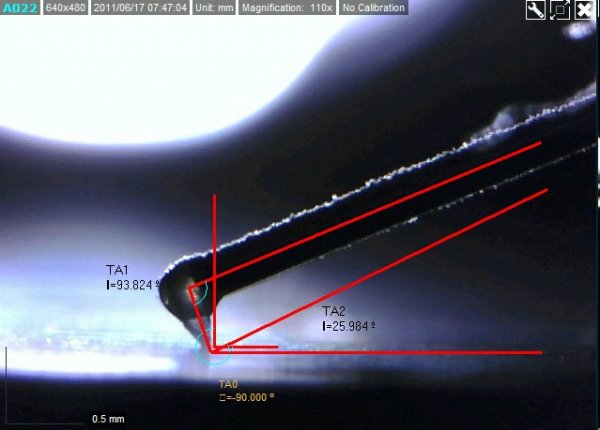
Also, one should ask why e.g. Ortofon have chosen to use the replicant stylus that gives SRA/effective VTA of around 90°/26°. Perhaps the 6 ° VTA error is of no concern, all other playback errors included?
You're concluding that VTA number from that picture with the measurements, not from the patent. The patent states that the sra should be 90 deg:
The angle of the front side facet surface to the upper surface of the record should be the customary 90°
and the vta of the cantilever should be ca. 20deg, so that is not really a set value. Their main claim is on the SRA. What VTA comes with that depends on how the tip is glued in.
The site talks about VTA IMD and how it applies to music and syantethic signals; cite "The listening tests reported are not authoritative (they were not double blind and the panel was extremely small). Nonetheless the results are interesting. Its author (Richard Tollerton) reported that a vertical tracking error of just 2° was perceptible on synthetic test tones, but the figure rose to nearly 12° on music programme."
Without actual music files we'll never know. Besides which type of music files is always very very important in these. Inner grooves? outer grooves? amount of modulation?
I see it like IGD. Lots of people claim it doesn't exist or doesn't occur on their setup. That is a consequence of either not having music where IGD occurs, or they don't know what to listen for, or are just plain deaf. It's easy to make a setup sound beautiful. It's not so easy to make a setup sound beautiful everywhere on every record.
I'm mainly interested in where things start to sound noticeably worse.
What I am most interested in is whether JICO have been conservative for their recommended VTF (1.0-1.5 g) and is reason for SRA to be a bit on the high side (I use 1.45 g brush down). In theory, lowering SRA and cantilever angle with 4° (to 90°/21°) would end up with an effective VTA ≈25°, but I would not do it with changing tonearm height much but rather with VTF. There is a way to test optimal VTF, but I have not dared to pass the higher limit.
You have that stylus. I don't. So you have to do the measurements whether or not VTF is set correctly on their recommendation. Lots of manufacturers are often dead wrong.
What's the dynamic compliance of that stylus? (without brush)
1.0-1.5 with a brush down is very very low. You'd expect a compliance of well over 35.
Whether or not more VTF brings you within your desired SRA range....depends on your static compliance.
However I doubt playing with the VTF would bring that stylus in your first example with that 8degree SRA error (according to the measurements) into the right ballpark.
The original v15IV is rated at 25mm/N, so that means adding 1g extra VTF (wich of course is a huge amount), only ads 0,25mm extra sagging of the stylus. That would result in a lowering of only 2 degrees on the VTA if the cantilever (tip to fulcrum distance) is 8mm long (pretty standard). Certainly not enough for the stylus from your first example.
And that's for 1g extra VTF. Adding half a gram or even less won't really do anything. Or that jico stylus must have an insane high static compliance of like 75mm/N or more, but that's unlikely.
But I assume you haven't done such calculations yet?