I'm still here-
First, to answer Loq's questions
1-Frankly, I don't remember what brand the foil was. We bought it at the supermarket, and I haven't seen it for years. What was important were the striations in the material.
2- In early experiments, clear silicone grease was used between the foil and the plastic. It served as both an adhesive and to decouple the foil from the plastic. It was messy, difficult to apply, expensive, and it it got into the area where you were trying to glue the cone together, the glue wouldn't hold. Later, when more were being built, we switched to the 3M spray. Also, the glue used to hold the seam of the cone started with epoxy, then graduated to a very thin liquid styrene cement sold at hobby stores to weld plastic models together, and probably ended up just being the spray adhesive.
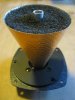
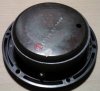
3- Yes, the Seas 1.5" dome illustrated is the device I remember using. It was very robust, and was able to work down to 1.5 KHz. Remember, the original intended crossover frequency was 2-2.5 KHz, not 10 K. It had the disadvantage of being rather expensive, at about 10 1970's dollars when Infinity was using Peerless paper cone tweeters that cost 2 bucks apiece. Granted, they were also using RTR electrostatic cells (also expensive) in their better models, but they were a crap shoot- very high failure rate, and they were implemented poorly. (the Infinity 2000 had them mounted to the side if the speaker at the front of what amounted to a "tunnel" which severely compromised the response of the cells.
The point being is that the first thing that probably happened was a much less expensive dome driver was substituted and the crossover frequency was moved up to keep them from frying at high levels.
From here, I really can't add too much regarding the history or what happened at Infinity. Shortly after I was involved in the prototype build, I got a job at a recording studio, and a year or so later went into the showrooms in Vegas where worked as an audio guy for a number of years. I never really thought much about the tweeter after that until recently when I became interested in the Walsh driver again. (the German Physik speakers look like one hell of an entertaining DIY project)
The thread I started in DIY was to see if anyone was doing anything in this area- not much interest. I then queried about the Walsh tweeter, and got a few hits, then that petered out.
In a couple of PM's with Loquatious, it has been suggested that most of your are Infinity affectionados who are trying to restore your speakers to their original glory. I can't help anyone here, because I have no idea what Infinity did later on.
Loquatious has suggested that I start a new thread concerning building the things, something I am really not inclined to do.
I will, however put together a little article showing how I built them- in fact, once I get settled from a recent move, I'll see about building a pair so you can see the step-by-step. This will take me a couple of months- I am currently building a power amp from scratch, and I have to locate the parts I have that are buried in the wasteland of my storage unit for both projects.
It's my hope that those of you trying to restore your speakers exercise caution when trying to locate drivers on fleabay. If they are claimed to be original, they may be damaged, and the dampening materials as well as the foam will undoubtedly be dried out.
From some of the photos I've seen here, don't let your enthusiasm cloud your judgement. I've sure done it myself. If you do get hosed, hold that seller accountable- Pay-Pal has a buyer protection plan in place- use it. Ebay has feedback and resolution methods in place- use them.
L8tr,
J