

You are using an out of date browser. It may not display this or other websites correctly.
You should upgrade or use an alternative browser.
You should upgrade or use an alternative browser.
Wharfedale Owners Thread
- Thread starter tyeeslayer
- Start date

Gang-Twanger
Resident Wharfedaliophool
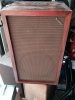
The face
Nice... Ported W60's, right? ... There are so many W60 owners on here, it's hard to keep track...
That's an underrated model. In the right setting (amplification, placement, etc.), it's a truly-excellent speaker. Perfect for '60's music, including jazz, classical, '60's funk/soul/R&B, folk music, '60's and early '70's classic-rock (and especially psychedelic-rock like Hendrix), Beatles and other British Invasion groups, Sinatra and other crooner-types (The W60's really hit the mark with Sinatra), and they sound alive with tube-cut vinyl from that era.
Here's a video of my W60's with my Fisher 800C, post-restore. Should give you an idea of their lively, open sound signature. They have that lush, full-on British, "breath of life" sound that gives you goosebumps. More than the W90's even (The design of the W90's intentionally-dials that lushness back with the mix of woofers): http://m.youtube.com/#/watch?v=qxPljs82Xgw
And keep in mind, Raymond Cooke was still at Wharfedale and would have worked with Mr. Briggs on this model, since they WERE the heads of the design team, just prior to the last of those "live vs recorded" events. The British line remained virtually-unchanged in 1960. That's because they were working on the W60 and an eventual W*0 series to be marketed in the US. And they would have worked on the W70 as well, which was introduced later on that same year (and possibly the W40). The W90, on the other hand, wasn't introduced until 1962 (Apparently, Joe Ackroyd, formerly of Goodmans and later of Royd Audio, was the one who came up with that design). After whatever work was involved for him with the W60 and W70, Cooke spent his last months at the company working on a Wharfedale slimline model as well as what would be his first KEF model, the K1 (Mr. Briggs was reportedly NOT happy when Cooke turned in his resignation...It temporarily-ended their friendship, though they did reconcile that friendship later on). A very-pivotal time in the company's history.
Last edited:
Gang-Twanger
Resident Wharfedaliophool
Any one have and badges for a pair of W70D's?
I think the W70E series badges might be the same, in case you find a pair of those.
By the way, I have been going absolutely-crazy thinking about the new 80th Anniversary Denton model. Dr. Morbius sent me this link. Music Direct is selling them for 50% off. That's $500 a PAIR instead of a grand. You won't see a better deal on a high-end bookshelf model. Something like 40hz-24khz +/-3dB's. That's serious performance. They got excellent reviews. I want a pair so bad it hurts. Love the look of them. http://www.musicdirect.com/p-107091-wharfedale-denton-limited-edition-80th-anniversary-bookshelf-speakers-pr.aspx


BadassBob
Digitally rendered
By the way, I have been going absolutely-crazy thinking about the new 80th Anniversary Denton model. Dr. Morbius sent me this link. Music Direct is selling them for 50% off. That's $500 a PAIR instead of a grand. You won't see a better deal on a high-end bookshelf model. Something like 40hz-24khz +/-3dB's. That's serious performance. They got excellent reviews. I want a pair so bad it hurts. Love the look of them. http://www.musicdirect.com/p-107091-wharfedale-denton-limited-edition-80th-anniversary-bookshelf-speakers-pr.aspx
I just received my Denton 80th Anniversaries this past Saturday. They sound spectacular :yes:. Very detailed, yet smooth. I can hear things I couldn't previously...all of this coming from a guy that spent the last half decade on a SET/high efficiency system. I spent a good 6 or 7 hours listening to them Saturday, and probably another 5 yesterday, very nice. I couldn't spend that kind of time with my Electro Voices without getting fatigued.
Last edited:
Gang-Twanger
Resident Wharfedaliophool
I just received my Denton 80th Anniversaries this past Saturday. They sound spectacular :yes:. Very detailed, yet smooth. I can hear things I couldn't previously...all of this coming from a guy that spent the last half decade on a SET/high efficiency system. I spent a good 6 or 7 hours listening to them Saturday, and probably another 5 yesterday, very nice. I couldn't spend that kind of time with my Electro Voices without getting fatigued.
Aww dude... You're killin' me.

Wow, that's awesome. I read about that response and was like, OMG... How do they look in person compared to the picture?
Dammit... Now I'm REALLY jones'ing.
BadassBob
Digitally rendered
Aww dude... You're killin' me.
Wow, that's awesome. I read about that response and was like, OMG... How do they look in person compared to the picture?
Dammit... Now I'm REALLY jones'ing.
They look way better in person. Sorry I'm being a bad influence
. The response is no lie, them buggers dig deeper than my 12TRXB's did in 5cu ft cabinets :yes:. I haven't felt I've needed a sub thus far, and my musical tastes are generally found in rock, electronica, and outlaw country.
Gang-Twanger
Resident Wharfedaliophool
They look way better in person. Sorry I'm being a bad influence
Really? At first I was worried about the bass with a 5" woofer, but then I saw that response spec. Wow, those would be great modern alternatives to my old ones. How are they with classic-rock and other stuff from way back yonder? That was another concern since the old ones nail it down so well. I think I'd just about part out my W60E's for a pair of these things... Hmmm... Need to scrounge some coin'age.
Last edited:
BadassBob
Digitally rendered
How are they with classic-rock and other stuff from way back yonder? That was another concern since the old ones nail it down so well.
Very good! I spent a lot of time listening to Elton John, Van Halen, Foghat, Rush, Pink Floyd, Grand Funk, Joe Walsh, Wilburys, and Allman Bros...they all sounded good. The thing I like most about these, they are so smooth that even poorly mastered music sounds exceptional. On my SET/high efficiency system, poor masters were unlistenable.
Gang-Twanger
Resident Wharfedaliophool
You should put up a thread in the Speakers section. I think quite a few others would love to hear your thoughts on those puppies.
The GAS is making me nuts right now. I read the review, and they really emphasized their warm, cozy, engaging musicality, as if they were an old pair of Airedales, and I love that stuff. My W90's have it. You just want to listen and listen and listen, and when you're away from home, you miss 'em. Sounds like these have that in large doses. My kind of speaker.
I was listening to my W90's last night, playing a 5CD funk collection, and it was one of those moments where you don't want to stop. I love those Super 3 tweeters. But it sounds like they did a killer job with that dome-tweet. And I had been worried in the past about man-made materials like Kevlar (or plastic as in the case of KEF) being used for woofer cones, but they somehow created a warm, cozy, natural-sounding speaker with it. I wonder who designed the new Denton.
Last edited:
Gang-Twanger
Resident Wharfedaliophool
Very good! I spent a lot of time listening to Elton John, Van Halen, Foghat, Rush, Pink Floyd, Grand Funk, Joe Walsh, Wilburys, and Allman Bros...they all sounded good. The thing I like most about these, they are so smooth that even poorly mastered music sounds exceptional. On my SET/high efficiency system, poor masters were unlistenable.
WOW... They really recreated that old-school Wharfie musicality, huh? That's how my W90's are with less-than-stellar recordings. Masters of the mundane. Sounds like they took this reissue very, very-seriously. And you have some major speakers in your collection if I remember correctly, so you would know.
I wonder how long that sale will last. I would really love to grab a pair at such a sweet price.

Soundwise
New Member
Wharfedale Kingsdale
I stumbled upon a pair of Wharfedale Kingsdale 3's at a thrift shop! They have massive 15'' woofers!
They are painted black and I will strip them to get them back to their original finish. I will recap the crossovers and get rid of those nasty black Elcaps.
There seems to be very limited information about the older Wharfedales, is there someone around here that has any information on these bulky loudspeakers?
Thanks in advance
Attachments

BadassBob
Digitally rendered
You should put up a thread in the Speakers section. I think quite a few others would love to hear your thoughts on those puppies.
Will do, watch the speaker section of the forum later on. I should have a bit of downtime at work today, so I'll post my impressions there :yes:
Gang-Twanger
Resident Wharfedaliophool
I stumbled upon a pair of Wharfedale Kingsdale 3's at a thrift shop! They have massive 15'' woofers!
They are painted black and I will strip them to get them back to their original finish. I will recap the crossovers and get rid of those nasty black Elcaps.
There seems to be very limited information about the older Wharfedales, is there someone around here that has any information on these bulky loudspeakers?
Thanks in advance
British/European-sold model, which is why we Americans don't ever see them. I believe they had a Kingsdale 3 or perhaps a Kingsdale in one or more of the XP series', but those look nicer, and they have that riser on the bottom like the W12/FRS. Very-cool-looking. The era would probably be '69 to '74 thereabouts, if my memory serves me right.
What color is that tweeter? Is it really white or is that just the picture making it look that way? I ask because they used a lot of those purple ones back then. Looks like a Wharfie tweeter though, except for the white.
Last edited:
Gang-Twanger
Resident Wharfedaliophool
Will do, watch the speaker section of the forum later on. I should have a bit of downtime at work today, so I'll post my impressions there :yes:
Cool. Like I said, I think quite a few folks would love to hear your listening impressions. One quick question (whenever you have time). How did you power them? I read that they are 6ohm, so I wasn't sure how they would be with something like my Fisher 800C, but if 30wpc of Fisher tube power is enough, that would be great. I could still use my 2000x, but I'm hooked on tubes right now.
Anyway, take your time on answering this post. If you need to address it in the other thread, no problem. I'm just trying to cover all the bases on these babies. Sounds like I need to look closer at these modern Wharfies. After hearing about these Dentons, it makes me wonder how that big $40,000 Airedale reissue is. Since they made that into a kind of "heritage" model, it wouldn't surprise me if they came out with a W90 or W70 reissue. The W4 is actually supposed to be even nicer-sounding that the larger Airedale. Anyway, I'm babbling.
Oooh... I got GAS.... I got LOTSA' GAS.
Last edited:
Soundwise
New Member
British/European-sold model, which is why we Americans don't ever see them. I believe they had a Kingsdale 3 or perhaps a Kingsdale in one or more of the XP series', but those look nicer, and they have that riser on the bottom like the W12/FRS. Very-cool-looking. The era would probably be '69 to '74 thereabouts, if my memory serves me right.
What color is that tweeter? Is it really white or is that just the picture making it look that way? I ask because they used a lot of those purple ones back then. Looks like a Wharfie tweeter though, except for the white.
Thanks a lot Gang-Twanger!
The tweeter dome is transparant/white, I have added some detail pictures. I find it strange that the tweeter has flat sides, I only see them with a round faceplate.
The cabinats weren't sanded before the previous owner painted them so luckily the paint comes of quite easily.
Attachments


Gang-Twanger
Resident Wharfedaliophool
Thanks a lot Gang-Twanger!
The tweeter dome is transparant/white, I have added some detail pictures. I find it strange that the tweeter has flat sides, I only see them with a round faceplate.
The cabinats weren't sanded before the previous owner painted them so luckily the paint comes of quite easily.
OK, now I see what they are. This is from the same series as the Dovedale 3. The Kingsdale, I think, was the TOTL model from that series (The Dovedale 3 gets some very-nice reviews, actually, so I can see you being very-happy with those). Again, probably made between '69 and '74 thereabouts (In '75, they came oug with the SP series, and I don't know if the ****dale 3 models were still around at that point... Maybe, but I doubt it... They were heavy into using Leak-manufactured tweeters and stuff by then, since the Rank Group had also owned Leak.
Last edited:

eb2jim
Super Member
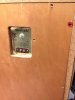
I am posting here on the advice tyeeslayer. I have run into the AK Wharfedale overload of info - it could take me years to read through all the posts here on Wharfedale speakers to get some basic info on what I have and best advice. So, to lead into it, I got a pair of W60D speakers apparently. I wasn't at all in the market for them, but a CL ad had a turntable I was after plus an array of other stuff (CD, receiver, later stuff). In order to get the TT at a reasonable price point I agreed to pay extra for the speakers in the deal, and it worked out. Now I want to clean them up. Before I do anything (always do no harm) I am trying to figure out what I have, age, what should be there vs what is, and whatever. Kind of broad and general info.
The boxes are pretty plain, and not at all like what most W60's here look like. There is no wood "bar" across the middle. The veneer is plain, and looks like maple. No walnut or mahogany as the grain is real closed. I don't know if an oil finish would look good. It looks like stain or other stuff has been thrown on these at some point, and I wonder if they came in blonde as they are light and it has an orange tint. It doesn't look like the grills are removeable - the trim wood goes over the front edge, and also it looks like there is a bit of stain on the very edge of the fabric, which is why I wonder if these were blonde, or if it is just hamfisted touch up. I have pulled the screws but the backs are snugged in, and I have read they use sand (sandbags?) on the back inside to deaden them up. That is the extent of what I have done so far, other than hooking them up and hearing them work at the guy's garage. I have some pics of them. I appreciate the once overs!
The boxes are pretty plain, and not at all like what most W60's here look like. There is no wood "bar" across the middle. The veneer is plain, and looks like maple. No walnut or mahogany as the grain is real closed. I don't know if an oil finish would look good. It looks like stain or other stuff has been thrown on these at some point, and I wonder if they came in blonde as they are light and it has an orange tint. It doesn't look like the grills are removeable - the trim wood goes over the front edge, and also it looks like there is a bit of stain on the very edge of the fabric, which is why I wonder if these were blonde, or if it is just hamfisted touch up. I have pulled the screws but the backs are snugged in, and I have read they use sand (sandbags?) on the back inside to deaden them up. That is the extent of what I have done so far, other than hooking them up and hearing them work at the guy's garage. I have some pics of them. I appreciate the once overs!
Attachments



Brian
An Old Geezer
A version of the W60, obviously. Wharfedale offered several cabinet styles from plain to lots of sculptures. It does seem buyers opted for the fancier cabinets when buying Wharfedales. Possibly the price difference was not that great, Wharfedale buyers were more affluent, something I usually found true when selling them back in the '60s, and, or, the less decorative versions were only imported in small quantities. I do not think anyone would argue the level of cabinet decoration affected the sound, though it likely did affect the WAF.
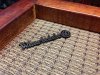
The backs, once unscrewed do come off. They are fitted tightly when new and may even have swelled making it more of a challenge. My W70s are quite tight but on one edge of each there is just enough space to wedge in a very thin blade and even so slightly pull them out just a bit. I end up with a blade on opposing sides gently sliding the panel ever so slightly. I take upwards of half an hour per panel to get them out. It looks like some one has tried to use the screw holes to pull from. There is a way with a tool to do it but if you do not have it, do not do it. You can see the results in the photo.
The panel is sealed. Provided you do not break into the panel, the sand will not leak out. When you get the panel out, look along the top and bottom edges. You will see where dowels were driven in to seal the fill holes. They can be drilled out if you want to add more. Wharfedale did not do as good a job in filling and compacting the sand and settling has occurred leaving cavities. For those whole want the whole enchilada in terms of rebuilding them, you need cleaned dry while sand with higher levels of silica. I have heard of persons using a combination of sand and lead shot but never heard if the results were good or bad. I would think over time the shot would settle to the bottom unless it was the primary fill and sand was used to fill the spaces between the shot.
Gang-Twanger
Resident Wharfedaliophool
Yeah, to start off, how many drivers are there? Two or three? If two, then they are the original W60. If three, then see if they still have a port. If so, they are W60C's. No port, AND they still have the sand-filled rear panel, then W60D's. No sand-filled panel, then W60E's. That's the easiest way to tell.
The W60C has an early form of that purple tweeter (No cover on it like the later versions). The early W60D's had the same one, so remember the W60C is also ported (And to avoid confusion later, the larger W70C and W90C used a ceramic version of the old Super 3 cone-tweeter... The original W60 used a similar-sounding cone-tweeter based on the Super 5, which had been around for like a decade or more... The Super 3 is a better tweeter they reserved for their top-tier models like the W70, W90, Airedale, etc.). Anyway, back to the purple-colored mylar tweeter. It had three noticeably-different versions throughout that transition period after Gilbert Briggs retired. The first had no cover, the second version can be seen on the W*0D models. But if you want, go to my profile page, click on ALBUMS, amd check out the W60D pics I put up to see a shot with the grill off. Hard to explain the little black diffusor on there that aids with dispersion. And the W60E has a different-looking diffusor that covers even more of the tweeter. If you get to know the tweeters, it makes it easier to identify the speaker model.
The W60 models (ALL of them) can be placed vertically OR horizontally. I personally prefer horizontal, but either is fine. Just make sure the tweeter is at eye-level WHATEVER the placement. So that means that horizontal placement will have to be much-higher than if they were vertical/upright. Say 18-20" for upright and 25-30" for horizontal (resting on it's side). And if horizontal, make sure the tweeter is on the same side for both speakers. I have them on the left, but you can try either. Just remember what I said about always putting the tweeters at eye-level (ear-level).
By the way, when I removed the screws on the back of one of my W60's, the back didn't want to come out, so I left it there for a day or two with something to stop it if it fell out more than an inch or two, and then when I got back to it, it was loose.
So, getting back to the first paragraph, lets see if we can't determine exactly which version you have. Like Brian said, they did sell unfinished ones that people could stain/finish the wood themselves.
Last edited: