

You are using an out of date browser. It may not display this or other websites correctly.
You should upgrade or use an alternative browser.
You should upgrade or use an alternative browser.
What CD Are You Hearing Now?
- Thread starter Vlad Soare
- Start date


You are not alone. Many classical music lovers struggle with him. And of those who love him, many used to struggle with him initially. I'm one of the latter. I fell in love with classical music when I was about nine or ten. I'm fourty-nine now. If you had asked me last year whether I liked Brahms, my answer would have been, "hmmm... maybe a tiny bit here and there, but generally not so much". Today I love him to bits. It took me almost fourty years to resonate with him.I struggle with Brahms - though I'm very far from being a classical music specialist, so I'm sure I'm just missing the point.
I don't know what it is about his music that makes it so difficult to get at first, and yet so unbelievably rewarding when you do. Other composers are not like this. You either like them, or you don't. If you don't, you don't. But Brahms is a strange case. You think you don't, but the more you listen to him, the more you realize that you actually do. He seems messy and unmelodious at first glance, even though he is the exact opposite of that. I don't know why.
In my case the key was simply persistence. The more I listened to him, the more I noticed how those motifs combined to create a heart-melting melody which I hadn't made out at first, but which now seemed so incredibly obvious. The more I listened, the more I realized that what seemed like a mess at first was actually a perfect, classical structure, with clearly defined exposition, development, recapitulation. No mess at all; everything makes perfect sense.
The performance is also critical. I couldn't for the life of me understand anything from his second piano concerto, until I listened to a recording that I finally resonated with. The first piano concerto was love at first sight for me, but I did later on stumble upon a recording on YouTube that was simply horrible. If I had started with that, I would have remained with the impression that I disliked Brahms.
There are many things to say about him, but this isn't the place, and I'm also not an expert in this area. Suffice to say that struggling with Brahms is not unusual, quite the contrary, and that persevering is really worth it.
Last edited:

Thank you for this. What a thoughtful reply - you capture the experience of listening really well.You are not alone. Many classical music lovers struggle with him. And of those who love him, many used to struggle with him initially. I'm one of the latter. I fell in love with classical music when I was about nine or ten. I'm fourty-nine now. If you had asked me last year whether I like Brahms, my answer would have been, "hmmm... maybe a tiny bit here and there, but generally not so much". Today I love him to bits. It took me almost fourty years to resonate with him.
I don't know what it is about his music that makes it so difficult to get at first, and yet so unbelievably rewarding when you do. Other composers are not like this. You either like them, or you don't. If you don't, you don't. But Brahms is a strange case. You think you don't, but the more you listen to him, the more you realize that you actually do. He seems strange, messy and unmelodious at first, even though he is the exact opposite of that. I don't know why.
In my case the key was simply persistence. The more I listened to him, the more I noticed how those motifs combined to create a heart-melting melody which I hadn't made out at first, but which now seemed so incredibly obvious. The more I listened, the more I realized that what seemed like a mess at first was actually a perfect, classical structure, with clearly defined exposition, development, recapitulation. No mess at all; everything makes perfect sense.
The performance is also critical. I couldn't for the life of me understand anything from his second piano concerto, until I listened to a recording that I finally resonated with. The first piano concerto was love at first sight for me, but I did later on stumble upon a recording on YouTube that was simply horrible. If I had started with that, I would have remained with the impression that I dislike Brahms.
There are many things to say about him, but this isn't the place, and I'm also not an expert in this area. Suffice to say that struggling with Brahms is not unusual, quite the contrary, and that persevering is really worth it.
I cut my teeth as a listener in my teen years (I'm 69 now) on free jazz, before I dug deep into the tradition and the connections between jazz and much of the rest of music. It's been the great preoccupation/obsession of my life, outside of family and work. So I'm used to being patient, and I've had to redouble that as I've poked around in classical music for the last decade or so.
The thing about Brahms for me is - and again, I think this my issue, not the music - it never feels like there's much happening to care about, and it's hard to pay attention to. I have a Cleveland Orchestra box of the four symphonies and a (DG?) box of his chamber music, and a recording (whose recording escapes me at the moment) of both piano concertos. None of it moves me. But I'll keep listening, and your note will help.
Also - you write you fell in love with classical music when you were nine or ten. I was a few years older when jazz came into my life, but I find it really interesting how our musical homes are built when we are young. I listen to lots of different kinds of music, but almost always end up back at jazz.
Last edited:

Blowed Fuse
ok ok ok….. It’s just a little pin prick
OK, I will admit that a photo of a CD player in action is not as glamorous as that of a turntable spinning a record, which the other thread is full of, but I guess it will have to do. At least until they invent a CD player with a transparent lid or something.
When I was in college and already fanatically interested in classical music, I noticed that some of my friends seemed to understand more at a first hearing but didn't feel an urgent need to explore the same piece later. By contrast, quite a bit of music that I came to love didn't impress me at first.Thank you for this. What a thoughtful reply - you capture the experience of listening really well.
I cut my teeth as a listener in my teen years (I'm 69 now) on free jazz, before I dug deep into the tradition and the connections between jazz and much of the rest of music. It's been the great preoccupation/obsession of my life, outside of family and work. So I'm used to being patient, and I've had to redouble that as I've poked around in classical music for the last decade or so.
The thing about Brahms for me is - and again, I think this my issue, not the music - it never feels like there's much happening to care about, and it's hard to pay attention to. I have a Cleveland Orchestra box of the four symphonies and a (DG?) box of his chamber music, and a recording (whose recording escapes me at the moment) of both piano concertos. None of it moves me. But I'll keep listening, and your note will help.
Also - you write you fell in love with classical music when you were nine or ten. I was a few years older when jazz came into my life, but I find it really interesting how our musical homes are built when we are young. I listen to lots of different kinds of music, but almost always end up back at jazz.
Music, like any art form, doesn't necessarily reveal its secrets promptly or easily. But as you listen to different composers, styles, and performances, you'll develop a basis for understanding a wider variety and for cultivating your own preferences. That said, if you're not connecting with something, the more intently you try to appreciate it, the more elusive it can become. In such cases I find it's best to set it aside and return to it later when you can approach it with fresh ears.
Example 1: One modernish piece left me cold after a couple hearings. So I let it rest, then one day on a whim, played it while I was washing dishes, and it started making sense to me. Before long I grew to love it as I do to this day. And that was about 40 years ago.
Example 2: I was already a big fan of Beethoven's "Eroica" symphony (#3) and owned a couple recordings that, while somewhat different, both sounded excellent to me. At the same time I really liked Charles Munch's recordings of mostly French repertory with the Boston Symphony. But when I bought Munch's "Eroica" I was shocked. It had a lightweight, almost trivial feel that I thought violated the essence of the music. I couldn't get rid of that LP fast enough.
Fast forward a couple decades, and I had heard and came to admire Beethoven recordings in "historically informed" performance styles (you'll run into the term "HIP"). Typically performed with much smaller orchestras and at faster tempos approaching or matching Beethoven's metronome markings, they sounded very different from traditional performances. Learning to appreciate them required quite an adjustment on my part, but once I acclimated, I found they brought me closer to the heart of the music. Then, I wondered, how would that Munch recording sound to me today? I hunted down a used CD (it was out of print and this was before streaming) and surprise, it seems unremarkable. And really good.
So if you're not connecting with something, try giving it a rest and come back to it later. Maybe a different performance, another time of day, or what you had for dinner will give a different perspective.

Example 2: I was already a big fan of Beethoven's "Eroica" symphony (#3) and owned a couple recordings that, while somewhat different, both sounded excellent to me. At the same time I really liked Charles Munch's recordings of mostly French repertory with the Boston Symphony. But when I bought Munch's "Eroica" I was shocked. It had a lightweight, almost trivial feel that I thought violated the essence of the music. I couldn't get rid of that LP fast enough.
Fast forward a couple decades, and I had heard and came to admire Beethoven recordings in "historically informed" performance styles (you'll run into the term "HIP"). Typically performed with much smaller orchestras and at faster tempos approaching or matching Beethoven's metronome markings, they sounded very different from traditional performances. Learning to appreciate them required quite an adjustment on my part, but once I acclimated, I found they brought me closer to the heart of the music. Then, I wondered, how would that Munch recording sound to me today? I hunted down a used CD (it was out of print and this was before streaming) and surprise, it seems unremarkable. And really good.
HIP as a concept is appealing, but in my limited experience, the tempos are, as you note, faster and don't sound right to me. One example: while the instrumentation is not HIP, David Zinman's recording of Beethoven's symphonies with the Zurich Tonhalle Orchestra is HIP-adjacent, and though I've listened to the set off and on for more than a decade, it still sounds like somebody mashing their foot on the gas pedal. I find myself wanting to roll around (figuratively speaking) in mid-century versions, like Szell's Cleveland Orchestra set. But I take your general point; I have set aside other music for years, until something in me changed and I could finally hear it.
Always good advice, regardless of genre. Thank you for your note. As with Vlad's reply, I'll keep what you wrote in mind.So if you're not connecting with something, try giving it a rest and come back to it later. Maybe a different performance, another time of day, or what you had for dinner will give a different perspective.
Last edited:
Recent acquisition, spotted in a local store.
I already had all of Bruckner's symphonies under Günter Wand's baton and hadn't got around to listening to them all, plus the Fourth in three different interpretations. As I said earlier, I'm new to Bruckner. So I wasn't actually in the market for another Bruckner recording, having not even managed to listen to everything I already owned yet.
But I had nothing with Paavo Järvi, a conductor I had heard so much about. Plus, after having just cut my teeth on Bruckner with his Fourth Symphony, I was now wondering which of the others I should continue my journey with. So I took this as a sign. OK, Seventh it is.
I love it. I absolutely love this symphony. I'm not yet sure if I like it more than the Fourth, but I find that within less than half an hour of listening to it I start craving for it again - especially for the second movement. Which must mean something.
I don't know how to rate Järvi's performance, having never listened to any other. All I know is it gives me goosebumps at times. I will compare it to Günter Wand as soon as I get the chance.
Last edited:

I'll be interested to hear your compare and contrast. I quite like the Wand set.Recent acquisition, spotted in a local store.
I already had all of Bruckner's symphonies under Günter Wand's baton and hadn't got around to listening to them all, plus the Fourth in three different interpretations. As I said earlier, I'm new to Bruckner. So I wasn't actually in the market for another Bruckner recording, having not even managed to listen to everything I already owned yet.
But I had nothing with Paavo Järvi, a conductor I had heard so much about. Plus, after having just cut my teeth on Bruckner with his Fourth Symphony, I was now wondering which of the others I should continue my journey with. So I took this as a sign. OK, Seventh it is.
I love it. I absolutely love this symphony. I'm not yet sure if I like it more than the Fourth, but I find that within less than half an hour of listening to it I start craving for it again - especially for the second movement. Which must mean something.
I don't know how to rate Järvi's performance, having never listened to any other. All I know is it gives me goosebumps at times. I will compare it to Günter Wand as soon as I get the chance.
View attachment 3558854
View attachment 3558855

twiiii
Lunatic Member
Yesterday was listening a Telarc LP of the 1812 overture and comparing it to the CD I have also. I still think that Telarc and the Sheffield Labs with a few Reference recordings are the best at capturing true string and double reed sounds. Part of that is the mics and electronics chosen and some of it whether using tubes or not making direct to disc or not and using digital its all about the talent of the producer and recording and mastering engineers. Doug Sax was a genius whether in the analog format or the digital format. Today I revoiced my HT system in the stereo mode because I had moved my listening position coloring the sound to be to midbass heavy or mid/range tweeter shy. Next I have to restring some day/night shades. Then after that go food shoping. Then maybe I'll get to listen to some music or I may take a nap. Who votes for the NAP?
PS. The Telarc LP won.
PS. The Telarc LP won.
I'll be interested to hear your compare and contrast. I quite like the Wand set.
Wand made several recordings of Bruckner's symphonies over a long period of time and, as far as I can work out, his later ones, which he made with the NDR orchestra in the nineties, are the more valued ones.
I don't have those yet. All I have is this set of older recordings with the Cologne Radio Orchestra. The Seventh was recorded in 1980.

Wand is noticeably faster, especially in the first movement. Frankly, I'm not sure what I feel about this. My first impulse was to say that I don't particularly like it, but come to think of it, this may be simply because I just happen to have heard Järvi first and to have gotten used with his slower tempo.
I think I see Wand's point. In Järvi's performance the first movement feels like an Andante, having at times, especially in the first theme, almost the same pace and feeling as the second movement. This gives it a solemn feel that I think suits it very well, but is it actually 'correct'? Wand makes it sound like a 'proper' first movement (i.e. a fast one). We get a fast first movement followed by a slow second movement, as we usually expect, rather than two slow(ish) movements in a row. This may also give the second movement, that glorious funeral march in Wagner's memory, a bit more weight, making it stand out a bit more.
So, even though Wand's faster pace doesn't necessarily appeal to me at this moment, I'm not saying it's bad. It could be just me. There is reason in it, and my instantaneous fall in love with this symphony in Järvi's interpretation could be clouding my judgement a bit. I need to listen to both a few more times to make sure.
There's one point where I prefer Wand's version. At the peak of the third and final climax of the second movement, Bruckner was convinced by one of his many well-meaning 'friends' to add a cymbal crash and a triangle. Later on, that addition was struck out from the manuscript, but the correction is not in Bruckner's handwriting. So now there'a controversy regarding this later addition of the cymbals and triangle - should it be observed or not?
Wand doesn't have it. Järvi does.
Personally, I think it sounds better without it. Bruckner's harmony is so perfect, and that climax so powerful in its own right, that adding a Mahler-like icing on top feels like an unnecessary, cheap trick.
To show you what I mean, here's that climax in Järvi's version. I'm uploading it entirely, because it's so incredibly powerful that it gives me the shivers every time I hear it. It would be a pity to cut it down. What I'm talking about is at 1:04.
Adagio_climax.mp3
 drive.google.com
It's not necessarily bad, it doesn't break anything, but I still think it sounds a bit cleaner, more Bruckner and less Mahler, without it. So, Wand has the edge here, in my opinion.
Anyway, writing down these things is very helpful to me, because forcing myself to express them in words allows me to crystallize my thoughts and to understand these pieces and performances better, beyond my initial impressions. So, many thanks for asking.

Last edited:
Update:
I'm listening to Wand again as we speak, and this time I really like his version. It doesn't seem as fast now as it seemed the first time. Now it sounds perfectly fine to me.
There's a cleanliness in the sound, a clarity in the definition of each layer, and overall an air of certainty, of precision, that I find appealing. And the tempo is just fine, despite my first impression.
I like it. Strangely enough, at this moment I think I prefer it to Järvi's.
Last edited:
I own what I think is the same set, though with a different cover. It was described as being a 'German import' when I bought it off Amazon back in 2015. It's the only Bruckner I have, so I can't do what you've done so ably in comparing and contrasting. You're right - the cymbal crash is weird, once it's pointed out to you. I haven't listened in a long time, so I'll be digging out the box this week for further consideration.Update:
I'm listening to Wand again as we speak, and this time I really like his version. It doesn't seem as fast now as it seemed the first time. Now it sounds perfectly fine to me.
There's a cleanliness in the sound, a clarity in the definition of each layer, and overall an air of certainty, of precision, that I find appealing. And the tempo is just fine, despite my first impression.
I like it. Strangely enough, at this moment I think I prefer it to Järvi's.
View attachment 3561513
Here's the cover of my box:
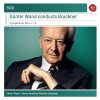
Yes, I think it's the same set, only with a different cover. The descriptions on Discogs seem to indicate they're the exact same recordings. When I was looking for a Wand Bruckner set, a couple of months ago, I found both, but in the end I chose the other one because it matched the Beethoven and Brahms sets that I already had.
The Beethoven and Brahms sets are with the NDR orchestra, though.

Apparently there's also a Schubert symphony set in the same series, but I don't have that yet. I will at some point search for it, too; it would be nice to have the complete collection.

I'm not sure, but I believe his late Bruckner recordings, made in the nineties with the NDR, were released individually, not as a complete set. I could be wrong, though. I haven't done a thorough search for those yet.
The Beethoven and Brahms sets are with the NDR orchestra, though.
Apparently there's also a Schubert symphony set in the same series, but I don't have that yet. I will at some point search for it, too; it would be nice to have the complete collection.
I'm not sure, but I believe his late Bruckner recordings, made in the nineties with the NDR, were released individually, not as a complete set. I could be wrong, though. I haven't done a thorough search for those yet.
Last edited: