• The move to the new server is done. There are some software and database maintenance updates in process. This has us passing the hat around to help out. We appreciate any donations. Seriously, even a dollar helps. The payment page may be found here - https://www.audiokarma.org/support.html

Why Recap Speakers and When?

BECtoo wrote:
They are sometimes the only practical cap for some very large values of caps usually used in woofer roll-off circuits.
Some questions,:yes: OK?

* For example, HOW large? I cannot remember seeing X-over caps any larger than 47uF.

* Is there any advantage to using film caps in the woofer roll-off circuit?

* Is there a simple way to identify a roll-off circuit on an exposed X-over network. And if not and assuming I have a schematic (or produce one by reverse process) ...

* ... what do I look for on the schematic?

I hope that this does nt put you on the spot :smoke:
 
lorne said:
BECtoo wrote:
Some questions,:yes: OK?

* For example, HOW large? I cannot remember seeing X-over caps any larger than 47uF.

* Is there any advantage to using film caps in the woofer roll-off circuit?

* Is there a simple way to identify a roll-off circuit on an exposed X-over network. And if not and assuming I have a schematic (or produce one by reverse process) ...

* ... what do I look for on the schematic?

I hope that this does nt put you on the spot :smoke:


I don't think there is an "audible" advantage using a good film cap in a woofer roll-off circuit. Two problems using a polypropylene cap for the 47 uF you mention are size and cost. The 47 uF cap as an electrolytic is about a buck where the 47 uF as a Solen poly is about $13.00. The poly cap is also about ten times as big (physically) as the non-polorized electrolytic. Some of the crossovers I build or rebuild use as much as 136 uF for the woofer roll-off caps and there is not enough room to use the larger poly caps. But, if I could find a real benefit audibly to using the larger more expensive caps in that circuit, I would do it.

As far as the subject of bypassing the large caps with a tiny value of capcitance (.1 uF or less) doing anything at all in a crossover, someone would have to give me a theory about why that should be done before I could go for that one. I just can't see that one at all.

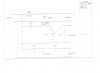
The 68 uF cap in the attached schematic is the woofer roll off cap.

Bob Crites
 

Attachments

  • chorus1.jpg
    chorus1.jpg
    34.3 KB · Views: 273
And now for a different perspective. I respectfully disagree with those who advocate replacing parts without knowing if they have gone bad. Sure, some people will replace something that has gone bad that way, but a lot of things that haven't gone bad get replaced, too. And afterwards, there is a tendency to think that things sound better, because one listens closely to observe any difference, so one notices more detail. Of course you will notice more detail if you listen closely and pay attention! But without properly putting the old capacitors back in and switching back and forth, listening to each carefully, you will not have a fair test at all.

Of course, if the capacitors have gone bad, you should replace them. I have done that in crossovers myself. And that really does improve the sound.
 
Hi Pyrrho: I am respectful of your opinion and would agree with you up to a point. Replacing parts with similar ones is not likely to produce gains. And the "psycho-audio" factor is something to be seriously considered — a metaphorical placebo effect. But I would submit some things that have been discussed above remain:

(a) In something less than a decade, bipolar/ non-polarized electrolytic capacitors having virtually no DC voltage applied to them will be in a state that is less than their original or optimal state.

(b) In many parts of the Xover circuit, substitution of electrolytic capacitors with film types will change the sound of the speaker. In most cases this will offer benefits in sonic performance.

(c) This is a subjective point: in some cases these benefits are so dramatic, and they may be so astonishing, that we may refer to them collectively as a transformation that exceeds anything we might otherwise suspect as illusional.

Of course you are right about a fair test. This can actually be done quite easily in many cases if the owner is willing to move the Xover network outside of the cabinet. But it will be necessary to construct a separate network containing the substituted parts. This can allow the owner to conduct a blind A/B test with the help of an assistant. I have moved Xover networks to external positions, but I have not gone to the trouble of duplicating them for testing purposes.
 
lorne said:
Hi Pyrrho: I am respectful of your opinion and would agree with you up to a point. Replacing parts with similar ones is not likely to produce gains. And the "psycho-audio" factor is something to be seriously considered — a metaphorical placebo effect. But I would submit some things that have been discussed above remain:

(a) In something less than a decade, bipolar/ non-polarized electrolytic capacitors having virtually no DC voltage applied to them will be in a state that is less than their original or optimal state.
...

They don't have to be perfect to still perform audibly identical to perfect ones. If they are reducing the signal to one of the drivers significantly, this will be audible. And if they have altered the crossover frequency significantly, such that one is worried about damage to drivers (as has been mentioned by others in this thread), this, too, will be audible, as speakers tend to audibly distort before they are damaged. If one hears a problem, then one should fix it. But if there is no audible problem, then it really doesn't matter, right? I personally own two pairs of speakers that are about 35 years old, which have all original capacitors, and I have noticed no problems. However, over a decade ago, I had to replace the capacitors in a pair of speakers from that same vintage, because they were causing audible problems. (In other words, I replaced capacitors that were "only" about 25 years old.) The lifespan of capacitors is variable, depending upon the original construction, and, of course, what has happened to them since then. Regardless of how old or new something is, if it is malfunctioning, it should be repaired. If it is not malfunctioning, "repairing" it is a waste of resources.

Of course, one may wish to modify someone else's design, which may be done at any time. But before doing that, one should really know what one is doing.

Now, obviously, since I have not made an identical crossover with new capacitors, I cannot be certain that there would be no audible difference if I were to replace the capacitors in the speakers. But on the other hand, I cannot be certain that the woofers are performing exactly to spec, or the tweeters, etc., either, without doing some proper testing of them. But no one is advocating that I replace these simply because they are old. That is what I am objecting to doing: Replacing things because they are old rather than replacing them because they are malfunctioning. Sure, capacitors are more likely to go bad with age (forgetting, of course, about foam surrounds on some speakers...) than other components, but they need not be replaced until they have actually gone sufficiently bad to cause an audible problem.

 
Cap confusion

Ok,
I have a few questions also. I have a pair of Sansui SP-X9000 speakers. One of the two when i change the switch between clear/normal/and soft theres barely any change in the output. Not that it sounds bad because they dont. Would recaping these be worth my effort?
Also, I'm confused on what type of caps to replace them with. I'd like to keep as close to the originals as possible. They look like radial electrolytics but i see no + or - marked on them. Theres 4 caps total per speaker 2 - 50v 3.3uf, 1 - 50v 15uf, 1 - 50v .47uf. any help would be great.
 
Speaker caps are non polorized so there is no + or -. Solens make good replacements capsd as does Dayton from Parts Express
 
I've used Solen and Auricap from Parts Express with audible improvements in audio quality on speakers that are approximately 30 years old..

Paul
 
cap type

Attatched is a picture of my Sansui SP-X9000 crossover. If these are not electrolytic can someone tell me what type they are? I'd like to replace them with as close to the original as possible.

Thanks
 

Attachments

  • 000_0844[1].jpg
    000_0844[1].jpg
    137.3 KB · Views: 596
Klipsch Chorus I

I have been following this Thread with a great deal of interest. I have a pair of Klipsch Chorus I speakers that I purchased new exactly 20 years ago. They seem to sound just fine but I do not know if it would be prudent to replace some or all of the x/o components. Where/who do I go to specifically discuss possible actions I might take to ensure that the sound quality of the Chorus I speakers is the best that it can be? :scratch2:
 
william.keith said:
I have been following this Thread with a great deal of interest. I have a pair of Klipsch Chorus I speakers that I purchased new exactly 20 years ago. They seem to sound just fine but I do not know if it would be prudent to replace some or all of the x/o components. Where/who do I go to specifically discuss possible actions I might take to ensure that the sound quality of the Chorus I speakers is the best that it can be? :scratch2:

The Klipsch forum here on AK might be a good place to ask questions specific to Klipsch products.
 
How is the sound different now? Still wondering if it is worth it on my CS-99A? Or sell them and let someone else do it...
 
Tripqzon said:
I'd also like to know how the sound changed.

Thanks,
Paul

Certainly it depends on a number of factors, but to give you a "general" answer to that question here's my take.

I recently recapped some Mitsubishi 2-way monitors that I have owned since new in 1978. They were sounding very midrange-heavy, lacking in high frequency detail, and the bass was very thin. I found myself trying to compensate with tone controls, something I'd NEVER done in the past.

A fellow Aker told me which caps to order (Solen) and he essentially did the recap for me. After getting the speakers back, I called him immediately and said the only word that came to mind to describe the difference was "Dramatic."

I had lived with these speakers for 28 years. After having them recapped, I had my old friends back. The bass was extended and deep, (the woofers weren't trying to reproduce mid and high frequencies they weren't designed to reproduce any longer) The highs were "tinkly" again, in other words transparent and well-defined. The mids no longer were gnawing my ears off, and were producing presence, not a grating sound like you get when you cup your ears with your hands and listen.

I hope that helps in some way. :thmbsp:
 
Whaleman said:
How is the sound different now? Still wondering if it is worth it on my CS-99A? Or sell them and let someone else do it...

I have to say I'm puzzled with you're response. Your signature below your username says "DIYer All the Way" and since re-capping is really quite a simple exercise......though I'm not familiar with the CS-99A's you refer to. Are those extra-special-tough or something?

Just wonderin.

Mike
 
Ya Think???

leakycaps.jpg


From JBL Century L-100's.

Anyone got any specific recommendations?
Thanks.
 
Oh YES!

Hi meggy: Is this a troll? Are you serious!?

These caps are 25-30+ years old! And I have a vague suspicion that the actual design and engineering of the caps are older than that. So you are indeed in need of a simple change out.

I'm not an archivist sort of restorer nerd, so I don't recommend electrolytic caps. We’ve come a long way, and the drivers can be much better employed with today’s more appropriate parts.

It appears that the caps are glued onto that ... er ... board. So the simplest way to change them out is to chisel away and peel them off. Gob some polypropylene or Mylar caps of the same capacitance onto the press-board with some hot glue and a $12 glue gun. Ride into Dodge!

You could also get some breadboard, a wafer of plain phenolic, or a rectangle of 1/4 inch ply. Drill the needed holes, and then glue or tie the new parts on with plastic cinch-ties. Hard wire the bits to replicate the original circuit with updated parts. Alternatively, with a chunk of breadboard you could solder the caps in place and jump the wires to the caps to duplicate the circuit. If the caps are very heavy, you may end up having to either tie down or 'peg' them with glue to keep stress off of the solder joints.

Your choice, but however you do it, I predict that you are in for a pleasant surprise! I would LOVE to have these speakers to work on. LET US KNOW! Enjoy the music!
 
Back
Top Bottom