bandwagoner
New Member
Hi Everyone, I love this forum to bits and constantly read around but don't get to contribute much because I don't often get my hands on vintage gear.
I was lucky enough to inherit a Yamaha C-2 pre-amplifier and Bryston 4B amplifier combo from my pops that he hasn't touched in several years - he was the original owner of both. I brought the amp to Bryston to refurbish a few years ago as a gift and it seems to work great, but I didn't really have any great components to test it out with - I had a harmon/kardon AVR20 II that I used as a preamp to ensure that it worked. Turns out his C-2 was not serviced or worked on since being purchased new (and you'll see from the photos it looks like it was hardly used at all). He said it did not turn on and ended up leaving it like that for several years. He asked me if I wanted to take a look at it and see if I could figure it out, and said that I could have the combo if I did! Didn't have to think very long.
FRONT:
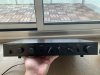
BACK:
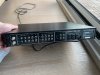
BOTTOM VIEW OPEN:
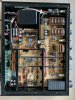
POWER SUPPLY BOARD *NOT POWER SUPPLY BOARD* (?) - Note the white leakage on the board:
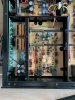
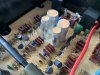
LEAKAGE:
TRIED TO FOCUS ON COMPONENT MARKINGS:
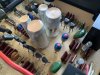
Anyway, after opening it up I quickly saw the problem - there seems to be a foil wrapped component (in what I think is the power supply board) that seems to have popped and leaked. It looks kind of like an electrolytic cap but not like one I've seen before (I obviously don't have very much experience with internal troubleshooting). It has what looks like to be a wax top, and wrapped in foil. The rest of the board is in good shape it looks like, but I am open to fully recapping anything necessary to bring it back to full performance. It's several decades old by now so I don't think it would hurt.
I recently got myself a soldering kit and I've been practising on some less valuable stuff - I'm wondering if someone with a little more experience here seems to know if replacing that should fix the problem. All the fuses seem to be good so I don't think it's that. Pics attached!
EDIT: Looking again, I don't know why I thought it's the power supply board considering there's no fuses and it's too far from the transformer. I don't know what it is!
I was lucky enough to inherit a Yamaha C-2 pre-amplifier and Bryston 4B amplifier combo from my pops that he hasn't touched in several years - he was the original owner of both. I brought the amp to Bryston to refurbish a few years ago as a gift and it seems to work great, but I didn't really have any great components to test it out with - I had a harmon/kardon AVR20 II that I used as a preamp to ensure that it worked. Turns out his C-2 was not serviced or worked on since being purchased new (and you'll see from the photos it looks like it was hardly used at all). He said it did not turn on and ended up leaving it like that for several years. He asked me if I wanted to take a look at it and see if I could figure it out, and said that I could have the combo if I did! Didn't have to think very long.
FRONT:
BACK:
BOTTOM VIEW OPEN:
POWER SUPPLY BOARD *NOT POWER SUPPLY BOARD* (?) - Note the white leakage on the board:
LEAKAGE:
TRIED TO FOCUS ON COMPONENT MARKINGS:
Anyway, after opening it up I quickly saw the problem - there seems to be a foil wrapped component (in what I think is the power supply board) that seems to have popped and leaked. It looks kind of like an electrolytic cap but not like one I've seen before (I obviously don't have very much experience with internal troubleshooting). It has what looks like to be a wax top, and wrapped in foil. The rest of the board is in good shape it looks like, but I am open to fully recapping anything necessary to bring it back to full performance. It's several decades old by now so I don't think it would hurt.
I recently got myself a soldering kit and I've been practising on some less valuable stuff - I'm wondering if someone with a little more experience here seems to know if replacing that should fix the problem. All the fuses seem to be good so I don't think it's that. Pics attached!
EDIT: Looking again, I don't know why I thought it's the power supply board considering there's no fuses and it's too far from the transformer. I don't know what it is!
Last edited: