• The move to the new server is done. There are some software and database maintenance updates in process. This has us passing the hat around to help out. We appreciate any donations. Seriously, even a dollar helps. The payment page may be found here - https://www.audiokarma.org/support.html

Yamaha CR-2040 Clean Up

rickknight

Active Member
Just got a Yamaha CR-2040 from a friends 2nd cousins estate (thought it was a CR-3020 until just a bit ago). Hooked up a pair of speakers and a turntable, and plugged it in. I gotta say this receiver sounds great! Even with a pair RS Optimus Mini AV speakers and an old Stanton 500 Mk II cartridge Rotel TT. I also gotta say, this sucker is filthy!
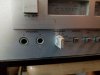
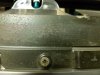
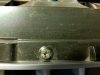
Selectors-1024.jpg SpeakerSwitch-1024.jpg StrippedScrewLeft-1024.jpg StrippedScrewRight-1024.jpg

None of panel lights worked so I found a lamp kit on that auction place and replaced the dial lamps. Then I decided to remove the bar that holds the dial lamps to make replacing the meter and pointer lamps a bit easier, but I've run into a problem. The heads on two of the four screws that hold the bar in place are stripped out. None of my screwdrivers will budge them, but I need to get them out so I can replace lamps and thoroughly clean the front panel. Anyone have a trick or technique for removing screws with badly stripped heads?

Thanks,
Rick
 
Register to hide this ad
I've had good luck with reverse flute (left hand) drill bits
https://www.mcmaster.com/#standard-drill-bits/=1dmr2z0

Inch Size Left-Hand Drill Bits
88055a48p1s.png


Also known as reverse-flute bits, the flutes spiral in the opposite direction of other bits. They are for use in reverse tool operation—most commonly to remove broken screws. Jobbers'length are the most common bits and have the rigidity and length required for most applications.

A split point keeps the bit centered without a pilot hole.

Bits with 135° point angle produce smaller chips than 118°point to prevent clogging.

Keep a shop vac nozzle close to the work to catch the swarffing.
 
As the drill bit bites in . Most of the time it will back out the damaged screw.
 
Avionic, I've actually wanted a 1020 for years but they were always too pricey for me. I don't know why I thought this was a 3020, but I'm very happy with it being a 2040.

Rick
 
Unlike the lower models of that line. The 2040 has discreet amplifiers . I'm not a big fan of the " chip amplifiers" of the 1040,840,640 etc.
 
On the CR2040, be very careful with those rotary switches with the flat linkages connecting to the actual multi position slide switch. I have see those linkages snap, and are almost impossibly to find a replacement short of a salvaged CR2040. I believe there may be directions on how to remove the linkage from the slide switch in the service manual. If the slide switch is very gunked up, you may consider disconnecting the linkage from the slide switch, Deox the slide switch so that it moved freely, and then reattach the linkage. If you are unsure on how to remove it, then leavit it in place and spray deoxit into the slide switch and slowly rotate back and forth until it it clean and moves free.
There also may be a few ECO's (Engineering change orders) relating to this unit with the power supplies. Make to to do these changes as well.
 
Finally got my CR-2040 all cleaned up and put back together. Looks beautiful, sounds not quite so beautiful. The presence and depth sound great, lots of hard, solid bass, but the highs sound a bit compressed. While I had this unit apart I checked and adjusted the dc offset voltage, idling current and power source voltage. After dialing those in, I repeatedly checked them for drift and there was none. I looked everywhere for caps that showed any sign of overheating but couldn't find any. Hoping the experts here can give me some advice that will get this beauty sounding as good as she looks.

Thanks, Rick

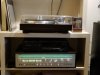
My CR-2040
CR-2040_Clean.jpg

With my YP-D8
CR-2040_YP-D8.jpg
 
Forgot to mention, I've been listening to mostly vinyl and some CD. The sound seems to be pretty much the same with either source.

Thanks,
Rick
 
The presence and depth sound great, lots of hard, solid bass, but the highs sound a bit compressed.
I looked everywhere for caps that showed any sign of overheating but couldn't find any.
Fusible resistors tend to drift high. Lots of them in there. They will choke off the power supply voltages to the various circuits. Recapping will bring your highs back to there full glory.
 
Avionic, Thanks for your replies,

I was afraid someone would suggest recapping, just hoping there might be something else to look for. I'm not sure I know how to identify the fusible resistors. Can you tell me what they look like?

I've thought about recapping the unit, but my budget (wife) won't quite allow for that. can you recommend a starting point? Where am I likely to get the most benefit from recapping if I can only do it in stages.

Yes, the scale is a bit brighter than the other lamps, but in the room it's not too bad. The 9 lamps are all the same, but I think the green sleeves the meter lamps fit into show more age.

BTW the left hand drill bit tip was only part for the solution for getting the stripped screws out. The bit just drilled out the middle of the screws. It kind of cleaned things up a. Then I used my son's Dremmel tool with a fine grinding wheel to cut a slot into the top of each of the two screws and use a small flat screw driver to remove them. I was able to find replacement screws in my collection of miscellaneous computer hardware.

Tom B.,
There also may be a few ECO's (Engineering change orders) relating to this unit with the power supplies. Make to to do these changes as well.

How do I check for any ECO's?

Thanks,
Rick
 
Do you use eq or loudness? Might not hurt to try different eq settings if you haven't already. Perhaps it's just a mismatch with your speakers? Good luck! I'm working on one also. I thought it sounded super with my Yamaha speakers, but I use a always use little eq since my rooms suck.
 
Absolve2525,
I have played with the EQ and Loudness, and I have normally very bright speakers and an OK room. Great sound, just not a lot of top end. I've tried using a different,smaller set of speakers and with similar results.

So, I usually like to remove the boards I'm working on when I recap, and as big and heavy as this thing is that seems like a necessity. A couple of problems. First, the interconnects are wirewrap on posts, that have been soldered over. Anyone have any experience working with that type of connection? The second problem is with the slide switch linkages to the front panel knobs. I don't see anything in the manual. Does anyone know how to safely remove and reattach these linkages? I'll have three of them to deal with on one board.

Thanks,
Rick
 
Can you tell me what they look like?
Look at the schematic . Any resistor symbol with a circle at both ends is a flame proof , flame resist, fusible . There also marked on the schematic as .... example ( 22Ω 85ma ) .. or have a yamaha part number HWxxxxx silkscreened on the board.

Fusible resistors on Yamaha schematics are usually labeled example FR210 or FR103 etc.
 
Last edited:
Back
Top Bottom