• The move to the new server is done. There are some software and database maintenance updates in process. This has us passing the hat around to help out. We appreciate any donations. Seriously, even a dollar helps. The payment page may be found here - https://www.audiokarma.org/support.html

Zilch's AK Design Collaborative - Econowave Speaker

Yep that's what I've been using (4647) for the response and impedance graph's.
Reason I wanted to try an find "accurate" measurements was I'm plotting the info
into Passive Crossover Designer and designing a low pass xover for the 2225.

I modeled a 2nd order, then swept through all the other variables when I tried a
1st order an found with tweaking parts it looked quite a bit better to me, humm....

It sounds better with a 1st order as well, the top of the woofer is more "open" now.

In case anyone is interested this is what I'm using at the moment, for the xover. :music:


Of course I'm interested, please keep us advised on your 2225H crossover findings. I think it is an underrated driver for Econowave, more people should try them. Plus, I happen to have a pair in the wings.

Russellc
 
After some distractions I finally got the crossovers assembled.


000_0099.jpg


Now to finish up with the speaker side of things. I'm sure ports, tuning and new baffles will be in the future if I stick with the Madrids.

Did you get the forwarded PMs?

Russellc
 
Very nice job! :thmbsp:

Remember the HF driver polarity thing. If your woofers are postive polarity, which is easily verified using a 1.5 volt battery, the Seleniums get connected opposite the polarity printed on those boards.... :yes:

I have discussed this polarity thing with Jack, and while I understand what he's telling me, my mind set wont quite let go!:para: I cant seem to grasp
the fact that reversing the HF leads will affect the bass.
Like I told Jack, when I first hooked up my Econowaves, with no circuit boards, just point to point, I discovered the "Black post makes positive movement" thing about the 2225H, so reversed the leads from the crossover
made the bass much better. While I accept what I'm being told as truth, my mind cant follow how reversing the HF leads will accomplish this "bass improvement" with the LF crossover lead attached "Hot to red"?

MY DUMB BRAIN wants me to reverse the crossover leads from the crossover to the LF driver, hot to black, instead of reversing the HF leads? Again, I accept it as truth, but dont understand it. I am so entrenched with mind set, when I get home I'm going to try it both ways and see. Good thing I dont have a RTA yet, or I might be ready for a home for the befuddled.:D

Russellc
 
Russell, I was fine on all this until I read your post, then I got confused, too.

So, I went back and re-read JackGiff's original PM and was just as confused. It is worded imprecisely, which is unusual for both Jack and Zilch. The way I interpret the polarity situation is this:

If you have JBL (reversed polarity) woofers (where a + voltage on the black woofer terminal makes the cone move out), then wire 'em up according to the silkscreened + and -.

If you have normal polarity woofers (pos voltage on red terminal makes the cone move out), I'm not sure whether you're supposed to reverse the leads on the woofs or the tweets. I've sent an email to Jack to hopefully get some clarification.

I've got a head-hurt from thinking about all this.
banghead.gif
Later this afternoon, I'll try reverse-engineering the PCB layout & see where that gets me.
 
Paratima,

Think of it this way, in a typical 2-way 2nd order xover like the Econowave.....

Your woofer is wired in phase positive to red and neg to black, the tweeter is wired
out of phase neg to red and positive to black.

So wire the woofers that way, but in the case of some JBL woofers the black lead is
basically positive, so wire the pos to black and the neg to red, then wire the tweeter
just as it shows, with neg to red and pos to black.

I hope that makes it a little clearer and explains better what is going on..Maybe?... :)
 
Kegger, nice try, but no cigar. :smoke:

I understand what you're saying, but that's not the way the world normally works. Engineers, knowing that us laypersons are not all that bright, usually won't put the onus on us to remember the intricacies of Butterworths vs Linkwitz-Rileys vs god knows what else, with or without a Zoebel. GACK!

No, responsible designers *coff, coff* put a "+" where they want us to run a lead to the positive side of a speaker and a "-" on the negative lead and label it "HF" if it goes to the tweeter and "LF" to the woofer. I'm a retired engineer, btw. That simplicity is what I tried to achieve for 36 years in the computer industry. I'm reasonably sure I didn't always manage it.

So, my question is simple: I have a PCB with the requisite symbols printed on it, "+", "-", "LF", and "HF". Assuming that I have a "normal" polarity woofer, where do I run the wires? I'll make up a form to fill out here, to make it easy: For NORMAL polarity speakers
...........................(insert + or - at end of each line)
HF + to Tweeter ___
HF - to Tweeter ___

LF + to Woofer ___
LF - to Woofer ___
 
I cant seem to grasp
the fact that reversing the HF leads will affect the bass.

Hey Russell,

You know that if you have the polarity "the wrong way" that there will be a big suckout at the crossover frequency, right? You probably also know that any kind of transient, like a drum hit or a bass string being plucked (not the ringing afterward), has high frequency components. If the leads are "the wrong way" then you will be killing off a chunk of those higher frequency components, hence damaging your transients. So drums sound muddy, etc. because the leading edge of the transient is distorted. Swithing the HF leads to "the right way" will produce the transients correctly, ergo the bass sounds better.

Ray
p.s. do I get extra points for working "hence" and "ergo" in the same post?
 
So, I went back and re-read JackGiff's original PM and was just as confused. It is worded imprecisely, which is unusual for both Jack and Zilch.

Zilch and I screwed up somehow on the polarity markings on the EconoWave PC boards, and had the HF designations backwards. I generated a quick explanation to send to the ones who would be affected, and had Zilch check it. It was OK, so I sent it to all concerned. But it wasn't really ok,...or was it?

Lets look at a single speaker mono system. Does it matter how you connect the wires from the amplifier to the speaker? Not at all, because the speaker is not a polarized device, and the driving voltage from the amplifier is an AC signal, which again is not polarized. Hooked either way, it sounds the same.

With a stereo system using one speaker per channel, both speakers need to be hooked up the same, and it will sound good. Hook one side opposite from the other, and the bass is greatly diminished. Both speakers need to be in phase to sound right.

Making a monaural system into a two way, the woofer and tweeter should sum their signals during the crossover period. As the woofers response drops due to increasing frequency, the tweeters output rises due to the same increasing frequency. The sum of these two signals as the frequency increases through the crossover region yields an unchanging response in total audio to the listener. With the tweeter out of phase, its signal subtracts from the woofers, making a huge drop in total output in the region of the crossover, where both drivers are operating. Once the frequency increases past the crossover region, it doesn't matter nearly so much, because the output is strictly from one driver.

With a stereo system using two drivers per side, both sides woofers need to be in phase with each other, and the tweeters need to be in phase with each other. Plus, each sides woofer and tweeter need to be in phase with each other throughout the crossover region, so that their outputs sum , not subtract.

If both sides have their woofers and tweeters out of phase, but the woofers are correct from side to side, and the tweeters are correct from side to side, reversing either the tweeters or the woofers will accomplish the same thing. Then all drivers are in phase, correct?

My instructions mentioned reversing woofer leads in one place, and tweeter leads in another. I can see how this can be confusing, and I apologize for putting you through all this torment. But reversing either will do the same thing. Try it.
 
Kegger, nice try, but no cigar. :smoke:

I understand what you're saying, but that's not the way the world normally works. Engineers, knowing that us laypersons are not all that bright, usually won't put the onus on us to remember the intricacies of Butterworths vs Linkwitz-Rileys vs god knows what else, with or without a Zoebel. GACK!

No, responsible designers *coff, coff* put a "+" where they want us to run a lead to the positive side of a speaker and a "-" on the negative lead and label it "HF" if it goes to the tweeter and "LF" to the woofer. I'm a retired engineer, btw. That simplicity is what I tried to achieve for 36 years in the computer industry. I'm reasonably sure I didn't always manage it.

So, my question is simple: I have a PCB with the requisite symbols printed on it, "+", "-", "LF", and "HF". Assuming that I have a "normal" polarity woofer, where do I run the wires? I'll make up a form to fill out here, to make it easy: For NORMAL polarity speakers
...........................(insert + or - at end of each line)

HF + to Tweeter __BLACK__ NEG -
HF - to Tweeter __RED__ POS +

LF + to Woofer __RED__ POS +
LF - to Woofer __BLACK__ NEG -

That is with normal polarity woofers,

With reverse polarity like SOME JBL's, reverse the woofer connections. ;)
 
OK, so I am not normal.

All of the fuss about losing bass is really about the "suckout" at the crossover region due to the woofers and tweeters are not phased correctly on each side. Swapping either set should get them singing properly.

The red and black posts, or "plus" and "minus" post used on speakers and amplifier outputs is not meant to indicate voltage potential, but is meant for purposes of phasing. And their polarities are not absolute, but relative. With multiple drivers, using the polarity indicators can help get them all working together correctly. But the positive terminal of the amplifier doesn't have to hook to the positive terminal of the speaker, as long as all the speakers are in the proper phase relationship with one another.

And I know that "responsible" engineers wouldn't place a "+" sign where they really mean "-". Again, I apologize for my part in this debacle.
 
If you are using a JBL woofer then wire it as shown on the board.(this is JBL problem as they are marking the posts wrong IMO).

If you are not using a JBL woofer put the positive lead from the xover board to the HF on the negative post of the HF driver.

Simple as that.:yes:
 
All of the fuss about losing bass is really about the "suckout" at the crossover region due to the woofers and tweeters are not phased correctly on each side. Swapping either set should get them singing properly.

The red and black posts, or "plus" and "minus" post used on speakers and amplifier outputs is not meant to indicate voltage potential, but is meant for purposes of phasing. And their polarities are not absolute, but relative. With multiple drivers, using the polarity indicators can help get them all working together correctly. But the positive terminal of the amplifier doesn't have to hook to the positive terminal of the speaker, as long as all the speakers are in the proper phase relationship with one another.

And I know that "resonsible" engineers wouldn't place a "+" sign where they really mean "-". Again, I apologize for my part in this debacle.

No big deal, those better versed in this, i.e. engineers likely understand this with the greatest of ease. Someone like me, who incorrrectly thinks of electricity in a wire like water in a pipe ( the whole collective of engineers shudder) it makes for confusion. I'm just stupid is all!:D I accept many things in this venture, or building amps, etc., on a "black box" principal. I dont know why, I just accept that this is how its done. When I try to "understand" I create this sort of confusion. I think jacks explaination about the midrange suck out provides the answer...I convinced myself it was the bass end of the response. Thanks Jack, for clearing that up for me. No need to apologize, it not your fault I'm so dense!

I suppose if anyone is confused, try it. Then swap the leads of one or the other drivers and try it again. On both speakers, of course.

Jack, (here I go again) I have always sworn I could hear a difference when I reverse the speaker wires ( to the crossover ) on both sides. Obviously, I have fleeced myself with the hypnosis of B.S.!

I can remember driving myself nuts with a "polarity flipping switch" on a stand alone DAC I have as well.

Now, here I really go...why all the fuss about components that "flip polarity",
Like my JBL 6230 power amp using XLR plugs...I was told that JBL's hookup actually flipped the polarity, so reverse the leads to both speakers...is this BS as well or different? Please feel free to tell me to shut up!:D:blah::stupid::screwy::D
 
If you are using a JBL woofer then wire it as shown on the board.(this is JBL problem as they are marking the posts wrong IMO).

If you are not using a JBL woofer put the positive lead from the xover board to the HF on the negative post of the HF driver.

Simple as that.:yes:

That's probably the best way to think of it. It just gets confusing, as you consider you could also flip the woofer end with the same result as flipping the HF end! Thats where I start to get a headach...whoops, here I go again!
When they said brains, I thought hey said trains, and I missed mine!

Russellc
 
If you are using a JBL woofer then wire it as shown on the board.(this is JBL problem as they are marking the posts wrong IMO).

If you are not using a JBL woofer put the positive lead from the xover board to the HF on the negative post of the HF driver.

Simple as that.:yes:

REX, not on ALL JBL woofers, some are red, positive polarity, :)
(And not just JBL woofers, although most others are not, LOL)
 
And I know that "resonsible" engineers wouldn't place a "+" sign where they really mean "-". Again, I apologize for my part in this debacle.
I did it. I, me, the Zilchster, asleep at the wheel!

When I developed the board layout, I forgot that my prototype used LE14A woofers, which are reverse-polarity JBLs, and thus, the compression drivers were connected backwards. That wrong connection I transferred to my drawing. There's a bit more to it than that, in that I wire L-Pads differently than Jack does, so I also had to translate those different schemes in the process, as well. That's my excuse, and I'm sticking with it.

Jack's the layout artist with CAD for designing circuit boards. I sent him a scanned copy of my hand drawing, and he transcribed it into the beautiful layout that appears in my signature, and which several members have now used in their projects shown here on the forum, as in Rex Everythings' #4308, above. The pilot production run had the HF polarity designations reversed, and it was not until we made some additional changes to the layout that I discovered my error. At that point, Jack PM'd members who were, in effect, Beta-testing the pilot run, advising them that the HF driver connection polarity should be reversed from that indicated on the overlay.

MY DUMB BRAIN wants me to reverse the crossover leads from the crossover to the LF driver, hot to black, instead of reversing the HF leads?
Your "dumb brain" is absolutely on target. If you're using reverse-polarity woofers, such as many vintage JBL's, the correct way is to reverse the woofer connections, at the woofer, preferrably, so that the system conforms to industry standard with respect to absolute polarity. HOWEVER, in this instance, it is the HF polarity designations on the pilot production boards that is "wrong," and thus, the HF correction when using standard positive-polarity woofers should be reversed from what is indicated on the board overaly, instead.

Generally speaking, as engineers and designers, we try to get everything right the first time. Despite our best intentions, that doesn't always happen; we screw up, and then have to fix it. Hopefully, nobody loses an eye in the process, though the responsible party (which is ME) having a black one is not particularly uncommon. ;)


Now, here I really go...why all the fuss about components that "flip polarity"?

Like my JBL 6230 power amp using XLR plugs...I was told that JBL's hookup actually flipped the polarity, so reverse the leads to both speakers...is this BS as well or different? Please feel free to tell me to shut up!:D:blah::stupid::screwy::D
That's what JBL would say, of course, but, fact is, all that makes getting it "right" more difficult, and, as we see here, confusing. There are also those who believe absolute polarity matters (we've discussed that in other threads here,) and that becomes an issue, too.... :yes:
 
Jack, (here I go again) I have always sworn I could hear a difference when I reverse the speaker wires ( to the crossover ) on both sides. Obviously, I have fleeced myself with the hypnosis of B.S.!

Maybe not at all. Many people can hear the difference between high cost speaker connection wires versus common zip cord. Are they right or wrong? I don't want to go there.

Now, here I really go...why all the fuss about components that "flip polarity",
Like my JBL 6230 power amp using XLR plugs...I was told that JBL's hookup actually flipped the polarity, so reverse the leads to both speakers...is this BS as well or different? Please feel free to tell me to shut up!:D:blah::stupid::screwy::D

In a system where everything is driven by the JBL, it shouldn't matter whether you reverse the leads or not. Remember that phasing is relative.

But in a system where there are other driving amplifiers (think bi-amped), maybe reversing the JBL's leads makes sense to keep all the speakers phased properly.

Is this BS or different? Yes, definitely.
 
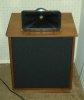
you guys figured out the sound, I'm work'n on the style of the Altec's. Man they sound sweeeet.
 

Attachments

  • horn6.jpg
    horn6.jpg
    84.8 KB · Views: 48
you guys figured out the sound, I'm work'n on the style of the Altec's. Man they sound sweeeet.

I have two pairs of Altec 846A Valencias that have been modified to use BMS HF drivers, and they sure sound great. I keep hoping that sanity will return at some time, and I can avoid having to replace the 811A horns with waveguides. But the temptation keeps growing as my project list diminishes.

I need help.
 
Maybe not at all. Many people can hear the difference between high cost speaker connection wires versus common zip cord. Are they right or wrong? I don't want to go there.


In a system where everything is driven by the JBL, it shouldn't matter whether you reverse the leads or not. Remember that phasing is relative.

But in a system where there are other driving amplifiers (think bi-amped), maybe reversing the JBL's leads makes sense to keep all the speakers phased properly.

Is this BS or different? Yes, definitely.

This is getting into the realm of absolute polarity and its significance. The theory is that absolute polarity should be mainained in the final reproduced sound. i.e. That which started out as a "compression" wave should be reproduced as a compression wave and vise versa.

Studies have been performed on the audibility of absolute polarity and apparently a few listeners are sensitive to it under a wide range of conditions while others can detect it reliably but only under lab conditions using specialized test signals. For most music listeners it doesn't matter and I'm one of them. I don't believe maintainence of absolute polarity is high on the list of priorities of most recording or mastering engineers. And for some genres of music, the concept of absolute polarity is meaningless. Just my opinion of course.

Clarke Johnson is one of the vocal proponents of the audibility of absolute polarity and has a book out on the subject The Wood Effect.

Although there may be a minor technical basis for the possibility of the audibility of absolute polarity (adiabatic air compression is not linear), in the end, the whole thing takes on the same "belief" characteristics one finds in cable discussions: You hear it and believe or you don't and you don't.
 
Back
Top Bottom