• The move to the new server is done. There are some software and database maintenance updates in process. This has us passing the hat around to help out. We appreciate any donations. Seriously, even a dollar helps. The payment page may be found here - https://www.audiokarma.org/support.html

The best phono preamp under $1000 (aka the Hagerman Bugle upgrade thread)

The LM4562/LME49720 datasheet does not show the architecture so I cannot say. In particular, the use of feedforward error correction as is applied in the OPA1656 and others needs particular care in the design of the supply decoupling network.
 
We speak of measurements with very accurate instruments and to design from that point. Then we talk about measuring results by ear. Not in a serious scientific blind or double blind method.

Unbeknownst to most, the testing between modifications were performed as close to blind between myself and Oranda as possible. I didn’t know what his results were before I tested, nor he of mine.

Also, I did not know what permutations of op amps, cap designs I would try first. Changes to c4 made a difference. Putting the 1612 in the third slot was something different than using all 3 2210. I didn’t know what to expect but the changes to the overall sound was astonishing. There’s no way I could or would have believed it.

We performed as “blind “ as possible and then discussed results. Not as a group where we could influence our observations. We both know how bias can taint perception.

We don’t always prefer the exact same permutations from our testing, but it was uncanny how we had the same thoughts, heard the same changes/ results when we did choose the same setup and reported blindly first, then discussed. Repeated results in both positive and negative aspects.

That’s at least as valid as “group listening “ or testing mentioned above. I don’t know what methods others used but I can somewhat accept that their results.

Both of us have been trained in the scientific community and have worked or do work in these fields professionally. I am just saying that we are not completely biased towards the design based off of what might be parts randomly put together or based off one initial result. This came about after months of trial and error and much more so for Oranda as I was just honored to participate.

The question to post up the results from the modifications was discussed many times. I am guilty of wanting Oranda to share with the AK community probably in hopes that others might want to try this inexpensive build. I am truly glad he shared his build.

I had hoped that others would refrain from biased opinions before trying it out or at least be curious to try. I don’t think Jim Hagerman’s design is a bad choice to start.

For analogy: Speaker design/crossover design; a good example of how mathematical equations and individual part testing may not always equate to the desired results, the best results. Putting them together requires individuals to use their ears for final evaluation, every single time. Then to top it off, results are subjective to the individual. It doesn’t matter what appears on an oscilloscope or meter. What I prefer is not the same as what you prefer.

If it was all based off what selective testing was used, it would be absolutely terrible. I don’t listen to my albums with an oscilloscope. I do like a good performing preamp however. Especially on the cheap.

DR
 
Last edited:
Art DJ, Musical Surroundings,Sutherland PH3?,Herron, Tavish Vintage,AD797. all were very nice and a continual upgrade.

Wyns design is an upgrade as is. And if you are able to DIY, less than $200.
 
Art DJ, Musical Surroundings,Sutherland PH3?,Herron, Tavish Vintage,AD797. all were very nice and a continual upgrade.

Wyns design is an upgrade as is. And if you are able to DIY, less than $200.

Hi again. So what is the lowest gain for which the Wyn designs are suitable? Can they get down to 36db w/o giving anything up?
 
Hi again. So what is the lowest gain for which the Wyn designs are suitable? Can they get down to 36db w/o giving anything up?
The input stage gain can be reduced to produce 36dB, but at the cost of redesigning the interstage filter which is there to, in part, compensate for the unity gain transition of the input stage which will occur at a lower frequency.
The input overload margin is pretty high in the present design- about 29dB at the rated input of 2.5mv and it is not frequency dependent, so there is lots of margin to spare.
What cartridge are you using?
 
The input stage gain can be reduced to produce 36dB, but at the cost of redesigning the interstage filter which is there to, in part, compensate for the unity gain transition of the input stage which will occur at a lower frequency.
The input overload margin is pretty high in the present design- about 29dB at the rated input of 2.5mv and it is not frequency dependent, so there is lots of margin to spare.
What cartridge are you using?

I use a number of cartridges some of them the DJ sort with outputs as high as 8mv. Downstream is my Parasound ZPre3 preamp with a 2.5v input limit beyond which it clips.

So if I'm looking at this right, 8mv input and 2.5v output limit leaves me with only about 50db to play with. If I stick with 36db gain, that leaves about 14db of vinyl headroom.

Or no?
 
I use a number of cartridges some of them the DJ sort with outputs as high as 8mv. Downstream is my Parasound ZPre3 preamp with a 2.5v input limit beyond which it clips.

So if I'm looking at this right, 8mv input and 2.5v output limit leaves me with only about 50db to play with. If I stick with 36db gain, that leaves about 14db of vinyl headroom.

Or no?

Why not use the Bugle2 build and the online gain calculator? It’s a very easy build, quick and can be completed for ~ $150 and it’s what this thread is all about. WP has a few threads dedicated for that build.
 
Why not use the Bugle2 build and the online gain calculator? It’s a very easy build, quick and can be completed for ~ $150 and it’s what this thread is all about. WP has a few threads dedicated for that build.

I only ask because the WP unit has been suggested as a better alternative to the Bugle2 (which I have) but I wonder how suitable it is for higher voltage MM cartridges.
 
I use a number of cartridges some of them the DJ sort with outputs as high as 8mv. Downstream is my Parasound ZPre3 preamp with a 2.5v input limit beyond which it clips.

So if I'm looking at this right, 8mv input and 2.5v output limit leaves me with only about 50db to play with. If I stick with 36db gain, that leaves about 14db of vinyl headroom.

Or no?
Give me a few moments to work it out. I'm in the midst of rebuilding my computer/simulation environment from a major workstation crash a number of days ago and I can't just run quick simulations that way I'm accustomed to.
 
I only ask because the WP unit has been suggested as a better alternative to the Bugle2 (which I have) but I wonder how suitable it is for higher voltage MM cartridges.

I haven’t built a WP unit to compare, but will be in the future. But, I have built this modified bugle2 and can attest that the results are night and day. You can easily and cheaply modify your current B2 board. And adjust the gain with a simple swap of a few resistors.
Resistors are very inexpensive and you are talking about $3-4 maybe to get the gain you want.

It would be easy to put it back if you didn’t like it.

I highly recommend that you try your gain changes and then swap out the c4, c5 caps and as Oranda suggested at the start, Silver Mica 10 nF at c5.
Those can be found online for around $16 (for 4 w I purchased). The Vishay 220 nF used for c4, c6 can be found for a few dollars also.

You can start with that now and have it done in an hour or so w soldering iron.
 
Ok. 8mv @1kHz, 5cm/sec is the sensitivity- that is -42dBv. The nominal sensitivity is 2.5mv, or -52 dBv. That reduces the margin by 10dB, so the remaining margin is 19dB. Assume 12dB for peak cartridge output, leaving 7dB. This will produce a peak output from the phono stage of +12dBv. The phono stage will not have a problem, but the succeeding preamp will have a problem unless you populate the included line stage. I suggest that you stick to the bugle 2 unless the improved specs really are that important to you.
 
I haven’t built a WP unit to compare, but will be in the future. But, I have built this modified bugle2 and can attest that the results are night and day. You can easily and cheaply modify your current B2 board. And adjust the gain with a simple swap of a few resistors.
Resistors are very inexpensive and you are talking about $3-4 maybe to get the gain you want.

It would be easy to put it back if you didn’t like it.

I highly recommend that you try your gain changes and then swap out the c4, c5 caps and as Oranda suggested at the start, Silver Mica 10 nF at c5.
Those can be found online for around $16 (for 4 w I purchased). The Vishay 220 nF used for c4, c6 can be found for a few dollars also.

You can start with that now and have it done in an hour or so w soldering iron.

I may still, just want to listen some more to form some better impressions (I have a lower output cartridge running so I can listen without overloading the preamp).

So far I'd say it is just a tiny bit brighter than the TC-750 and that may explain the better performance on massed strings. I think the TC-750's bass is slightly tighter than the Bugle 2.

I'm going to listen another week or two and then swap the TC-750 back in and see what my immediate impressions are.
 
I may still, just want to listen some more to form some better impressions (I have a lower output cartridge running so I can listen without overloading the preamp).

So far I'd say it is just a tiny bit brighter than the TC-750 and that may explain the better performance on massed strings. I think the TC-750's bass is slightly tighter than the Bugle 2.

I'm going to listen another week or two and then swap the TC-750 back in and see what my immediate impressions are.

Is this a standard Bugle2? No modifications? Just to understand.
 

Definitely get a feel for your Bugle2. I’m hoping that you will want to modify it as Oranda opened this thread.

In my experience with the modded B2, all previous inexpensive preamps seem to only have small levels of performance differences between each other.

The modded B2 is not a small level of change. It is very noticeable and enjoyable.

I understand and would really like to get a feel of the unmodified Bugle too. Looking forward to those who try out the mods.
 
Just a couple observations on the Bugle 2. Hagerman implements the "Neumann time constant" with R11, 332R. This forms a low pass filter at 47.9K. The controversial Neumann constant was popular with diy phono stages but seems to be rarely implemented today. The VSPS from RJM audio used to have it but he's since removed it in the most recent update.

Also, as is the treble roll-off is set at 1,812Hz, lower than the RIAA standard of 2,122Hz. You could fix the 75us time constant and remove the Neumann pole by removing R11 and replace with a jumper and change R10 to 7.5K.

upload_2022-11-10_10-34-28.png
 
Just a couple observations on the Bugle 2. Hagerman implements the "Neumann time constant" with R11, 332R. This forms a low pass filter at 47.9K. The controversial Neumann constant was popular with diy phono stages but seems to be rarely implemented today. The VSPS from RJM audio used to have it but he's since removed it in the most recent update.

Also, as is the treble roll-off is set at 1,812Hz, lower than the RIAA standard of 2,122Hz. You could fix the 75us time constant and remove the Neumann pole by removing R11 and replace with a jumper and change R10 to 7.5K.

View attachment 2710561

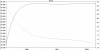
The simulations agree with this,
origbugel2.png

the bump at the end is the "Neumann pole" which assumes a characteristic for the lathe cut off filter (order, type and frequency) which is rarely followed in practice and is usually chosen to not be implemented these days- for good reason. I don't include it.
However, implementing the 75us has to take into account the shunt resistance that is R12 plus R13 in series, and is actually maximally flat with a value of c. 8.82k (NOT 7.5k) with the other Rs nominal.


modbugel2.png
 
Last edited:
Just a couple observations on the Bugle 2. Hagerman implements the "Neumann time constant" with R11, 332R. This forms a low pass filter at 47.9K. The controversial Neumann constant was popular with diy phono stages but seems to be rarely implemented today. The VSPS from RJM audio used to have it but he's since removed it in the most recent update.

Also, as is the treble roll-off is set at 1,812Hz, lower than the RIAA standard of 2,122Hz. You could fix the 75us time constant and remove the Neumann pole by removing R11 and replace with a jumper and change R10 to 7.5K.

View attachment 2710561

Honest question; does the Neumann design cause problems? I don’t know anything about design but wondering why Jim would use it if it was a bad idea?

What happens when you make your suggestions as to the performance of the bugle2?

DR
 
Honest question; does the Neumann design cause problems? I don’t know anything about design but wondering why Jim would use it if it was a bad idea?

What happens when you make your suggestions as to the performance of the bugle2?

DR
As @WizardWG4 stated, this was something that was a bit of a fad a number of years ago.
The reason is that the frequency response of the amplifiers driving the cutter needs to be limited for a variety of reasons, and this at one point was a single order roll off starting at about 50kHz, however, that is not set in any standard and is actually implemented at all sorts of frequencies and with a variety of filter characteristics (i.e. 2nd order Bessel, 2nd order Butterworth, etc. etc)
So building in a HF boost to take it into consideration just adds to the possibility of RF pickup problems being an issue and degrades the overload margin at supersonic frequencies where clicks and pops etc. can have significant energy and can cause transient overloads with the attendant recovery problems.
As for making the changes, you can see in my post above that the frequency response becomes flatter in the audio band. However, there is no higher frequency pole (roll off) present in the Hagerman design to deal with RF interference etc. which is usually beneficial.
 
As for making the changes, you can see in my post above that the frequency response becomes flatter in the audio band.

However, there is no higher frequency pole (roll off) present in the Hagerman design to deal with RF interference etc. which is usually beneficial.

So the suggested changes will flatten out the frequency response in audio band but b2 still could benefit from a hf rf interference filter?

Baby steps for this DR guy.
 
Back
Top Bottom