• The move to the new server is done. There are some software and database maintenance updates in process. This has us passing the hat around to help out. We appreciate any donations. Seriously, even a dollar helps. The payment page may be found here - https://www.audiokarma.org/support.html

Antiskate force , what is yours

Antiskate force at setting at 2, for 2 gram VTF

  • 0.14 gram or less

    Votes: 7 24.1%
  • 0.15-0.18

    Votes: 5 17.2%
  • 0.19-0.22

    Votes: 4 13.8%
  • 0.23-0.26

    Votes: 7 24.1%
  • 0.27-0.3

    Votes: 2 6.9%
  • 0.31-0.34

    Votes: 0 0.0%
  • 0.35-0.38

    Votes: 0 0.0%
  • 0.39-0.42

    Votes: 1 3.4%
  • 0.43 or more

    Votes: 6 20.7%

  • Total voters
    29
img_8857-jpeg.1153428

I found that the antiskate force is different on each turntable I have. This also makes the results vary when trying to use the blank disk method for setting AS, So a survey comparing settings on a nominal value if 2 ( supposedly match with a VTF of 2 gram)

What numbers do you get?
It will show what force and relation to VTF designers use, 10-15% can be expected, so 0.2-0.3 gram side force may be typical
The blank disc method does not work as the tip of the stylus does not touch the groove so it bears no relationship to anti skate forces.
Chris
 
The blank disc method does not work as the tip of the stylus does not touch the groove so it bears no relationship to anti skate forces.
Chris
That is what I am thinking too,, but serious actors use it and promote it . I could never make it work on my SME V . So I started to investigate with scale side force , and home made Wally skater. My SME V is at 9-10% side force which is not enough to prevent arm to slide quite fast towards centre. My other TT are about 15% force of VTF .

The analytical way is to calculate it .
Friction factor u 0.3-0.4, some sources say even lower, other higher..
Sin( Offset angle) is about 0.4
So % of VTF would be 0.3*0.4* 100 =12 % or 16%..
Wally Skater recommend 10%.
I did ask SME , the did no answer my direct question about the force, but said measurements are difficult and that AS setting is done as a part of servicing it.

Analytically the u friction factor can be calculated from a stationary arm with known VTF and AS force.
 
Last edited:
So what sideforce do you get with thr blank disc method? I get 13% of VTF.
The problem is stylus profiles vary, some have a blunt tip, some like VDH are sharp so thry dig into thr blanc disc further making issues.
Another consideration is each profile needs different anti skate ans the blank disc dies not help with this.
All of this issues aside, different size contact surfaces trying to climb the wall of a modulated groove has nothing to do with the tip of the stylus which is not supposed to touch the vinyl at all on a blank disc, especially when that tip like the vdh is sharp.
Chris
 
That is what I am thinking too,, but serious actors use it and promote it . I could never make it work on my SME V . So I started to investigate with scale side force , and home made Wally skater. My SME V is at 9-10% side force which is not enough to prevent arm to slide quite fast towards centre. My other TT are about 15% force of VTF .

The analytical way is to calculate it .
Friction factor u 0.3-0.4, some sources say even lower, other higher..
Sin( Offset angle) is about 0.4
So % of VTF would be 0.3*0.4* 100 =12 % or 16%..
The only way to set anti skate is a test disc, dont use the end which is highly modulated as most music is not like this. Set for maybe 2/3 of the track.
Chris
 
The problem is stylus profiles vary, some have a blunt tip, some like VDH are sharp so thry dig into thr blanc disc further making issues.
Another consideration is each profile needs different anti skate ans the blank disc dies not help with this.
All of this issues aside, different size contact surfaces trying to climb the wall of a modulated groove has nothing to do with the tip of the stylus which is not supposed to touch the vinyl at all on a blank disc, especially when that tip like the vdh is sharp.
Chris
That was not really an answer to the question. I get around 13 % of VTF with an MR profile using the blank disc.
 
That was not really an answer to the question. I get around 13 % of VTF with an MR profile using the blank disc.
My SME V and AT OC9MLIi needs 17-18% to become stationary on Denon XG-7001 test disk blank section. This corresponds to a friction factor u of 0.45.

But Letherman say arm should slowly slide inwards which is hopelessly inaccurate goal. The method is flawed
 
My SME V and AT OC9MLIi needs 17-18% to become stationary on Denon XG-7001 test disk blank section. This corresponds to a friction factor u of 0.45.

But Letherman say arm should slowly slide inwards which is hopelessly inaccurate goal. The method is flawed
He says a lot of things I dont agree with
 
My SME needs 17-18% to become stationary on Denon XG-7001 test disk blank section. But Letherman say arm should slowly slide inwards which is hopelessly inaccurate goal. The method is flawed
Well, it is flawed since you cannot get an exact value but then no method does iit. There is always an average depending on music material and recording level. Since I get 13 % with the slow moviing inwards it is in the ballpark.
 
That was not really an answer to the question. I get around 13 % of VTF with an MR profile using the blank disc.
I did not test, but I have done in the past and different profiles need different anti skate which I wrote in my reply, also some exotics ( not micro ridge) dig in to the blank disk.
I tested all this years ago and I realised the blank disk was useless which is why I have not done it again.
Chris
 
Well, it is flawed since you cannot get an exact value but then no method does iit. There is always an average depending on music material and recording level. Since I get 13 % with the slow moviing inwards it is in the ballpark.
The firce changes depending on the position on thr record.
Some arms like the Technics change the skate force as the arm moves so they are correct for more more of the record.
A test record is the only way to set skate.
Chris
 
Mistracking sounds like a BZZZRZ, can be a momentarily crashing sound at crescendo peak , or sharp BZzR at high levels.


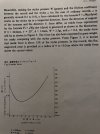
The manual for AudioTechnica cartridge tester say this about tracking ability. My own experience is that cartiridges that has BUZZ at 60u on the Ortofon test record buzz on music tracks too..

IMG_8956.png


With my arms recommended setting (which turn out to be 9-10% of VTF) my cartridge ATOC9MLii track 80um , it can do 90/100 at max AS, and does 70um with 0 antiskate


Please measure your AS and vote!
 
Last edited:
So what sideforce do you get with thr blank disc method? I get 13% of VTF.
On my other TT Fisher 6330 the arm becomes stationary at 0.3gram AS or 15% on a AT95E. On the SME V I need to lower VTF to 1.7 to get stationary arm at AS 3. SME or more like 10% AS of VTF , other TT around 15%
 
On my other TT Fisher 6330 the arm becomes stationary at 0.3gram AS or 15% on a AT95E. On the SME V I need to lower VTF to 1.7 to get stationary arm at AS 3. SME or more like 10% AS of VTF , other TT around 15%
So if you take stationary on blank space as a measure what are the side forces you get for the four tables? Maybe I missed a summary but I can see that the scales of the antiskate dials differ when it comes to side force. Is it 10% with the SME and 15% with the others for stationary on blank disc?
 
My SME V and AT OC9MLIi needs 17-18% to become stationary on Denon XG-7001 test disk blank section. This corresponds to a friction factor u of 0.45.

But Letherman say arm should slowly slide inwards which is hopelessly inaccurate goal. The method is flawed
By "Letherman," are you referring to the method explained at Soundsmith by Peter Ledermann?

"When you have it adjusted right, the arm will track on the SURFACE of the record (not in the groove) at the end of the record on the un-pressed flat space where the run-out groove is – it should track SLOWLY INWARDS toward the center at a MUCH SLOWER RATE than IF IT WERE ACTUALLY in the end groove. . . You will have a moment to do this until the stylus “pops” into the run-out groove." [emphasis theirs]

If by "hopelessly inaccurate" you mean it's unlikely than any two users will end up with exactly the same setting, I would agree; after all, it is a subjective call by each user just what constitutes a "much slower rate." For that matter, I probably wouldn't get exactly the same setting on multiple trials just doing it myself, but I think it's close enough. I've used this method with three different turntables, and I'm satisfied that I consistently get better sound than if I just depended on the numbers on the antiskate dial/slider.
 
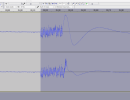
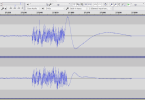
I just made a few tests of the cue up method. Based on playing pink noise, lateral, analogue productions test LP.

Antiskate pos 1.
test 1 antiskate.png

Less antiskate:
test 1 antiskate (low).png


Ideally, the movement in lateral should be as low as possible and equal between channels and it should only be a vertical move when cueing up.

Antiskate set a bit higher than the last one gave
test 1 antiskate a bit more.png

Although it is not equal it is now basically out of phase, i.e. a vertical movement of the stylus. Which is to be expected when cueing up.
 
I
By "Letherman," are you referring to the method explained at Soundsmith by Peter Ledermann?

"When you have it adjusted right, the arm will track on the SURFACE of the record (not in the groove) at the end of the record on the un-pressed flat space where the run-out groove is – it should track SLOWLY INWARDS toward the center at a MUCH SLOWER RATE than IF IT WERE ACTUALLY in the end groove. . . You will have a moment to do this until the stylus “pops” into the run-out groove." [emphasis theirs]

If by "hopelessly inaccurate" you mean it's unlikely than any two users will end up with exactly the same setting, I would agree; after all, it is a subjective call by each user just what constitutes a "much slower rate." For that matter, I probably wouldn't get exactly the same setting on multiple trials just doing it myself, but I think it's close enough. I've used this method with three different turntables, and I'm satisfied that I consistently get better sound than if I just depended on the numbers on the antiskate dial/slider.
Yes Lederman/Schrøder/blank disk method.
I have the Denon XG-7001 test record with a blank area specifically for this purpose.
IMG_8836.jpeg

My 3 TT vary AS force. But force wise 12-16% of VTF makes the arm stationary..with elliptical cartridge.with another cartridge (Microline) and TT 20% is required for a stationary arm
A 0.5 change in AS setting can be required to make arm start/stop moving..which gives a large margin for error
 
Last edited:
I use test records. This is of course a flawed method, but the flaws can be corrected.
1) Of course a high modulation part of the record is needed to get audible distorsion. And this leads to a very high value of skating compensation. This is why in the manual of the old RCA Erato test disk they write: Take the value back from that found with this method. This is what I do.
2) The blank disk method is useless - when used solely. But together with the test disk method it can be helpful. The compensation value adjusted in praxi should be somewhere in the middle of that found with the two methods. With quiet disks more to the lower value, with aggessively cut disks more to the higher.
3) Not only the stylus "form" influences the value one need to adjust but also the quality of it. Its surface polishing grade eg. For example styli like genuine ADC XLM III or the AT 13 Ea (the nude one) need almost no compensation at all with the test record method, others do.
4) The compensation needed also differs with the STA. I use this method to find the correct STA. There is obviously a sharp minimum of drag when the STA is correct.

And just remember: It is always a compromise.
 
Back
Top Bottom