You are using an out of date browser. It may not display this or other websites correctly.
You should upgrade or use an alternative browser.
You should upgrade or use an alternative browser.
Bogen AP-60 found in the dust
- Thread starter GrandDesigns
- Start date
-
- Tags
- ap-60 bogen bogen ap-60 tube amp

GrandDesigns
New Member
I figured I should buy replacement diodes because they're cheap. So I'm trying to figure out substitutes. You can validate my research as I'm not 100% sure. The seleinum rectifier is the oddball. Not sure what to replace that with, if anything.
Anyhow, there are 3 pairs of diodes and the single selenium rectifier:
Parts X1 and X2: Observed part # RCA 070114, proposed replacement 1N5405 = 500v, 3A, Mouser link - These are on the ~400 volt side.
Parts X3 and X4: Observed part # RCA 1N3256 , proposed replacement 1N4006 = 800v, 1A, Mouser link - These are on the ~250 volt side
Parts X6 and X7: Observed part # CER 67, proposed, replacement 1N4003 = 200v, 1A, Mouser link - May be too high voltage for the circuit. - 24 votls
Part X5: Selenium rectifier. This is small, about the size of an old postage stamp.
Anyhow, there are 3 pairs of diodes and the single selenium rectifier:
Parts X1 and X2: Observed part # RCA 070114, proposed replacement 1N5405 = 500v, 3A, Mouser link - These are on the ~400 volt side.
Parts X3 and X4: Observed part # RCA 1N3256 , proposed replacement 1N4006 = 800v, 1A, Mouser link - These are on the ~250 volt side
Parts X6 and X7: Observed part # CER 67, proposed, replacement 1N4003 = 200v, 1A, Mouser link - May be too high voltage for the circuit. - 24 votls
Part X5: Selenium rectifier. This is small, about the size of an old postage stamp.
Attachments




I'd probably just use 1N4007's for all of the 1 amp parts. Order 10, probably costs the same as buying 4. 1 amp at 1000v, exceeds either of the originals by a good margin.
I usually use 1N5408 for similar reasons, 3 amp, 1000v. Its more than I need for basically anything but no harm using stuff with higher voltage ratings and it cuts down on how much stuff I need to keep on hand.
honestly you should be able to use a 1N4007 for all of these. If you wanted to bump the ratings on anything, maybe put the 3 amp parts at X6 and X7. Shows 880ma, so while a 1 amp part will do it, a 3 amp gives a much wider margin. The others are much lower current draw.
X5 is in the bias supply, its handling a few milliamps. A 1 amp part is more than adequate. Possibly you'll need to tweak one of the resistors to put the bias voltage back where it goes afterward though. Less voltage drop with silicon so it will be more negative than it would be with the selenium.
Thats one heck of a power supply too. Most amplifiers do not use power supplies that are this involved.
I usually use 1N5408 for similar reasons, 3 amp, 1000v. Its more than I need for basically anything but no harm using stuff with higher voltage ratings and it cuts down on how much stuff I need to keep on hand.
honestly you should be able to use a 1N4007 for all of these. If you wanted to bump the ratings on anything, maybe put the 3 amp parts at X6 and X7. Shows 880ma, so while a 1 amp part will do it, a 3 amp gives a much wider margin. The others are much lower current draw.
X5 is in the bias supply, its handling a few milliamps. A 1 amp part is more than adequate. Possibly you'll need to tweak one of the resistors to put the bias voltage back where it goes afterward though. Less voltage drop with silicon so it will be more negative than it would be with the selenium.
Thats one heck of a power supply too. Most amplifiers do not use power supplies that are this involved.

Bulb is #12, Bogen liked those for some reason - used to be common, still can be found. Agree on diode ratings - I have a few lower voltage ones, but wouldn't buy less than 1000V.
honestly you should be able to use a 1N4007 for all of these. If you wanted to bump the ratings on anything, maybe put the 3 amp parts at X6 and X7. Shows 880ma, so while a 1 amp part will do it, a 3 amp gives a much wider margin
GrandDesigns
New Member
I'd probably just use 1N4007's for all of the 1 amp parts. Order 10, probably costs the same as buying 4.
X5 is in the bias supply, its handling a few milliamps. A 1 amp part is more than adequate. Possibly you'll need to tweak one of the resistors to put the bias voltage back where it goes afterward though. Less voltage drop with silicon so it will be more negative than it would be with the selenium.
Thats one heck of a power supply too. Most amplifiers do not use power supplies that are this involved.
Makes sense. I wondered why this amplifier has 3 different types of diodes that are all doing similar things. Maybe some were replaced in the past. Or maybe in the early 1960's there were differences in the diodes that made it worthwhile to use different types here. I will buy 10 1N4007's and test the selenium rectifier once I start replacing components.
Bulb is #12, Bogen liked those for some reason - used to be common, still can be found. Agree on diode ratings - I have a few lower voltage ones, but wouldn't buy less than 1000V.
I did finally find the #12 bulbs on Amazon. I find it interesting that the Sams parts listing doesn't show the lamps, but the lamps are indicated on the schematic as "#12" and "#1815" for the front panel status lamps. I perhaps that's standard just like various resistance, capicitance, and voltages which are shown.
Thanks everyone to the continued support on this.
GrandDesigns
New Member
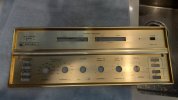
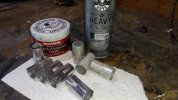
I did some research on cleaning and polshing this aluminum faceplate and of course the most informative thread was here on AK. Also of course there was no single answer other than to start mild and get more aggressive. Obviously the goal is not to inflict damage on the piece. After cleaning with mild soap and water, I ended up testing some aluminum polish and some Chemical Brothers "Fine metal polish" on the back side. I've used both products for many other projects. These didn't appear to cause and damage, but it seemed like the aluminum polish left a cleaner finish so I used that very sparingly on the front. I didn't want to scrub off the lettering which is already worn off in many places. This scoured off some of the imbedded grime that the soap didn't get, but overall it did not make much of a difference. I'm OK with that because this thing looks good enough for its age and it's not going to be perfect.
Attachments

Diodes used to be kind of expensive, so most likely the least expensive things that would do the job were chosen.
The other trick with metal polish on some of this stuff, depending on the finish it can take off the gold tint. Often it was tinted lacquer sprayed over some silver-colored metal and it doesn't take much to strip it off.
The other trick with metal polish on some of this stuff, depending on the finish it can take off the gold tint. Often it was tinted lacquer sprayed over some silver-colored metal and it doesn't take much to strip it off.
GrandDesigns
New Member
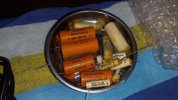
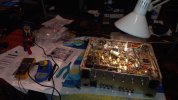
I got all the medium sized capacitors in, except the 40uf, 450 volt polarized electrolytic which is backordered at Mouser. Most of the old caps had values similar to their original values but I'll post some numbers later. I took numerous photos of each cap before removal because it would be incredibly easy to solder the new ones into the wrong place.
Attachments


I might suggest UF4007. They have a faster and lower noise switch off. Probably not something we would hear but they aren't much more expensive, especially if you only buying 10. It's what I buy usually in quantity 100 which is about a one lifetime supply.I will buy 10 1N4007's and test the selenium rectifier once I start replacing components.
GrandDesigns
New Member
I might suggest UF4007. They have a faster and lower noise switch off. Probably not something we would hear but they aren't much more expensive, especially if you only buying 10. It's what I buy usually in quantity 100 which is about a one lifetime supply.
How does the UF4007 compare to the 3 amp 1N5408 in terms of noise and speed?
Pretty similar but the 4007 is rated 1A which is plenty for a normal tube amp. I have some UF5408's as well but the leads are rather large diameter and rather stiff to bend in tight spaces. The reverse recovery time spec is the same for both of them at 75nS.
A high voltage Schottky diode is probably the best of all but they are in packages like a transistor and cost $2-3 ea. They turn off without the recovery time.
A high voltage Schottky diode is probably the best of all but they are in packages like a transistor and cost $2-3 ea. They turn off without the recovery time.
GrandDesigns
New Member
Various updates:
Thanks for the info on diodes. Plenty of choices there.
I pulled the trigger on two 12DW7 (7247) and six 12AX7 (ECC83) tubes over at vacuumtubes.net. Nice folks over there. The 7355's came in a couple of weeks ago from Radio Daze. So that makes a whole new set of tubes.
I also polished the aluminum vaccum tube covers (photos below), but I suspect they will re-tarnish somewhat quickly but it doesn't really matter.
I did buy a couple of different of power switches from Mouser and those are in. I need to drill out the original rivets holding in the old switch and see if I can retrofit the old switch housing with new internals, or just make it easy and install the new switch as is. The hole spacing should be correct. I am not a total purist to keep things original, however I can apprecaite knowing that some do prefer originality so the least I can do is try to retrofit the old switch housing with new internals.
I'm also still waiting on the large capacitors from Hayseed "Hams", as my wife referred to it as when the charge for over $100 showed up as an alert on her phone, and she called me wanting to know why I was buying ham. Pretty funny.
I should probably test the other switches too, but the power switch definately felt broken so that was the only one I tested.
Finally, I found a review of various integrated amplifiers that includes the AP-60. Here's one page of it.
Thanks for the info on diodes. Plenty of choices there.
I pulled the trigger on two 12DW7 (7247) and six 12AX7 (ECC83) tubes over at vacuumtubes.net. Nice folks over there. The 7355's came in a couple of weeks ago from Radio Daze. So that makes a whole new set of tubes.
I also polished the aluminum vaccum tube covers (photos below), but I suspect they will re-tarnish somewhat quickly but it doesn't really matter.
I did buy a couple of different of power switches from Mouser and those are in. I need to drill out the original rivets holding in the old switch and see if I can retrofit the old switch housing with new internals, or just make it easy and install the new switch as is. The hole spacing should be correct. I am not a total purist to keep things original, however I can apprecaite knowing that some do prefer originality so the least I can do is try to retrofit the old switch housing with new internals.
I'm also still waiting on the large capacitors from Hayseed "Hams", as my wife referred to it as when the charge for over $100 showed up as an alert on her phone, and she called me wanting to know why I was buying ham. Pretty funny.
I should probably test the other switches too, but the power switch definately felt broken so that was the only one I tested.
Finally, I found a review of various integrated amplifiers that includes the AP-60. Here's one page of it.
Attachments

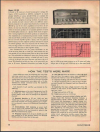
GrandDesigns
New Member
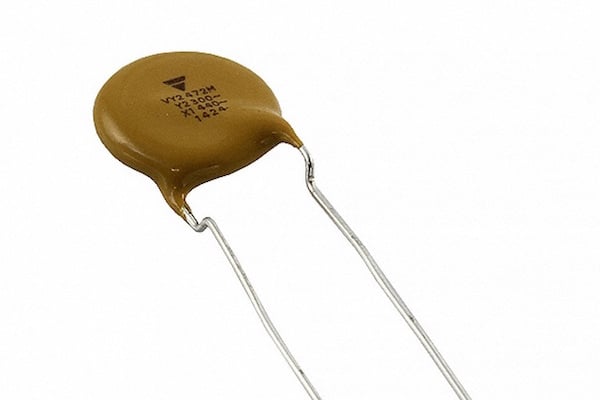
Quick question: The replacement I bought for the 600 volt .047 mf "Micamold Tropicap " is not the right AC volt value, but I can't get the right value in an axial style. I can only find a radial like this in the correct AC voltage. The one I bought is 253 volts AC and 630 volts DC, but this thing sits on the AC side, so it fall short to meet the 600 volt AC requirement. I am not inclined to run with the lesser capacitor. Maybe there is a better souce for a ~600 volt AC axial safety capacitor. Any thoughts on this?
Attachments
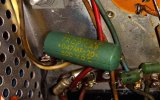
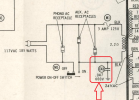
GrandDesigns
New Member
I tested my tubes at a local new and used electronics parts seller but I did not have confidence in the results due to my total lack of experience with testing tubes, and questions about the accuracy of the machine. (EPO is a fascinating store and it's always fun to see what turns up there). I did find another more reputable place to test tubes and will go over there Friday. While I have new tubes for this thing, I'd like to get an accurate assessment of the old tubes.
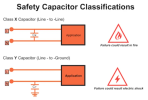
Safety Capacitors First: Class-X and Class-Y Capacitors - Technical Articles
Learn about Class-X and Class-Y capacitors, where they are used, and why they are referred to as
 www.allaboutcircuits.com
you will most likely have to use a box style cap with radial leads.
GrandDesigns
New Member
The one I bought appears to be OK except that it is not class Y (line to ground, fails open). It is class X (line to line, fails shorted). So it is not the correct part for this application as this would send the line voltage to the ground if it fails. So I'm back to the same problem: Do I use a more modern looking part like this one, or try to find an axial style part?The 600v is DC volts. In this spot you'd be more concerned about AC. If you can find one with a Y rating for at least 125vac, or more ideally 250vac, you're good to go.

That's a "death capacitor." Exceedingly dangerous to have that component in an audio system, particularly if other gear is grounded with 3-wire AC cords.Quick question: The replacement I bought for the 600 volt .047 mf "Micamold Tropicap " is not the right AC volt value, but I can't get the right value in an axial style. I can only find a radial like this in the correct AC voltage. The one I bought is 253 volts AC and 630 volts DC, but this thing sits on the AC side, so it fall short to meet the 600 volt AC requirement. I am not inclined to run with the lesser capacitor. Maybe there is a better souce for a ~600 volt AC axial safety capacitor. Any thoughts on this?
This is absolute BS. The cap to chassis ground can conduct sufficient current to kill, even when it's "good." Get rid of it. The parallel capacitor might be a good idea, and it won't cause a fire if it's connected after the fuse. It's a poor substitute for a real line filter though.
Jack
Last edited:
GrandDesigns
New Member
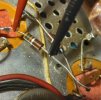
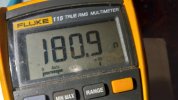
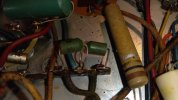
One resistor of this pair measured 180 ohms. The resistor markings and schematic both indicate a 150 ohm value. With a 10 percent tolerance, it should be 165 ohms maximum, so 180 seems too high and I think it should be replaced. Does anyone agree? If so, how many watts does this thing look like? 1/2 watt? SAMs indicates all are 1/2 watt unless otherwise noted.