• The move to the new server is done. There are some software and database maintenance updates in process. This has us passing the hat around to help out. We appreciate any donations. Seriously, even a dollar helps. The payment page may be found here - https://www.audiokarma.org/support.html

Calling All Yamahas. Time to Post Your Pics

Hi,
Just got a yamaha a-2000a (pics to follow) . Question what is the difference between this and he a-2000? I am missing one button beside the richness button. What is this button for. Is this a class A integrated? thanks

They seem to be pretty much the same. I did notice a 6,000 Yen price difference in some literature, but I could not spot any glaring differences in the external or internal construction (pure art meets science IMHO). I did notice a MM > REC OUT in the specs for the A-2000a, but not the A-2000.
 
No it is not a class A switch, since the A-2000a runns in "class A" all the time. It is the famours "fake" class A design Yamaha did for the B-2x power amp that is in the A-2000a.

But where did you run up this amp, I know only of one unit in the US? and that is a non "a" model.

BTW; you just got one of the best Yamaha integrated amps ever made.
 
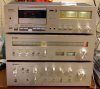
My basement rig is Yamaha gear with Polk 7A's. I need to replace the tuner signal strength bulb and build a rack.

TC-320 cassette
CT-800 tuner
CA-800 integrated
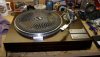
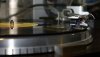
YP-D10 turntable w/AT440MLa cartridge
 

Attachments

  • cass_2.jpg
    cass_2.jpg
    71.2 KB · Views: 120
  • d10_1.jpg
    d10_1.jpg
    74 KB · Views: 89
  • d10_2.jpg
    d10_2.jpg
    86.4 KB · Views: 87
  • 440mla_sm.jpg
    440mla_sm.jpg
    31 KB · Views: 62
No it is not a class A switch, since the A-2000a runns in "class A" all the time. It is the famours "fake" class A design Yamaha did for the B-2x power amp that is in the A-2000a.

But where did you run up this amp, I know only of one unit in the US? and that is a non "a" model.

BTW; you just got one of the best Yamaha integrated amps ever made.

Thank you. I got this unit here in the Philippines. This is my second 2000 series amp. The first amp I got was the AX-2000. From the first time I listened to these I was hooked. I also have the M-85/ C-85 combo but lately I have been listening more to the A-2000a running on the direct mode.I just can't describe the sound but I feel it is more natural sounding . One of these days I will ask a friend of mine, who is more of an audiophile, to audition this and share with you guys his insights.
 
No it is not a class A switch, since the A-2000a runns in "class A" all the time. It is the famours "fake" class A design Yamaha did for the B-2x power amp that is in the A-2000a.

But where did you run up this amp, I know only of one unit in the US? and that is a non "a" model.

BTW; you just got one of the best Yamaha integrated amps ever made.
Would you please refrain from calling HCA "fake" Class A? :D

Have you ever seen a technical description of the circuit? I checked my service manual for the MX-10000 and there is no description or schematic of the HCA circuit. I suspect that it's an IC.
 
Would you please refrain from calling HCA "fake" Class A? :D

Have you ever seen a technical description of the circuit? I checked my service manual for the MX-10000 and there is no description or schematic of the HCA circuit. I suspect that it's an IC.

Nothing fake about the 130WPC HCA in the MX-2000 I listen to daily. It drives my JBL L112's with ease and finesse without reaching for the high watts. Much more powerful and dynamic than the 250WPC M-85. Nothing "fake" about these watts.
 
Would you please refrain from calling HCA "fake" Class A? :D

Have you ever seen a technical description of the circuit? I checked my service manual for the MX-10000 and there is no description or schematic of the HCA circuit. I suspect that it's an IC.

Mark you might notice there is an "X" missing in the name A-2000a :)

I am talking about an amp that was sold before the HCA even was invented and yes the B-2X was refered to in reviwes as a "fake" class A amp since the design is not pure class A. But don't get the word in the wrong way, the amp was never sold as a class A amp so it was kind of a surprice that the amp acted like one. The special class A design of the amp, the soul if you might say was only used in 3 amps: the Yamaha B-2x power amp, the A-2000/2000a integrated amp and then it was put on the shelvs to collect dust - later Yamaha desided to build something really really special and they took it out again only to put it inside the mighty Yamaha MX-10000.

Before you're hartbeat goes too high, I am still not saying that the HCA is a "fake" class A.
Yamaha never said that HCA is class A (class A is a clear defined power amplifer class). What Yamaha did says is that the end result is the same, but much more efficient - and in the end to me it is the sound that matters not the class of amp design.

I have the scematics of the HCA in the MX-2000 and MX-1000 (they are not the same). Sorry for the earlyer statment, I must have been sleeping.

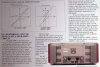
Mark try and look at this blockdiagram from the B-2x and then at the one for the MX-10000, suddenly you see the the B-2x looking straight back at you.

attachment.php
 
Last edited:
Well, if this isn't Yamaha calling HCA "Class A," I don't know what is. I'd also add that the B-2x, like other Class A amps, switches into Class AB at a point.


MX1000-ClassA.jpg

If we're talking AX-2000/AX-2000a, the internals look very, very similar and share a chassis for sure, to the MX-2000. I'd love to have one. According to TVK, The big difference was the dropping of video switching, and from what I see, the DAC in the AX-2000 was dropped in the AX-2000a.

Links compliments of hifo do

AX-2000

AX-2000a

ax2000a_b.jpg<AX2000 -- MX2000>mx-2000(2).JPG
 
Last edited:
Mark you might notice there is an "X" missing in the name A-2000a :)

I am talking about an amp that was sold before the HCA even was invented and yes the B-2X was refered to in reviwes as a "fake" class A amp since the design is not pure class A. But don't get the word in the wrong way, the amp was never sold as a class A amp so it was kind of a surprice that the amp acted like one. The special class A design of the amp, the soul if you might say was only used in 3 amps: the Yamaha B-2x power amp, the A-2000/2000a integrated amp and then it was put on the shelvs to collect dust - later Yamaha desided to build something really really special and they took it out again only to put it inside the mighty Yamaha MX-10000.

This actually is an implementation of Feed Forward !! The low power amp operates in class A because it needs to be near perfect as possible in order to cancel out errors in the high powered class B amplifier.

Yamaha probably didn't use this design much because it is a much more complex design than the later HCA amps.
 
Well, if this isn't Yamaha calling HCA "Class A," I don't know what is.

Notice that the info you post is only about the MX-10000 and nowhere they say HCA, but alwayes use the therm "HC class A amp". This makes quite a difference, since the HC class A amp in only pressent in the MX-10000 and not in any other MX/AX model where they call the design HCA.

This little play with words is a typical marketing game, it looks the same on paper but is quite different in real life.

No, Yamaha never stated that HCA is class A.

rabbit: I agree, a testement to this might be that the design only was used in a few statement models.
 
Notice that the info you post is only about the MX-10000 and nowhere they say HCA, but alwayes use the therm "HC class A amp". This makes quite a difference, since the HC class A amp in only pressent in the MX-10000 and not in any other MX/AX model where they call the design HCA.

This little play with words is a typical marketing game, it looks the same on paper but is quite different in real life.

No, Yamaha never stated that HCA is class A.

rabbit: I agree, a testement to this might be that the design only was used in a few statement models.

It's not class 'A' in the strict sense however with HCA both devices do conduct over the whole cycle. It's just that the normally inactive device idles at a quiescent level rather than being completely cutoff as in a class 'B' or 'AB' amplifier.

It's described more in patent #4803441.
 
Yamaha never said that HCA is class A (class A is a clear defined power amplifer class). What Yamaha did says is that the end result is the same, but much more efficient - and in the end to me it is the sound that matters not the class of amp design.

Rabbit: again I can only agree with you, in the strict sense HCA is not class A.

And thx for pointing out the patent number, it brought forward a few interesting dates June 1979 and June 1983. It happens that the Japanese release of the B-6 (X-power) was 1979/80 and the B-2x was 1983.
 
Rabbit: again I can only agree with you, in the strict sense HCA is not class A.

And thx for pointing out the patent number, it brought forward a few interesting dates June 1979 and June 1983. It happens that the Japanese release of the B-6 (X-power) was 1979/80 and the B-2x was 1983.

Whilst it's not true class 'A' it's overall transfer characteristic is as good as class A which is why you can compare it with a class 'A' design. Having said that I have noticed that the actual implementation of the HCA amps according to their schematics is somewhat different from the patent. Perhaps there were a few compromises along the way ;)
 
Notice that the info you post is only about the MX-10000 and nowhere they say HCA, but alwayes use the therm "HC class A amp". This makes quite a difference, since the HC class A amp in only pressent in the MX-10000 and not in any other MX/AX model where they call the design HCA.

This little play with words is a typical marketing game, it looks the same on paper but is quite different in real life.

No, Yamaha never stated that HCA is class A.

rabbit: I agree, a testement to this might be that the design only was used in a few statement models.

Rabbit: again I can only agree with you, in the strict sense HCA is not class A.

And thx for pointing out the patent number, it brought forward a few interesting dates June 1979 and June 1983. It happens that the Japanese release of the B-6 (X-power) was 1979/80 and the B-2x was 1983.

Whilst it's not true class 'A' it's overall transfer characteristic is as good as class A which is why you can compare it with a class 'A' design. Having said that I have noticed that the actual implementation of the HCA amps according to their schematics is somewhat different from the patent. Perhaps there were a few compromises along the way ;)
Good information you guys.

The service manual for the MX-10000 describes it as a MOS FET H.C.A Amp with a MOS FET output current mirror. The circuit has 4 pairs of MOS FET transistors. There is one of these circuits for each channel. It appears to be the circuit described in the patent.
 
Last edited:
Back
Top Bottom