• The move to the new server is done. There are some software and database maintenance updates in process. This has us passing the hat around to help out. We appreciate any donations. Seriously, even a dollar helps. The payment page may be found here - https://www.audiokarma.org/support.html

Digital vs Audio Formats in Music

Status
Not open for further replies.
oh ok i just wanted to know. i got that impression,well i still have that impression.to each his own i gues.you sound like a well educated sound engineer,from what i see of your post ,but i see you only have opinion of what benefits your agenda.and that is your right as an american.and i respect your right to have an opinion.
 
You got me now! :rolleyes:

@Matt

Think of it like classical music before we ever had any way to store music onto something. We can still play Beethoven today regardless we never heard his original performances because his music is converted to a program, a language, musical notes.

Same is with digital but even further. You can print it on punch cards, make dots on a roll of paper with a pen, keep in on mechanical hard drive, SSD, whatever. The numbers are forever, if we have the code we can reproduce it every time perfectly. Digital has no physical limitation. And it will reproduce the actual artist playing.

Each time a master tape is reproduced the next generation is worse and worse. It deteriorates with time, its soon unplayable. Eventually the magnetic tape that has the original Kind of Blue will be so frail and deteriorated, if they play it on a machine it will fall apart. it will only be a museum piece.

That's a good point. But who is storing the source code and on what?
 
I can't say what, if any, difference it makes to include content above 20 KHz, so this discussion may fall into the "neither here nor there" category. But it is quite possible, and it's never been easier to do, thanks to digital recording, ironically enough.

Even though analog equipment CAN have a very high bandwidth (how did we get to the moon?), most analog gear, INCLUDING recording studio gear, is intentionally rolled off starting somewhere above 20kHz to avoid interference.

Not in my studio or any studio I have heard of. Maybe you're thinking of the effect of transformers used on some inputs and outputs for electrical isolation and the impact of the transformer on frequency response?

Gear should be well behaved over a wide bandwidth that exceeds the signal content, if possible. My small console is flat to 40K and a few db down at 100K. My old line mixer is nearly flat to 100K and a few dB down at 200K.

If one were recording a live acoustic ensemble in a space without ambient noise issues that require otherwise, you might throw up a pair of condenser omni mikes first and see if that gets it.

The on-axis response of, say, a DPA 4006A, Earthworks QTC50 or MG 1/2" capsule on a Josephson C617 could easily extend to 50K at reference level (flat) and then roll off above that.

Perhaps you use a Millennia Media preamp, one of their HV series. They rate frequency response of the HV-37 as +0 to -3 dB to beyond 300 KHz. Run that into an A/D and record at 96K and you could easily have recorded much of the space flat to 48K. If you track it to a 30 ips tape machine, it could be pretty close to flat at 30K and still doing something at 40K.

Again, what any of this means to choice of format or perceived audio quality or musical enjoyment is not at all clear, but it's never been easier to make extended response recordings than it is today.

Cheers,

Otto
 
That's a good point. But who is storing the source code and on what?

Musical archives, foundations, corporations, us people... Wherever and however it is stored it will sound fairly the same when decoded later on.

Beethoven's sheet music is performed by musicians and never a performance will be repeated to the similarity you will get by playing a digital music file on different players.

With digital we can easily archive every musical event ever made. The ideal digital media strives to achieve is recorded and mastered music file to be given to end users to enjoy in the exact same quality without downsampling or upsampling. You would never get closer to the actual source material than with 1:1 DDD.
 
Of course, it's also true that the response of more typical directional microphones used for close-miking in studios is more limited and limps above 20K at or about the point at which the response starts to roll off. This isn't a deliberate sabotage of the response, it's the basic physics that limits the frequency response as the wavelength grows smaller than the capsule, while capsule size can only be so small before the inherent noise of the motion of air molecules in the capsule becomes annoying relative to the smaller signal of a smaller capsule.

Still, you want the recording chain to be well-behaved over and somewhat beyond the signal content and just because something is starting to roll off at 20K doesn't mean there is no signal above 20K. The C451 plot, for example, shows that mike is still flat at 20K relative to 1K, and there will be significant response above 20K as it begins to roll off.

Cheers,

Otto
 
It seems some here doubt that much recording studio equipment begins to roll-off above 20kHz (either naturally or intentionally)

Here are some examples:
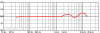
Figure 1 shows the frequency response of a Neumann U47. This is a very old design, not really state-of-the-art, but it is the probably the most desired microphone in the world. ($10,000 to $20,000 for a well-maintained one)
This is the microphone used frequently by the biggest stars in the world. A studio will miss out on business if they don't have this mic. These mics figure VERY prominently in the recordings of everyone from Sinatra to Abbey Road. I have never witnessed a recording engineer pass on an opportunity to use one if available. This design is so popular, there are at least a dozen companies with modern-day clones. Although this chart does not show above 20kHz, you can kind of see where things are headed.

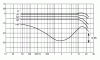
Figure 2 shows a more modern design, the very popular DPA 4011 condenser. (formerly Bruel & Kjaer) This is used today from everything from classical recording to punk rock. The TL is the transformerless version. It is down at least 5db at 30kHz

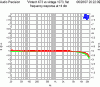
Figure 3 shows the Neve 1073 Microphone Preamp. In the last 15 years or so, the recording world has gone mad for this design from the early 70's, to the point which it is now being copied by at least a dozen companies. Again, this is one of those pieces of gear that, if you own a recording studio and you don't have several of these, you ARE missing out on business from producers and record labels who insist on using it. The diagram I am showing is actually from one of the 1073 clone companies. You can see the frequency response down 2db at 20kHz, and you can see where the clone company (the X73) has intentionally COPIED this "imperfect" response. The response does not get better beyond 20kHz.

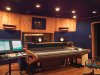
Figure 4 shows my own studio listening environment (including Tom-Hidley designed Westlake monitors with Kinoshita horns and TAD componenets, which were previously insulted in this thread.) The recording console pictured, is an MCI 500D. These consoles were ubiquitous in the 70's and 80's, indeed there were a few times during that era where every song in the "top 5 billboard" was recorded or mixed with this type console. This EXACT console has been used on a few hits as well. The MCI consoles are indeed rolled off, starting somewhere between 20 and 30 kHz.
 

Attachments

  • 1-U47.png
    1-U47.png
    3.2 KB · Views: 7
  • 2-4011.gif
    2-4011.gif
    56.9 KB · Views: 6
  • 3-1073.gif
    3-1073.gif
    23.1 KB · Views: 5
  • 4-MCI Westlake.jpg
    4-MCI Westlake.jpg
    167.4 KB · Views: 9
Musical archives, foundations, corporations, us people... Wherever and however it is stored it will sound fairly the same when decoded later on.

Beethoven's sheet music is performed by musicians and never a performance will be repeated to the similarity you will get by playing a digital music file on different players.

With digital we can easily archive every musical event ever made. The ideal digital media strives to achieve is recorded and mastered music file to be given to end users to enjoy in the exact same quality without downsampling or upsampling. You would never get closer to the actual source material than with 1:1 DDD.

It all works on the same binary theory. And the difference is in the conversion.

1 or 0 (digital file - positive or negative)

positive or negative magnetic field. (tape as a storage medium, the way speaker drivers work)

positive or electric charge. (the conversion process from vinyl, the powering of speaker drivers.)

If there are flaws they are perhaps in the lower bitrate of digital (which is not a problem inherent in the medium, just how it is implemented) and the conversion of digital files into electric impulses. Maybe vinyl cartridges just work better at converting the storage medium than DACs do.
 
So, you didn't like the "cheap" Shure (even though plenty of studios use it), and I presented you with the Neumann for $3,500.00 with a response chart (hey, doesn't Neumann make disc cutting heads too? Hmmm...).
Perhaps it is time to step back and take a fresh look at my position. You have claimed on multiple posts that microphones cannot reproduce above 20 khz and gave examples of some with truly miserable response.

Let's take a fresh look at (one of) the Shoeps mics that disproves your assertion:

shoeps_mk4.jpg


Now let's look at the DPA (Bruel & Kjaer) 4003:


You either get it or you don't.

Please name the studios that are using these 50KHz mics to record the music you listen to
Too many to mention. Telarc, Philips, DGG, Windham Hill, etc.

Here are a few specific references:

Peter Gabriel Live using Scheops MK4

Steve Epstein using DPA (B&K) 4003s
 
It all works on the same binary theory. And the difference is in the conversion.

1 or 0 (digital file - positive or negative)

positive or negative magnetic field. (tape as a storage medium, the way speaker drivers work)

positive or electric charge. (the conversion process from vinyl, the powering of speaker drivers.)

If there are flaws they are perhaps in the lower bitrate of digital (which is not a problem inherent in the medium, just how it is implemented) and the conversion of digital files into electric impulses. Maybe vinyl cartridges just work better at converting the storage medium than DACs do.

I am not well informed enough to get into what converts better, DACs or cartridges. And that would be a whole different topic.

Vinyl and cartridge pickup has some microphonics that create nice ambiental sounding echo effect that create artificial spatial data in the sound. And people love ambiental echo effects, it feels more live to our brains. More stuff going on than flat accurate 2D stereo.
 
In order to record 24/96 etc it takes high quality microphone(s), reproduction to 50khz.
Not necessarily to get the benefit - at least in the digital world. I have several reissues of old analog recordings transferred to 24/96. One in particular is the 1963 soundtrack from Goldfinger. The 24/96 version sounds so much more extended at the top (like the LP) than the CD version. Here we're able to lose the deleterious effects of the necessary brickwall filter and the series of compromises it brings. A spectrum analysis would likely not show much content above the 20-22khz range, but the clarity and focus well below that range is immediately evident.

Thanks again for your supporting posts E.
You're welcome. Evidently, some folks here don't like hearing information that conflicts with their dogma. :)
 
Last edited:
The on-axis response of, say, a DPA 4006A, Earthworks QTC50 or MG 1/2" capsule on a Josephson C617 could easily extend to 50K at reference level (flat) and then roll off above that.
Thank you for providing another voice who is aware of microphone technology.
 
Perhaps it is time to step back and take a fresh look at my position. You have claimed on multiple posts that microphones cannot reproduce above 20 khz and gave examples of some with truly miserable response.

Let's take a fresh look at (one of) the Shoeps mics that disproves your assertion:

shoeps_mk4.jpg


Now let's look at the DPA (Bruel & Kjaer) 4003:


You either get it or you don't.


Too many to mention. Telarc, Philips, DGG, Windham Hill, etc.

Here are a few specific references:

Peter Gabriel Live using Scheops MK4

Steve Epstein using DPA (B&K) 4003s

I stated that the mics I posted charts for cannot do it (and used a mic that is used n a lot of studios, then followed up with one that was more to the budget constraints you seemed to desire).

Look a few posts back for more info on mics that may be considered the "de facto" standard for studios to have.

Do you think the response charts presented are incorrect, or that they have been falsified to support the discussion?

I am still waiting for YOUR supporting facts that show the ultrasonic frequency being maintained through the chain of events from original performance to the pressure wave that hits your eardrum.
The following would be very good:
Mic response chart (one that is used in a studio).
Mic preamp resonse chart (studio unit)
Mixing board response chart (" ")
Master tape machine response chart
Magnetic tape response chart
Cutting lathe head response chart
Comparison of master disc and pressed disc's freq. response
TT cartridge response chart
TT Preamp response chart
Preamp response chart
Amp response chart
Speaker response chart

Provide these and you will show irrefutable proof of your assertions and assumptions as to what our gear is capable of.

I recognize you are not beholden to me or anyone else to provide this factual info. but could you humor us anyway?
If nothing else, it would be good info. to share.
 
Last edited:
It seems some here doubt that much recording studio equipment begins to roll-off above 20kHz (either naturally or intentionally)

No there is no doubt that many mikes begin rolling off at or around 20K, as I posted already. What you say is all correct. A studio recording is usually about making a good sounding recording, not transcribing an audio event, and the gear is chosen to get that good sound. Extended response is not a primary consideration and gear with extended response is probably ill-suited in most cases.

OTOH, that is not the totality of the recording world and there are recordings that focus on relatively straightforward presentation of the audio event. The typical gear for those recordings, as I illustrated, could easily be flat to 50K.

I actually have no idea about the frequency response specs of phonograph discs. If I had to guess, I would not have expected the response to go beyond 20K, but I'll leave that to people who know such things.

Cheers,

Otto
 
I am still waiting for YOUR supporting facts that show the ultrasonic frequency being maintained through the chain of events from original performance to the pressure wave that hits your eardrum.

I think I covered the recording side.

OTOH, you would need to maintain the extended response by distributing the 96K file, and then make sure your amp and speakers could respond out to 50K. I know my Hafler amps are up to the task, but really have no idea about the Peerless tweeters in my studio monitors or the SuperZeroes.

Also, the directionality of 50K sound is probably pretty high from a 1" dome, assuming it is present. Can 50K waves even make it into the ear canal without having to turn one ear to face the speaker? Maybe it's best to use headphones or high end ear buds?

After all that, I'm over 50 and can barely hear a 16K tone at a fairly solid level. As I said, probably "neither here nor there," at least for me.

Cheers,

Otto
 
BTW, would I have to take the grills off the SuperZeroes? What is the effect of speaker grill cloth at 50K I wonder?

Cheers,

Otto
 
I am not well informed enough to get into what converts better, DACs or cartridges. And that would be a whole different topic.

Vinyl and cartridge pickup has some microphonics that create nice ambiental sounding echo effect that create artificial spatial data in the sound. And people love ambiental echo effects, it feels more live to our brains. More stuff going on than flat accurate 2D stereo.

I'd not heard about microphonics, it would make sense since the needle acts to some degree like that.

any microphonic plug ins for digital? I listened to some tube plugins on foobar and they sounded like crap.

Maybe there is no digital substitute for the real thing
 
Do you think the response charts presented are incorrect, or that they have been falsified to support the discussion?
You either understand that microphones commonly used in a wide range of recordings today have response to 50 khz or you don't. The $99 dollar variety doesn't.

You either understand that many line contact cartridges have response to 40 khz or you don't. The $50 variety doesn't.

You either understand that cutters and lathes have been putting ultrasonic content on discs since the 70s or you don't. Not all do.

You either understand that pro analog tape recorders (Studer A800, etc) have response to 30 khz or you don't. I'm sure you can find a tape deck that doesn't.

Have a nice day!
 
Last edited:
E-Stat & Positron, thank you for your great knowledge and contributions.

I think my points might be less-controversially stated like this:

The normal music listener, ESPECIALLY an AK'er, would be surprised to find out that most/all of their favorite recordings, were made on studio equipment such that the many mics, preamps, consoles, tape machines, transformers, etc are all creating theoretical little bottlenecks that often prevent any meaningful material above 30kHz in the final product. Loss of bandwidth is not limited to digital, or lower-than-ideal sample rates, it is usually happening in analog domain as well. This tends to run counter to many folks' idea that all analog gear is awesome, and is choking under the repression of digital tyranny.
 
Last edited:
You either understand that microphones commonly used in a wide range of recordings today have response to 50 khz or you don't. The $99 dollar variety doesn't.

You either understand that many line contact cartridges have response to 40 khz or you don't. The $50 variety doesn't.

You either understand that cutters and lathes have been putting ultrasonic content on discs since the 70s or you don't. Not all do.

You either understand that pro analog tape recorders (Studer A800, etc) have response to 30 khz or you don't. I'm sure you can find a tape deck that doesn't.

Have a nice day!

I'm having a great day!

It would be even better if you could support your side of the discussion with factual information (I presented a $3,500.00 microphone in support of mine, along with MANY microphones used in pro studios. I also presented a $25,000.00 lathe cutting head regarded as one of the best in support of mine).

Aren't you willing to do the same?

Please don't leave us hanging with your assertions and assumptions.

Chain of evidence trumps hearsay every time.

BTW While it is most certainly a rigged test to support digital audio (natch), this is an interesting study performed by NHK in Japan:
"Perceptual Discrimination between Musical Sounds with and without Very High Frequency Components"
(I didn't type up this paper myslef. it was actually created by NHK and is on their website. A fact.)

http://www.nhk.or.jp/strl/publica/labnote/lab486.html
 
Last edited:
Status
Not open for further replies.
Back
Top Bottom