• The move to the new server is done. There are some software and database maintenance updates in process. This has us passing the hat around to help out. We appreciate any donations. Seriously, even a dollar helps. The payment page may be found here - https://www.audiokarma.org/support.html

Digital vs Audio Formats in Music

Status
Not open for further replies.
When you choose mediocrity as your reference, you'll indeed find quite a few limitations. :)


Many moons ago, I used to sell Radio Shack (Shure-made or Shure knockoff) microphones to Les Paul when he was building his 48 track studio in his home.

Despite their mediocrity, some people enjoyed the stuff he recorded with them.

I was working with what I could find.
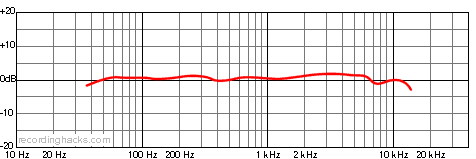
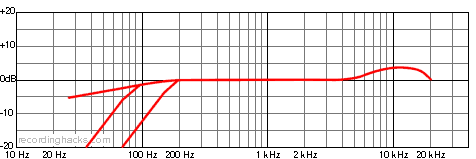
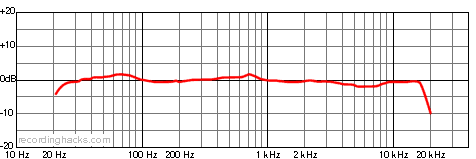
Can you provide response charts of the mics used in the studios you deal with?

Maybe the chart from a Neumann U87 ($3,500.00) would have made better sense in my post:
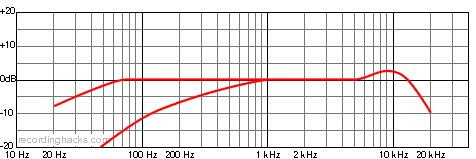
0860.png


Or maybe a Coles 4038 ($1,500.00):
0701.png


AKG C451e ($500.00):
0323.png


Royer R121 ($1,300.00):
1402.png


I won't even mention the equalization that has to be applied when a recording is cut and when it is played back just to make the system work (I'll let the graph be an eye-opener for the uninitiated :)

riaa_1_1.jpg
 
Last edited:
My belief is that's where the improvements in digital recordings will occur - getting more and more accurate sampling of the live music being performed.
Such has already arrived with DXD workstations by Pyramix and others. The 2004 based DXD standard is 24/352.

Watch the youtube video where Bob Ludwig talks about how he uses the workstation with high resolution sources.
 
A $7,800 Neuman Solution-D (d stands for digital)

26328d1162926207-modern-neumann-freq-response-charts-solution-d.jpg


Rob you are killing the flatearths like flies. :ntwrthy::ntwrthy::ntwrthy:
 
I was working with what I could find.
Hopefully others will learn and/or begin with questions instead of making faulty assumptions based upon a lack of awareness.

Can you provide response charts of the mics used in the studios you deal with?
Already have. Notice the embedded link for "condenser microphones? Click it! I'm not a recording engineer but have participated in Telarc recordings in Atlanta.

Despite their mediocrity, some people enjoyed the stuff he recorded with them.
I don't assert that one must only listen to high resolution sources or systems in order to enjoy music. Whenever I travel, I listen to uncompressed content on an iPad via Shure Se535 IEMs. And in terms of hours, I typically listen more to my garage system in fair weather than the main one.
 
A $7,800 Neuman Solution-D (d stands for digital)

26328d1162926207-modern-neumann-freq-response-charts-solution-d.jpg


Rob you are killing the flatearths like flies. :ntwrthy::ntwrthy::ntwrthy:

Not my intent at all, Pando.
I just like when people discuss things using facts, reality (maybe a bit of science), and truth.

Sometimes these discussions remind me of political blogs, where people support their party with blind faith (or ignorance) instead of looking at what is real.


Can an LP play 15Hz to 50KHz?
Maybe.
What studio is able to cut and press an LP with information in those ranges?

Can our body sense frequencies at 50KHz?
Maybe.
What information is generated by our systems and the software played on it at those frequencies?

How much joy do you think you would you obtain from listening to an album that contained ONLY information from 30KHz to 50KHz?
Some here have the ability to test it out.

What human voice can reach those frequencies?

What analog instrument plays int hose frequencies?

What studio mic, records flat to those frequencies?

The arguments get really silly at times, especially when people run away from the facts.

I (more than once) proposed a test that could PROVE whether one medium was better at accurate reproduction than another.
There are members on this thread with he capability to carry out the test.

They'd rather continue to argue their beliefs and their "party" than know the truth.

But the truth is out there.
 
Last edited:
What analog instrument plays int hose frequencies?
I"m glad you asked this time instead of making more faulty assumptions:

French horn - 90 khz
Trumpet - 80 khz
Violin - 40 khz
Oboe - 40 khz
Cymbal - 100 khz
Claves - 100 khz
Triangle - 90 khz
Rimshot - 90 khz
Piano - 70 khz

James Boyk from Caltech has done extensive research on ultrasonic response.

The arguments get really silly at times, especially when people gte away from the facts.
I couldn't agree more. Especially when certain individuals are completely unaware of them!

Hint: there are two links found in my post if you're truly interested. It seems you missed the two in post 170.
 
Last edited:
Interesting since Hydrogen Audio states this.


It would be quite difficult to play a quadraphonic system if it could only reproduce 33.33khz, let alone 17.5khz. This requires mics, of course.

So I suspect the figures from your source are incorrect.

Cheers.

I got them from a company name Diamond Cut Audio Restoration.

They did the restorations for the Edison Historical Society (the cylinders), and for the Smithsonian, but I won't vouch for their knowledge of anything audio.
I'll only share it.
YMMV

F = (Pi x D x RPM) / (W x 120)

wherein

D = Usable Diameter of the Record at various locations (in inches)

RPM = Revolutions Per Minute of the Record in Question

W = Smallest dimension of the styli (in inches)

Pi ~ 3.1416

A .00025" cutting sapphire would have a limitation of 41KHz.
 
Last edited:
Not incorrect, just limited to mediocre samples which in no way define the technology.

Read my reply in post # 176.

I probably gave the size of a mediocre cutting head in a mediocre lathe too.
I'll see if I can get the specs from a good one.
(Maybe a Neumann SX68 with a Freq. Response of 40Hz-16KHz for $25,000?)

As for 90KHz from a French horn-
Cool!
I'm sure bats love the symphony.
(And don't forget what else James Boyk writes: A discussion of the significance of these results describes others' work on perception of air- and bone-conducted ultrasound; and points out that even if ultrasound be taken as having no effect on perception of live sound, yet its presence may still pose a problem to the audio equipment designer and recording engineer.)

Unfortunately, if a mic doesn't pick it up and it can't be cut by a lathe, it isn't going to come out of your speakers via your TT, so it's a moot point.

Can someone point to the studies that prove we can sense frequencies in the ultrasonic range?
I find that fascinating (maybe that's why I can hear a flyback transformer whenever a CRT is on).
 
Last edited:
I probably gave the size of a mediocre cutting head in a mediocre lathe too.
Given your track record of making faulty assumptions and providing data of limited components, I wouldn't be surprised. :)

(And don't forget what else James Boyk writes...
You've read the abstract summary, now read The Significance of the Results:

In a paper published in Science, Lenhardt et al. report that "bone-conducted ultrasonic hearing has been found capable of supporting frequency discrimination and speech detection in normal, older hearing-impaired, and profoundly deaf human subjects." [5] They speculate that the saccule may be involved, this being "an otolithic organ that responds to acceleration and gravity and may be responsible for transduction of sound after destruction of the cochlea," and they further point out that the saccule has neural cross-connections with the cochlea. [6]

Even if we assume that air-conducted ultrasound does not affect direct perception of live sound, it might still affect us indirectly through interfering with the recording process.


So much for the bandwidth limiting of Redbook!

Unfortunately, if a mic...
If a frog had wings he wouldn't bump his butt.

There are mics like the Shoeps to which I linked that have response to 50 khz. Lathes were cutting Quadraphonics in the 70s with 40 khz carriers.

Do you always substitute speculation for truth?
 
Character assassination, booooo!!! :nono:
I find it a real shame when posters on various audio forums just make crap up ("most analog gear, INCLUDING recording studio gear, is intentionally rolled off") and pontificate about topics beyond their awareness ("Shure SM58 studio microphone response chart:", "if a mic doesn't pick it up and it can't be cut by a lathe")

Especially when it takes only minutes to debunk their assertions. Did you follow my link about microphones that do have 50 khz response? Perhaps I should post a cute picture of a Sesame Street character to emphasize my point?
 
Do you always substitute speculation for truth?

Nope, just the facts presented so far (unless the Mfgrs. are lying? Maybe you can go back and disprove the charts they provided? Please do so for the edification of the group).

Neumann provides specs on their cutting heads that are well BELOW the information you think is being reproduced on your rig.

Mic mfgrs. provide response specs that are well BELOW what you think is being reproduced on your rig.

Speaker mfgrs. provide response specs that are well BELOW what you think is being reproduced.

If the mic can't pick it up and the lathe can't cut it and the speaker can't vibrate it, what exactly is the medium of transport that is making you perceive it during playback?

You may have a Formula 1 car in your driveway, but if you put 86 Octane in it, you "ain't got sh*t".

As for CD4: special cutting AND playback heads are necessary (not to mention the software needed).
It's not really relevant to this discussion (show of hands: How many of us have the software and the hardware?)

And what you didn't understand about bone-conduction and ultrasonics: they were showing that people may still be able to "hear" voices and sounds without having the ability to hear. It is sensing the vibrations of the sound. Voices are not in the ultrasonic frequency range.
Note that they said " transduction of sound after destruction of the cochlea".
They did not say "perception of ULTRAsound".
(Not a speculation. I actually quoted your quote:))

(Waiting for the "specifications mean nothing. it's the music that matters" response).
 
Last edited:
It was most certainly a patent infringement and I'll repeat - it is not a switching design, aka digital. It's simply an AB amp with a sliding bias that keeps it into the class A range most of the time.


Most attenuators work best between 12:00 and 2:00. When you are forced to attenuate the signal too much, the impedance match is not ideal

i have really been thinking about these statements E-Stat,can i ask you do you have a dislike for technics equipment.sorry but i am curious.

sorry guy's did not mean to get in here just needed to clear something up.i just kinda felt i mightta been bullied a bit because of my lack of knowledge. yall can continue
 
hey i have some mics from the sixties they are akg's dont know the model numbers they are packed away,but the guy that gave them to me said they were badass,he had strings and things in denver it was also a recording studio,his name was Bill Barker he and Joe the guitarist with aerosmith were good friends.he knew his sheet he could tell you anything about music.he even had a car made like a strat. damn i liked the 60's and 70's
 
Last edited:
Nope, just the facts presented so far (unless the Mfgrs. are lying? Maybe you can go back and disprove the charts they provided? Please do so for the edification of the group).
Who is "they"? Shoeps? Disprove their response chart to 50 khz? Would you kindly be more specific?

Neumann provides specs on their cutting heads that are well BELOW the information you think is being reproduced on your rig.
And? Is this another "I found one example - therefore that is the best available" situation?

Mic mfgrs. provide response specs that are well BELOW what you think is being reproduced on your rig.
So 50 khz is below what I think is being reproduced on my rig? Actually, I think the answer is closer to 22-25 khz. The important factor is there are no brute force filters limiting the response.

If the mic can't pick it up and the lathe can't cut it and the speaker can't vibrate it, what exactly is the medium of transport that is making you perceive it during playback?
Sorry, I don't agree with your current crop of faulty assumptions. Look again at the facts. Returning to the original topic, the issue of the limited bandwidth of the Redbook standard involves the need for a radical, eleventh order brick wall filter to prevent gross distortion. Gradually rolled off response above 20k provides no such compromise.

As for CD4: special cutting AND playback heads are necessary (not to mention the software needed).
I'm delighted you now understand the capability. Perhaps you need to tell the person who asked the previous question quoted above. :)
 
I find it a real shame when posters on various audio forums just make crap up ("most analog gear, INCLUDING recording studio gear, is intentionally rolled off") and pontificate about topics beyond their awareness ("Shure SM58 studio microphone response chart:", "if a mic doesn't pick it up and it can't be cut by a lathe")

Especially when it takes only minutes to debunk their assertions. Did you follow my link about microphones that do have 50 khz response? Perhaps I should post a cute picture of a Sesame Street character to emphasize my point?

So, you didn't like the "cheap" Shure (even though plenty of studios use it), and I presented you with the Neumann for $3,500.00 with a response chart (hey, doesn't Neumann make disc cutting heads too? Hmmm...).

Please name the studios that are using these 50KHz mics to record the music you listen to, and debunk the Neumann response graph provided by Neumann on the Neumann website. Remember to include the response charts of the preamps used for those mic elements (very important).

i'm assuming you know more than they do about their own products.
 
Last edited:
Status
Not open for further replies.
Back
Top Bottom